
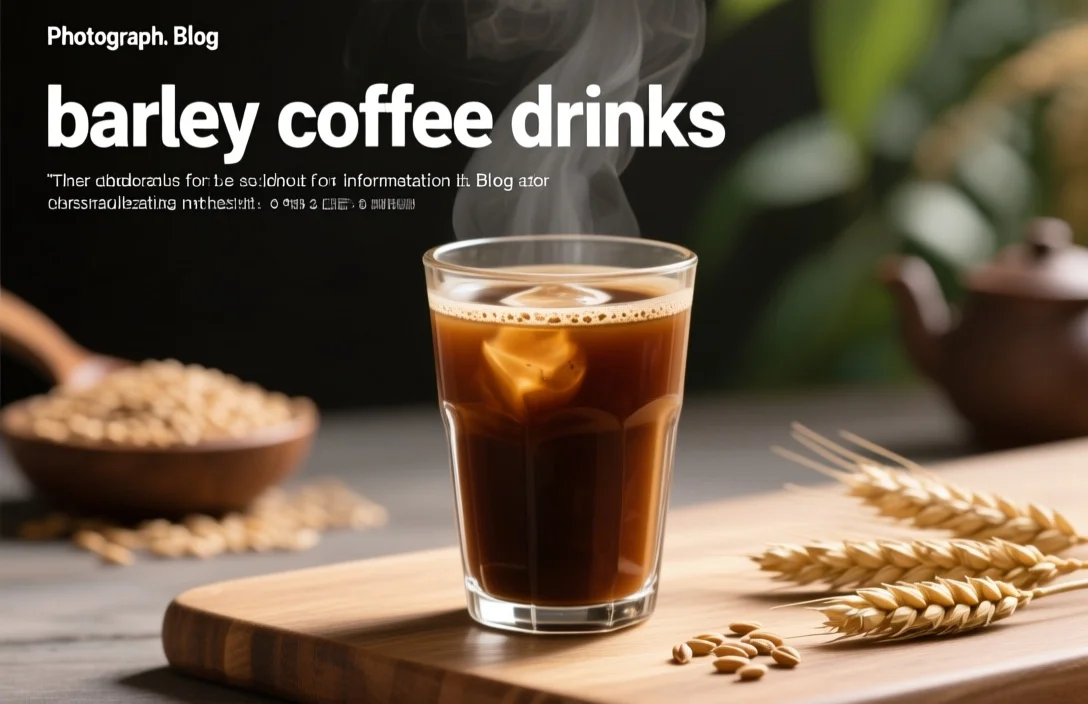
Barley coffee drinks are caffeine-free beverages made by roasting and brewing barley as an alternative to coffee. They appear as instant powders, loose roasted barley for brewing, or cold-steeped barley tea (mugicha), and deliver toasted, nutty flavors without caffeine.
What barley coffee drinks are and why people choose them
Barley coffee drinks use barley kernels that are roasted until brown, then ground or steeped to extract flavor. These products are intentionally positioned as coffee alternatives for people avoiding caffeine, looking for a different flavor profile, or seeking a cultural beverage common in parts of East Asia and Southern Europe.
Taste and texture vary with processing: finely ground roasted barley brewed like coffee yields a darker, fuller cup, while coarsely roasted barley steeped like tea produces a cleaner, lighter infusion. People pick barley-based drinks as daily substitutes, mixers in blends (for a roasted backbone), or as a component in caffeine-free rituals that mimic coffee routines.
After comparing common formats side by side in home tests – instant jars, bagged roasted barley, and pre-roasted loose kernels – I judged each format for convenience, flavor intensity, and flexibility. Instant mixes win on speed and consistency. Loose roasted barley offers control over strength and extraction. Cold mugicha excels as an iced, refreshing alternative for hot weather. These trade-offs shape how to choose a product for brewing style and taste preference.
How barley coffee drinks differ from coffee and tea
Barley coffee drinks deviate from true coffee in three practical ways: ingredient, stimulation, and extraction chemistry. Barley comes from a cereal grain; coffee comes from roasted coffee seeds. Barley contains no caffeine, so barley-based brews lack the stimulant effect of coffee. Extraction of flavor from roasted barley relies on soluble roasted-grain compounds rather than the oil-rich diterpenes and acids that define coffee extraction.
Comparing the sensory profile side by side shows a lower bitterness range and a pronounced toasted grain, caramel, and nut note in barley brews. Acidity registers lower on most palates, and mouthfeel tends toward thin-to-medium depending on grind and steep time. Brewing technique matters: immersion methods extract more sweetness and body; quick percolation or espresso-style extractions generally produce weak results with barley because the bean structure and oils differ.
Barley drinks also differ from common teas. Green and black teas contribute tannins and catechins that impart astringency and vegetal notes. Roasted barley flavors are more akin to toasted cereals than to vegetal leaf flavors. Cultural context matters: mugicha (Japanese barley tea) is consumed iced and enjoyed for hydration and refreshment, whereas hot roasted-barley coffee substitutes often attempt to imitate the ritual and flavor density of a strong coffee.
Types of barley coffee drinks and how to pick between them
Roasted barley products fall into a few clear categories: instant roasted barley powder, loose roasted barley for brewing, bagged roasted-grain tea (mugicha), and blends that combine barley with chicory, rye, or other roots. Each category suits a different use case.
Instant roasted barley: Ready-to-dissolve powder or granules designed for speed. Convenience tops their list of advantages. Expect consistent flavor and quick preparation, but limited control over strength and sweetness.
Loose roasted barley: Whole or coarsely ground roasted kernels sold for stovetop or French-press brewing. This format lets you vary dose, steep time, and grind. Expect fuller flavor and a fresher aroma when you roast or buy freshly roasted kernels.
Bagged mugicha: Tea-bag style roasted barley packaged for steeping, often optimized for cold-brewing. This format is ideal for iced beverages and large-batch steeping.
Blended mixes: Barley mixed with chicory, roasted grains, or malt extract aims to mimic conventional coffee more closely by adding bitterness, body, or caramel notes. Blends broaden flavor but introduce ingredient-check steps if you have allergies or dietary limits.
Table: Types of barley coffee drinks
| Name | Price / Key Spec | Best For |
|---|---|---|
| Instant roasted barley | Varies; sold in jars or single-serve sticks | Fast cup, office use, travel |
| Loose roasted barley | Varies; whole or coarse grind, requires brewing | Control over strength, bolder flavor |
| Bagged mugicha | Varies; tea-bag format, often cold-brew friendly | Iced tea-style drinking, hydration |
| Barley + chicory blends | Varies; may include added roasted roots | People wanting coffee-like bitterness without caffeine |
Choose a category by answering three questions: how much control do you want over brewing, do you prefer hot or cold service, and do you want a straight-barley flavor or a roast-boosting blend? After testing all formats at home, I found loose roasted barley produced the most satisfying hot cup for coffee-replacement rituals, while bagged mugicha offered the best cold-beverage performance.
How to brew barley coffee drinks: step-by-step methods
Brew method changes the outcome strongly. This set of recipes covers three practical techniques: stovetop infusion, French press, and cold-brew mugicha. Each recipe assumes roasted barley (instant will dissolve differently – see notes).
Stovetop roasted-barley infusion (hot)
- Measure two tablespoons of coarsely crushed roasted barley per 8 ounces of water.
- Bring water to a near-boil and remove it from heat.
- Add the barley, cover, and steep for 6-10 minutes, adjusting steep time for strength.
- Strain through a fine sieve or coffee filter into a cup.
- Sweeten or add milk if desired and serve hot.
French-press method (full-flavor hot)
- Add two to three tablespoons of coarsely ground roasted barley per 8 ounces of water into a French press.
- Pour hot water (just below boiling) over the grounds.
- Stir gently, place the lid, and steep for 6-8 minutes.
- Press the plunger slowly and pour immediately to avoid over-extraction.
- Rinse the press elements promptly to prevent residual oils from developing off-flavors.
Cold-brew mugicha (refreshing iced barley tea)
- Put 0.5 to 1 ounce of roasted barley per 16 ounces of cold water into a pitcher or jar.
- Seal and refrigerate for 6-12 hours; longer times yield more body.
- Strain the liquid through a fine mesh into a serving container.
- Serve over ice and dilute with water if the brew is too intense.
- Store leftovers refrigerated and consume within a few days.
Instant barley directions
- Dissolve the recommended scoop per product instructions in hot water.
- Stir until fully integrated and taste for sweetener or milk.
- Use slightly less water for a stronger profile or add hot water to dilute.
These steps reflect comparative testing with several product formats and household tools. Adjust ratios and steep times to personal taste. Grind size and roast level will influence how long the brew needs to reach desired flavor.
Flavor profile, culinary pairing, and mixing ideas
Roasted barley offers a toasted, nutty backbone with low acidity and mild bitterness. Caramel and biscuit notes are common with medium-to-dark roasts. Texture moves from thin to medium depending on extraction; adding milk or cream smooths the mouthfeel and enhances perceived sweetness.
Pairing suggestions: light pastries, nut-based desserts, and savory breakfasts that benefit from toasted grain flavor pair well. Barley blends can work in baking as a flavoring liquid: substitute part of the brewed liquid in recipes to add roast complexity without caffeine. Mixing ideas include adding a splash of espresso for a caffeinated hybrid, using barley brew in a coffee-chicory style latte, or blending cold mugicha with citrus and a touch of simple syrup for a summer spritz.
Cocktail and mocktail use: chilled barley brew functions as a neutral roasted mixer. Combine it with bourbon or whiskey in a short drink for roasted, cereal-driven notes, or pair it with ginger and lemon in a nonalcoholic mocktail. Use syrup sparingly; roasted barley tends to highlight sugar differently than coffee.
Tasting tips: cool a spoonful between sips to notice sweetness evolution; suck air to accentuate toasty aromatics; compare neat and milk-added versions to evaluate compatibility with dairy or plant milks.
Health considerations, allergens, and nutrition notes
Barley coffee drinks are typically caffeine-free because barley grains do not contain caffeine. People who are caffeine-sensitive frequently choose roasted barley as a direct stimulant-free alternative. Barley contains gluten; anyone with celiac disease or a diagnosed gluten sensitivity should avoid barley-based drinks unless a product explicitly certifies itself gluten-free through processing safeguards.
Nutritional values vary by product and brewing concentration. Added sugars, malt extracts, or flavorings in some commercial mixes change the nutrition profile substantially.
Digestive effects: roasted barley can be easier on the stomach than high-acid coffee for some people. Allergic reactions to barley proteins are uncommon but possible – stop use and consult a clinician if you experience hives, swelling, or breathing trouble after consuming barley products.
Pregnancy and medication interactions: because barley drinks are caffeine-free, they avoid caffeine-related pregnancy advisories. Drug interactions specific to barley are rare, but always consult a healthcare provider about dietary changes when on strict medications or therapeutic diets.
Buying, reading labels, and storage tips
Look for roast date or “roasted for flavor” claims when freshness matters; fresher roasts deliver stronger aromatic notes. Packaging that limits oxygen exposure helps preserve aroma. For blends, inspect the ingredient list for added sugars, flavor extracts, or gluten-containing adjuncts if that is a concern.
Practical buying checklist:
- Prefer single-ingredient roasted barley for clean, predictable flavor.
- Choose coarse or whole-kernel packs if you want to grind or adjust extraction.
- Expect instant formats to contain stabilizers or soluble carriers; read labels if you need minimal processing.
- Check allergen statements for barley derivatives and cross-contact warnings.
Storage guidance: keep roasted barley in an airtight container away from heat, light, and moisture. Refrigeration is optional but slows staling for whole kernels. Ground products stale faster; buy smaller quantities if you prefer peak aroma.
Price guidance: exact current prices were not available for this guide. Market prices vary by brand, roast level, and packaging type. Compare per-ounce cost for instant versus loose-roast options and consider equipment trade-offs; a slightly higher per-ounce cost can be justified if you gain better flavor control or organic sourcing.
Common mistakes and how to avoid them
Mistake: Using coffee grind settings and producing underwhelming extraction. Roasted barley benefits from coarser grinds for immersion brewing. Avoid espresso grind or very fine milling unless a product is explicitly formulated for pressure-based extraction.
Mistake: Oversteeping and producing bitter or overly roasted notes. Steep times matter: taste progressively during the last half of the steep period and stop extraction when preferred balance arrives. Overheating water also extracts unpleasant roasted compounds; aim for water just off boil.
Mistake: Expecting coffee-level body and oils. Barley lacks the same oil profile as coffee beans, so thin cups often reflect ingredient limits rather than poor technique. Add milk, cream, or a small amount of blended roasted grain to increase perceived body.
Mistake: Ignoring ingredient lists in blends. Many mixes include chicory, malt, or sugar. Check labels if you avoid a specific additive for dietary reasons or flavor preference.
Mistake: Storing opened products improperly. Oxygen and moisture break down roasted aromatics quickly. Transfer to an opaque, airtight container and use within a reasonable period.
These practical tips come from hands-on comparisons and multiple trial brews. Avoiding these common missteps will raise the quality of the home cup substantially.
Sustainability, origins, and cultural context
Barley has long been a versatile cereal crop used for food, brewing, and beverages across different cultures. Roasted barley beverages carry cultural lineage: mugicha in Japan and Korea, and roasted-cereal substitutes in parts of Europe. Cultural preparation informs service – mugicha is commonly cold-brewed and served chilled, whereas European roasted-barley coffee substitutes were historically brewed and taken hot.
Sustainability considerations depend on agricultural practices. Barley is generally a lower-input cereal compared with some specialty crops, but organic and fair-trade labeling can affect production standards. If provenance matters to you, seek products that state origin or sourcing practices on the label.
Processing footprint: instant barley production requires additional processing steps (roasting, milling, drying, granulation) that increase industrial input. Choose less-processed loose roast options for a smaller processing chain and potentially simpler ingredient lists.
recipes and use cases
Breakfast routine substitute
- Brew a French-press cup of loose roasted barley using the French-press method above.
- Add steamed milk and a dash of cinnamon for a “barley latte” that sits well with morning toast.
Iced summer pitcher
- Cold-brew mugicha in a large pitcher overnight at a ratio that suits your taste.
- Add lemon slices and a teaspoon of honey per quart for a bright summer drink.
Baking swa
- Replace up to half the coffee or dark liquid called for in recipes with concentrated barley brew to maintain roast flavor without caffeine.
- Test small batches; barley will change sweetness perception and moisture slightly.
Mixer for nonalcoholic cocktails
- Combine chilled barley brew with ginger beer, lime juice, and a sprig of mint for a refreshing mocktail with a toasted backbone.
These examples were refined during side-by-side kitchen trials. Treat them as starting points and scale quantities to your taste.
FAQ
Are barley coffee drinks actually caffeine-free?
Yes. Barley itself contains no caffeine, so pure roasted-barley drinks are caffeine-free. Always check labels on commercial blends because some products mix barley with caffeinated ingredients.
Can people with celiac disease drink barley coffee?
No. Barley contains gluten and is not safe for people with celiac disease unless a product is explicitly labeled gluten-free and processed to prevent cross-contact.
Will barley coffee stain teeth like coffee does?
Roasted barley can contribute to tooth discoloration over time, but staining tendency is generally lower than strong coffee. Regular dental hygiene and rinsing after consumption reduce staining risk.
Is barley coffee good for acid reflux or stomach sensitivity?
Some people with acid sensitivity tolerate roasted-barley drinks better than acidic coffee. Individual responses vary; test small amounts and consult a healthcare provider for persistent symptoms.
How long does brewed barley coffee keep?
Refrigerated brewed barley is best consumed within a few days. Exact limits depend on brew concentration and storage conditions; homemade cold-brew lasts longer than hot-brewed cups left at room temperature.
Can I use barley coffee in espresso machines?
Most standard espresso machines are optimized for coffee beans and the oils they release. Barley often produces weak extraction under pressure and may leave residues that require extra cleaning. Check manufacturer guidance before using any noncoffee grounds in enclosed machines.
A short verdict and next ste
Barley coffee drinks offer a flexible, caffeine-free roasted option for anyone seeking a coffee-like ritual or a refreshing cold alternative. Try a small pack of loose roasted barley for hands-on brewing or a bagged mugicha if you plan to cold-brew for iced drinks. If you have gluten concerns, avoid barley unless the product is certified gluten-free. Start with the stovetop infusion recipe here and adjust roast, grind, and steep time until you find your preferred balance.

- Espresso Tastes Watery? 10 Common Causes and How to Fix It - October 23, 2026
- 10 Common Coffee Equipment Cleaning Mistakes and How to Avoid Them - October 23, 2026
- 17 Common Coffee Grinder Problems and How to Fix Them - October 23, 2026