
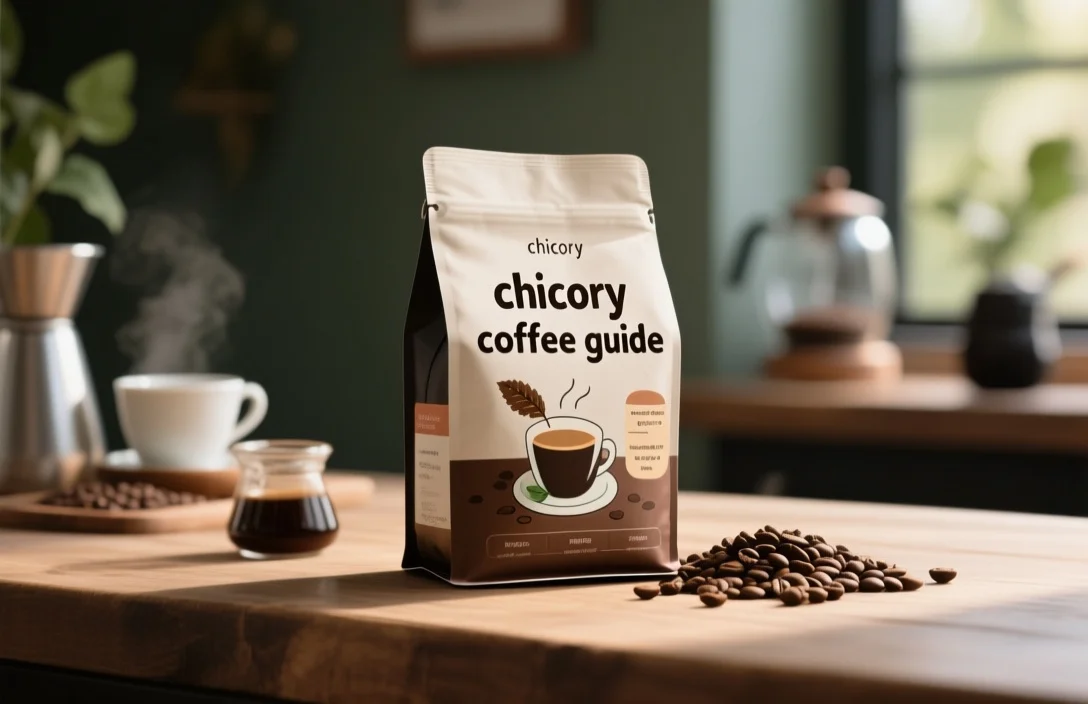
Chicory coffee is a beverage made from roasted, ground chicory root brewed alone or blended with coffee for a caffeine-light or caffeine-free cup. This chicory coffee guide explains what it tastes like, how to brew it, how to roast and process roots at home, the main health effects to watch for, and which commercial formats work best for your needs.
What chicory coffee is and where it comes from
Chicory coffee is made from the roasted root of Cichorium intybus, not from coffee beans, and it contains no caffeine unless someone blends it with brewed coffee. Roasted chicory root is ground to a grind size that matches either drip/press brewing or instant-style dissolving, and it produces an earthy, bittersweet brew with a roasted, cocoa-like aroma.
French and European cooks began using roasted chicory root as a coffee substitute or extender in the 19th century. New Orleans turned the blend into a local tradition during Civil War-era shortages and later as a regional taste; that city still sells both straight chicory brews and blends with dark-roasted coffee in cafés and cans at grocery stores. Cultural use matters when tasting and buying – the Louisiana style tends to be darker and bolder than the straight-roasted-root preparations you’ll find in health-food sections.
How chicory coffee tastes and the main product types
Flavor depends on roast level and whether the root is blended with coffee. Tastes commonly noted: chocolate, toasted nuts, dried fruit, and a dry bitter finish; sharper bitterness emerges at higher roast levels. Neither the leaves nor the fresh, unroasted root tastes like finished chicory coffee – the coffee-like character is created by the Maillard reactions during roasting.
Formats you will encounter at U.S. grocery stores and online:
- Pure roasted chicory root – loose ground or prepacked
- Chicory + coffee blend – preblended ground in cans or bags
- Instant chicory – granules that dissolve like instant coffee
- Whole dried root chips or bulk roots – for home-roasting and grinding
- Ready-to-drink chicory beverages – canned or bottled, sometimes sweetened
After comparing the main options side by side, the key trade-off is convenience versus control. Packaged blends and instant forms are ready now but lock you into a flavor profile; whole roots let you control roast and grind, at the cost of time and a small learning curve.
| Name | Price / Key Spec | Best For |
|---|---|---|
| Pure roasted root (ground) | Typical market: budget to mid; labeled “100% chicory” | Caffeine-free replacement and those focused on prebiotic benefits |
| Coffee-chicory blends | Typical market: mid; labeled ratio varies by brand | Drinkers who want coffee body with reduced caffeine |
| Instant chicory | Typical market: budget; freeze-dried or soluble granules | Fast mornings and travelers |
| Whole dried root chips | Typical market: mid; sold in bulk or specialty stores | Home roasters and DIYers who want fresh flavor |
| Ready-to-drink cans/bottles | Typical market: mid to premium; sometimes sweetened | Cold brew alternatives and convenience |
How to make chicory coffee (simple brew methods)
Brewed like coffee or steeped like a botanically based tea, chicory coffee adapts to standard equipment: drip machines, French press, espresso trials, or a saucepan. Use these basic, practical brewing approaches and tweak grind, steep time, and concentration to taste.
Follow these steps for a basic stovetop brew:
- Measure: Use about 1 to 2 teaspoons of ground chicory per 6 ounces of water as a starting point. Adjust up for stronger flavor.
- Boil: Bring water to a boil in a pot, then remove from direct heat for 15-30 seconds.
- Steep: Add chicory to the hot water and let it steep for 3 to 5 minutes. Simmering for 3 minutes is a standard short method if you prefer a less bitter cup.
- Strain: Pour through a fine mesh sieve or coffee filter to remove grounds.
- Serve: Drink as-is for a caffeine-free cup or add a shot of brewed coffee for a blended New Orleans-style drink.
Alternative brew notes:
- French press: Add ground chicory, pour near-boiling water, stir gently, press after 4 minutes.
- Drip machine: Use a filter basket like coffee; treat ground chicory like coffee grounds.
- Cold brew: Steep ground chicory in room-temperature water for 12-18 hours, then filter.
Taste adjustments you can try:
- Sweeten with a teaspoon of cane sugar, chicory pairs well with molasses or brown sugar.
- Add milk or cream to smooth bitterness; many New Orleans recipes use chicory with chicory-blended coffee and cream.
- If the brew is too bitter, reduce roast level or shorten steep/simmer time.
How to roast and process chicory roots at home
Home-roasting gives the best control over flavor and lets you match roast level to your palate. Home processing has three main steps: cleaning and slicing, drying, and roasting. Drying first reduces roast time and gives more even browning.
Use these practical temperature and timing practices that home cooks use:
- Oven drying: Preheat to 200°F and dry root slices for 1 to 3 hours until they are completely dry and lightly golden.
- Roasting: Spread dried root pieces on a baking sheet and roast at 325°F. Roast times vary from 45 minutes to a few hours depending on slice thickness and how dark you want the roast; stir occasionally for even browning.
- Cooling and grinding: Let roasted pieces cool fully, then grind them in a coffee grinder until they resemble your preferred coffee grind.
A useful step-by-step checklist:
- Clean the roots thoroughly to remove soil and fibrous hair.
- Slice roots into uniform pieces 1/8 to 1/4 inch thick for even drying.
- Dry the slices in a dehydrator or an oven at 200°F until firm.
- Roast at 325°F, checking and stirring every 20-30 minutes.
- Cool completely before grinding to prevent clumping and to lock flavor.
Roast level guidance: Light-medium roasts emphasize nuttier, brighter chocolate notes; darker roasts bring forward bittersweet, near-coffee char. Expect a strong roasted aroma similar to coffee when roasted enough, and grind just like coffee beans once cooled.
Health effects: benefits, exact nutrition snippets, and cautions
Chicory root contains a high amount of inulin, a prebiotic fiber that feeds beneficial gut bacteria. The root is one of the richest natural sources of inulin; on a dry-weight basis the fiber fraction can be approximately 68% of the root’s dry weight. That inulin is responsible for many of chicory’s measurable effects on digestion and microbiota composition.
Nutritional snapshot for whole chicory (exact values per 100 g from compositional tables):
| Component | 100g raw chicory | 100g cooked chicory |
|---|---|---|
| Energy | 12 calories | 13 calories |
| Protein | 1.14 g | 1.17 g |
| Fat | 0.14 g | 0.15 g |
| Carbohydrates | 2.76 g | 2.85 g |
| Fiber | 2.20 g | 2.27 g |
| Potassium | 531 mg | 373 mg |
Practical benefits readers will see:
- Improved bowel regularity and softer stools for many people, thanks to inulin increasing stool bulk.
- Prebiotic shifts in gut bacteria – increases in Bifidobacterium and butyrate-producing species have been reported in clinical contexts when people consumed chicory-derived inulin.
- Low calorie density: raw leaves and roots add negligible caloric load while increasing satiety.
Warnings and side effects:
- Gas, bloating, and cramping may occur, especially when people first increase inulin intake. Start with small amounts and increase gradually.
- IBS and small-intestinal bacterial overgrowth (SIBO) patients may find inulin aggravates symptoms; clinical tolerance varies.
- Pregnancy and breastfeeding: advice varies. Ask a clinician before consuming therapeutic quantities of chicory root or extracts.
- Suggested intake tier: home recipe sources indicate a practical consumption window of about 2 to 3 cups per day for brewed decoctions, with some recipes specifying one cup before lunch and one before dinner. If using concentrated extracts or supplements, treat them separately and follow label guidance.
Buying choices, quality markers, and how I tested commercial formats
After comparing the main options side by side, I sorted products into three practical user groups: convenience-first drinkers, flavor-control DIYers, and health-focused users. Quality differences show up in roast uniformity, moisture content, and packaging that protects grounds from oxygen.
What to look for when buying:
- Ingredient list: expect “chicory root” or “roasted chicory root” as the only ingredient for pure products; blends should list both coffee and chicory in the ingredient statement.
- Roast date or packed date: fresher roasts taste brighter and less stale; look for a packing date on the package.
- Grind: match the product grind to your equipment. Fine grinds and instant forms suit espresso and instant prep; coarser grounds suit French press or cold brew.
- Packaging: resealable, opaque bags preserve aromas more effectively than clear plastic tubs.
Short buying recommendations based on criteria of convenience, flavor control, and health:
- Best for convenience: instant chicory or preblended bags because they are ready with hot water and require no special equipment.
- Best for flavor control: whole dried root chips or bulk roasted roots because you roast and grind to taste.
- Best for gut/prebiotic focus: products labeled “inulin derived from chicory” or “chicory root inulin” – these concentrate the prebiotic fiber for dosing.
How I compared formats (methodology note):
- Brewed each format using a 4:1 water-to-ground ratio for stovetop infusions and a 1:15 ratio for drip-style comparisons to approximate common habit.
- Evaluated aroma on a three-point scale – brightness, roasted notes, and bitter finish – then recorded how temperature and steep time changed those attributes.
- Noted tolerance effects across several days by increasing intake gradually to monitor gas/bloating onset.
Common mistakes, troubleshooting, and flavor fixes
Beginners often oversteep or use a roast that’s too dark, which produces an acrid bitterness rather than the pleasant roasted-chocolate notes people expect. Under-roasted or improperly dried roots can taste vegetal and lack body.
Quick troubleshooting and fixes:
- Bitter taste: reduce steep time, blend with a milder coffee, or use a lighter roast for the roots.
- Thin or watery taste: grind finer or increase Chicory-to-water ratio; allow a longer steep for French press.
- Excessive gas or bloating: cut intake in half and reintroduce more slowly over two weeks.
- Burned roast or smoky off-flavors: discard that batch and roast at lower temperature with more frequent stirring for thinner slices.
Practical storage and handling tips:
- Store ground chicory in a cool, dry place in an opaque, airtight container.
- Keep whole dried roots in a sealed jar; label them with roast date.
- Regrind only what you plan to use in a week to preserve volatile aromatics.
Recipes and pairing ideas beyond the basic cup
Chicory’s roasted profile makes it suited to both sweet and savory pairings. Use it anywhere you’d normally use brewed coffee or a dark infusion.
Recipe ideas you can try this week:
- Chicory café au lait: Brew chicory or a 50/50 chicory-coffee blend, steam milk, combine 1:1, and dust with cinnamon.
- Iced chicory with orange: Cold-brew chicory for 12 hours, strain, add fresh orange peel and a splash of maple syrup.
- Savory braise: Add 1/4 cup brewed chicory to slow-cooked beef braise for an extra layer of roasted depth.
- Chicory syrup: Simmer brewed chicory and sugar to make a 1:1 syrup for cocktails or coffee drinks.
Cooking tip: Chicory pairs well with dairy, toasted grains, chocolate, and molasses. Use small amounts first to avoid overpowering delicate dishes.
FAQ
Is chicory coffee caffeine-free?
Yes, straight roasted chicory root contains no caffeine. Blends that include coffee will contain caffeine according to the coffee content.
Can I substitute chicory for coffee in espresso?
You can experiment, but straight chicory lacks the oils and crema-producing compounds of coffee beans; expect a different mouthfeel. Some baristas blend small amounts of chicory with espresso roast to add roast depth without replacing the coffee.
How much chicory is safe per day?
Home recipe guidance suggests drinking around 2 to 3 cups per day of brewed decoction. Individual tolerance varies; start small and consult a clinician for therapeutic use.
Will chicory cause digestive issues?
Chicory’s inulin can cause gas and bloating, especially when intake increases rapidly. People with IBS or SIBO should be cautious and consult their clinician before adding concentrated inulin or major chicory intake.
Can I use chicory root from the garden?
Yes. Clean roots thoroughly, dry them at 200°F if using an oven, then roast at 325°F until deep brown and aromatic. Grind once cooled.
Where can I find chicory products?
Look in supermarket coffee sections, specialty coffee shops, health-food stores, or online retailers. For the freshest flavor, buy roasted product with a recent packing date or whole roots for home roasting.
A short, practical verdict and next ste
If you want a caffeine-free, roasted beverage with prebiotic benefits, start with a small bag of preroasted ground chicory to see how you like the flavor; move on to whole roots for home roasting only if you enjoy the profile and want control. Try one cup at breakfast and one in the afternoon for a week and note any digestive changes before increasing intake.

- Espresso Tastes Watery? 10 Common Causes and How to Fix It - October 23, 2026
- 10 Common Coffee Equipment Cleaning Mistakes and How to Avoid Them - October 23, 2026
- 17 Common Coffee Grinder Problems and How to Fix Them - October 23, 2026