
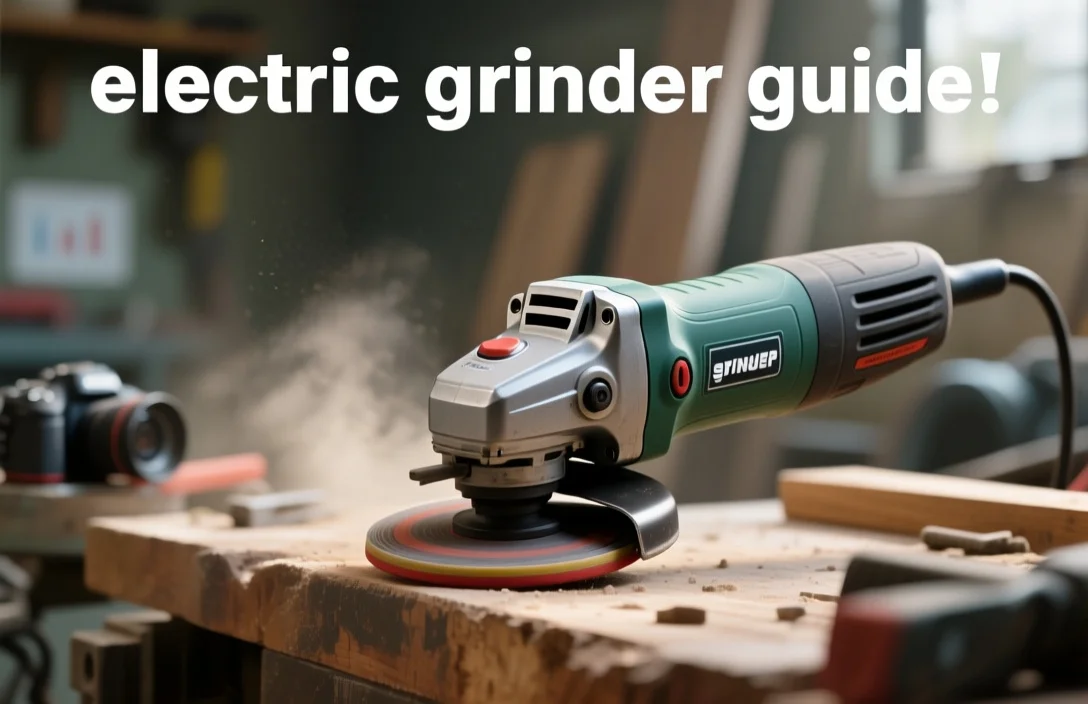
An electric grinder is the fastest route to consistent grinds for coffee, spices, and a few other kitchen jobs. For coffee, I would start with a burr grinder. For whole spices and herbs, a blade grinder or a dedicated spice grinder usually makes more sense. This guide keeps the claims tight, separates the useful features from the marketing noise, and gives you a practical way to buy, use, and maintain the right grinder.
How an electric grinder works
Electric grinders turn electrical power into spinning motion that breaks beans, spices, or other dry ingredients into smaller particles. Burr grinders use two abrasive surfaces, called burrs, to crush the material between them. That gives a narrower particle range, which matters most when you want coffee extraction to behave the same way from cup to cup. Blade grinders work differently. A spinning blade chops whatever is in the cup, and the particle size depends a lot on how long you let it run.
Motor strength, burr design, and speed all affect the result. Wattage or horsepower matters because it tells you how well the grinder can handle dense material without slowing down. Speed matters too. High-speed blade grinders often create more heat and static, which is not ideal for delicate ingredients. Conical and flat burrs each have their place. Conical burrs usually run cooler and hold less grind in the chamber. Flat burrs can produce a more even particle spread, though they may be louder and keep a little more coffee inside the grinder.
How I would choose an electric grinder
I would narrow the field by task first, then by features. That is the cleanest way to avoid buying a grinder that looks capable but does the wrong job.
The main criteria I would use are grind consistency, burr type, motor size and stability, capacity, dose control, cleaning ease, noise level, price, and warranty or service support.
Coffee asks for repeatable particle size. That is why most home coffee drinkers are better off with a burr grinder that has either stepless adjustment or a lot of small steps between settings. Spices are different. A blade grinder or a dedicated spice grinder often works better because it can break things down quickly and is easier to clean between uses. Meat, large batches of nuts, and grain milling call for a purpose-built appliance, not a small coffee grinder.
Grinder types and the trade-offs
Burr and blade get most of the attention, but that is only part of the picture. There are conical burrs, flat burrs, high-speed centrifugal grinders, and heavy commercial bench grinders. Each one solves a different problem.
Conical burrs usually make sense if you want lower speed, less heat, and less retention. Flat burrs are often chosen by people who want a tighter particle spread, especially for filter coffee and espresso dialing. Blade grinders are cheaper and more flexible for quick chopping tasks, but they do a poor job of producing uniform coffee grounds. Centrifugal grinders are fast and handy for certain spices, though they are usually less consistent for coffee. Commercial grinders are built for volume and durability, but they take up more space and are more machine than most homes need.
Quick comparison
Ranked by fit for the job, not by price alone, and then by how much upkeep you are signing up for.
| Name | Price / Key Spec | Best For |
|---|---|---|
| Entry Burr Grinder | Budget tier, small conical or low-profile flat burrs, basic stepped settings | Drip coffee and beginners who want better consistency than blades |
| High-Resolution Burr Grinder | Mid to premium, larger steel burrs, stepless or many-step adjustments | Home espresso and people who dial in grind size precisely |
| Blade Grinder | Budget, high-speed rotating blade, no grind-size control | Quick spice grinding, small nut chopping, and general kitchen use |
| Dedicated Spice Grinder | Small bowl, stainless steel, easy to remove and clean | Whole spices, herbs, and small batches of seeds or nuts |
| Commercial/Bench Grinder | Heavy-duty motor, large burrs or plates, higher throughput | Cafes, restaurants, or high-volume home use |
What to buy for the job you actually have
This is where a lot of shoppers go wrong. They buy for the category instead of the task.
- Espresso at home: choose a high-resolution burr grinder with stepless adjustment or very fine stepped settings. Timed or digital dose control helps. Low retention matters too. I would look for metal burrs of at least 40 mm for stability.
- Filter coffee and French press: a mid-range burr grinder with stepped adjustments and a larger hopper is usually enough. You want consistency in the medium to coarse range, not espresso-level precision.
- Spices and herbs: buy a dedicated spice grinder or a blade grinder with a removable stainless bowl. That makes cleanup easier and cuts down on flavor carryover. Expect more fines with a blade unit.
- Occasional multi-use: a simple blade grinder or a small burr grinder that comes apart easily is the safer choice if you want to switch between coffee and spices.
- Commercial or heavy home use: invest in a commercial-grade bench grinder. Look for durable bearings, fan-cooled motors, and burrs or plates that can be replaced.
How to dial in grind size
A grinder is only useful if you can return to the same result twice. I would use a simple routine and keep notes.
- Weigh your beans or spices on a kitchen scale.
- Set the grinder to a medium starting point for your method, finer for espresso, medium-fine for Aeropress, medium for pour-over, coarse for French press.
- Grind a small test dose and look at the particle spread. You want even particles and as few large chunks as possible.
- Move one step finer if the brew tastes weak or runs too fast. Move one step coarser if it tastes bitter or runs too slowly.
- Write down the setting, dose, and brew time.
- Make small adjustments and test again until the result is where you want it.
- For spices, start coarse and grind in 1 to 2 second bursts so the motor does not heat the contents too much. Sift if you need a stricter particle size.
Cleaning and maintenance that actually matters
Cleaning is not busywork. It keeps flavor cleaner and helps the grinder last longer.
For coffee grinders, I would brush out the burr chamber lightly each day if you use it often. A deeper clean every 2 to 4 weeks makes sense, depending on how oily your beans are and how often you grind.
A monthly disassembly and brush of the burrs and chute is a reasonable habit for regular users. A vacuum attachment or soft brush helps with stubborn residue. Check burrs for chips and uneven wear, then replace them according to the manufacturer’s guidance. If your grinder has replaceable burrs, keep the replacement part information handy. Keep the hopper closed when you are not using it so humidity and odors do less damage. For blade or spice grinders, wipe the bowl and blade right after use and dry them completely.
Mistakes that waste money
The biggest mistake is buying the wrong grinder for the job. A blade grinder for espresso is usually a bad match. So is an entry-level burr grinder when what you really want is café-style espresso performance. That mismatch leads to frustration, and the grinder gets blamed for doing exactly what it was built to do.
Neglected cleaning is another common problem. Old residue changes flavor and can make the grind less even. Wet or oily ingredients are also a problem if the grinder is designed for dry goods. Unless the manual says otherwise, I would keep frozen and wet items out of a dry grinder.
If you want to use one grinder for both coffee and spices, accept that aroma transfer is part of the deal. Separate grinders are better if you care about clean flavor. Also, do not overfill the hopper. A jammed hopper is one of the easiest ways to strain the drive shaft. Before you buy, check whether the burrs can be replaced and whether the manufacturer provides decent support.
Troubleshooting the usual problems
If the grind is producing too many fines or looks uneven, check burr alignment and wear first. Worn or misaligned burrs are a common reason coffee tastes flatter even when you keep changing the setting. If the burrs are visibly rounded or chipped, replacement is the next step.
Grinding noise, stalling, or overheating usually points to a blocked chamber, something too dense for the grinder, or worn bearings. Turn it off, clear the chamber, and try again with a smaller batch. Static cling is common in dry climates and with high-speed grinders. Shorter pulses can help, and so can a slightly less dry environment.
If fine grinding is clogging the chute, step back to a coarser setting and clean out the path. For commercial units, keep a record of service intervals and stock the wear parts that tend to go first, like burrs, seals, and belts.
Placement and safe use in the kitchen
Put the grinder on a stable, level counter, not near the edge. Keep it away from sinks and other water sources. Cords should stay out of the way and away from heat.
Unplug the unit before cleaning or taking it apart. If your grinder has a removable hopper, make sure it is locked in place before you start it. For heavier models, a grounded outlet and surge protection are sensible precautions. I would also keep the manual and spare burr information in one place, because you do not want to search for them when a part needs replacing.
How long a grinder lasts
How long a grinder lasts depends on the burr material, how much you use it, and how well you clean it. In a normal home setting, steel burrs can last several years. Ceramic burrs often last longer, but they can chip if they hit a foreign object.
The burrs usually wear out before the motor does. Motors and gearboxes can last much longer if the grinder stays clean and does not run under strain all the time. If your grind quality starts slipping, or if the burr edges look worn down, it is time to think about replacement. Belts, seals, and gaskets are also routine wear items on some models. Before buying, I would confirm that replacement burrs are available and that the model has service information you can actually use.
Buying
Use this as a final pass before you spend the money.
- If you make espresso every day and adjust recipes often, prioritize a high-resolution burr grinder with low retention and stepless adjustment.
- If you brew several methods and want one dependable machine, choose a mid-range burr grinder with stepped settings and a moderate hopper.
- If spices are your main use and coffee is occasional, buy a dedicated spice grinder or a separate blade grinder.
- If budget matters most, a basic burr grinder is still a meaningful step up from a blade grinder for coffee.
- If you want less maintenance and less noise, compare noise ratings and look for brushless motors or vibration-dampening mounts.
A simple pro-and-con check helps here. Burr grinders give you control and consistency, but they cost more and need regular cleaning. Blade grinders are cheap and flexible, but they are uneven for coffee.
FAQ
What type of grinder should I buy for espresso?
Buy a burr grinder with fine adjustment, low retention, and sturdy burrs. Stepless adjustment makes it easier to dial in shots.
Can I use the same grinder for coffee and spices?
You can, but flavor transfer is a real drawback. If you care about clean coffee aroma and pure spice flavor, separate grinders are the better choice.
How often should I replace burrs?
Replace burrs when the grind becomes inconsistent or the cutting edges look worn. For many home users, that ends up being every 1 to 3 years, depending on use and burr material.
Are ceramic burrs better than steel?
Ceramic burrs resist heat and can stay sharp for a long time, but they are more brittle. Steel burrs are tougher and widely used, though they may wear faster depending on use.
Why does my grinder produce static cling?
Dry beans, low humidity, and high-speed grinding all make static worse. Short bursts and a less dry room usually help.
Final take
For most coffee drinkers, a burr grinder is the right answer. For spices, a dedicated spice grinder is usually the cleaner choice. I would choose based on the main job, then check cleaning, replacement parts, and adjustment range before buying.
If you are comparing models, start with two that fit your use case, then look at grind range, burr access, and service support. That is the part that saves you from buying the wrong machine twice.

- Espresso Tastes Watery? 10 Common Causes and How to Fix It - October 23, 2026
- 10 Common Coffee Equipment Cleaning Mistakes and How to Avoid Them - October 23, 2026
- 17 Common Coffee Grinder Problems and How to Fix Them - October 23, 2026