
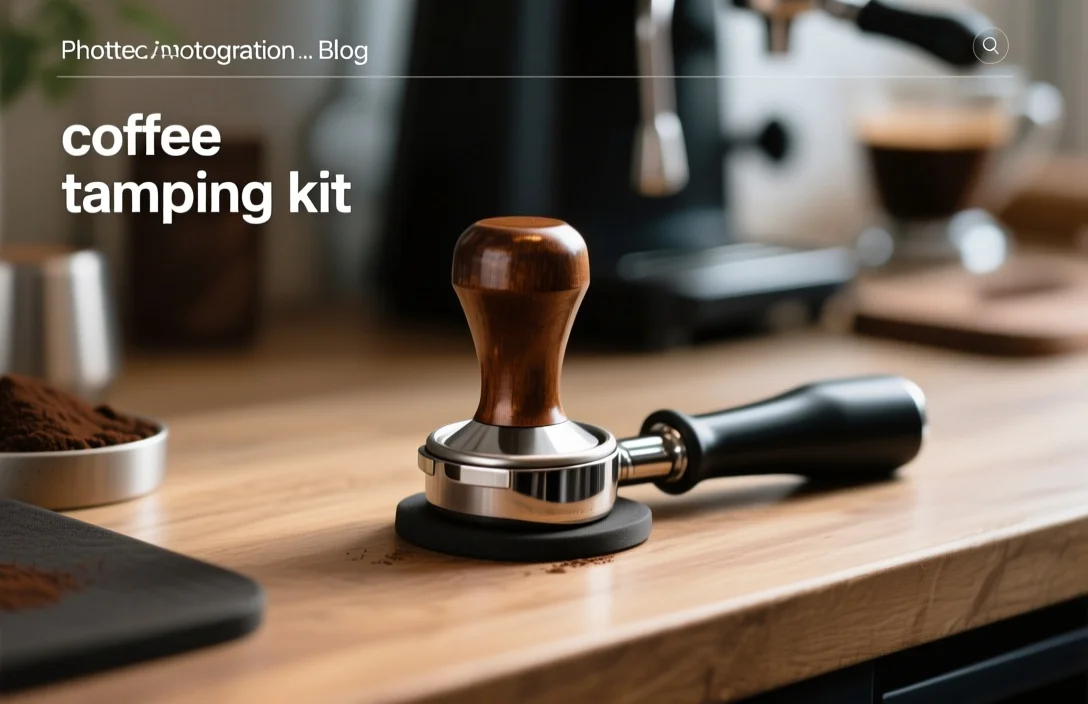
Coffee tamping kit is a compact set of tools for compressing ground espresso inside a portafilter before brewing. In practical terms, it usually includes a tamper, a distribution tool or funnel, and sometimes a level or tamping mat. The parts that matter most are the ones that help you keep the puck even and repeatable.
Why tamping matters for espresso
Tamping controls how water moves through the coffee puck. If the grounds are loose or uneven, water finds the easiest path and runs through too fast. The result is often a thin, sour, or under-extracted shot.
What matters most is pressure and surface level. Pressure changes how tightly the coffee bed packs. Surface level determines whether water meets the puck evenly. If the puck is visibly lopsided, extraction usually is too. My practical rule is simple: aim for a flat, level surface and avoid piling on force just for the sake of it.
What usually comes in a coffee tamping kit
Most kits include at least one tamper and one alignment or distribution tool. Home-user kits often add a dosing funnel and a silicone tamping mat to protect the counter and portafilter. More complete kits may include a precision level, interchangeable tamper bases, or a calibrated tamper with an adjustable stop.
Material and size matter more than flashy packaging. Stainless steel bases give you a flat, steady surface and a bit of weight. Aluminum or anodized alloys are lighter and usually cheaper, but they can dent or scratch more easily. Common sizes are 58 mm and 53 mm, though some kits use adjustable or trimmable bases for other portafilter sizes. Handle shape also affects comfort. T-shaped, mushroom, and ergonomic handles all change how naturally the tamper sits in your hand.
When I compare kits, I keep coming back to four practical questions: is the base flat, does the distribution tool actually help, does it include a mat or stand, and does the handle fit the hand you plan to use. Brand names matter less than those basics.
Kit types and who they suit
| Name | Price / Key Spec | Best For |
|---|---|---|
| Basic tamping kit | Budget-level components, one fixed tamper, dosing funnel, silicone mat | Home users who want dependable tamping without extra pieces |
| Distribution + tamper kit | Includes a distribution tool (WDT or puck screen) and a tamper with flat stainless base, often 58 mm | Users who want better repeatability and more even distribution |
| Calibrated tamper kit | Tamper with calibrated stop or adjustable pressure arm, often a heavier base | Home baristas who want a more consistent tamp from shot to shot |
| Pro barista kit | Interchangeable bases, stainless tamper, dosing funnel, knock mat, puck leveler | Small cafes or enthusiasts who need durable tools and flexible fit |
The main trade-off is straightforward. Heavier, sturdier kits cost more and are less portable. Calibrated tampers reduce pressure variation, but they also add mechanical complexity. If you value simplicity, I would usually start with a plain stainless tamper and a good distribution tool before buying anything more specialized.
How to choose the right kit
Start with portafilter size. Measure the inside lip of the portafilter with a ruler and choose a tamper base that matches it or sits only slightly smaller, preferably with a reliable distribution funnel to help center the grounds. A poor fit creates edge gaps, and those gaps work against you.
Then think about how much espresso you actually make. If you pull one or two shots a day, a simple heavier tamper and a dosing funnel are usually enough. If you pull several shots an hour, comfort matters more. In that case, look for a tamper that sits well in the hand and a mat or stand that keeps the workflow moving.
A calibrated tamper is worth considering if you want a set pressure every time. It can help beginners stay consistent and can make it easier for multiple people to use the same routine. I would not treat it as a cure-all, though. If the grind and dose are all over the place, a calibrated stop will not rescue the shot.
The distribution tool deserves attention too. A funnel helps with cleanup and repeatability. A WDT-style tool breaks up clumps and evens out density before tamping. For many home users, a kit that combines a good distribution step with a flat tamper base is the quickest path to better shots.
A useful way to narrow it down:
- Measure your portafilter diameter and check compatibility.
- Decide whether you want a calibrated tamper or a plain weight-based one.
- Choose materials you are willing to maintain, stainless for durability, lighter alloys if you care about portability.
- Pick the distribution method that fits your workflow, funnel for speed, WDT for precision.
- Confirm whether the kit includes a mat or stand if counter protection matters to you.
How to use a tamping kit well
Technique matters as much as the tools. Start with a consistent dose and a grind size that suits your espresso machine. Use a leveled dosing funnel or another distribution tool to reduce clumps and smooth the top of the puck before tamping.
Place the portafilter on a stable surface or in a tamping stand. Hold the tamper so the base stays parallel to the portafilter, then press straight down with your forearm. I would keep the motion short and vertical. Twisting and wobbling only make the surface less even.
If you are using a calibrated tamper, press until the stop engages. If you are using a standard tamper, aim for the same pressure every time. It does not need to be dramatic. It needs to be repeatable.
After tamping, check the puck. It should look even, without a pronounced dome or dip. Wipe excess grounds from the rim before locking the portafilter into the machine. Once tamping is done, do not let the puck sit around if you can avoid it.
A few short drills help build consistency:
- Make five tamped pucks in a row and aim for the same height and flatness.
- Pull three shots with the same dose and tamp method, then compare extraction time and taste.
- Change one variable at a time, first tamp technique, then grind, then dose, so you can tell what is actually affecting the shot.
Common tamping mistakes
The biggest problem usually starts before the tamper even touches the coffee. Uneven distribution causes most of the trouble. If you overfill and press too hard, you can create a crown in the center, which encourages channeling. If you underfill, water can race around the edges instead of moving evenly through the bed.
A tilted wrist or off-center press also creates problems. So does moving the tamper around or twisting it during compression. I would keep the action vertical and steady. The goal is a flat puck, not a polished finish.
Using a tamper that does not match the portafilter size leaves loose coffee around the edge. That is where channeling starts. A correctly sized base, or a funnel that centers the grounds before tamping, is a better choice.
Maintenance mistakes matter too. Coffee oil on the tamper base changes how it sits against the puck. Adjustable parts can also collect debris and stop working smoothly. Keep the tools dry and clean, and follow the maker’s instructions if anything needs lubrication.
Keeping the kit in good shape
Wipe the tamper base after each session with a clean cloth to remove oils and fines. For stainless bases, it is worth checking flatness now and then by placing the base on a known-flat surface. A little edge wear is fine. A warped or chipped base is not.
If you have a calibrated tamper, check that the stop still behaves the same way over time. If the stop begins to drift, follow the manufacturer’s instructions for recalibration or service.
Distribution tools and funnels need cleaning too. Small bits of coffee powder can get stuck in the mesh or channels and change how the grounds settle. I would disassemble multi-piece tools about once a month for a proper clean, then reassemble them with dry hands.
When to upgrade beyond the kit
A good grinder matters more than a fancier tamper. If your grind is inconsistent, tamping will only do so much. A burr grinder with small adjustment steps will usually improve extraction more than a premium tamping tool.
Machine type matters too. Espresso machines with pressure profiling or more advanced pre-infusion will show tamping differences more clearly. If your machine has limited pressure control, tamping changes may matter less than grind and dose.
A few accessories can help you see what is happening:
- a dosing scale for repeatable dose
- a microfiber brush for the portafilter
- a bottomless portafilter for visual feedback on channeling
Those tools make it easier to tell whether a tamping change is working or whether the problem is elsewhere.
Which kit fits which setup
Home users pulling single shots with different beans: a simple stainless tamper and a dosing funnel are usually enough.
Weekend espresso hobbyists: a distribution tool plus a heavier stainless tamper makes sense, especially if you are dialing in shots often.
Small offices or low-volume cafés: a pro-style kit with interchangeable bases and a durable mat is a better fit, since different people may use the same setup.
High-volume commercial setups: speed and simplicity matter most. A tamper stand, a durable funnel system, and a clear workflow for staff training are usually more useful than a decorative or boutique tool.
FAQ
How hard should I tamp?
Aim for a pressure you can repeat shot after shot. If you use a calibrated tamper, use the stop and keep the rest of your routine stable while you taste and time the shots.
Can I use any tamper base diameter?
No. The base should match, or closely fit, your portafilter. A mismatch leaves loose coffee at the edge and makes repeatability worse. Measure first.
Do I need a distribution tool?
If you want more even pucks and less corrective tamping, yes, it helps. Beginners usually get more value from a good distribution tool than from an expensive tamper.
How do I clean and store the kit?
Wipe the tamper base dry after each use. Clean distribution tools more thoroughly once a month, and store all metallic parts in a dry place.
Bottom line
A coffee tamping kit is worth buying if it matches your portafilter size and your workflow. I would start with fit, then look at distribution, and only then think about calibrated pressure. For most people, a flat stainless base and a decent distribution aid do more good than a complicated tamping system.
If you are choosing one now, measure your portafilter, pick a kit that fits that size, and run a few tamp-repeatability drills with the same grind and dose. That will tell you faster than a product page whether you need a better tamper, a better grinder, or both.

- Espresso Tastes Watery? 10 Common Causes and How to Fix It - October 23, 2026
- 10 Common Coffee Equipment Cleaning Mistakes and How to Avoid Them - October 23, 2026
- 17 Common Coffee Grinder Problems and How to Fix Them - October 23, 2026