
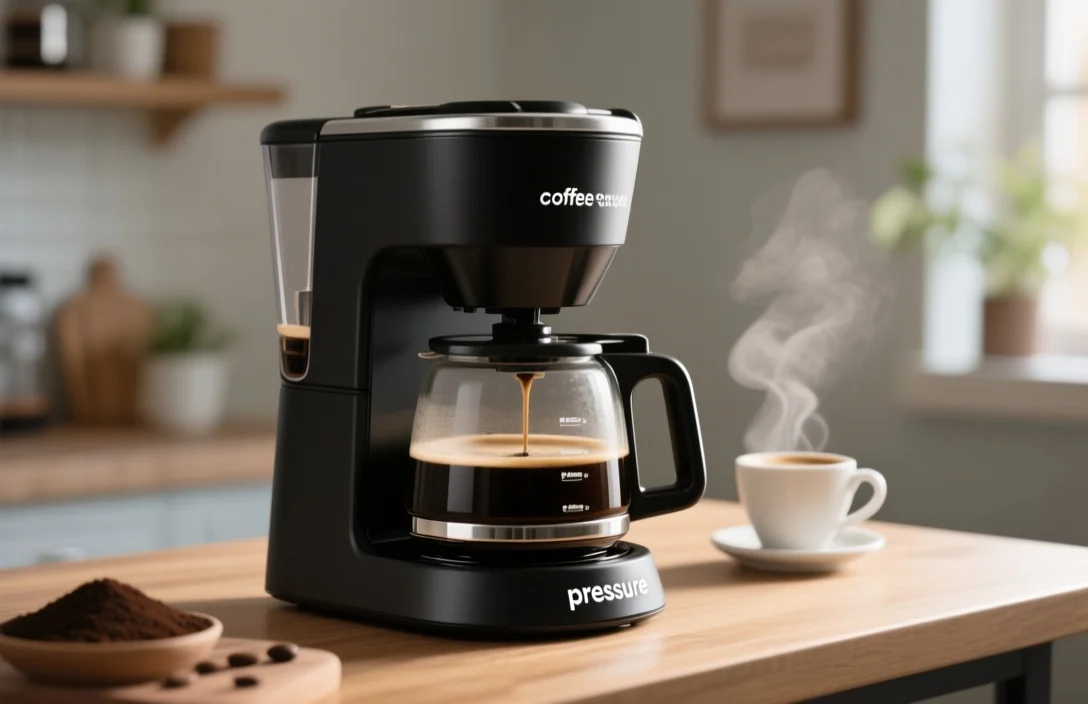
Coffee maker pressure matters because it controls how water moves through the grounds, and that changes extraction, crema, and flavor. But I would keep the idea in proportion. Pressure is one part of the brew system, not the whole story. The machine type matters too. Pump-driven espresso machines, steam-driven stovetop brewers, and gravity drip brewers all work differently, so you should match the pressure behavior to the drink you want.
What coffee maker pressure actually means
Coffee maker pressure is the force pushing hot water through coffee grounds during brewing. That force affects flow rate, contact time, and how well the water pulls oils and dissolved solids from the coffee.
In brewing discussions, pressure is usually measured relative to atmospheric pressure and often described in bar. One detail worth watching, though, is that manufacturers sometimes list pump capability rather than the actual brew pressure at the puck or basket. Those are not always the same thing. If the exact number matters to you, check the machine documentation, not just the product page.
Why pressure changes the cup
Pressure changes how water moves through packed coffee. Higher pressure can push water through fine grounds quickly, which often gives a concentrated drink with more suspended oils and, in espresso, crema. Lower pressure and slower flow usually lead to a different balance of acids, sugars, and bitterness.
I keep coming back to grind resistance here, because it does most of the work with pressure. Coarser grounds let water pass more easily, which can reduce extraction. Finer grounds create more resistance, slow the flow, and increase extraction of compounds that add body and intensity. Dose, tamp, and temperature all matter too, but pressure and grind are the first two levers most people need to understand.
How different coffee makers create pressure
There are three common approaches: mechanical pumping, steam-driven expansion, and gravity flow.
Pump-driven machines use an electric pump to move water through a sealed group. Steam-driven devices heat a sealed chamber until steam forces water through the grounds. Drip and pour-over systems depend on gravity, so they run at near-atmospheric pressure and move water more slowly through the bed.
The pump type matters as well. Vibratory pumps use rapid piston motion and are common in home machines. They are compact and usually cheaper, but they tend to be louder. Rotary pumps create steadier flow and are common in commercial equipment. Steam-driven stovetop brewers rely on heat and pressure from steam, which makes them useful for a very specific style of concentrated coffee. Gravity systems do not actively pressurize the water; the flow depends on head height and how much the grounds resist it.
Service and noise differ by design. Vibratory pumps are easy to fit into smaller machines, but they are often louder and can wear out sooner than rotary pumps. Steam-driven units need careful heating and periodic safety checks. My practical rule is simple: choose the pressure method that fits the brew style first, then worry about the rest.
Pressure behavior by common device type
| Name | Pressure / Key Spec | Best For |
|---|---|---|
| Pump espresso machine (domestic) | High-pressure pump capability; brew pressure depends on flow and resistance | Compact espresso with control over dose and grind |
| Commercial rotary-pump espresso | Steady, serviceable pump output; consistent pressure under heavy use | High-volume cafes and precise extraction |
| Steam-driven stovetop brewer (moka-style) | Steam/pressure-driven flow; pressure varies with heat | Intense, concentrated stovetop coffee |
| Manual lever espresso | User-generated pressure swings; can enable pressure profiling | Skilled users who want hands-on control |
| Drip brewer / pour-over | Near-atmospheric; gravity-fed flow through grounds | Filter coffee with clarity and long extraction |
| French press | No active pressure during infusion; separate plunge creates mild compression | Full-bodied immersion brews |
How pressure works with grind size, dose, and tamping
Pressure never works alone. Grind size sets how easy it is for water to pass through the coffee bed. Finer grinds increase resistance and need more pressure to keep flow moving. Coarser grinds reduce resistance and let water move faster.
Dose changes the bed height and density, which also affects the pressure needed to push water through. Tamping matters because it changes how even the puck is. A flat, level tamp helps water move more evenly. An uneven or overly hard tamp can cause channeling, even if the machine pressure is technically correct.
Temperature plays a role too. Hotter water is less viscous and can flow differently under the same applied pressure. That changes extraction yield. In practice, you are usually adjusting for shot time and yield, not chasing a single pressure number in isolation.
How to measure pressure on your machine
If you want to know what your machine is doing, measuring pressure is useful. It helps with diagnosis, tuning, and figuring out whether the pump is healthy.
The most direct methods are a manometer at the group head or a portafilter pressure gauge. A manometer setup may require parts and a service manual. Portable gauges that screw into the group or replace a blind basket are simpler if you only want occasional checks.
You can also learn a lot from flow behavior. Time a known shot volume and watch for signs like pulsing, sudden channeling, or very fast flow. Those signs can point to pressure-flow mismatches. Pressure profiling tools go further and show how pressure changes over the extraction, which is useful if you are trying to diagnose pump or boiler issues.
Maintenance issues can reveal pressure problems too. If shots are short and thin even when your grind and dose seem right, a leak, worn pump, or blocked group seal may be part of the problem. Weak steam or slow hot water can point to scale buildup restricting flow into the pump or boiler. If you install measurement tools, follow the manufacturer’s safety instructions and do not modify boiler safety components.
Troubleshooting pressure-related problems
I would start with the simple checks. Make sure the water supply is working, run a hot-water flush to clear the group or lines, and inspect the group gasket for damage or poor seating.
Scale is a common culprit. Mineral deposits can reduce flow and distort how pressure feels at the machine. Descaling according to the manufacturer’s instructions often helps, though it will not solve every issue.
If the machine produces inconsistent pressure pulses, listen for noise and vibration. A noisy, erratic pump can mean air in the system, a failing vibratory pump, or a worn mount. Valves, seals, and pressure-relief parts can also wear out and leak pressure. Once internal safety components or high-pressure boilers are involved, professional service is usually the safer move.
When you describe the problem to a technician, be specific. Say whether it affects single shots, hot water, steaming, or everything. That detail helps narrow down whether the issue is with the pump, valves, boiler, or heating element.
Practical adjustments that improve extraction
Start with grind, dose, and tamping before touching the machine itself. If shots run too fast, move the grind finer in small steps. If flow is too slow or choked, go coarser.
Check the dose so it matches the basket size. A bad match creates uneven extraction and can make pressure behavior look worse than it is. That is one of the easier mistakes to miss.
Maintenance matters too. Backflush machines with the recommended detergent where the machine supports it. Replace group seals on the timeline the manufacturer suggests. Descale based on your water hardness. Clean the shower screen, dispersion plate, and basket regularly so flow stays even. If a part is worn, replace it before it fails.
If you want more direct control, hardware upgrades can help. A pressure gauge, a machine with a rotary pump, or a model with pressure profiling gives you more visibility and control. I would weigh that against cost, serviceability, and whether the extra control will actually change the coffee you drink day to day.
When pressure is not the main factor
Some brewing methods rely on immersion or gravity more than pressure. French press and cold brew depend mostly on time, temperature, and particle size. Pressure does not matter much until you plunge the press.
Pour-over and drip brewing are also more about water distribution, flow rate, and channeling control than raw pressure. In those methods, coffee quality, roast profile, and grind uniformity usually matter more than the machine’s ability to generate force.
That is why I would not choose a machine by pressure alone unless you are specifically trying to make espresso or a similar concentrated drink. For filter coffee, a good grinder and consistent brewing method usually do more for the cup than a pressure-heavy machine.
Common myths to ignore
A bigger pump rating does not automatically mean better espresso. Pump capability is only one part of the equation. A strong pump can still make poor coffee if the grind, tamp, or maintenance are off.
Harder tamping does not simply “add pressure” in a helpful way. Too much tamp force can make the puck uneven and lead to channeling. A consistent, level tamp is the better target.
Crema is not proof of quality by itself. It tells you something about emulsified gases and oils, but it does not confirm balanced extraction or good beans. Roast level, freshness, and brew method affect crema more than headline pressure ratings do.
I would also skip shortcuts like grinding extremely fine just to force more crema or overtightening parts to try to raise pressure. Those fixes usually hide the real issue and can strain the machine.
Choosing a machine for the pressure you need
Start with the kind of control you want. If you want simple, repeatable drinks with little setup, capsule or semi-automatic machines may be enough because they manage pressure for you. If you care about tuning extraction, look for a machine with a gauge, accessible settings, and serviceable parts.
Match the machine class to the job. High-volume use calls for durable rotary pumps and sturdy boilers. Home machines often do fine with vibratory pumps if you accept the noise and occasional maintenance. Lever machines give skilled users direct pressure control, but they ask for more practice.
I would also check the manual and not rely on broad product claims. Published pump capability may not match the actual brew pressure at the puck because of bypass valves, flow restrictors, and group design. Parts availability and service support matter if you plan to keep the machine for years.
FAQ
What pressure do espresso machines need?
Pressure needs vary by machine design and intended result. Typical home and cafe machines use pumps capable of producing enough force for concentrated extraction, but the exact specification depends on the model. Check the manufacturer’s documentation for the published pump or brew pressure.
Does higher pressure always make stronger coffee?
No. Higher pressure can increase concentration when everything else stays the same, but strength also depends on dose, grind, extraction yield, and roast. Too much resistance can push coffee into bitter, over-extracted territory.
How can I tell if my machine’s pump is failing?
Watch for irregular noise, unstable flow, and weak steam or hot-water delivery. If cleaning, descaling, and gasket checks do not help, pump wear or internal leaks become more likely.
Should I buy a machine with a pressure gauge?
If you want to understand what is happening during extraction, a gauge is useful. It helps with diagnosis and tuning. Some machines also let you test pressure with removable accessories, which is handy if you do not want to modify the machine.
Does tamping harder increase brew pressure?
Not in the simple way people often assume. Tamping changes puck resistance and uniformity, not the pump’s force itself. A level, consistent tamp is better than trying to solve extraction by pressing harder.
Can I improve pressure by descaling?
Yes, if scale buildup is restricting flow into the pump or boiler. Follow the manufacturer’s descaling instructions, since safe procedures depend on the machine.
Bottom line
Pressure shapes extraction, but it does not work by itself. Grind size, dose, tamping, temperature, and maintenance all matter. If you want the exact number for your machine, start with the manual or manufacturer specs, then use a simple pressure gauge if you need to diagnose or fine-tune performance. In most cases, I would begin with the grinder and dose before looking for a pressure fix.

- Espresso Tastes Watery? 10 Common Causes and How to Fix It - October 23, 2026
- 10 Common Coffee Equipment Cleaning Mistakes and How to Avoid Them - October 23, 2026
- 17 Common Coffee Grinder Problems and How to Fix Them - October 23, 2026