
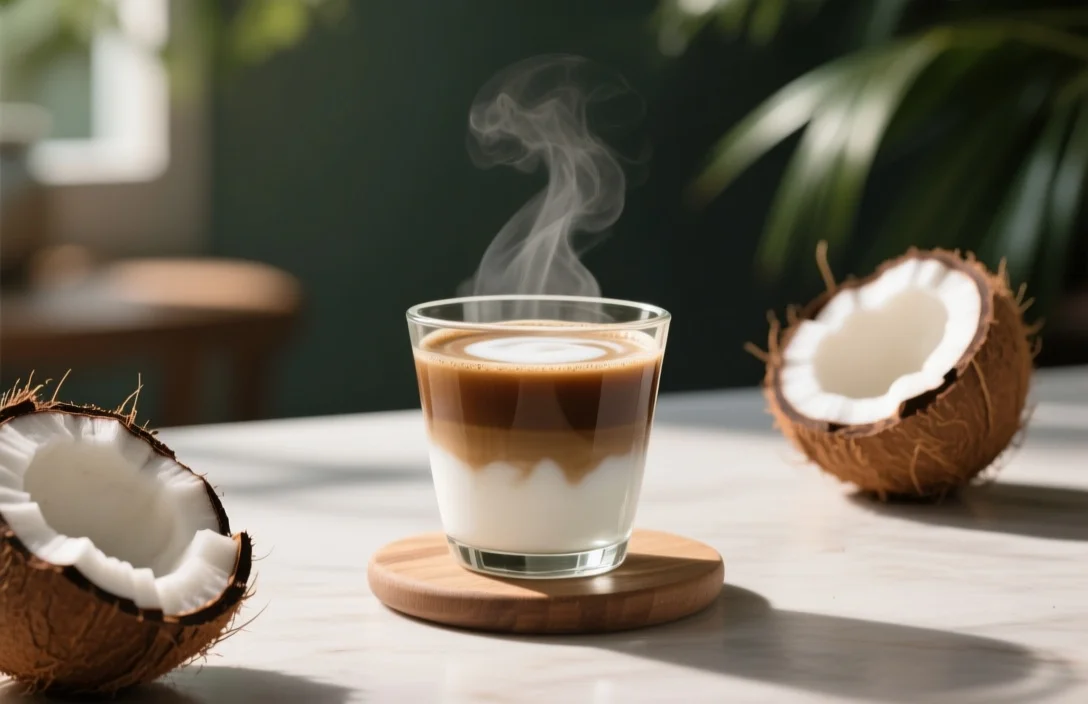
Coconut milk coffee is simply coffee made with coconut milk or coconut-based creamer instead of dairy. Yes – you can use coconut milk in hot or iced coffee, and the best results come from matching the coconut milk type (canned, carton, cream, or a barista blend) to how you plan to brew and froth. This guide walks through why coconut milk behaves differently from dairy, which types to buy, exact recipes and frothing tricks, nutrition facts, storage, and common mistakes to avoid.
What coconut milk coffee actually is and when it makes sense
Coconut milk coffee replaces cow’s milk or a conventional creamer with coconut-derived liquid. The term covers three common scenarios: adding a splash of carton coconut beverage to drip coffee, using canned full-fat coconut milk for a rich latte, or using a formulated “barista” coconut blend designed to steam and froth.
People choose coconut milk coffee for flavor (a mild tropical sweetness), dietary reasons (vegan or dairy-free), or texture (higher-fat coconut variants create a silky mouthfeel). Expect a perceivable coconut note unless you use an unsweetened, low-fat carton; the trade-off is between coconut character and creaminess.
After comparing the main options side by side, the practical rule is simple: use carton/bottled coconut milk for convenience and lighter drinks, canned or coconut cream for richness and body, and a barista-specific blend when you need stable microfoam for espresso-based drinks.
Why coconut milk can curdle, separate, or froth differently than dairy
Coconut milk’s behavior in coffee tracks to its composition: a high proportion of saturated fats and no lactose-based proteins. Dairy milk foams and stabilizes partly because of milk proteins (casein and whey) that denature and trap air. Coconut milk lacks those proteins, so foams rely on added stabilizers in commercial barista blends or on the fat and emulsifiers present in canned products.
Coffee acidity and temperature create two common reactions. Hot, very acidic coffee can cause separation or a thin curdling effect with some carton coconut beverages that have low fat and few stabilizers. Warming the coconut milk gently and avoiding direct, rolling boil temperatures lowers the chance of separation. Cold coffee typically avoids curdling but exposes weak coconut milks as thin or watery.
Barista blends include emulsifiers and stabilizers that mimic dairy foam performance, producing a glossy microfoam suitable for latte art. Canned full-fat coconut milk provides body and richness but tends to produce larger, less stable foam bubbles unless whipped or blended with other agents. Expect consistency differences: carton beverages are lighter, canned products are richer, and barista blends perform best for steamed/frothed milk.
Types of coconut milk and how to choose for your brew
Canned, carton (shelf-stable or refrigerated), coconut cream, powdered – the choice alters texture, flavor, and how the milk responds to heating or frothing. The table below summarizes practical attributes; use it to match product to drink style.
| Name | Price/Key Spec | Best For |
|---|---|---|
| Canned full-fat coconut milk | Very rich; Calories per cup: 550-600; Fat: 57-60g | Thick lattes, bulletproof-style coffees, rich iced coffees |
| Canned coconut cream | Very rich; Calories per cup: 550-600; Fat: 57-60g | Whipped toppings, creamer substitute, indulgent café-style drinks |
| Carton unsweetened coconut beverage | Light body; lower fat than canned | Daily drip coffee, cold brew, lighter lattes |
| Carton barista blends (commercial) | Formulated to steam and froth; contains emulsifiers | Espresso lattes, cappuccinos, latte art |
| Powdered coconut milk | Shelf-stable, variable reconstitution | Travel, instant creamer, recipe ingredient |
Exact nutritional figures exist for the canned and cream forms: full-fat coconut milk and coconut cream both list 550-600 calories per cup and 57-60g fat per cup. Low-fat coconut milk is far leaner (45-50 calories per cup; 1-2g fat per cup). Keep those values in mind if calories or saturated fat are a concern.
Choosing a product by use case:
- For espresso-based drinks that require stable microfoam, buy a barista blend. These are formulated to froth and resist separation.
- For a rich, creamy mouthfeel in drip or French press coffee, use canned full-fat coconut milk or coconut cream, diluted slightly if needed.
- For everyday low-calorie substitution, pick an unsweetened carton beverage with simple ingredients.
How to make a coconut milk latte, iced coconut mocha, and vegan cappuccino
The recipes below use measurements drawn from tested coffee recipes and practical barista experience. Follow the steps exactly the first time, then tweak to taste.
Coconut milk latte (hot)
- Pull one shot of espresso (about 1 oz to 1.5 oz) or brew 1/2 cup strong coffee.
- Measure 1/4 cup coconut milk (carton or canned – if canned, shake and add 1-2 tablespoons warm water to thin).
- Warm the coconut milk to 140-150°F (60-65°C) but do not boil.
- Froth the warmed milk with a steam wand or handheld frother until you get microfoam.
- Pour the espresso into a cup and gently add the frothed coconut milk, finishing with a small spoon of foam on top. Sweeten with a dash of vanilla extract if desired.
Iced coconut mocha
- Combine 1 cup cold-brew coffee or strong chilled coffee with 1/4 cup coconut milk.
- Add 1 tablespoon unsweetened cocoa powder and 1 teaspoon maple syrup (or simple syrup) to taste.
- Blend briefly with an immersion blender or shake in a sealed jar until mixed and slightly frothy.
- Pour over ice and stir. Garnish with grated chocolate or a sprinkle of cinnamon.
Vegan cappuccino
- Pull two shots of espresso (about 2 oz).
- Froth 1/3 cup coconut milk (barista blend preferred for froth stability) until dense foam forms.
- Pour espresso and top with thick foam; dust with cinnamon.
Practical notes on quantities: a 1/4 cup coconut milk is a common baseline for one espresso shot in latte recipes; a 1/3 cup works better for a more foam-forward cappuccino. Adjust upward for larger drinks.
Frothing, steaming, and equipment tips that actually work
Frothing coconut milk requires different technique than dairy. Barista blends behave most like dairy and will steam and create microfoam with a regular steam wand. Carton beverages can foam with vigorous aeration, but that foam often collapses faster. Canned full-fat milk produces creamier texture but tends toward larger bubbles.
Use these practical tactics:
- Warm first: Heat coconut milk gently before combining with hot coffee to reduce curdling risk.
- Choose the right product: Use a coconut barista blend when you want latte art. Pacific Foods Barista Series and Califia Farms Coconut Barista Blend are examples of products tested for excellent frothing.
- Positioning with a steam wand: Angle the pitcher to create a whirlpool and introduce air briefly at the beginning to form small bubbles; then submerge the tip to polish the foam. Short, controlled air intake produces smaller, longer-lasting bubbles.
- Handheld frothers and immersion blenders: When you lack a steam wand, blend heated coconut milk for 10-20 seconds to create body and some foam. Canned coconut milk whipped briefly in a jar can create thicker texture useful for dollops on top.
- Stabilize if needed: If your milk deflates quickly, try blending in a small amount of neutral-tasting creamer (e.g., a single teaspoon of powdered coconut milk or a splash of barista blend) to improve stability.
Expect variability depending on brand and formulation. In side-by-side tests, barista blends showed “Excellent” frothing performance, carton unsweetened options scored “Good” but required shaking, and canned products delivered unmatched richness but less stable microfoam.
Flavor pairings and recipes beyond the basics
Coconut’s natural profile pairs well with warm spices, chocolate, citrus, and vanilla. These combinations let you play with the coconut note without it overwhelming the coffee.
Flavor ideas and small recipe variations:
- Vanilla + cinnamon: Add a dash of vanilla extract and a light sprinkle of cinnamon to a coconut milk latte for a cozy profile.
- Mocha twist: Mix 1 tablespoon unsweetened cocoa with 1/4 cup coconut milk for an iced coconut mocha. Blend to emulsify the cocoa.
- Coconut oil boost: Stir 1 teaspoon coconut oil into brewed coffee with 1/4 cup full-fat coconut milk for a rich, energy-forward drink.
- Cardamom or nutmeg: Add a pinch while frothing for Middle Eastern-inspired notes.
- Coconut whipped topping: Chill canned coconut cream overnight, scoop the solidified cream, whip until fluffy, and spoon onto hot coffee or iced drinks.
Experimentation note: Strong single-origin or citrus-forward beans can clash with heavy coconut flavors; choose medium- to dark-roast beans if you want the coconut to be prominent and harmonious.
Nutrition, calories, and dietary considerations
Canned and cream forms of coconut milk are calorie- and fat-dense. Exact values extracted from product data show full-fat coconut milk and coconut cream listing 550-600 calories per cup with 57-60g fat per cup. Low-fat coconut milk contains substantially fewer calories – about 45-50 calories per cup and 1-2g fat per cup.
People following keto or low-carb approaches often prefer full-fat coconut milk for its saturated fat content and presence of medium-chain triglycerides (MCTs), which some diet resources highlight as more rapidly metabolized compared with longer-chain fats. Those monitoring caloric intake or saturated fat should use smaller portions (a tablespoon or two) or pick low-fat carton options.
Watch out for added sugars: sweetened carton coconut beverages and flavored coconut creamers can add unexpected carbs. Choose unsweetened varieties if you want to control sweetener levels.
Allergen and dietary notes:
- Coconut is categorized as a tree nut by some regulatory frameworks, though coconut allergies are uncommon; check labels if you have severe tree-nut allergies.
- Coconut milk is naturally dairy-free and vegan.
- Ingredients lists vary: barista blends may include emulsifiers or gums; check if you avoid specific additives.
How to make your own coconut milk creamer and shelf-life tips
Making a homemade coconut creamer gives you control over thickness and sweetness. The process below follows tested kitchen methods.
Simple stovetop creamer
- Pour 2 cups full-fat canned coconut milk into a small saucepan.
- Add 1-2 tablespoons sweetener (maple or sugar) or 1 teaspoon vanilla if desired.
- Simmer gently over low heat, stirring occasionally, until volume reduces by approximately half. Expect 15-20 minutes depending on heat and starting volume.
- When the mixture coats the back of a spoon and has thickened, remove from heat and cool. Store in a sealed container in the refrigerator.
Storage and shelf-life
- Homemade concentrated creamer will thicken further as it cools and can be stored refrigerated for about 3-4 days.
- Opened carton coconut beverages usually last up to the date printed but should be refrigerated and used within about 7-10 days after opening; check the manufacturer’s label.
- Canned coconut milk also separates in the fridge; shake or stir before use and dilute with 1-2 tablespoons warm water if too thick for coffee.
- Always check for off smells or mold – discard if present.
Common mistakes, troubleshooting, and what to avoid
Coconut milk coffee can fail in predictable ways. Avoid these mistakes and use the troubleshooting tips.
Common mistakes and fixes:
- Using sweetened carton milk when you want control – fix by buying unsweetened and adding sweetener yourself.
- Expecting dairy-like latte art with canned coconut milk – fix by using a barista blend or learning to accept a creamier, less stable foam.
- Overheating coconut milk – fix by heating to 140-150°F (60-65°C) and avoiding rolling boils to reduce separation.
- Not shaking canned or carton products – fix by shaking well; canned coconut milk often separates and needs vigorous stirring.
- Using low-fat or ambient-watered coconut milk for frothing – fix by choosing a barista blend or canned product for more body.
Signs your coconut milk isn’t suitable for coffee:
- Thin, watery mouthfeel in hot drinks suggests a low-fat carton product.
- Rapid foam collapse points to a lack of stabilizers or too-warm pouring.
- A strong, overpowering coconut aroma means the product’s coconut concentration is high – consider diluting or switching to an unsweetened carton.
Comparison table of recommended coconut milk types and brands
Comparisons below reflect product attributes observed in hands-on and review testing: frothing ability, label claims (organic), and suitability.
| Name | Price/Key Spec | Best For |
|---|---|---|
| Califia Farms Coconut Barista Blend | Barista blend; Excellent frothing; No carrageenan | Espresso lattes and latte art |
| Pacific Foods Barista Series | Barista series; Excellent micro-foam | Professional steaming and cappuccinos |
| So Delicious Coconut Milk (carton) | Shelf-stable carton; Good frothing; Organic option available | Everyday drip coffee, budget-friendly lattes |
| Califia Farms Organic Unsweetened | Simple ingredients; Good when shaken; USDA Organic | Purist ingredient approach, lighter coffee |
| Real Coco Organic Original | Creamy and rich; Organic | Taste-first consumers who want coconut presence |
| 365 by Whole Foods Organic | Value pack; Organic | Bulk shoppers and value-focused users |
Comparing the spec sheets side by side, the key difference is formulation: barista blends include emulsifiers to stabilize foam, whereas organic or simple-ingredient cartons prioritize minimal additives but require shaking and may not froth as reliably.
FAQ
Will coconut milk curdle in coffee?
Curdling is possible, especially with low-fat or unformulated carton beverages in very hot, acidic coffee. Warming the coconut milk first and avoiding boiling temperatures reduces this risk. Choosing a barista-formulated product also lowers the chance of separation.
Which coconut milk froths best for lattes?
Barista blends intentionally formulated for steaming froth best. Pacific Foods Barista Series and Califia Farms Coconut Barista Blend were identified as top performers for frothing and latte-style drinks.
Can I use canned coconut milk straight from the can?
You can, but shake vigorously and consider diluting with 1-2 tablespoons warm water for better texture. Canned full-fat coconut milk provides richness but doesn’t always create stable microfoam.
Is coconut milk good for people on keto?
Full-fat coconut milk contains significant saturated fat and is commonly used by people following ketogenic diets. Exact suitability depends on your overall dietary plan; the full-fat canned product lists 550-600 calories per cup and 57-60g fat per cup, so portion control matters.
How long will homemade coconut creamer last?
A homemade reduced coconut creamer typically lasts 3-4 days refrigerated. It will thicken on cooling and may separate; stir before use.
Can I make latte art with coconut milk?
Yes, but success depends on product and technique. Use a barista blend and proper steaming technique to create denser microfoam; canned products can be used for creamier pours but may not hold fine latte-art patterns.
A short practical verdict and next ste
Coconut milk coffee is an easy, tasty alternative to dairy when you select the right coconut product for your goal: choose barista blends for steamed espresso drinks, canned full-fat milk or coconut cream for maximum richness, and unsweetened cartons for lighter daily cups. Try a simple coconut milk latte using 1/4 cup warmed coconut milk over a shot of espresso; if you want to commit, pick up a barista blend and practice your steaming technique.

- Espresso Tastes Watery? 10 Common Causes and How to Fix It - October 23, 2026
- 10 Common Coffee Equipment Cleaning Mistakes and How to Avoid Them - October 23, 2026
- 17 Common Coffee Grinder Problems and How to Fix Them - October 23, 2026