
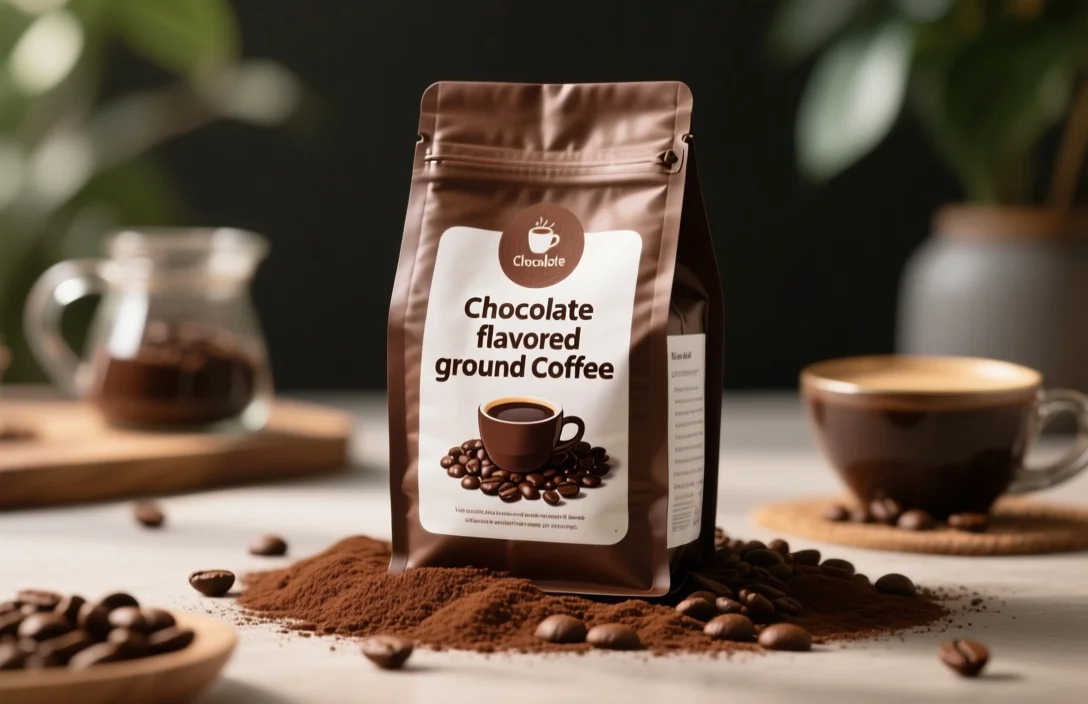
Chocolate flavored ground coffee is ground coffee that has been blended or infused with cocoa, chocolate compounds, or chocolate-derived flavoring so the brewed cup carries a clear chocolate note alongside coffee aromas. Buy flavored ground coffee as a pre-blended product, choose beans with natural chocolate tasting notes, or add cocoa powder or chocolate syrup at brew time – each approach has different flavor authenticity and shelf-life trade-offs.
What chocolate flavored ground coffee actually is
Chocolate flavored ground coffee describes more than one product category. Some packages contain coffee beans roasted with cocoa nibs or mixed with powdered cocoa during grinding; other products are plain coffee grounds treated with natural or artificial chocolate flavor compounds after roasting. Roasters sometimes label beans as “chocolatey” when the coffee’s intrinsic tasting profile resembles chocolate without added flavoring.
Flavoring technique matters because it changes how the chocolate note behaves in a cup. Coffees with natural chocolate tasting notes come from origin and roast chemistry, so the chocolate impression is usually subtler and integrates with acidity and body. Infused or sprayed flavors can produce a stronger, more immediate chocolate scent but may fade faster during storage and can leave oils or residues on grinders and equipment.
How the chocolate flavor is created
Chocolate flavor in coffee comes from two distinct routes: origin-derived tasting notes and added chocolate compounds. Origin-derived notes arise during bean fermentation, drying, and Maillard reactions in roasting; certain cacao-like aromatics form naturally and are described as “cocoa,” “dark chocolate,” or “milk chocolate” on tasting notes. These descriptors point to the coffee’s inherent flavor profile rather than an additive.
Added chocolate flavor is either physical or chemical. Physical blends mix coffee with cocoa nibs or powdered cocoa at some point during processing. Chemical or spray-infused flavoring uses natural extracts, proprietary aroma concentrates, or artificial flavorants applied after roasting to coat the beans or ground coffee. Each method changes shelf stability: cocoa nib blends contribute particulate matter and fat, while sprayed flavors rely on carrier oils and can oxidize or migrate, affecting freshness and machine cleanliness.
Types and label variants you’ll see on shelves
Roasters and grocery brands use several label terms that sound similar but mean different things. “Chocolatey” usually implies tasting notes from the bean and roast. “Mocha” on a bag can mean a flavor profile (coffee with chocolate-like acidity and body) or a marketed, chocolate-infused product intended for making mocha-style drinks. “Chocolate flavored” or “chocolate infused” signals added flavoring or mix-ins.
Labels that state “contains cocoa” or “cocoa nibs” indicate a physical blend; that tells you there will be cocoa solids or pieces present. Labels noting “natural flavor” or “artificial flavor” refer to flavorants added during processing and do not specify source. Packages that list ingredients beyond “100% coffee” are the safest bet if you want an explicit chocolate addition or want to avoid one.
Roast level influences chocolate perception. Medium-dark roasts often reduce acidity and enhance sweet, roasty notes that we label chocolate. Single-origin coffees from regions known for nutty or cocoa-like profiles are the usual claims on tasting cards; look for origin and cupping descriptors to prefer natural chocolate-like beans over flavored ones.
How to choose – criteria and trade-offs for everyday buyers
Ranked by how important I find each criterion for typical shoppers: (1) flavor authenticity, (2) convenience and machine compatibility, (3) freshness and shelf life, (4) price/value. Use those priorities to pick between natural chocolate-note beans and flavored ground coffee.
Natural chocolate-note beans
- Pros: integrated flavor that changes with roast; no added oils that can gum up grinders; often more complex.
- Cons: chocolate impression is subtler; less predictable cup-to-cup.
Flavored ground coffee (added flavor)
- Pros: immediate, recognizably chocolate-forward cup; convenient for home mocha-style drinks.
- Cons: flavor additives can wear off with storage; some flavoring oils may affect grinders and espresso group heads.
Special formats to consider include single-origin medium-darks, blends that list “cocoa nibs,” and pre-ground flavored packs labeled for drip or French press. If you use a blade grinder, avoid flavored beans because the extra oils can cling to blades and transfer flavors between grinds.
Comparison table – Name, Price/Key Spec, Best For
| Name | Price/Key Spec | Best For |
|---|---|---|
| Natural chocolate-note beans (single-origin or blend) | Price varies by roaster; labeled with tasting notes like “cocoa” or “dark chocolate” | Drinkers who prefer nuanced, stable oils and longer freshness |
| Cocoa-nib blended ground coffee | Price varies; contains physical cocoa nibs or powder | Home cooks making mocha drinks or cold-brew chocolate blends |
| Spray-flavored ground coffee | Price varies; lists “natural flavor” or “artificial flavor” | Quick chocolate-forward brew with minimal prep |
| Instant coffee with chocolate added | Price varies; often shelf-stable and pre-sweetened | Convenience-first users, travel, or office use |
After comparing these options side by side, choose the natural chocolate-note beans for balanced cups and the flavored ground coffee for an obvious chocolate punch. Verify package ingredients if you have allergen concerns or use specialty equipment.
Brewing techniques that highlight chocolate notes
Good brewing clarifies the chocolate character instead of masking it. Dialing grind size, water temperature, and contact time determines whether chocolate becomes a background harmonic or the dominant note.
Medium coarseness for drip and coarser for French press tends to reveal sweetness and body, reinforcing cocoa impressions. Lower-temperature pours (just off boil, about 90 to 96 degrees Celsius in specialty practice) preserve delicate aromatics that can translate to chocolate perception. Espresso extraction concentrates caramelized sugars and roast-derived chocolate notes; a slightly darker roast with balanced extraction accentuates chocolate without bitterness.
Brew steps to test chocolate emphasis (start here and adjust)
- Measure: Weigh coffee and water to maintain consistent ratios; pick a ratio you prefer and keep it constant while testing.
- Grind: Grind immediately before brewing to avoid flavor loss; use a burr grinder and aim one step coarser than your usual espresso setting for drip, and two to three steps coarser for French press.
- Heat: Heat water to just below boiling and allow 10-20 seconds to settle if you’re using electric kettles; avoid temperatures that scorch.
- Bloom/Pulse: For pour-over, bloom with a small water dose, then pour in controlled pulses to balance body and acidity.
- Taste and adjust: If bitterness dominates, try a coarser grind or slightly cooler water; if the chocolate note is missing, move to a slightly finer grind or darker roast.
Cold brew is an especially effective way to amplify chocolate-like sweetness because long extraction at low temperatures pulls sweeter, less acidic compounds. Experiment with a 12-18 hour steep to find your preferred chocolate intensity.
How packaging and storage affect chocolate-flavored coffee
Chocolate-flavored coffee, whether naturally chocolatey or flavored with additives, loses aroma faster than unflavored coffee if exposed to oxygen, heat, or light. Whole beans retain flavor longer than pre-ground coffee. When choosing a packaged product, prefer one-way valve bags and small package sizes unless you consume coffee rapidly.
Keep bags sealed and stored in a cool, dark cabinet away from heat sources. Freezing whole-bean coffee can preserve aroma when you buy in bulk but introduces condensation risk on repeated thaw/freeze cycles; store in an airtight container if you freeze. Ground flavored coffee usually loses the most aromatic compounds within a few weeks; if the label indicates added flavor and you want peak intensity, buy smaller sizes and use them quickly.
Common packaging terms such as “fresh roast date,” “use by,” or “best by” convey different things. Roast date offers the best freshness reference for whole-roast oils and volatile aromatics; a “best by” date is more common on flavored ground coffee and reflects overall shelf stability including added ingredients. Check labels for roast or pack dates to make educated freshness choices.
Common mistakes, pitfalls, and what to avoid
Running flavored beans through an espresso machine without routine cleaning can transfer chocolate oils into other drinks and accelerate residue buildup. Use a dedicated grinder or increase cleaning cadence when using oils or spray-flavored beans. Using detergent or metal brushes in delicate grinders risks damage; instead, use dry cleaning methods recommended by the grinder’s manufacturer.
Buying the largest, cheapest flavored ground coffee without roast-date or ingredient transparency often produces lackluster chocolate aroma. If you prefer natural chocolate notes, rely on tasting notes and roast levels rather than marketing terms. Over-roasting to force a chocolate note can introduce burnt bitterness that masks nuance and creates an artificial chocolate impression.
Allergen labeling sometimes hides in the ingredient list: “contains natural flavor” does not specify if cocoa-derived compounds or dairy-based chocolate notes are present. For people with cocoa, milk, or soy allergies, contact the manufacturer or choose products that explicitly list all ingredients. Keep in mind that flavored coffees with added sweeteners or milk powders will alter extraction and can cause increased foaming or clogging in espresso machines.
Flavor pairing and recipes that use chocolate-flavored coffee
Chocolate-flavored ground coffee pairs well with dairy and dairy alternatives because proteins and fats enhance the perception of chocolate through mouthfeel. Try these practical pairings and simple recipes to test how the chocolate note behaves.
- Milk latte: Brew a concentrated shot or a stronger drip and finish with steamed milk to highlight creamy chocolate.
- Mocha syrup: Add a spoon of cocoa powder or chocolate syrup to brewed flavored coffee for extra depth without re-brewing.
- Cold brew chocolate concentrate: Coarsely grind chocolate-flavored beans and cold-brew for 12-18 hours; dilute with milk or water for a chilling chocolate-coffee base.
- Baking with grounds: Use spent coffee grounds from chocolate-flavored beans in brownie batters or crusts for layered cocoa-coffee flavor (avoid overuse as grounds change texture).
Experiment with sweeteners and dairy alternatives because sugar elevates perceived chocolate sweetness while alternative milks (oat, almond) interact differently with roast-derived oils.
Label reading, food safety, and allergy considerations
Package labels vary widely; look for ingredient lists that clearly state “coffee, cocoa,” “cocoa nibs,” or specific flavorants. If an ingredient is listed as “natural flavor,” reach out to customer service for details if you have a dietary restriction. Cross-contamination risk exists where producers flavor many products on the same line.
Food safety for flavored coffee is straightforward: coffee and cocoa are low-moisture ingredients, and microbial growth is unlikely in sealed dry packages. Problems can arise if manufacturers add syrups or dairy-containing powders; such products should include clear allergen statements and storage instructions. Keep flavored grounds dry and sealed; discard packages with signs of moisture, off-odors, or mold.
How to test and compare products at the store or online
Bring a testing mindset to purchase decisions: establish a baseline by brewing a cup of a neutral medium roast you already enjoy, and then sample a chocolate-flavored option side by side. Compare aroma intensity, mouthfeel, finish, and balance. Note whether the chocolate note feels integrated or tacked-on.
When shopping online, read ingredient lists and look for roast dates. If reviews are your guide, prioritize those that describe tasting notes in measurable terms – acidity, body, sweetness – rather than vague praise. For budget-conscious shoppers, small trial bags or sample sizes reduce waste and allow direct comparison without committing to large quantities.
Practical checklist before buying:
- Confirm whether chocolate is a natural tasting note or an added ingredient.
- Check for roast or pack date.
- Verify grind size matches your brewing method.
- Look for packaging with a one-way degassing valve.
- If allergic, request full ingredient disclosure.
FAQ
Is chocolate flavored ground coffee real chocolate?
Some products include real cocoa or cocoa nibs; others use flavor compounds or concentrates that mimic chocolate. Read ingredient lists for “cocoa,” “cocoa nibs,” or “chocolate” to confirm the presence of actual chocolate components.
Will flavored coffee ruin my grinder or espresso machine?
Flavored beans that use oil-based coatings can leave residue that builds up in grinders and espresso group heads. Use a designated grinder or increase cleaning frequency when you regularly use flavored coffee.
Does chocolate-flavored ground coffee have more caffeine?
Caffeine content depends on the coffee bean and roast level, not the presence of chocolate flavoring. Added cocoa contributes negligible caffeine relative to coffee. If precise caffeine levels matter, check roast and bean type rather than flavor claims.
How long does the chocolate flavor last after opening?
Aroma intensity declines over weeks for ground coffee. Flavored ground coffee that contains sprayed flavorants or cocoa will typically lose perceptible aroma faster than whole-bean options. Buy smaller packs and seal tightly for best results.
Can I make a mocha with any chocolate-flavored coffee?
Yes; a chocolate-flavored ground coffee can be a good base for a mocha, but strength and balance will depend on roast and extraction. Add cocoa powder or chocolate syrup to adjust sweetness and depth.
Are “chocolatey” tasting notes the same as added chocolate?
No. “Chocolatey” usually describes natural tasting notes produced by the bean and roasting process. “Chocolate flavored” or “contains cocoa” indicates added ingredients or flavorants.
Final practical step: pick one method to test this week – buy a small bag of beans marked with “cocoa” tasting notes and a small bag of spray-flavored ground coffee, brew them back-to-back using the same ratio, and note which profile you prefer. Adjust based on machine care and how quickly you consume the bag.

- Espresso Tastes Watery? 10 Common Causes and How to Fix It - October 23, 2026
- 10 Common Coffee Equipment Cleaning Mistakes and How to Avoid Them - October 23, 2026
- 17 Common Coffee Grinder Problems and How to Fix Them - October 23, 2026