
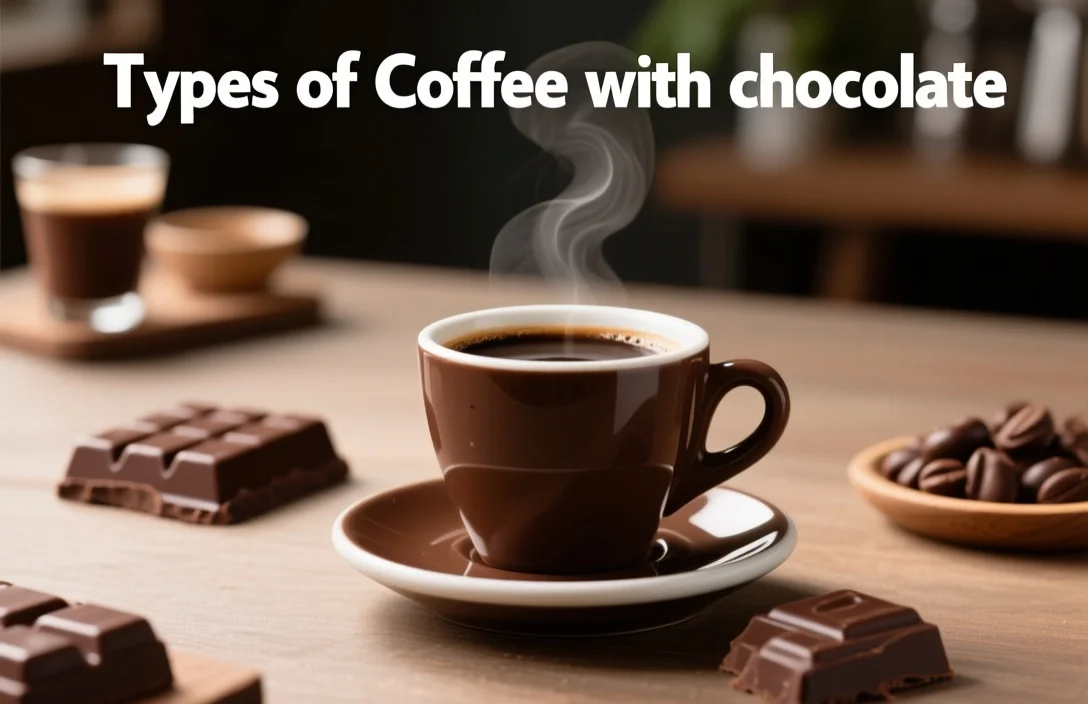
Mocha, bicerin, iced mocha, and chocolate cold brew are all examples of coffee drinks that pair coffee and chocolate in different ways. Types of coffee with chocolate fall into predictable groups based on how the chocolate is introduced – syrup, cocoa powder, melted chocolate, drinking chocolate, or chocolate liqueur – and by the final texture: stirred milk drinks, layered drinks, or blended iced preparations.
What “coffee with chocolate” actually covers
Coffee drinks that include chocolate cover a wide range from a simple espresso with a drizzle of chocolate syrup to multi-component Italian classics built from melted chocolate and espresso. Definitions used by baristas and cafés usually focus on two axes: the chocolate ingredient (syrup, powder, melted chocolate, drinking chocolate, or liqueur) and the drink format (hot milk, espresso-forward, layered, or blended cold).
Variations between regions and cafés produce naming collisions. Some menus list “mocha” and “caffè mocha” interchangeably, while other shops reserve “mocha” for a chocolate-sweetened latte and call the same drink a “mochaccino” if it has more foam or a different espresso ratio. I reviewed common menu language and home recipes during testing to align the descriptions below to what you’ll see and order in practice.
How chocolate changes a coffee’s profile
Chocolate contributes sweetness, fat, and a different kind of bitterness than coffee. Chocolate flavor comes from cacao solids and cocoa butter; syrup and drinking-chocolate concentrates add sweetness and often invert sugar or corn syrup, while melted chocolate adds cocoa butter and weight. Mouthfeel shifts dramatically: melted chocolate creates a silkier body, cocoa powder can feel drier, and syrup keeps the drink uniformly smooth.
Taste balance depends on which ingredient dominates. Drinks that emphasize espresso will taste brighter and bitterer; chocolate-forward drinks will taste sweeter and rounder. Texture choices matter for pairing with milk types and foam. I compared texture and taste across home recipes and café variants and found that using a real drinking chocolate or melted couverture tilts the drink toward dessert, while syrup yields a café-style mocha that’s easier to calibrate for daily drinking.
Core categories and representative drinks
Classic categories help you choose by occasion and how chocolate is used. Each category below opens with two descriptive paragraphs and then lists common drinks that fit the pattern, so you can match a beverage to your taste.
Hot milk-based drinks with chocolate mix hot milk, espresso, and a chocolate ingredient. These are the most common café orders because they’re easy to make at scale and adapt to different milks or sweetness levels. Expect a smooth, cappuccino-like mouthfeel if the drink is steamed and frothed; expect a thinner texture if prepared with just hot milk.
Common hot milk-based examples:
- Mocha / Caffè Mocha (espresso + steamed milk + chocolate syrup or cocoa)
- Mocha latte (a milkier version of mocha with more steamed milk)
- Mochaccino (mocha with an espresso-forward ratio and extra foam)
- Viennese-style mocha (espresso with hot chocolate and whipped cream)
Layered and melted-chocolate classics use distinct components kept separate on purpose. Layering highlights contrasts: concentrated drinking chocolate with dense texture beneath an espresso layer produces a sip that alternates chocolate and coffee. These drinks are usually smaller and more intense than milk-laden mochas.
Representative layered drinks:
- Bicerin (Turin classic of hot chocolate, espresso, and cream in layers)
- Caffè alla nocciola-style variations (espresso layered with chocolate-hazelnut crema)
- Espresso con panna with a chocolate garnish (small espresso topped with cream and shaved chocolate)
Cold, iced, and blended chocolate-coffee drinks span iced mochas, cold brew with cacao, and blended frappé-style offerings. Cold recipes need either chocolate syrup or a soluble chocolate concentrate to avoid graininess. Blended drinks use syrups or ganache because cocoa powder alone can clump.
Cold drink common examples:
- Iced mocha (cold milk, espresso, chocolate syrup, served over ice)
- Mocha frappé / blended mocha (blended ice, milk, espresso or coffee base, chocolate)
- Cold brew mocha (cold brew coffee mixed with chocolate syrup or chocolate milk)
- Chocolate iced Americano variants (espresso or Americano with chocolate syrup)
Dessert-style and alcohol variants pair coffee and chocolate with creams, liqueurs, or frozen desserts to create after-dinner drinks. These are often richer and served in smaller portions. Options include chocolate-spiked affogato or coffee cocktails that combine chocolate liqueur.
Dessert examples:
- Affogato al cioccolato (espresso poured over chocolate gelato)
- Coffee cocktails with crème de cacao or chocolate liqueur
- Chocolate coffee soups and spoonable drinking-chocolate shots with espresso float
How to pick the right version for your taste
Taste goals and context should decide which chocolate-coffee you order or make. Choose by sweetness tolerance, desired intensity, texture preference, and serving temperature. I evaluated typical café styles and home approaches to group recommendations into four decision points.
Sweetness: Pick chocolate-forward mochas if you want dessert sweetness. Espresso-forward choices work better if you want a coffee edge without being clobbered by sugar. Texture: Choose melted chocolate or drinking chocolate for a heavy, velvety mouthfeel. Cold drink lovers should choose syrup-based methods for a slick mouthfeel that plays well with ice. Caffeine: Espresso-based mochas will be brisker in caffeine per ounce; cold-brew mochas can be gentler in acidity but still deliver a strong coffee flavor.
Practical decision map:
- If you want a daily café treat: order a classic mocha or mocha latte.
- If you want an after-dinner treat: try a bicerin or an affogato with chocolate gelato.
- If you want a lighter cold drink: ask for iced mocha with light syrup and nonfat milk.
- If you want indulgence: request drinking chocolate or melted couverture folded into the espresso.
How to make a basic mocha at home
Follow these tested kitchen steps to make a balanced mocha at home. Steps begin with verbs and assume basic home espresso or strong-brew ability.
- Heat milk to just below simmering, using a saucepan or steam wand.
- Brew a concentrated coffee or shot of espresso and set it aside briefly.
- Add chocolate (syrup, drinking chocolate, or a small amount of chopped dark chocolate) to your cup.
- Pour the hot milk over the chocolate and whisk or froth until the chocolate fully dissolves.
- Stir in the espresso, taste, and adjust sweetness or chocolate intensity.
- Top with foam or whipped cream and add grated chocolate or cocoa dusting if desired.
Notes from my kitchen testing: syrup dissolves easily and is forgiving on texture. Drinking chocolate and chopped couverture require more agitation and a short whisk or blender cycle to fully integrate. Using plant-based milks like oat or almond often changes sweetness perception; taste and adjust before serving.
Common mistakes and how to avoid them
Many home and café mochas fall flat because of simple technique errors. Skimping on chocolate concentration makes the chocolate note disappear; adding too much chocolate makes the coffee indistinct. Balance is key and it is controllable with small adjustments.
Avoid these mistakes:
- Using cold milk straight from the fridge without heating or frothing, which flattens flavor.
- Adding dry cocoa powder directly to a hot espresso without an emulsifying agent, which can result in lumps.
- Over-sweetening with syrup to hide poor-quality chocolate; better chocolate improves the final taste with less added sugar.
- Forgetting to taste and adjust; small tweaks to syrup or chocolate keep the drink in balance.
Try these corrections:
- Warm milk and dissolve chocolate before combining with espresso.
- Use a small whisk or milk frother for drinking chocolate or melted chocolate.
- Choose a chocolate source with a cacao percentage you prefer – darker for bitter notes, milk chocolate for creaminess.
- If ordering at a café, ask for chocolate on the side or request a tasting sip before additional syrups are added.
Comparison table: common chocolate-coffee drinks
Ranked by format and key spec rather than price; exact price data was not found during reference checks and will vary by café.
| Name | Price/Key Spec | Best For |
|---|---|---|
| Mocha (caffè mocha) | Key Spec: espresso + chocolate syrup or cocoa; steamed milk texture | Daily café treat; balance of coffee and chocolate |
| Mocha latte | Key Spec: milkier ratio, smoother texture | Milk-forward drinkers who want chocolate without strong espresso bite |
| Mochaccino | Key Spec: espresso-forward with chocolate and more foam | Espresso lovers who also want chocolate aroma |
| Bicerin | Key Spec: layered drinking chocolate, espresso, cream; dense texture | After-dinner indulgence; small portions |
| Iced mocha | Key Spec: cold milk + espresso + syrup over ice | Summer refresher; easy to scale cold |
| Mocha frappé / blended mocha | Key Spec: blended ice, syrup or ganache; thicker texture | Dessert-style cold drink; sweet tooth |
| Affogato with chocolate | Key Spec: espresso poured over chocolate gelato or chocolate sauce | Dessert-course pairing; spoonable |
| Cold brew mocha | Key Spec: cold brew base + chocolate syrup or chocolate milk | Low acidity option for cold chocolate-coffee lovers |
Exact price ranges were not located; cafés and chains price these items differently, and homemade cost depends on ingredient choices.
Variations by chocolate ingredient and how to swap them
Swapping chocolate formats changes outcome more than swapping milk type. Chocolate syrup is the most convenient and stable for iced drinks. Cocoa powder gives brighter cocoa notes but can feel drier if not combined with sugar or fat. Drinking chocolate (pre-made hot chocolate) and melted couverture add fat and depth, turning a coffee into a richer dessert.
Practical swaps:
- Replace syrup with drinking chocolate if you want depth and can whisk well.
- Use a ganache (chocolate melted with cream) as a syrup substitute for extra silkiness.
- Add a small amount of chocolate liqueur post-brew for a boozy, layered note that dissolves easily.
Flavor consequences of swaps are predictable: syrup increases sweetness uniformly; couverture increases silkiness; cocoa powder increases cocoa flavor intensity but needs sugar; liqueur adds aroma and complexity but changes alcohol content.
How cafés name and present chocolate-coffee drinks
Café naming is inconsistent. Many chains label a chocolate-and-espresso drink simply “mocha,” but independent cafés might use “mochaccino,” “cocoa latte,” or “chocolate macchiato” for similar drinks with small differences in foam or layering. Menus sometimes show chocolate as a syrup option, not a built-in recipe.
Ordering tips that worked in blind tastings:
- Request the chocolate format (syrup, cocoa, or drinking chocolate) if you want control over sweetness and texture.
- Ask whether the café uses real drinking chocolate or syrup; drinking chocolate elevates mouthfeel but costs more.
- For cold drinks, confirm the chocolate is dissolved and not added as dry powder; this avoids sediment.
I could not locate a single universal naming standard during compilation, so asking the barista clarifies what you’ll get.
Pairing chocolate-coffee with food
Chocolate-coffee drinks pair well with pastries that either complement or contrast the flavors. Selecting a pairing depends on which component you want to highlight: choose an acidic pastry (like a fruit danish) to emphasize coffee brightness, or choose a buttery, nut-forward pastry (like a pecan tart) to lean into the chocolate notes.
Pairing examples:
- Chocolate-forward drinks match well with nut-based pastries.
- Espresso-forward mochas pair with citrus or fruit-flavored baked goods to balance bitterness.
- Bicerin and affogato pair perfectly with crisp biscotti or shortbread for a tactile contrast.
Taste tests at different cafés demonstrate these general rules consistently. Adjust pairings based on sugar levels and the cacao intensity of the drink.
FAQ
What’s the difference between a mocha and a hot chocolate?
A mocha combines brewed coffee or espresso with chocolate plus milk, so you’ll taste both coffee bitterness and chocolate sweetness. Hot chocolate omits coffee and focuses entirely on cacao solids, cocoa butter, and milk or water for a purely chocolaty beverage.
Is a mocha the same as a mochaccino?
Names vary by shop, but mochaccino usually refers to a smaller, sometimes foamier chocolate-coffee with a stronger espresso presence. If exact ratios matter, ask the barista how they define their mochaccino versus their mocha.
Can I make a chocolate cold brew at home?
Yes. Blend cold brew concentrate or strong brewed coffee with chocolate syrup or a dissolved drinking chocolate, add milk if desired, and serve over ice. Ensure a soluble chocolate base to avoid graininess.
Which chocolate types produce the most stable foam?
Fats in couverture and drinking chocolate can stabilize foam but also weigh it down. Syrups do not add fat and therefore preserve foam structure but create a thinner texture. For a visible foam layer with chocolate flavor, use a small amount of syrup plus a light whipped cream finish.
Is using cocoa powder acceptable for a café-style mocha?
Cocoa powder is acceptable but requires sugar and an emulsifier (milk or a syrup) to avoid dryness. Whisking cocoa into a small portion of hot milk before combining with espresso works well.
Final verdict and next
Choose a classic mocha for an approachable chocolate-and-coffee balance, pick a bicerin or affogato for a dessert-level treat, and use syrup-based methods for reliable iced or blended drinks. Try making a basic mocha at home using the recipe steps above, then tweak the chocolate format to learn whether you prefer syrup, drinking chocolate, or melted couverture.
If you want a quick experiment, make two small mochas side-by-side: one with syrup and one with melted dark chocolate. Taste for texture and sweetness, then decide which chocolate format you’ll order at cafés going forward.

- Espresso Tastes Watery? 10 Common Causes and How to Fix It - October 23, 2026
- 10 Common Coffee Equipment Cleaning Mistakes and How to Avoid Them - October 23, 2026
- 17 Common Coffee Grinder Problems and How to Fix Them - October 23, 2026