

For a single serving, combine a standard espresso serving or a concentrated brewed coffee with cold milk, brown sugar, and plenty of ice. Dissolve the sugar before chilling the drink. The exact ingredient quantities were not available, so treat the amounts below as a method and adjust sweetness, coffee strength, and milk to taste.
Brown sugar dissolves most reliably in warm coffee, hot water, or a small batch of syrup. Once smooth, cool the sweetened coffee before adding milk and ice. This prevents grit and slows dilution.
What Is The Exact One-serving Brown Sugar Iced Coffee Recipe?

No verified exact-value recipe was available for this drink. For a repeatable home method, use a standard serving of espresso or concentrated coffee, a smaller amount of brown sugar, cold milk, and enough ice to fill the glass. Dissolve the sugar in the warm coffee or in a small amount of hot water, cool the mixture, then add milk and ice.
| Component | Suggested starting amount | What it does |
|---|---|---|
| Brown sugar | A modest amount, adjusted to taste | Adds caramel-like sweetness |
| Espresso | A standard serving of espresso | Provides a concentrated coffee base |
| Cold milk | Add enough to soften the coffee without masking it | Rounds bitterness and carries the sweetness |
| Ice | Enough to fill the serving glass | Chills the drink and controls dilution |
This method yields one drink. A taller glass does not require more sugar or coffee automatically. Add milk and ice gradually so the drink does not become thin.
Before assembling, prepare the coffee, measure the milk, and have the ice ready. Once the ingredients meet, stir until the drink looks even and taste it promptly.
Why Does Brown Sugar Need Dissolution?
Brown sugar can remain gritty when it is stirred directly into cold coffee. Its crystals and molasses coating dissolve more slowly as the drink cools, which can leave uneven sweetness and hard grains at the bottom of the glass.
Graininess Risk With Direct Mixing
Cold coffee and ice give sugar less time to dissolve. Stirring brown sugar directly into an iced drink can leave some crystals suspended in the liquid or settled below the ice. The result is a drink that tastes sweeter in some sips than others.
Direct mixing works better when the sugar is first dissolved in warm coffee or hot water. Do not add the ice until the liquid looks smooth.
Dissolution Methods, Syrup Vs Direct Mixing
There are two useful approaches. A quick syrup gives the most consistent texture. Direct mixing also works when the sugar is fully dissolved in the warm coffee component before the drink is chilled.
Impact On Mouthfeel And Sweetness Perception
Dissolved brown sugar distributes its molasses flavor throughout the drink. That makes the coffee taste rounder and keeps the sweetness consistent. Undissolved crystals add an unpleasant texture and can make the coffee seem harsher.
Prioritize a smooth sweet base before adding milk or ice. It is easier to correct sweetness in a dissolved mixture than in a finished drink with sugar sitting at the bottom.
What Are The Exact Ingredient Quantities For A Standard Serving?
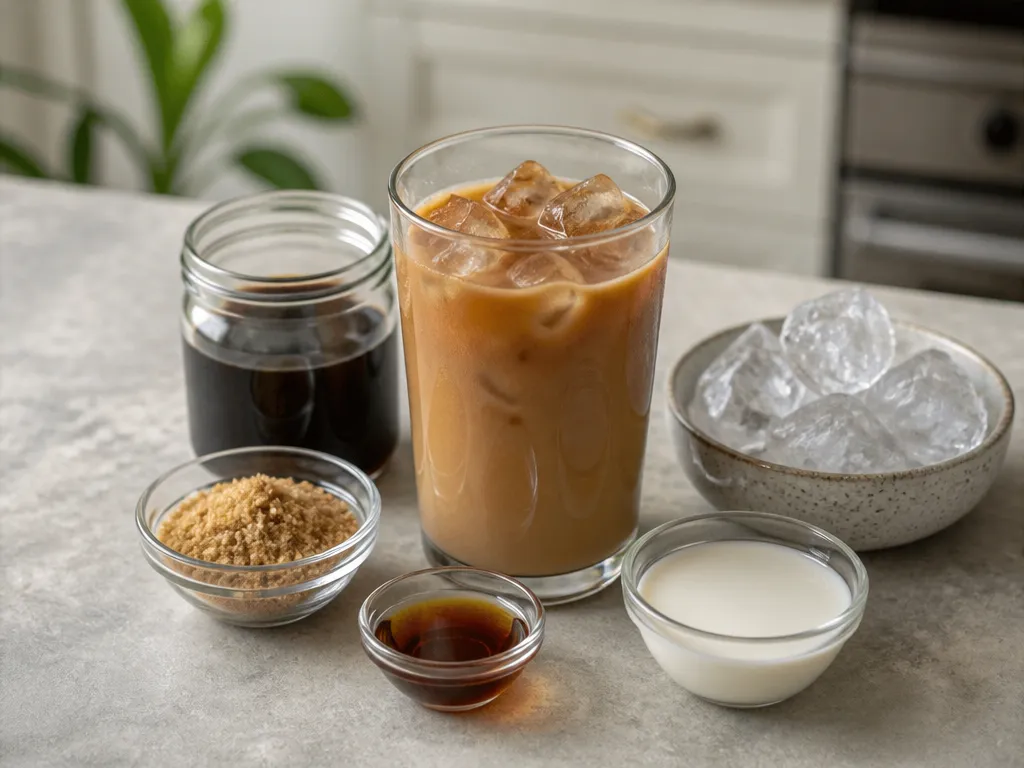
There were no verified exact quantities for a standard serving. Use a standard coffee serving as the base, add brown sugar gradually, then soften it with cold milk and ice. The right balance depends on the coffee concentration, milk, ice, and sweetness of the brown sugar.
For the clearest coffee flavor, begin with less milk and sugar than you think you need. You can add more after tasting, but removing sweetness or dilution is harder.
| Ingredient | Starting amount for one serving | Notes |
|---|---|---|
| Brown sugar | Small amount, adjusted to taste | Dissolve before adding ice |
| Coffee base | One standard serving of espresso or concentrated coffee | Use a stronger base if adding a generous amount of milk |
| Cold milk | Add gradually | Dairy and unsweetened non-dairy milk both work |
| Ice | Enough to fill the glass | Use solid, cold ice to slow melting |
If you are measuring by feel, add ice after the coffee and milk are combined. Too little ice leaves the drink warm and encourages continued melting; too much can leave less room for coffee and milk.
Optional ingredients such as vanilla or cinnamon should be added after the base drink is balanced. Sweet syrups may require less brown sugar.
Which Coffee Base Should I Use And How To Chill It?
Choose the base according to the flavor and equipment you have. The coffee should be concentrated enough to remain noticeable after milk and melting ice are added.
Concentration controls strength; chilling controls temperature. Keep those decisions separate. A weak coffee base cannot be fixed reliably with extra brown sugar.
Practical order to protect flavor: cool the coffee, dissolve the sugar, combine the coffee and sweetener, add milk, then pour over ice and stir.
How Do I Assemble And Serve Over Ice?

Assemble the drink in a way that keeps the sugar evenly distributed and limits early dilution.
If the coffee tastes weak, use a stronger coffee base or less milk next time. If it tastes too bitter, add milk or a small amount of dissolved sugar. Avoid correcting every problem with more sugar.
What Is The Total Time And Yield For This Recipe?
This is a quick single-serving drink once the coffee is ready. The main variable is chilling time. Espresso can cool relatively quickly, while brewed coffee and cold brew may need to be prepared ahead.
Active Prep Time Vs Chilling Time
Active preparation includes making the coffee, dissolving the sugar, adding milk, and assembling the drink. Chilling is separate. If warm coffee is poured onto ice, the ice melts rapidly and the drink can become weak before you finish it.
For the best result, cool the coffee before combining it with milk and ice. If you must use warm coffee, use less ice at first, stir, and add more once the drink has cooled.
Single Serving Yield, Plus Make-ahead
This method makes one glass. For preparation ahead, chill the coffee and store the dissolved brown sugar mixture separately. Add milk and ice only when you are ready to drink.
Do not store the finished drink over ice. Melting ice will gradually change its strength and sweetness.
How Can I Calibrate Sweetness And Strength To Taste?
Change one element at a time. That makes it easier to tell whether the problem is sweetness, coffee strength, milk, or dilution.
What Edge Cases And Variations Should I Consider?
Milk, coffee concentration, ice, and flavor additions all change the balance. Treat the core method as a starting point and adjust one ingredient at a time.
Dairy-free And Non-dairy Milk Options
Non-dairy milks differ in fat, sugar, and protein. A coffee-style oat or other barista blend can give the drink a fuller texture, while lighter milks may leave the coffee tasting sharper.
Batch Prep And Storage
Batch the coffee and dissolved sweetener separately, then assemble each serving over fresh ice. Mixing a large batch with ice causes gradual dilution.
| What to batch | Best practice | What goes wrong if you don’t |
|---|---|---|
| Coffee base | Chill before serving | Warm coffee melts the ice quickly |
| Brown sugar syrup | Cool and cover | Improperly dissolved sugar can remain gritty |
| Milk and ice | Combine per serving | The drink thins and its texture changes |
Flavor Add-ins And Spices
Cinnamon and vanilla pair well with brown sugar, but both can overwhelm the coffee when used heavily. Add them sparingly and taste before adding more. If you use a sweetened syrup, reduce the brown sugar so the drink does not become cloying.
Quick Summary
Make brown sugar iced coffee by preparing a concentrated coffee base, dissolving brown sugar into it, cooling the mixture, adding cold milk, and serving it over ice.
| Condition that changes the drink | What to adjust |
|---|---|
| You want it sweeter | Add a small amount of dissolved brown sugar. |
| You want it stronger | Use more concentrated coffee or less milk. |
| Your coffee base is not cold yet | Chill it before adding ice, if possible. |
| You detect graininess or uneven sweetness | Dissolve the sugar fully before combining the drink. |
Start with a small amount of sugar and milk, taste over ice, and make one adjustment at a time.
Frequently Asked Questions
How Much Does A Homemade Brown Sugar Iced Coffee Cost Compared To Buying One?
Exact per-cup cost depends on local prices, the coffee you use, your milk, and whether you already own the equipment. No ingredient prices were available, so a reliable cost cannot be stated.
To calculate it at home, divide each package price by its usable quantity, then add the cost of the coffee, brown sugar, and milk used for one serving. Equipment costs are separate.
What Happens If I Skip Dissolving The Brown Sugar And Just Stir It In With The Coffee?
The drink may have uneven sweetness and a gritty mouthfeel. Sugar is slower to dissolve once the coffee is cold, especially after ice is added.
If this happens, dissolve a little sugar in warm coffee or hot water separately, let it cool, and stir it into the drink. Strain only if the texture remains unpleasant.
Why Does My Iced Coffee Taste Weaker Or Less Sweet After A Few Minutes On Ice?
Melting ice adds water to the drink. Warm coffee melts ice faster, and small or already-wet cubes dilute it sooner.
Chill the coffee before assembly, use solid ice, and drink the coffee soon after stirring. If it is weak immediately, use a more concentrated coffee base or less milk.
Can I Make This Without Espresso, Using Brewed Coffee Or Cold Brew Instead?
Yes. Use strong brewed coffee or cold brew and adjust by taste, since there was no verified conversion between these bases and espresso.
Chill the coffee before adding ice. If the finished drink lacks coffee flavor, strengthen the base or reduce the milk rather than adding more brown sugar.
What If I Only Have Light Brown Sugar Or Dark Brown Sugar?
Either can work. Dark brown sugar usually gives a deeper molasses flavor, while light brown sugar produces a milder caramel note.
Begin with the same small amount you would normally use, dissolve it fully, and adjust after tasting. The sugar type may change the drink’s flavor even when the sweetness seems similar.
When Should I Replace An Ingredient Or Adjust My Method, And When Is It Time To Get Help?
Persistent grit usually points to incomplete dissolution. Burnt, sour, stale, or otherwise unpleasant coffee notes may indicate that the coffee or milk needs replacing.
If you experience an unexpected health concern after drinking it, seek appropriate medical advice. Otherwise, most problems with this recipe come from coffee strength, sugar dissolution, milk choice, or ice dilution.
How Can I Verify That My Coffee Is Strong Enough To Match The Recipe’s Intent?
Taste the coffee base before adding milk and ice. It should be noticeably concentrated, since both milk and melting ice soften the flavor.
Make a test drink and change only one variable on the next attempt. Use stronger coffee for more intensity, less milk for a bolder drink, and dissolved brown sugar only when sweetness is the issue.

- Espresso Bar Wedding: Ideas, Setup, Costs, and Tips for a Memorable Coffee Experience - November 11, 2026
- How Many Grams of Espresso Beans for a Double Shot? A Complete Brewing Guide - November 11, 2026
- Brasilia Espresso Machine: Features, Performance, Models, and Buying Guide - November 11, 2026