
Your coffee tastes sour after brewing primarily due to under-extraction, often caused by a grind that's too coarse or insufficient brew time.
There's nothing quite as disappointing as anticipating that first rich, aromatic sip of coffee, only to be met with an unexpected and unpleasant sourness. For many coffee enthusiasts and casual drinkers alike, encountering a sour cup can be confusing, turning a simple morning ritual into a perplexing mystery. As someone who has spent years exploring the intricacies of coffee brewing, from bean sourcing to advanced extraction techniques, I understand the frustration this specific flavor profile can bring. This article will meticulously unpack the various reasons why your coffee tastes sour after brewing, providing you with the expert insights and practical solutions needed to transform your daily cup into a consistently delightful experience. We'll delve deep into the science and art of brewing to ensure you never have to wonder "why does my coffee taste sour after brewing" again.

Understanding the Basics: What Causes Sour Coffee?
When your coffee tastes sour after brewing, it's often a clear signal that something went awry in the extraction process. Extraction refers to the act of dissolving desirable flavors from the coffee grounds into the water. A balanced cup of coffee requires the right amount of compounds—acids, sugars, and bitter notes—to be extracted. Sourness, in this context, typically indicates an imbalance, particularly when too many of the early-extracted acids come through without the balancing sweetness and body.
The "Sour" Spectrum: Acidity vs. Unpleasant Sourness
It's crucial to distinguish between desirable acidity and unwelcome sourness. High-quality coffees, especially lighter roasts, often exhibit bright, vibrant acidic notes that can be reminiscent of citrus, berries, or even wine. These are complex, pleasant flavors that contribute to the coffee's character. However, when your coffee tastes sour after brewing in an unpleasant way, it usually presents as a sharp, mouth-puckering, almost lemony or vinegar-like sensation that lacks any accompanying sweetness or complexity. This distinct difference is key to diagnosing your brew.
My First Encounter with Truly Sour Coffee
I remember one particular morning, early in my coffee journey, where I had excitedly purchased a new, vibrant single-origin bean. Following the recommended parameters, I brewed a cup, expecting a burst of fruity notes. Instead, the first sip was overwhelmingly tart, reminiscent of unripe fruit, leaving a thin, almost metallic finish. It was then I realized that even with premium beans, the brewing process itself could sabotage the outcome. This experience taught me the profound impact of proper technique and became a driving force in my quest to understand exactly why coffee sometimes tastes sour.
The Primary Culprits Behind Sour Coffee
Understanding "why does my coffee taste sour after brewing" involves looking at several interconnected factors. Most frequently, the issue boils down to under-extraction, but other elements, from the beans themselves to the water you use, can also play a significant role. Let's explore these common causes in detail.
Under-extraction: The Most Common Offender
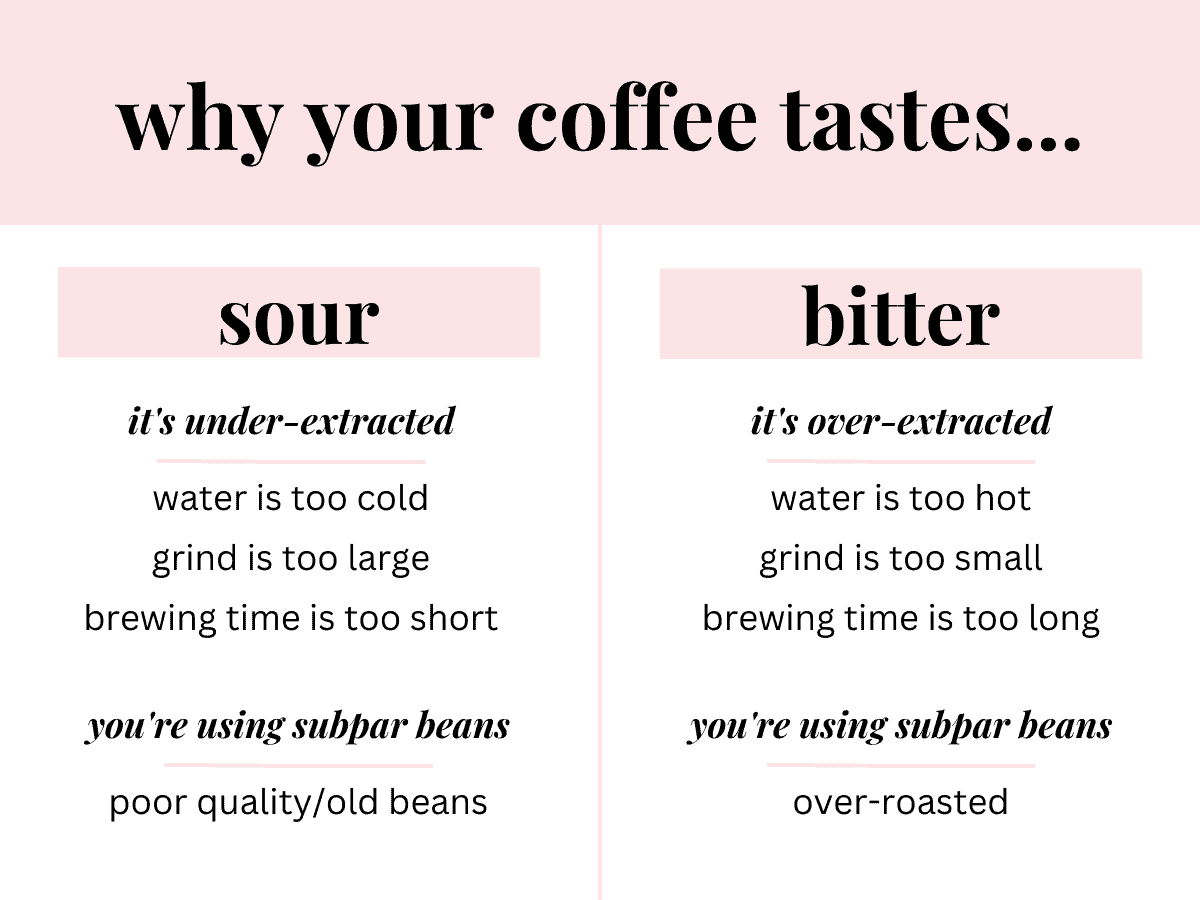
Under-extraction occurs when not enough of the soluble compounds are dissolved from the coffee grounds during brewing. The lighter, more acidic compounds extract first, followed by sweetness, and then bitterness. If the brewing process stops prematurely, you're left with an abundance of those early, tart acids, leading to a sour taste.
Grind Size Too Coarse
One of the most frequent reasons for under-extraction is a grind size that is too coarse for your chosen brewing method. Coarse grounds have less surface area for water to interact with, meaning the water passes through too quickly and cannot extract enough flavor. If your pour-over or espresso is sour, a coarser grind might be the primary culprit.
Insufficient Brew Time
Even with an appropriate grind, if the water doesn't spend enough time in contact with the coffee grounds, under-extraction will result. This is particularly noticeable in methods like French press or pour-over where brew time is a critical variable. Shortening the contact time will inevitably leave the coffee tasting sour.
Water Temperature Too Low
Water temperature is another non-negotiable factor. If your brewing water is too cold, it simply won't be able to dissolve the coffee solids efficiently. The ideal temperature range for brewing coffee is generally between 195°F and 205°F (90°C and 96°C). Using water below this range will hinder extraction and contribute to a sour cup.
Coffee Bean Issues
Sometimes, the answer to "why does my coffee taste sour after brewing" lies within the beans themselves, independent of your brewing technique.
Light Roasts
Lightly roasted coffees inherently retain more of their original acids. While these can be delightful when properly extracted, they can easily present as sour if the brewing isn't dialed in. It requires careful attention to ensure balanced extraction, bringing out their fruity complexity rather than just sharp tartness.
Old or Stale Beans
Coffee beans are at their peak freshness shortly after roasting. As they age, they degas and lose volatile aromatic compounds. While old beans more commonly lead to a flat or papid taste, sometimes the remaining acids can become more pronounced relative to other diminished flavors, contributing to an undesirable sourness. This is why fresh beans are always recommended.
Poor Bean Quality
The quality of the coffee bean itself is fundamental. Beans that are unripe or defected can introduce inherently sour, astringent, or off-flavors that no amount of perfect brewing can fix. Investing in high-quality, specialty-grade coffee from reputable roasters is a foundational step to avoid a sour brew.
Water Quality
The water you use makes up over 98% of your coffee, so its quality cannot be overlooked. Water that is too soft, meaning it lacks sufficient minerals, can lead to poor extraction and a resulting sourness. These minerals help buffer the acids and facilitate balanced flavor extraction. Distilled or heavily filtered water often leaves coffee tasting flat or sour.
Brewing Method and Equipment
Your brewing setup and its maintenance also impact the final taste. Overlooking these aspects can certainly explain why your coffee tastes sour after brewing.
Cleanliness
Any residual coffee oils or mineral buildup in your brewing equipment can impart off-flavors, including sour or bitter notes, to your fresh brew. Regular and thorough cleaning of your grinder, brewer, and carafe is essential for maintaining optimal flavor. A dirty machine can turn even the best beans into a disappointing cup.
Brew Ratio Imbalance
Using too little coffee for the amount of water can also lead to under-extraction, even if other parameters seem correct. A common starting point for a balanced brew ratio is 1:15 to 1:18 (coffee to water), meaning 1 gram of coffee for every 15-18 grams of water. Deviating too far from this, especially using less coffee, can result in a thin, sour beverage.

Diagnosing Your Sour Brew: A Troubleshooting Guide
When your coffee tastes sour after brewing, it's not a mystery, but a puzzle with clear solutions. Troubleshooting involves a systematic approach, adjusting one variable at a time until you achieve that perfectly balanced cup.
Check Your Grind Size
This is often the first place to start. If your coffee tastes sour, try grinding your beans finer. A finer grind increases the surface area exposed to water, allowing for more efficient extraction. Make small adjustments; even a slight change can make a significant difference, especially if you're using a burr grinder.
Optimize Brew Time and Temperature
For immersion methods like French press, extend the brew time by 30-60 seconds. For pour-over, ensure your water flow is even and that the total brew time falls within the recommended range (e.g., 2.5-3.5 minutes for a 300g pour). Always use water that has just come off the boil, ideally between 195°F and 205°F (90°C and 96°C). Using a thermometer can be immensely helpful here.
Evaluate Your Coffee Beans
Consider the age and roast level of your beans. If your coffee tastes sour and you're using very light roast beans, ensure your grind and temperature are optimized for maximum extraction. If the beans are several weeks or months past their roast date, they might be stale; try a fresh bag from a reputable roaster. My personal rule of thumb is to use beans within 2-3 weeks of roasting for optimal flavor.
Consider Your Water
If you suspect your water quality is the issue, try brewing with filtered water that retains some mineral content, or consider using bottled spring water. Avoid distilled water entirely. Many coffee professionals even use specifically formulated brewing water to ensure consistency and optimal extraction, eliminating water as a variable when diagnosing a sour cup.
Maintain Your Equipment
Regular cleaning is non-negotiable. Break down your brewing equipment—grinder, filter basket, carafe—and clean it thoroughly with hot, soapy water after each use, or at least daily. For more stubborn mineral buildup, a descaling solution designed for coffee makers can work wonders in restoring your equipment to its prime and preventing unwanted sour notes.
Preventing Sourness: Best Practices for Delicious Coffee
Moving beyond troubleshooting, a proactive approach to your brewing habits can largely prevent you from ever having to ask "why does my coffee taste sour after brewing" again. It's all about consistency and attention to detail, treating each step of the process with care and precision.
Choose Quality Beans
The foundation of a great cup of coffee begins with the beans. Invest in freshly roasted, whole-bean coffee from specialty roasters who provide roast dates. Look for descriptions that align with your preferred flavor profiles, recognizing that lighter roasts, while potentially more complex, might require more diligent brewing to avoid sourness. High-quality beans simply offer a wider margin for error.
Master Your Grind
A good burr grinder is perhaps the most impactful investment you can make after quality beans. Grinding your coffee fresh, right before brewing, prevents rapid staling. More importantly, a burr grinder provides a consistent particle size, which is essential for even extraction. Experiment with your grind settings to find the sweet spot for your brewing method. When I first upgraded my grinder, the difference in my coffee's taste, particularly the absence of sourness, was immediate and remarkable.
Dial in Your Water
Don't underestimate the power of good water. Use filtered water that is free of chlorine and off-tastes, but still contains enough dissolved minerals (TDS typically between 75-150 ppm) to facilitate proper extraction. If your tap water isn't up to par, a simple filter pitcher can make a big difference, or consider specialty brewing water options. Consistent water quality is paramount.
Perfect Your Brewing Technique
Consistency in your brewing technique is key. Whether it's a pour-over, French press, or automatic drip machine, follow a standardized process. Use a scale to measure your coffee and water precisely. Monitor your brew time and ensure your water temperature is within the optimal range. Practice makes perfect; with each brew, you'll gain a better understanding of how minor adjustments impact the final flavor, allowing you to consistently avoid that dreaded sourness.
Frequently Asked Questions
Why does my espresso taste sour?
Espresso typically tastes sour due to under-extraction, often from a grind that's too coarse, too short a shot time, or water temperature that is too low. Adjusting to a finer grind and aiming for a shot time of 25-30 seconds can usually resolve this.
Can old coffee beans cause a sour taste?
Yes, old or stale coffee beans can contribute to a sour taste. As beans age, their desirable aromatic compounds diminish, sometimes leaving behind a more pronounced, unbalanced acidity that can be perceived as sourness.
Does water quality affect coffee sourness?
Absolutely. Water that is too soft or distilled can lead to under-extraction and a sour taste because it lacks the necessary minerals to properly dissolve coffee solids. Using filtered water with balanced mineral content is crucial.
Is sour coffee the same as acidic coffee?
No, they are different. Desirable acidic coffee exhibits bright, complex notes like citrus or fruit. Unpleasant sour coffee, however, is typically a sign of under-extraction, presenting a sharp, thin, and often unappealing tartness lacking sweetness.
How can I make my coffee less sour without changing beans?
To make your coffee less sour without changing beans, try grinding finer, increasing your brew time, ensuring your water temperature is between 195-205°F (90-96°C), and confirming you're using an appropriate coffee-to-water ratio.
Conclusion
Understanding why your coffee tastes sour after brewing is the first step toward consistently enjoying a delicious cup. By systematically evaluating factors such as grind size, water temperature, brew time, bean freshness, and water quality, you gain the power to diagnose and rectify issues. My journey from a frustratingly sour brew to a consistently balanced one has been driven by these very insights. Embrace the process of experimentation and refinement. Take the time to adjust your variables, clean your equipment diligently, and invest in quality ingredients. You'll not only banish sour coffee from your life but also deepen your appreciation for the nuanced art of brewing. What small adjustment will you make to your coffee routine today to chase that perfect, non-sour cup? Feel free to share your experiences or questions in the comments below!

- Unlocking the Venti: Discover the Perfect Shot Count for Your Drink - October 13, 2026
- Unpacking the Buzz: Caffeine Levels in Café Bustelo Espresso - October 13, 2026
- How to Fix Bitter Coffee: 10 Expert Ways to Improve the Taste - October 4, 2026