
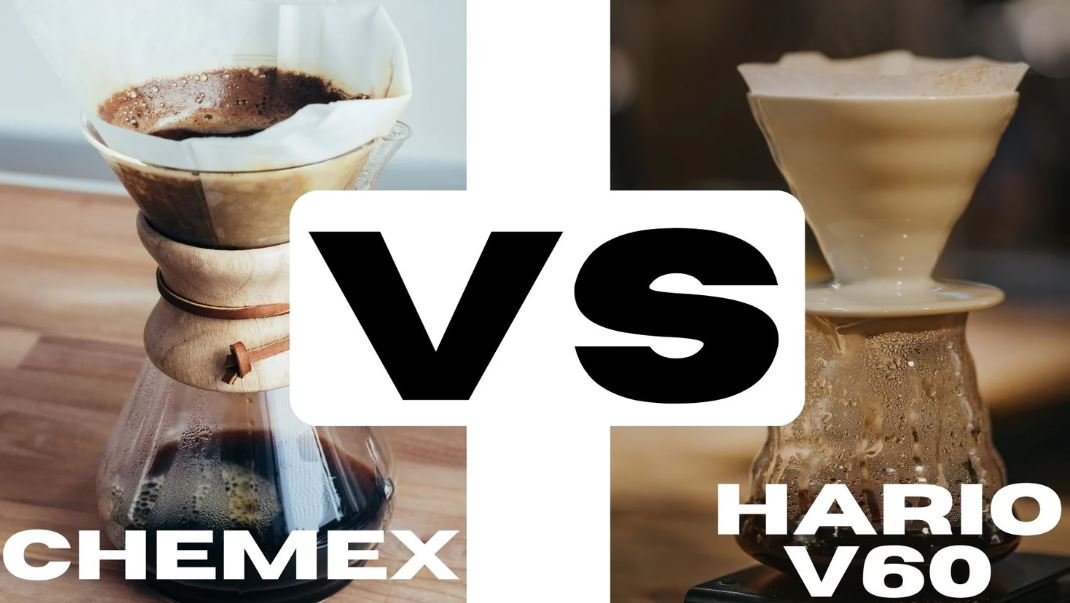
I remember the first time I stood in my kitchen, kettle in hand, staring at two brewers and genuinely unsure which one to use. The Chemex looked like something from a museum, all glass and wood and leather. The V60 sat next to it, a little plastic cone that seemed almost cheap by comparison. I had spent months brewing with both, and yet that morning, I honestly did not know which one would make the coffee I wanted.
That moment has stayed with me. You see, choosing between a Chemex and a Hario V60 is not like picking between two brands of the same thing. It is more like choosing between a vinyl record and a high-resolution digital file. Both play music. Both can move you to tears. But the sound, the texture, the ritual of putting the needle down versus tapping a screen—that is where the real difference lives.
I have made hundreds of cups with both of these brewers. I have served Chemex coffee to my in-laws at a holiday brunch, watching them nod politely at its clean, delicate flavor. I have brewed a V60 for a friend who works in specialty coffee, and watched him pause mid-sentence, cup halfway to his lips, because he caught a blueberry note he was not expecting. These brewers have been with me through early mornings before brutal commutes, through lazy Sunday afternoons with nowhere to be, through power outages where the only thing I could control was the spiral of my pour.
This is not a dry, technical comparison. I am going to tell you what these brewers actually feel like to live with. I will tell you about the mornings I messed up, the cups that tasted like regret, and the ones that tasted like a small miracle. By the end, you will know which one belongs on your counter. Not which one the internet says is better, but which one fits your hands, your mornings, your taste. Let’s get into it.
What Is a Chemex Coffee Maker?
The Chemex is a pour-over coffee maker that looks like an hourglass and functions like a chemistry experiment in the best possible way. It was invented in 1941 by a German chemist named Peter Schlumbohm, a man who looked at the complicated coffee makers of his era and decided to strip everything down to pure function wrapped in beauty. The result is a single piece of borosilicate glass shaped like an hourglass, with a polished wooden collar tied around the neck with a rawhide string. It is so iconic that it lives in the Museum of Modern Art, and honestly, it deserves to be there.
The Story Behind the Glass
Schlumbohm was not a coffee guy by trade. He was a scientist, and he approached brewing the way a chemist approaches a solution. His design philosophy was brutally simple: use materials that do not add anything to the final product, and make every part serve a purpose. The borosilicate glass is inert, meaning it will never interact with your coffee or leach anything into it. The wooden collar is not just decorative, although it certainly is beautiful. It serves as a heat shield, letting you pick up a carafe full of near-boiling liquid without burning your hand.
I remember unboxing my first Chemex. It was an 8-cup model, and I had ordered it online after weeks of watching brewing videos. When I lifted it out of the box, I felt something I had never felt about a kitchen appliance before. It felt like I had bought a piece of art. I placed it on my counter and just looked at it for a minute, the way it caught the morning light through the glass. My wife walked in and said, “That’s a coffee maker?” She meant it as a compliment, and she was right. The Chemex transforms the act of making coffee into something that feels elevated, even on a groggy Tuesday when you can barely find your slippers.
The hourglass shape is not just for show, either. It creates a natural brewing chamber on top and a serving carafe below, all in one seamless piece of glass. There are no mechanical parts, no switches, no plastic tubes that will eventually crack. It is a vessel, pure and simple, and that purity runs through every cup it produces.
How the Brewing Actually Works
Brewing with a Chemex is a slow, patient process. You take one of their thick paper filters, which feel almost like fabric compared to standard coffee filters, and you fold it into a cone. The folding is specific—a three-ply side goes against the pouring spout to prevent the filter from collapsing when it gets wet. The first time I did this, I folded it wrong and my filter collapsed mid-brew, sending a sludge of wet grounds into the beautiful glass carafe below. I had to dump the whole thing and start over, cursing quietly while my uncaffeinated brain tried to remember the proper crease pattern.
Once the filter is in place, you add your ground coffee and begin pouring hot water in slow, deliberate spirals. The water saturates the grounds, and then gravity takes over. The coffee drips through the thick filter and pools in the bottom chamber. There is no valve, no stopper, no mechanism to control the flow. The only thing regulating the speed is the thickness of the filter itself and the resistance of the coffee bed.
What comes out the other side is remarkably clean. I mean genuinely clean, not just free of grounds but almost translucent in its clarity. When you hold a Chemex-brewed coffee up to the light, it gleams like a dark tea. There is no oil slick on the surface, no fine sediment at the bottom of your mug. The thick paper absorbs nearly all of the coffee’s natural oils and traps every microscopic particle. You are left with a cup that tastes focused, defined, and almost impossibly smooth.
The Parts That Define It
The filter is the star of the show. Chemex bonded filters are roughly three times thicker than a standard pour-over filter. When you hold one up, light barely passes through. This density strips out the oils and the fines, which are the tiny coffee particles that slip through most other brewing methods. If you are used to a French press, where the coffee has a heavy, almost chewy body, the Chemex will feel like a different beverage entirely. It is the difference between whole milk and skim, except the flavor is not watered down, just polished to a high shine.
The glass carafe is the other defining feature. Because the Chemex is a single piece, you brew and serve from the same vessel. The 8-cup model is large enough to make coffee for a brunch crowd, and pouring from it feels genuinely ceremonial. You lift the wooden collar, tilt the glass belly, and fill each mug with a steady amber stream. The carafe retains heat reasonably well, though not as long as a double-walled metal server. I have learned to drink my Chemex coffee relatively quickly, or to pour what I am not drinking into a thermal carafe. Letting it sit on the cooling glass means a lukewarm second cup, and lukewarm Chemex coffee loses much of its delicate character.
The wooden collar is removable, which you discover the first time you need to clean the thing. It slides off after you untie the rawhide string, and you have to be careful not to drop the wet glass while you wrestle with it. I have fumbled this collar more times than I care to admit, standing at the sink with soapy hands, trying to keep a several-hundred-dollar piece of glass from slipping. The collar also needs occasional care. If it dries out, it can crack. A little bit of food-grade mineral oil rubbed into the wood every few months keeps it looking rich and prevents splitting. It is a small act of maintenance, but it deepens your connection to the object. You are not just using a Chemex; you are caring for it.
The Beans That Belong Here
I learned the hard way that not every coffee tastes good through a Chemex. Early on, I brewed a dark, oily Italian roast that I had enjoyed in my French press. The result in the Chemex was thin, ashy, and bitterly hollow, like the ghost of a coffee rather than the coffee itself. The thick filter had stripped away the very oils and body that made that dark roast enjoyable, leaving behind only the charred, bitter notes with nothing to cushion them.
The Chemex is built for lighter, brighter, more delicate coffees. A washed Ethiopian Yirgacheffe, with its floral jasmine aroma and citrus zip, absolutely shines. The clean extraction lets you taste every individual note—the lemon zest, the honey sweetness, the tea-like finish. Medium roasts with caramel and nutty profiles also work beautifully, as the slow drawdown smooths out any harsh edges. I save my Chemex for the coffees that taste like fruit and flowers, the ones where I want to close my eyes and pick apart the layers. It is a spotlight, and when you point it at the right bean, the performance is unforgettable.
What Is the Hario V60?
The Hario V60 is a simple cone-shaped dripper with a single large hole at the bottom and spiraling ridges running up its interior walls. It was made by a Japanese glassware company that has been around since 1921, and its name tells you everything about its design: it is shaped like a V, and the walls angle at 60 degrees. There is no carafe, no wooden collar, no leather tie. It is a cone that sits on top of your mug, and in the world of specialty coffee, it is the tool that baristas reach for when they want to show you exactly what a bean can do.
Where It Came From
Hario spent decades making heatproof glass for laboratories before they turned their attention to coffee. The V60 arrived in the early 2000s, right as the specialty coffee movement was gathering serious momentum. Coffee professionals were starting to treat brewing like a science, obsessing over variables like flow rate, extraction yield, and water temperature. They needed a dripper that gave them complete control, something that would not get in the way of their technique.
The V60 answered that call. Its design is almost absurdly simple, but every detail was considered. The 60-degree angle creates a deep coffee bed that promotes even extraction. The spiral ribs prevent the wet filter from sticking to the cone walls, which would trap water and cause uneven flow. The single large hole at the bottom offers zero resistance, meaning the brewer controls the flow rate entirely through grind size and pouring technique. It is a platform for precision, not a crutch for beginners.
My first V60 was a clear plastic model that cost less than a bag of good beans. I placed it on my mug, dropped in a filter, and brewed with the confidence of someone who had been making pour-overs for years. The coffee that came out was sour, thin, and genuinely unpleasant. I had been humbled by a plastic cone. That moment taught me something important: the V60 does not hide your mistakes. It amplifies them and serves them to you undiluted. But it also rewards skill more generously than almost any other brewer.
The Mechanics of the Spiral
Understanding how the V60 works means understanding those ribs. When you place a wet paper filter into a smooth cone, it tends to stick to the walls. This creates a seal, trapping water and forcing it to exit only through the very bottom of the coffee bed. The spiraling ridges on the V60 create an air gap between the filter and the cone, allowing water to escape through the sides as well. This prevents water from pooling and over-extracting the bottom of the bed while the top remains under-extracted.
The large single hole at the bottom is equally important. Many drippers have multiple small holes that restrict flow to a predictable rate. The V60’s open bottom means the water leaves as fast as your grind size and pour technique allow. You can make a brew drain in two minutes or four minutes, not by changing a setting on the brewer, but by changing how you pour and how you grind. This is both the V60’s greatest strength and the reason it frustrates so many beginners.
I spent a solid week making bad V60 coffee before I produced anything I would willingly serve to another human being. My pours were inconsistent, my grind was all over the place, and my timing was a mess. But each bad cup taught me something. A sour cup meant I had ground too coarse or poured too fast, and the water had under-extracted the coffee. A bitter, drying cup meant I had ground too fine or poured too slowly, and the water had spent too much time in contact with the grounds. The V60 is a brutal but honest teacher.
The Different Faces It Wears
The V60 comes in more materials than any brewer I know. The plastic version is the cheapest and, in my opinion, the most practical for daily use. It is nearly indestructible, it weighs almost nothing, and it has excellent thermal stability because plastic does not steal heat from your brewing slurry the way cold ceramic or glass does. I have dropped my plastic V60 onto tile floors more than once, and it has bounced cheerfully without a scratch.
The ceramic V60 is the one that lives on my counter. It is heavy, beautiful, and available in white or red. It requires thorough preheating because cold ceramic will suck the thermal energy right out of your brew, dropping the slurry temperature and leading to under-extraction. I run hot water through mine for a solid thirty seconds before I start brewing, and I place it on a warm mug. The metal and copper versions are stunning but come with their own maintenance needs, particularly the copper, which will tarnish without regular polishing.
The V60 comes in three sizes: 01 for a single small cup, 02 for one to two mugs, and 03 for larger batches. The 02 is the sweet spot for most people. It makes a generous single serving and can handle a brew for two without breaking a sweat. Its small footprint and light weight make it the most portable serious coffee brewer I have ever owned. I have packed a plastic V60, a stack of filters, and a bag of pre-ground coffee in my suitcase for countless trips, and I have never once worried about it breaking.
The Beans That Come Alive Here
The V60 is at its best with bright, complex, fruit-forward coffees. A naturally processed Ethiopian with wild blueberry and strawberry notes will absolutely explode in this brewer. The thin paper filter allows a generous amount of the coffee’s natural oils to pass through, giving the cup a silky, substantial mouthfeel that carries those fruit flavors beautifully. The acidity is electric, the sweetness is immediate, and the finish lingers in a way that Chemex coffee simply does not.
Nordic-style light roasts, which can sometimes taste underdeveloped or grassy in a Chemex, find their full voice in a V60. The added body and texture give these delicate roasts a presence they lack when stripped too clean. I also love the V60 for high-acidity Central American coffees—a bright Costa Rican with crisp apple acidity and a honeyed finish feels custom-made for this dripper. The V60 is for the coffee explorer, the person who buys single-origin bags from different roasters every month and wants to taste every wild note the bean has to offer.
Chemex vs Hario V60: Side-by-Side Living
Design, Build, and Counter Presence
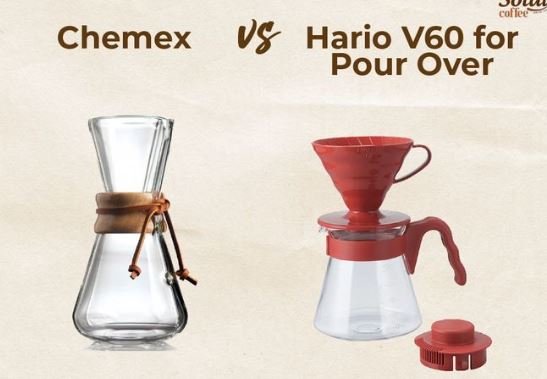
The Chemex is a centerpiece. When people walk into my kitchen, their eyes land on it. The sweeping hourglass curve, the warm wood collar, the leather tie—it looks less like a coffee maker and more like a vase that happens to produce incredible coffee. I leave mine on a sideboard even when it is not in use because it genuinely improves the aesthetic of the room. But that beauty comes with a cost: fragility. I have heard the sickening clink of the Chemex neck bumping a faucet, and I have held my breath inspecting it for hairline cracks. It demands a careful hand.
The V60, particularly in plastic, does not aspire to be art. It is a tool, and it owns that identity completely. It sits on my counter taking up no more space than a coffee mug, doing its job without asking for attention. There is a functional honesty I deeply respect. If I knock it over, I pick it up and keep brewing. If it breaks someday, which seems unlikely, I will buy another for a few dollars and feel no emotional loss. The Chemex becomes part of your home. The V60 becomes part of your routine. Both roles matter; they just matter to different people.
The Brewing Dance
Making coffee with a Chemex feels like conducting a slow, patient orchestra. The thick filter restricts flow naturally, so I use a coarser grind and a single, steady pour after the bloom. The whole process for a 500-milliliter batch takes about four and a half to five minutes. I stand at the counter, kettle in hand, watching the gentle swell of the coffee bed, breathing in the steam. It is meditative. My mind wanders during a Chemex brew, and the coffee still turns out well because the filter is doing much of the control work for me.
The V60 is a different dance entirely. It is active, focused, and demanding of your complete attention. I grind finer, bloom the grounds, and then pour in a series of deliberate, concentric pulses. My whole body sways slightly as I pour, a kind of physical metronome keeping my spirals steady. The brew takes two and a half to three minutes, and I am locked in for every second of it. If I drift off thinking about my morning meeting, my pour wobbles, the water channels through one side of the coffee bed, and my cup tastes sour and hollow. The V60 rewards presence. It punishes distraction.
The Taste That Decides
A Chemex cup, brewed properly, has the clearest flavor separation I have ever experienced. You can pick out individual notes like instruments in a well-mixed song: jasmine, lime zest, brown sugar, each one distinct and clean. The body is light, almost airy. The finish disappears from your palate without a trace, leaving you ready for the next sip. It is a cup for people who value definition above richness, clarity above texture.
A V60 cup has more presence, more weight on the tongue. The thin filter releases oils into the brew, coating your mouth with a velvety, syrupy texture. The acidity is brighter, the fruit notes are more jammy and aggressive, and the finish lingers. It tastes alive in a way the Chemex sometimes does not. Both are extraordinary. The Chemex is a polished gem, every facet visible and distinct. The V60 is a ripe piece of fruit, juice running down your chin.
Where the Flavor Truly Parts Ways
Body and Mouthfeel
The most immediate difference between these two brewers is how the coffee feels in your mouth. Chemex coffee is gossamer light. It has no weight, no oiliness, no coating sensation on the tongue. My wife, who is not a coffee person, once described it as “clean water that tastes like coffee,” and she was not wrong. The V60, by contrast, leaves a buttery, syrupy presence. It feels substantial. It lingers. The same beans, roasted by the same roaster, will feel entirely different depending on which brewer they pass through.
Aroma and the Clarity of Flavor
The aroma rising from a Chemex cup is high, floral, and delicate. Because the heavy oils that carry deeper, earthier scents are trapped in the filter, what reaches your nose is purely the volatile, bright compounds. In a V60, the aroma is richer, deeper, and more like the scent of the dry grounds themselves. The flavor clarity in the Chemex is surgical; you can identify a citrus note precisely as lemon or lime. The V60 blends its flavors into a more cohesive whole, a chord rather than isolated notes.
How Origin Character Comes Through
A washed Kenyan coffee is my personal litmus test. In the Chemex, that savory, tomato-like acidity is laser-focused, like a clear broth. In the V60, the same coffee delivers a juicier, sweeter blackcurrant punch with a heavier, wine-like texture. Both are unmistakably Kenyan, but they tell different stories. The Chemex gives you the technical specifications, the clean data. The V60 gives you the soil, the sun, the farmer’s hands. If I am analyzing a coffee, I reach for the Chemex. If I am falling in love with one, I reach for the V60.
The Filter Divide
Holding a Chemex filter next to a V60 filter makes the difference immediately physical. The Chemex paper is thick, almost cloth-like, and you must fold it carefully into a cone before use. The creases are specific, and getting them wrong means your filter collapses during the brew. When you pre-wet it, the water sits for a moment before slowly penetrating and draining through. This dense paper scrubs the coffee of its oils and micro-fines, delivering a brew that is pristine to the point of austerity.
The V60 filter is thin, crinkly, and pre-formed. You drop it into the cone with one hand. Water passes through it almost instantly when you pre-wet. It stops the solid grounds from entering your cup but generously allows the soluble oils to pass. The cost of ownership adds up over time. Chemex filters are a specialty product, more expensive per cup. V60 filters are cheaper and easier to find, especially in bulk. Your choice here is between a meticulously edited, flawless cup and a rich, complete, full-fidelity experience.
Control, Consistency, and the Hand That Pours
Flow Rate and What It Means
The V60’s single large hole means you are the valve. Your grind size and your pouring rhythm determine the flow rate entirely. This is empowering and maddening in equal measure. I have brewed perfect V60 cups in two minutes and fifteen seconds, and I have brewed bitter, over-extracted ones in three minutes with the same beans, simply because my pour was slower. The Chemex, by contrast, has a built-in governor. The thick filter restricts outflow naturally, keeping your brew time within a predictable window. You trade absolute control for comforting consistency.
Grind Size and Its Consequences
I set my grinder differently for each brewer. For the Chemex, I move the dial coarser, towards the texture of coarse sea salt. This keeps fine particles from migrating to the bottom and clogging the already-slow filter. For the V60, I tighten the grind to a medium-fine consistency, like granulated sugar, providing enough resistance for the fast-flowing water. If I accidentally swap these settings, disaster follows. A V60 grind in a Chemex clogs the filter and produces a bitter, hollow cup. A Chemex grind in a V60 drains in ninety seconds and tastes sour and underdeveloped, like unripe fruit.
Forgiveness, Frustration, and Learning to Brew
If you are a beginner still learning the basics, the Chemex is the more forgiving teacher. Its thick filter self-regulates, saving you from your worst pouring mistakes. You will make drinkable, often genuinely good coffee relatively early in your journey, which builds confidence and keeps you coming back. The ritual feels manageable, not overwhelming.
The V60 is brutal to beginners. My first few V60 brews were bad enough that I nearly gave up. But its brutality is instructive. Each failure is a clear lesson: sour means grind finer or pour slower; bitter means grind coarser or pour faster. You learn to pour steadily, to preheat thoroughly, to feel the rhythm of the brew. The V60 forges skill through failure. It will not hold your hand, but it will make you a better brewer faster than anything else.
Living With Them: Cleaning, Care, and Longevity
The daily Chemex clean is straightforward: remove the collar, rinse the glass with hot water, and wash with a bottle brush. The periodic deep clean is more involved. Brown coffee oils build up in the bottom of the carafe over time, and removing them requires a dedicated coffee detergent or a swirl of ice and coarse salt. It takes a few extra minutes of care that the V60 never asks for. The wooden collar needs occasional oiling to stay supple and crack-free. These are small acts of maintenance, but they add up.
The V60 is the lowest-maintenance brewer I have ever owned. I rinse it under hot water after each use. Sometimes I wipe it with a cloth. There are no hidden crevices, no removable collars, no buildup that requires special cleaners. The plastic model will outlive me, which raises a mild environmental concern, but functionally it is indestructible. The ceramic version needs a proper wash to stay pristine, but it still takes less effort than the Chemex. Filter disposal is identical for both: lift the paper, drop it in the compost, and walk away.
The Money Question
The initial cost of both brewers is modest compared to the coffee you will run through them over the years. A plastic V60 costs around ten dollars, making it perhaps the single best value in specialty coffee equipment. A ceramic V60 or a Chemex runs between forty and fifty dollars. The real financial difference is in the consumables. Chemex filters cost more, and if you brew daily, you will notice that recurring expense adding up over months and years. You also need a gooseneck kettle for both, but the V60 demands one more urgently. A steady, controlled pour is non-negotiable with the V60, while the Chemex can handle a careful pour from a standard spout in a pinch. Factor in a good burr grinder for either; pre-ground coffee is the fastest path to a muddy, disappointing cup with both brewers.
The Case for the Chemex
The Chemex is the brewer I reach for on slow Sunday mornings when the house is still quiet and I am making breakfast for the people I love. It makes enough coffee for a table of four without breaking a sweat. Its advantages are clear and compelling: a stunning design that improves any room it sits in; a thick paper filter that produces the cleanest, most tea-like cup imaginable; a brewing method that is gentle, steady, and forgiving of imperfect technique; and a serving capacity that makes it the natural choice for gatherings.
The downsides are equally real. It is fragile glass that will shatter if you knock it against a hard edge. The filters are proprietary, thick, and noticeably more expensive over the long haul. And the cup it produces, for all its clarity, can feel thin and lacking in body if you are accustomed to richer brewing methods. You should buy a Chemex if you host brunches, if you love the visual romance of coffee preparation, if you prefer washed, floral, and light-roasted beans, and if you would rather sacrifice body for purity.
The Case for the Hario V60
The V60 is my Tuesday morning brewer, the one I use when it is just me, a single cup, and seven minutes before I need to be out the door. It is fast, focused, and personal. Its strengths are abundant: a cost of entry so low it is almost an impulse purchase; a portability that has saved my coffee routine in countless hotel rooms and Airbnb kitchens; an ability to highlight the vibrant acidity and fruity wildness of specialty single-origin beans; and a level of control that lets you shape every variable of the brew.
The V60 has sharp edges. Its learning curve is real and unforgiving. You will make bad coffee with it before you make good coffee, and you need a gooseneck kettle to pour with the precision it demands. It will not serve a crowd, and it will punish your laziness every single morning. You should buy a V60 if you are a single-cup drinker who loves exploring light roasts, if you want to deeply learn the craft of manual brewing, if you travel and refuse to drink bad coffee, or if you value flavor intensity and body more than absolute, surgical clarity.
Where I Finally Landed
If you forced me to keep only one, knowing it had to cover every situation—solo mornings, small gatherings, the full range of beans I love—I would keep the plastic Hario V60. It is the more versatile tool, the more honest teacher, and its cost and durability make it the rational choice for a daily driver. But the V60 is the logical choice, and coffee is not always logical. The Chemex is the emotional choice, the one that turns a morning routine into a small ceremony. When a friend asks me which one to buy, I ask them a question: Do you want a tool that teaches you, or a piece of art that serves you? Their answer determines everything.
Common Questions I Get Asked
Does a Chemex actually make better coffee than a V60?
Neither brewer makes objectively better coffee. They make different styles of coffee. The Chemex produces a cleaner, more delicate cup with brilliant flavor separation and a light, tea-like body. The V60 produces a richer, more aromatic cup with heavier body and brighter, more aggressive acidity. Your preference for one over the other says more about your taste than about the brewers themselves.
Why does my Chemex coffee taste so clean and light?
The thick bonded paper filter removes almost all of the coffee’s natural oils and traps every microscopic sediment particle. What reaches your cup is a brilliantly clear extraction with no slickness on the tongue and no gritty residue. The flavor notes separate distinctly, making it easy to pick out individual characteristics like floral aromas or citrus brightness.
Which brewer is faster for my morning routine?
The Hario V60 is noticeably faster. Its thin filter and large single exit hole allow for a quicker flow rate, and a complete single-cup brew typically takes between two and a half to three minutes. A Chemex brew for a comparable volume usually takes four to five minutes due to the restricted flow through the thick filter. The V60 gives you speed, but demands more focused attention during its shorter brew window.
Can I use the same grind size for both brewers?
No, and this mistake ruins more coffee than any other variable. The V60 needs a finer, medium-fine grind, like granulated sugar, to create enough resistance for the fast water flow. The Chemex needs a coarser, medium-coarse grind, like sea salt, to prevent the thick filter from clogging. Swapping these settings gives you bitter, over-extracted coffee in the Chemex or sour, under-extracted coffee in the V60.
Which brewer handles light roast coffee better?
Both handle light roasts brilliantly but express them differently. The V60 is the favorite among specialty coffee professionals because its thin filter releases more of a light roast’s vibrant, fruity oils and bright acidity. The Chemex is stunning with washed light roasts where you want to dissect floral and citrus notes with clinical clarity. It comes down to whether you want to feel the coffee’s juiciness or analyze its structure.
Is the Chemex harder to use than the V60?
The opposite is true in practice. The Chemex is easier to use consistently because its thick filter self-regulates the flow, smoothing out the inconsistencies of a beginner’s pour. The V60 is significantly more demanding, requiring precise pour technique and a properly dialed-in grind to produce a balanced cup. The Chemex forgives; the V60 teaches.
Which brewer should a complete beginner buy first?
The Chemex if you can afford it and will treat it with care. Its forgiving filter makes it easier to get a good cup early on, which builds momentum. The plastic V60 is an equally valid choice if you want to spend almost nothing and are committed to learning through trial and error. Both paths lead to great coffee; one is gentler, the other is faster at building skill.
Are the filters interchangeable between the two brewers?
Absolutely not. Chemex filters are a specific, much thicker bonded paper that must be folded into a cone to fit the Chemex brewing chamber. V60 filters are thin, pre-formed, crinkly cones designed for the V60’s 60-degree angle and spiral ribs. They are entirely different products made for entirely different brewing systems.
A Final Word
When the Chemex is the right choice for your life, you will feel it in your hands. It is for the host who pours coffee for a full table, the person who finds genuine pleasure in beautiful objects, the drinker who seeks a flawless, clean cup that tastes like the essence of the bean, refined and polished to a high shine.
When the V60 is the right choice, it will feel like an extension of your own hand. It is for the explorer who buys different single-origin beans every month, the learner who wants to understand brewing at a deep, intuitive level, the solo drinker who wants a fast, vibrant cup before the day swallows them whole.
If you are on the fence right now, buy the plastic Hario V60. It costs less than two specialty lattes. Use it for a month. Struggle with it. Learn its moods. Taste its failures and its triumphs. Then, if you still crave the ritual, the beauty, the ceremony, buy the Chemex as your second brewer. This is not settling. This is the natural arc of a coffee lover’s life. You begin with a teacher, and when you are ready, you earn a piece of art.

- How to Fix Bitter Coffee: 10 Expert Ways to Improve the Taste - October 4, 2026
- Why Does My Coffee Taste Bad? 20 Common Problems and Fixes - October 4, 2026
- How to Get Better Crema With Café Bustelo Coffee - October 2, 2026