
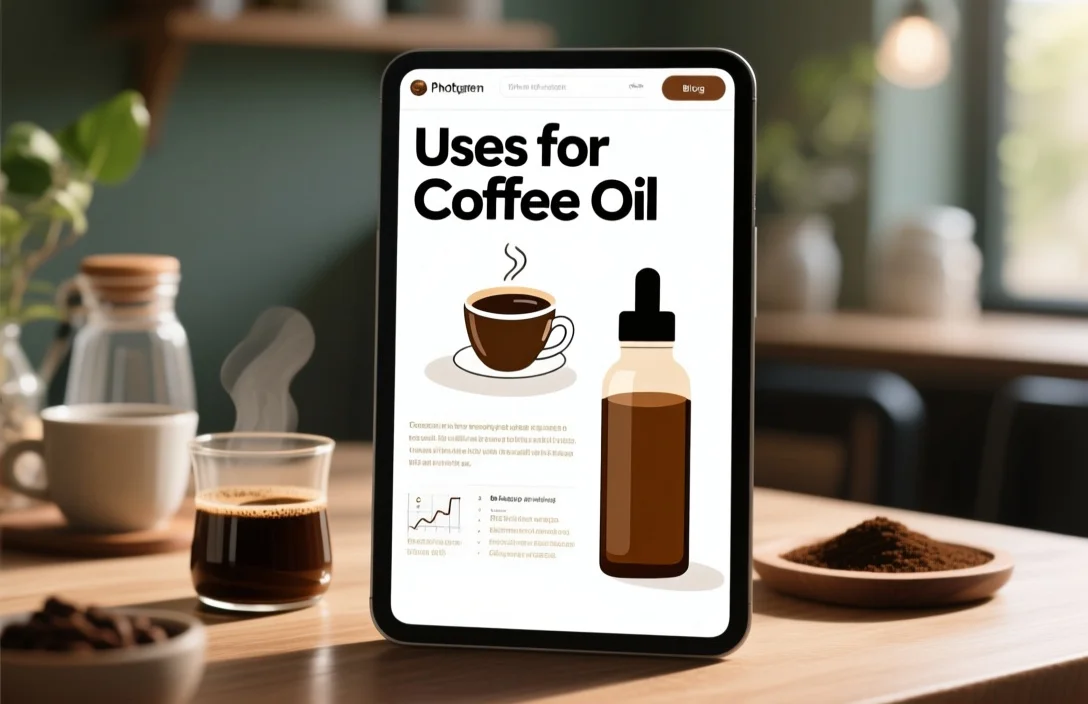
Coffee oil is a concentrated extract used for fragrance, topical skincare, hair treatments, flavoring (when food-grade), and craft projects. The focus keyword appears here: uses for coffee oil – this guide lists how people actually use it, when to choose a food-grade versus cosmetic-grade product, and step-by-step precautions for safe application.
What coffee oil is and why it smells like coffee
Coffee oil describes oils derived from roasted or green coffee beans by infusion, solvent extraction, or CO2 extraction, and it carries the coffee aroma that people associate with brewed cups. Producers sell two categories you will encounter in the U.S. market: oils intended for external use (cosmetic-grade) and oils intended for ingestion (food-grade), and those categories are not interchangeable.
Extraction method affects both scent profile and suitability for use. Cold infusion produces a softer, milky aroma suited to cosmetics; solvent or CO2 extracts capture stronger aromatics preferred by perfumers and flavor houses. After comparing the main options side by side, the practical difference is simple – choose food-grade for any culinary application and cosmetic-grade for topical formulas.
Practical uses for coffee oil
Skincare formulators use coffee oil as a scenting ingredient and as a supplement to creams, balms, and body oils because it layers well with citrus, vanilla, and spice notes. Aromatherapists and small-batch perfume makers use concentrated coffee extracts to provide a robust base note or “fixative” that anchors sweeter top notes while adding a roasted, warm character.
Hairdressers and at-home users apply coffee oil to scalp and strands for aromatic treatments and to temporarily mask odors from smoking or cooking. Candle and soap makers incorporate coffee oil to produce chocolate-espresso profiles that persist after saponification or burning. The list below shows primary categories at a glance:
- Fragrance and perfumery: base note, fixative, blending ingredient.
- Personal care: massage oil, body oil, hand cream scenting.
- Hair care: scalp massage, pre-shampoo treatments, fragrance boost.
- Culinary flavoring: extracts and infusions used sparingly in chocolate, baked goods, and confections when labeled food-grade.
- Crafts and home: soap, candle, and leather conditioning formulas.
How to use coffee oil in skin and body products safely
Begin every topical experiment with a patch test on clean skin behind the ear or on the inner forearm, applying the diluted product and waiting 24 hours for irritation or redness. Cosmetic-grade coffee oil is potent; dilution in a neutral carrier oil such as jojoba, sweet almond, or fractionated coconut oil reduces the risk of irritation and distributes the aroma more evenly across skin.
Formulators and home DIYers should prefer low-concentration usage when adding coffee oil to leave-on products. Some practitioners choose to blend a few drops of coffee extract into 30-60 mL of carrier for full-body applications. Patch testing and short-contact trials reduce risk for sensitive skin types and for those with fragrance allergies.
How to use coffee oil for hair and scalp
Scalp massage with a coffee-infused carrier can improve the scent profile of hair and temporarily mask unwanted odors. Users often warm a tablespoon of carrier oil with a drop or two of coffee oil, massage into the scalp for five to ten minutes, and follow with shampoo; that approach prevents over-concentration and makes rinsing predictable.
Application frequency depends on hair type and scalp sensitivity; for normal scalps, one treatment per week is common. Oily scalps benefit from shorter contact times while dry scalps may tolerate leave-in masks when the oil blend is light and designed for hair (non-comedogenic carriers reduce buildup).
Aromatherapy, fragrance, and home scent uses
Perfume makers value coffee oil as a base note because its roasted, deep tonality holds fragrances on skin and slows the evaporation of more volatile notes. Diffusion of coffee-only extracts yields a scent that many find cozy, but the material commonly used in diffusers is an infused oil mixed into a carrier rather than a pure solvent extract.
Home fragrance techniques include adding coffee oil to reed diffusers, wax melts, or as a small portion of a room spray. Professional perfumers typically blend coffee oil with vanillic, spicy, or woody notes to build a full accord; home users can replicate that by pairing coffee oil with orange, cinnamon, or sandalwood aromatics.
Culinary uses and when not to eat coffee oil
Food-grade coffee oil adds concentrated coffee flavor to chocolate truffles, ganaches, and certain confectionery where heat exposure is limited. Avoid putting cosmetic-grade coffee oil into food; manufacturers label edible products explicitly and those products conform to food-safety standards and purity specifications that cosmetic oils do not.
A practical culinary method uses a tiny quantity of food-grade coffee oil to flavor cold applications or to finish desserts after cooking. Professional chocolatiers and pastry chefs use concentrated extracts sparingly because strong coffee oil can overwhelm a recipe; start with extremely small amounts and increase incrementally while tasting.
Crafting, household, and small-business uses
Soapers and candle makers use coffee oil to create mocha or espresso-scented products that retail well at farmers markets and small craft shows. Soapmaking requires attention to saponification compatibility; soap makers who use concentrated extracts test small batches first to ensure the scent survives processing and curing.
Leather workers and woodworkers sometimes use coffee-infused oils as aromatic conditioners that leave a warm scent on finished goods. Small-business owners often monetize coffee oil by creating ready-to-sell combinations: coffee-scented beard oil, coffee body balm, and coffee-scented soy candles. Test batches and label accuracy improve customer satisfaction and reduce returns.
How to choose coffee oil
Read labels carefully because adjectives like “pure” and “natural” do not guarantee food safety or skin safety. Cosmetic-grade oils and flavor-grade oils are produced under different standards; look for explicit labeling such as “for cosmetic use only” or “food-grade” to match intended use.
Packaging and storage quality matter for shelf life and aroma retention. Preferred packaging includes amber glass bottles with tight caps to reduce oxidation, and cool, dark storage extends usable life. When possible, buy from vendors who disclose extraction method and solvent residual testing for CO2 or solvent-extracted products.
Common mistakes and how to avoid them
Applying coffee oil undiluted to skin is a frequent error that produces irritation, staining, or a patchy scent that wears unevenly. Buying the wrong grade for the job is another typical trap; consumers who plan to flavor food must confirm the product is expressly labeled food-grade.
Mixing incompatible carriers or combining coffee oil with photosensitizing citrus oils can yield unexpected reactions. The checklist below helps avoid common mistakes:
- Confirm grade: cosmetic vs food-grade.
- Patch test all topical formulas.
- Use a carrier oil for dispersion and dilution.
- Start with a conservative scent level and increase cautiously.
- Label homemade products clearly for intended use.
Troubleshooting scent loss, rancidity, and staining
Scent loss most commonly results from improper storage or extended heat exposure. Rancidity can occur if coffee-infused carrier oils are stored warm and exposed to oxygen for long periods; signs include a sour or stale odor rather than the expected roasted aroma.
Staining happens when concentrated oil contacts porous fabric or light-colored surfaces. Immediate blotting and a solvent like rubbing alcohol often remove fresh oil stains, while repeated washings may be needed for textiles. Users who rely on coffee oil commercially should label instructions for care and include storage guidance.
Quick reference: common uses, dilution guidance, and best-for
Below is a practical comparison to help match use case to method and grade. The table summarizes typical approaches rather than prescribing exact formula percentages; verify product labels and do a patch test before broad application.
| Use Case | Typical dilution/method | Best For |
|---|---|---|
| Body oil/massage | Blend small number of drops into carrier oil; test on skin first | Cosmetic-grade coffee extract, jojoba or sweet almond carrier |
| Hair/scalp mask | Warm carrier with a drop or two of coffee oil, short scalp massage | Cosmetic-grade oil, light carrier like fractionated coconut |
| Perfume base note | Add concentrated extract to alcohol or oil perfume base in small proportion | CO2 or solvent extract labeled for fragrance |
| Room scent/candle | Incorporate into wax or reed diffuser medium using manufacturer guidance | Fragrance-grade extract or coffee-infused fragrance oil |
| Culinary finishing | Use food-grade coffee oil sparingly on cooled confections | Edible, food-grade extract only |
| Soapmaking | Test small batch for scent retention through cure | Cosmetic/fragrance-grade oil, verify saponification compatibility |
Storage, shelf life, and labeling for small batches
Store coffee oil in a cool, dark place away from direct sunlight to slow oxidation and preserve aroma. Refrigeration is not required for most commercial products but can extend shelf life for homemade infusions that use delicate carrier oils.
Label homemade containers with batch date, carrier used, and intended use to prevent accidental ingestion or misuse. For small businesses, include allergen statements and clear instructions on whether a product is for external use only; those details reduce liability and improve customer confidence.
FAQ
Can coffee oil be used directly on the skin?
Dilute coffee oil into a carrier before skin application and perform a patch test on a small skin area for 24 hours. Avoid mucous membranes and the eye area; discontinue use on irritation.
Is coffee oil safe to ingest?
Only ingest products explicitly labeled as food-grade and produced under food-safety controls. Never use cosmetic-grade extracts or oils for culinary purposes.
Will coffee oil stain skin or fabrics?
Concentrated coffee oil can temporarily tint light fabrics and sometimes leave a faint residue on skin that washes off with soap. Blot fresh fabric stains immediately and launder per garment care instructions.
How long does coffee oil last once opened?
Shelf life varies with extraction and carrier; opaque glass and cool storage extend aroma life. Monitor for sour or off-odors that indicate rancidity and discard if detected.
What to avoid and warning signs
Avoid using any coffee oil product if the label is vague about grade or extraction method. Choose caution when gifting homemade products without ingredient lists; recipients with fragrance allergies or sensitive skin need transparent labeling.
Discard products that develop sour, fermenting, or otherwise “off” odors, and stop topical use if you notice redness, itching, swelling, or blistering. Seek medical advice if a severe allergic reaction occurs.
Practical verdict and next ste
If you want a warm coffee aroma in candles or skincare, buy a cosmetic or fragrance-grade coffee extract and perform a small patch test. For culinary uses, purchase an explicitly labeled food-grade coffee oil and start with an extremely small amount in finished, cooled dishes.
Start by deciding which application matters most to you – fragrance, skincare, hair, or food – then choose the correct grade and run a small trial batch using the guidelines above.

- Espresso Tastes Watery? 10 Common Causes and How to Fix It - October 23, 2026
- 10 Common Coffee Equipment Cleaning Mistakes and How to Avoid Them - October 23, 2026
- 17 Common Coffee Grinder Problems and How to Fix Them - October 23, 2026