
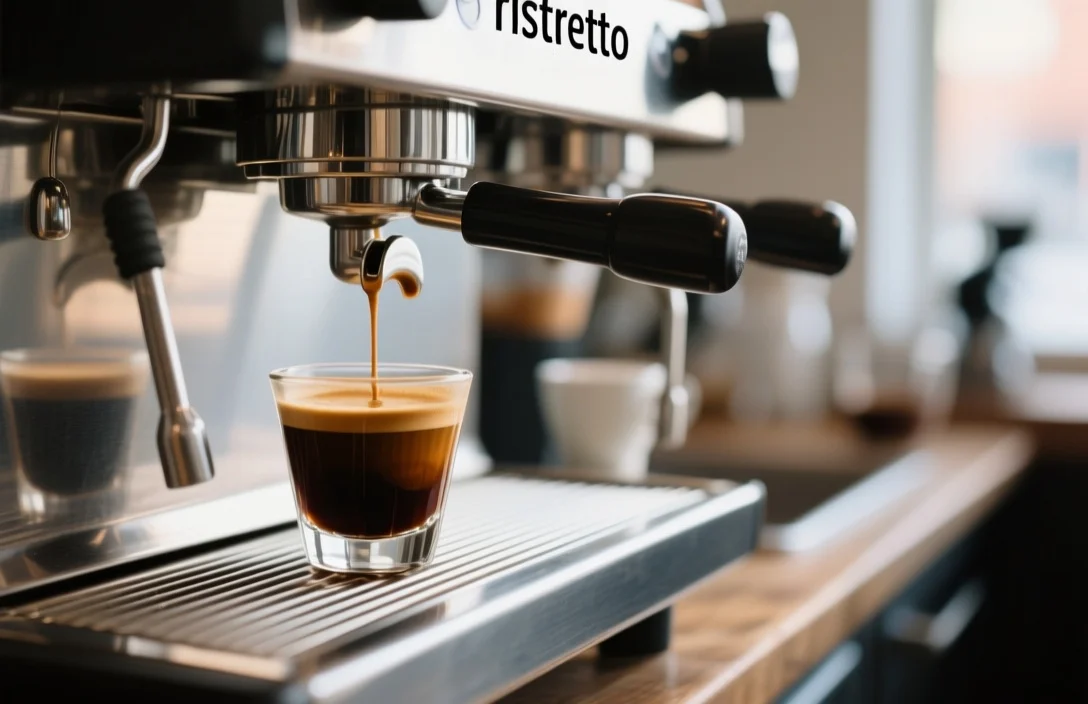
Ristretto is the better pick if you want a smaller, sweeter, syrupier shot. Espresso is the safer everyday choice if you want something balanced, more versatile, and easier to use in milk drinks or an Americano. If I had to reduce the comparison to one practical rule, I would say this: choose ristretto for straight sipping, choose espresso for almost everything else.
Ristretto vs Espresso: Quick Verdict
Ristretto pulls less liquid through the same coffee puck, so the shot feels tighter, denser, and usually less bitter. Espresso uses more water and gives you a fuller extraction, which makes it easier to balance with milk and dilution. That is the cleanest way to think about it.
If you like a concentrated shot on its own, ristretto makes sense. If you want a base that can go into a latte, cappuccino, or Americano without getting awkward, espresso is the more practical order.
What each shot actually is
A ristretto is Italian for restricted, and that is exactly the idea. It is made with the same espresso machine and the same type of coffee puck, but the shot is stopped earlier and yields less liquid. A common brew ratio for ristretto is about 1:1 to 1:1.5.
A standard espresso, often called normale, uses more water. A typical brew ratio is around 1:2, with a yield of roughly 36-40g from about 18-20g of ground coffee. Both drinks are made under pressure, usually around 9 bar. The difference is mostly how far the extraction is allowed to go.
Why the flavor changes
I keep coming back to extraction, because that is where the whole comparison lives. Coffee compounds do not leave the puck all at once. The brighter acids and aromatics tend to come first, the sweeter middle notes follow, and the harsher bitter compounds show up later. A ristretto cuts the shot short, so it tends to lean into the sweeter, more concentrated part of the extraction.
That is why ristretto is often described as syrupy, thick, and less bitter. Espresso is broader and more balanced because it captures more of the shot. It usually tastes more complete, which is another way of saying it gives you more range, and more bitterness too.
Grind matters here. To pull a ristretto properly, many baristas go 1-2 settings finer than they would for a normale espresso, then stop the shot earlier, around 15-20 seconds. If the grind is too coarse, the shot can taste thin. Too fine, and you can get channeling or an over-extracted mess.
Side-by-side comparison
Here is the useful comparison, stripped down to the parts most people actually care about.
| Attribute | Ristretto | Espresso (Normale) |
|---|---|---|
| Brew ratio | 1:1 to 1:1.5 | 1:2 |
| Typical yield | 15-20g (0.5-0.7 oz) | 36-40g (1.2-1.4 oz) |
| Extraction time | 15-20 seconds | 25-30 seconds |
| Flavor profile | Sweet, intense, syrupy | Balanced, complex |
| Body | Thick, heavy | Creamy, full |
| Caffeine (per shot) | 60-70mg | 63-75mg |
The table is useful because it shows what is different and what is not. The two drinks are closer than people assume. Ristretto is smaller and more concentrated, but espresso is not a weak version of it. It is the standard form.
Caffeine and perceived strength
This is where people tend to overstate the difference. A ristretto often tastes stronger because it is more concentrated, but that does not automatically mean it has much more caffeine. The ranges commonly given are 60-70mg for ristretto and 63-75mg for espresso, which are close enough that I would not choose between them on caffeine alone.
If your goal is total caffeine, a larger dose or a longer drink like a lungo is usually the more relevant move. Ristretto can feel more intense, but perceived strength is not the same thing as caffeine content.
Who should choose each one?
My practical rule is simple.
Choose ristretto if:
- you drink espresso straight
- you want a sweeter, denser shot
- you like light-roast or fruity beans
- you want less bitterness in the cup
- you are making a smaller milk drink, such as a flat white
Choose espresso if:
- you want a dependable base for milk drinks
- you order cappuccinos, lattes, or Americanos
- you want a more traditional espresso profile
- you want a shot that is easier to scale up in recipes
- you prefer balance over intensity
Straight sipping can go either way. That is where preference matters most.
How each one behaves in drinks
This part is often skipped, but it matters in real life. Ristretto is a smart choice in a flat white because its concentrated body can stay present in the milk. Espresso is usually better in a latte or cappuccino, where a larger milk volume needs a fuller shot to keep the drink from tasting hollow.
For an Americano, I would use espresso. Ristretto can work, but the small volume gets diluted quickly and can lose definition. Espresso gives you a better base for that drink.
Common mistakes people make
The most common mistake is assuming ristretto is always stronger in every sense. It is stronger in flavor intensity, but not necessarily in caffeine.
Another mistake is using the same shot settings for every bean. Roast level changes how fast coffee extracts. A light roast may benefit from ristretto because it can lean into sweetness, while a darker roast can become overly sharp or acrid if you push concentration too far.
Crema is another trap. It is tempting to judge the shot by the top layer alone, but crema volume is not a reliable measure of quality. A ristretto can look less dramatic and still taste better.
How to pull each shot at home
If you want to compare them properly, keep the dose the same. Use about 18-20g of coffee for both shots so the only real variable is extraction.
For ristretto:
- Grind slightly finer than your usual espresso setting.
- Distribute the grounds evenly and tamp level.
- Pull the shot for about 15-20 seconds.
- Stop around 15-20g of liquid output.
For espresso:
- Use your baseline espresso grind.
- Tamp evenly and keep the puck consistent.
- Pull for about 25-30 seconds.
- Aim for about 36-40g of liquid output.
I would change only one thing at a time. If the shot tastes sour, go finer. If it tastes bitter or dry, go coarser. Write down the setting, because memory is unreliable once you switch beans.
Pairings that make sense
Ristretto pairs well with smaller milk drinks and with beans that have sweetness or fruit character. Espresso is the better all-around partner for standard café drinks.
A useful shorthand:
- Flat white, ristretto
- Latte, espresso
- Cappuccino, espresso
- Americano, espresso
- Straight shot, either one
That is not a rigid law. It is just the pattern that makes the most sense most of the time.
When ristretto is the wrong order
I would skip ristretto if the drink is going to be heavily diluted. It can lose its shape too quickly in a large iced drink or an Americano. I would also be cautious with very dark roasts, because the tighter extraction can make bitterness feel sharper instead of smoother.
If a customer expects a standard shot and gets a ristretto without warning, the complaint is usually about volume, not taste. That is why the distinction matters. The cup may be small in a way some people do not expect.
FAQ
Is ristretto stronger than espresso?
It is stronger in taste, usually not in caffeine. Ristretto feels more concentrated because it pulls less liquid and emphasizes the sweeter middle of the extraction.
Does ristretto have less caffeine than espresso?
Not reliably. The usual ranges are close, about 60-70mg for ristretto and 63-75mg for espresso. The actual number depends on dose, roast, and yield.
Can I use ristretto in milk drinks?
Yes, especially in smaller drinks like a flat white. For larger milk drinks, espresso is usually the better fit.
How do I make a consistent ristretto?
Use the same dose as espresso, grind 1-2 clicks finer, and stop the shot earlier, around 15-20 seconds. Then taste and adjust in small steps.
Should cafés offer ristretto by default?
I would not make it the default, but I would keep it on the menu. It gives customers another option without requiring a different bean or a different machine.
If you only remember one thing, make it this: ristretto is about concentration, espresso is about balance. That is the real tradeoff, and it explains most of the choice.

- Espresso Tastes Watery? 10 Common Causes and How to Fix It - October 23, 2026
- 10 Common Coffee Equipment Cleaning Mistakes and How to Avoid Them - October 23, 2026
- 17 Common Coffee Grinder Problems and How to Fix Them - October 23, 2026