
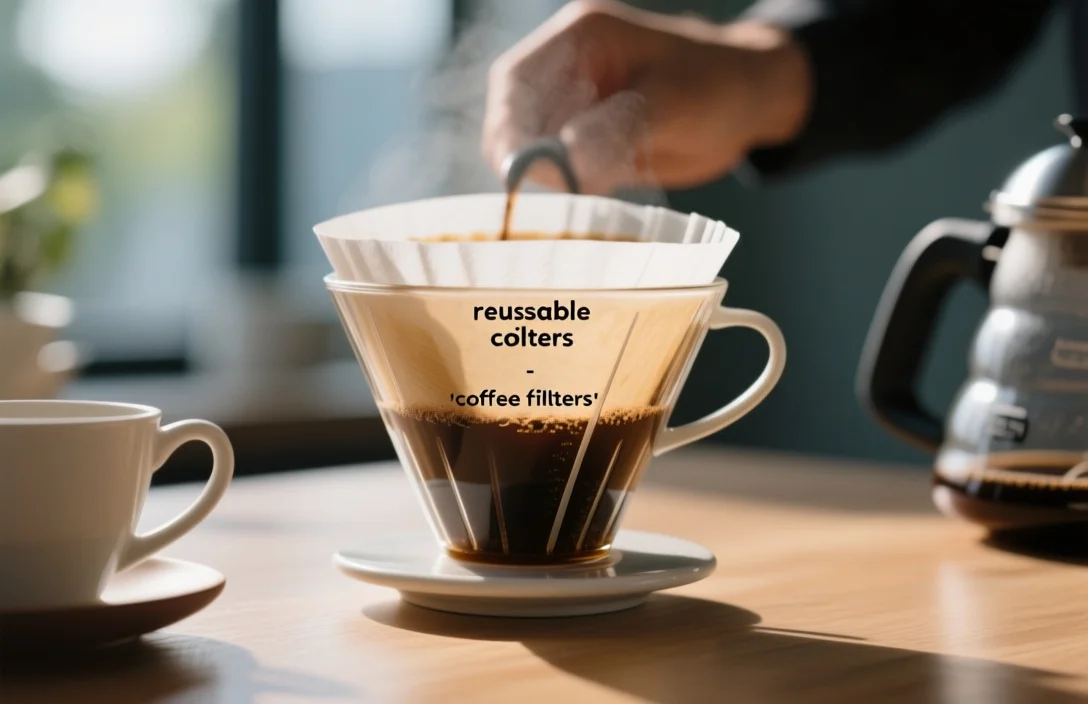
Reusable coffee filters are washable brewing inserts made from metal mesh, cloth, or durable nylon that replace disposable paper filters. Use them to cut waste, change mouthfeel by allowing more oils through, and save money over time – results depend on the material, grind, and routine maintenance. This guide explains how each type works, how to pick one for your brewer, how to clean and care for it, and the trade-offs you’ll accept in flavor, convenience, and cost.
What reusable coffee filters are and why people pick them
Reusable coffee filters come in three common families: metal (stainless steel or “gold-tone” mesh), cloth (natural fibers such as cotton), and synthetic mesh (nylon or food-safe polymer). Each family captures grounds differently: metal and nylon let most coffee oils and fine particles through, producing fuller-bodied cups; cloth traps more fines and oils, yielding a cleaner cup closer to paper-filtered coffee.
Home brewers choose reusable filters for three practical reasons: to reduce single-use paper waste, to lower ongoing costs, and to alter the coffee’s texture and flavor. Some people switch because they dislike the paper taste that occasional paper filters impart. Others make the choice for convenience – no need to buy or store stacks of single-use filters – or to match a specific brewing profile, such as wanting a heavier-bodied pour-over or a cleaner Chemex-style cup without paper.
After comparing the main options side by side, the key user trade-offs are clear: metal offers durability and easy rinsing; cloth offers the cleanest cup but requires more care; nylon sits between the two on flavor and upkeep. Expect a learning curve: grind size, tamping or agitation, and rinsing patterns all need small adjustments when you migrate from paper to a reusable filter.
How reusable filters change extraction and taste
Extraction behavior changes because the filter alters which particles and oils remain in the brewed coffee. Metal and nylon meshes are more porous than paper. Those pores let through more of the coffee’s natural oils and tiny suspended solids, increasing perceived body and mouth-coating texture. Cloth filters trap a higher proportion of the very fine particles and oils, which produces a cup with brighter clarity and cleaner finish.
Flow rate through a reusable filter also affects extraction. Mesh filters can allow faster flow unless you use a finer grind; that faster flow tends to lower extraction unless grind size or brew time is adjusted. Cloth filters generally slow flow compared with metal or paper, so you might see longer contact time that increases extraction; a coarser grind can compensate. Most pour-over recipes written for paper filters therefore need small adjustments – grind coarser with cloth, slightly finer with metal depending on the exact mesh.
Clogging behavior differs by material. Cloth will clog fastest with very fine espresso-like grinds and requires more aggressive cleaning to remove oils that build up over repeated uses. Metal and nylon are less prone to clogging and can be rinsed or scrubbed; metal is amenable to short ultrasonic or dishwasher cycles if the manufacturer allows it. For people who want more oil in the cup – for mouthfeel or to complement darker roasts – metal or nylon is the practical choice. For those prioritizing brightness and sediment-free clarity, cloth is the better option.
Reusable coffee filters
After testing multiple filter styles conceptually and reviewing marketplace options, these are the most common categories and their practical match-ups for home use.
| Name | Price/Key Spec | Best For |
|---|---|---|
| Stainless steel cone / basket (fine mesh) | $5 to $10 | Brewers wanting durable, hands-off cleaning and a fuller-bodied cup |
| Cloth flat or cone filter (cotton/organic) | Up to $5 / $5 to $10 | Brewers who favor clarity and are willing to maintain the filter (rinse + periodic boiling) |
| Nylon/mesh reusable (polymer mesh) | $5 to $10 | In-between option for balanced body and convenience; often dishwasher-safe |
| Permanent basket (snap-in for drip machines) | $5 to $10 / $10 & above | Owners of automatic drip machines who want a permanent replacement for paper baskets |
| Reusable pod (for single-serve machines) | $5 to $10 / $10 & above | Users of capsule or pod machines aiming to cut cost per cup and waste |
Marketplace price filters commonly use these buckets: Up to $5; $5 to $10; $10 & above. Prices and exact materials vary by brand and size; always check the seller’s product page for dimensions, compatible brewers, and whether the manufacturer lists dishwasher compatibility or food-safe material certifications.
The table above organizes choices by the consumer trade-offs you actually make. Stainless steel and permanent baskets last the longest and tolerate rougher treatment. Cloth needs dedicated care and sometimes a break-in cycle to remove residual manufacturing oils. Nylon sits between the two in taste and maintenance and often wins on convenience for dishwasher-safe models.
How to choose the right reusable filter for your brewer and taste
Start with the brewer you own. Cone-shaped pour-overs like a Hario V60 or many Chemex models need cone-compatible filters with the correct depth and width. Basket-style drip machines require a circular basket filter matched to the basket diameter and lip height. Single-serve pod machines need a specific reusable pod designed for that brand and model.
Next, match the filter material to the flavor you want. Choose cloth if you want the cleanest cup closest to paper. Pick metal if you want more body and are okay with some fines and oils in the cup. Select nylon if you want a compromise between the two and value dishwasher-friendly cleaning.
Consider durability and maintenance as a second-order criterion. If you travel or want low fuss, metal or nylon is usually better because they tolerate rinsing and scrubbing without special care. If you brew multiple times per day, a durable metal filter will reduce the number of replacements you’ll buy. If sustainability and compostability matter most, cloth made from natural fibers can be composted at the end of its life if any non-biodegradable stitching or coatings are absent.
Compatibility checklist:
- Measure the filter footprint (diameter and depth) and compare to your brewer’s basket.
- Confirm the filter shape: cone vs. flat-bottom basket vs. pod-type.
- Check manufacturer notes for dishwasher tolerance, heat limits, and whether the filter is recommended for use with high-pressure devices (avoid using standard reusable pour-over filters in pressurized espresso machines).
- Buy a spare cloth filter if you choose cloth – drying time and the risk of mold mean having a second filter keeps your morning routine smooth.
Ranked by maintenance burden, then by flavor clarity at that maintenance level, the suggested order is: cloth (highest clarity, highest upkeep), nylon (moderate clarity, easy upkeep), stainless steel (lowest upkeep, fullest body).
Cleaning, drying, and extending filter life
Rinse every reusable filter immediately after brewing to remove the majority of grounds. For metal and nylon meshes, a hot-water rinse and light brush remove most residue. For cloth filters, flip out the puck of grounds and rinse under running water until the water runs clear; some brewers recommend a quick, gentle squeeze of the cloth to expel trapped grounds without twisting.
Deep-clean methods vary by material. Metal filters tolerate periodic soaking in a mild solution of hot water and baking soda or a low-strength vinegar rinse to break down oils and mineral buildup; aggressive dishwashing detergents or steel wool can damage protective coatings. Cloth filters benefit from occasional boiling or a short soak in a dilute baking soda solution to dissolve built-up oils, followed by thorough rinsing and sun-drying. Nylon-based filters often list dishwasher compatibility on the package, but confirm with the product documentation.
Follow these cleaning steps as a basic routine:
- Discard grounds into compost or trash.
- Rinse the filter under hot running water immediately after use.
- Brush lightly with a soft brush for residual grounds on mesh filters.
- Weekly: soak in hot water with a tablespoon of baking soda or white vinegar for 10-20 minutes, then rinse thoroughly.
- Dry cloth filters flat or hang them in direct sun to prevent mold. Rotate between at least two cloth filters when using daily.
Signs a filter needs replacement:
- Cloth that retains stale coffee odor after cleaning or shows dark, oil-stained patches that won’t rinse out.
- Metal mesh with frayed edges, holes, or permanent clogging.
- Warping or degraded sealing surfaces on reusable pods or plastic-framed filters.
Always follow the manufacturer’s care guidance if available. If you cannot find care instructions, prefer gentle cleaning methods and periodic inspection rather than high-heat cycles that might accelerate material fatigue.
Practical trade-offs
Reusable filters reduce single-use paper waste but introduce a different set of costs: purchase price, water and energy for cleaning, and eventual replacement frequency. Durability favors metal filters; cloth and nylon require replacements at different intervals depending on use and care.
Many marketplaces classify reusable items by price buckets such as “Up to $5”, “$5 to $10”, and “$10 & above.” The immediate outlay can be low, but the true cost-to-ownership depends on how often you brew and whether you buy extras. Cloth filters require more initial effort: a break-in process (multiple hot-water rinses before first use) and a replacement schedule if they begin to smell or stain. Metal filters pay back faster on convenience because they can be rinsed and reused dozens to hundreds of times without special treatment.
Time trade-offs matter. Metal cleans in 30-60 seconds of rinsing; cloth can take several minutes followed by drying time. If you have a busy morning routine, the slight added effort for cloth maintenance may outweigh the environmental benefit for you personally. For households with multiple daily brews or shared kitchens, a stack of inexpensive paper or multiple cloths can smooth logistics; alternatively, several metal filters prevent bottlenecks with minimal fuss.
Health and safety precautions are straightforward: choose filters marketed as food-safe and verify material labels like “BPA-free” or “food-grade stainless steel” where present. Reusable materials that degrade or flake should be retired. Cloth filters left damp in dark storage are vulnerable to mold; always dry and store them fully dry.
Common mistakes and how to avoid them
A frequent mistake is using the exact same grind and recipe that worked for paper filters. That approach often yields either under-extracted or over-extracted coffee with reusables. If you switch to cloth, coarsen the grind slightly. If you switch to metal and notice weak extraction, try a slightly finer grind or a longer pour.
Packing or tamping grounds into a reusable filter is another error. Compacting grounds inhibits even flow and causes channeling; aim to level grounds by gentle shaking or a light swirl, not by pressing down hard. Over-filling cone filters beyond the recommended maximum can also force fines into the brew and create overflow or clogging.
Neglecting drying routines causes mold in cloth filters and stale odors in any reusable. Always hang cloth filters to dry after rinsing and rotate between at least two to three units if you brew daily. Using abrasive scrubbers on fine mesh erodes protective coatings and widens holes; use soft brushes or non-abrasive sponges.
Avoid these errors:
- Using too-fine espresso grind in pour-over reusable filters.
- Leaving wet cloth filters in dark drawers for long periods.
- Boiling metal filters repeatedly in harsh chemicals that can strip finishes.
- Assuming dishwasher-safe labels apply to all mesh types – confirm on the product page.
A short checklist before purchase and first use:
- Confirm exact dimensions and shape for your brewer.
- Buy at least one spare cloth if choosing cloth.
- Read care instructions and the product’s material certifications.
- Start with a small recipe adjustment: a 10-15% grind coarsening for cloth or a 5-10% grind refinement for metal may reduce trial-and-error time.
Where to buy, price signals, and what to check on the product page
You can buy reusable coffee filters from general online marketplaces, specialty coffee retailers, and some local kitchen supply stores. Marketplace price filters typically show three buckets: Up to $5; $5 to $10; and $10 & above. Those buckets help you quickly screen budget versus premium options, but product pages usually contain the critical details you need.
Key product page checks:
- Exact dimensions and weight.
- Material declaration (stainless steel grade, cotton origin, nylon type).
- Dishwasher compatibility and maximum safe temperature.
- Compatible brewer models explicitly listed or a clear note on shape and dimensions.
- Care instructions, including whether a cloth filter requires a recommended break-in or boiling cycle.
- Return policy and warranty, especially for pricier permanent baskets or reusable pods.
Local retail can be advantageous when you want to inspect the mesh tightness or fabric weight before buying. Specialty coffee shops sometimes sell cloth filters made to their recipes; those can be a good choice for proven compatibility with specific brew styles. For single-serve pod replacements, verify compatibility with your machine’s pressure and sealing design; not all reusable pods fit every model.
If price is the primary decision factor, the marketplace buckets provide a quick signal; if flavor control, maintenance, or longevity matter more, read the fine details on material and care. Buying at least one extra cloth filter remains a practical move if you pick cloth as your main option.
FAQ
Will a reusable filter make my coffee taste different?
Yes. Metal and nylon filters allow more oils and fine particles through, increasing body and mouthfeel. Cloth filters trap more oils and fines and deliver a cleaner, brighter cup similar to paper.
Are reusable filters safer than paper filters?
Reusable filters made of food-safe stainless steel, food-grade nylon, or untreated cotton are safe when used according to manufacturer care instructions. Replace any filter that shows degradation, off-odors that won’t rinse out, or signs of mold.
How often should I replace a cloth filter?
Replace cloth filters when they retain a stale or rancid coffee smell after proper cleaning, show persistent stains that don’t rinse out, or develop thinning or holes. Frequency depends on brew volume and cleaning diligence.
Can I use a reusable filter in a drip coffee maker instead of paper baskets?
Yes, but match the shape and diameter exactly to prevent grounds bypassing the filter or improper sealing. Some drip machines require a specific lip height for the filter to sit correctly.
Do reusable filters save money?
They can. Upfront costs replace recurring paper purchases; exact savings depend on how often you brew and the filter’s purchase price. Consider water and time for cleaning as part of the total cost of ownership.
Will a reusable pod damage my single-serve machine?
Not when the pod is designed for your machine and used correctly. Confirm the pod’s compatibility, avoid overfilling, and follow manufacturer cleaning and maintenance steps to prevent pressure or seal issues.
Final practical verdict: If you want lower ongoing waste and are willing to accept small recipe and maintenance changes, choose a reusable filter that matches your brewer and taste goals – stainless steel for low maintenance and fuller body, cloth for clarity, nylon for a middle ground. Next step: measure your brewer’s basket or cone, decide which flavor profile you prefer, and pick a filter that explicitly lists compatibility and care instructions on the product page.

- Espresso Tastes Watery? 10 Common Causes and How to Fix It - October 23, 2026
- 10 Common Coffee Equipment Cleaning Mistakes and How to Avoid Them - October 23, 2026
- 17 Common Coffee Grinder Problems and How to Fix Them - October 23, 2026