
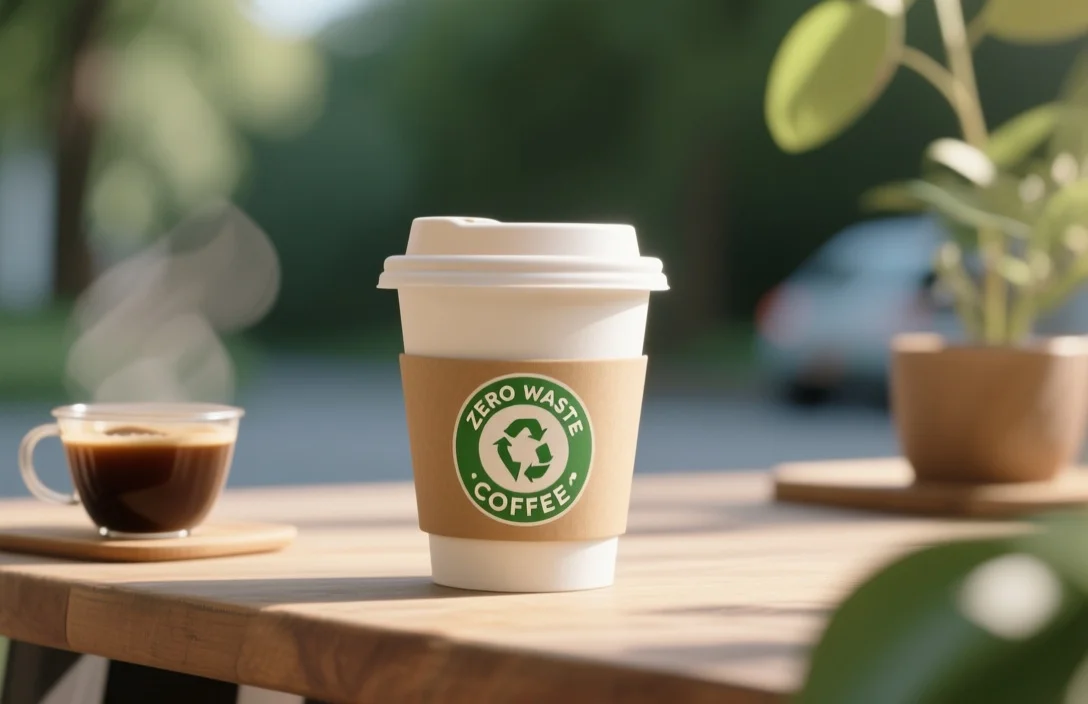
Zero waste coffee means drinking coffee while avoiding single-use packaging and keeping organic waste out of the trash by using reusable gear and composting grounds. This guide shows practical choices you can make at home, at work, and on the move to cut the usual paper, plastic, and pod waste that coffee creates.
What zero waste coffee looks like at home
Zero waste coffee begins with three commitments: buy beans with minimal packaging, brew with reusable or long-lived equipment, and return used coffee grounds to the soil or reuse them around the house. A household that follows these principles will favor bulk or bag-free beans, metal or cloth filters, a reusable travel cup, and a compost or bokashi setup for spent grounds.
Many readers think zero waste requires radical lifestyle change. Small, consistent swaps create most of the reduction: switching from single-use pods to a French press or AeroPress, replacing disposable paper filters with a metal one, or choosing beans that come in recyclable or returnable packaging. Expect the practical work to be mostly habit-building – rinsing and drying reusable gear, collecting grounds, and choosing different suppliers when you run out of your usual brand.
Why coffee creates so much waste
Coffee’s waste footprint concentrates in two places: packaging and used grounds. Roasted beans are often sealed in multi-layer bags to preserve freshness, and those bags are difficult to recycle because they combine foil, plastic, and paper. Single-serve pods add a mechanical layer of waste from plastic and aluminum or non-compostable casings.
Cafés and on-the-go consumption contribute disposable cups, lids, stirrers, and milk cups. Organic waste matters because grounds going to landfill decompose anaerobically and can produce methane. Choosing composting or reuse routes diverts most of that biological waste from the methane-producing path and returns nutrients to soil instead.
After comparing brewing systems
After comparing the main options side by side, the environmental trade-offs become clear: systems that require consumable filters or pods generate steady waste, while simple devices with reusable filters push the footprint into the manufacturing phase instead. The table below compares common brewing methods by waste profile and best use case.
| Name | Price / Key Spec (waste profile) | Best For |
|---|---|---|
| French press | Metal/Glass device, no paper filters; long-lived parts | Home drinkers who want strong coffee and low single-use waste |
| Pour-over (V60, Chemex) | Paper filters unless paired with reusable metal/cloth filter; simple hardware | People who value clarity and ritual and will use reusable filters |
| AeroPress | Small plastic device; potential for reusable metal filter or single-use paper | Travelers and small-batch brewers who want low waste with fast clean-up |
| Espresso machine | Requires tamping and frequent maintenance; coffee puck compostable; some models use pods | Espresso lovers who make many drinks at home or in offices |
| Single-serve pods | High convenience; steady disposable plastic/aluminum/bioplastic waste | Users prioritizing convenience, not recommended for zero waste |
Choosing a brewing method requires ranking the priorities you have: zero single-use waste, lowest lifecycle footprint, convenience, or brew quality. Those prioritizing minimal daily waste should prefer devices that eliminate paper filters and pods. Buyers focused on manufacturing footprint should buy robust equipment with long warranties to amortize the manufacturing impact over years.
How to buy beans with minimal waste
Choose local roasters that sell beans in bulk or that accept returned roaster bags for reuse. Reusable bag programs, bulk bins at co-ops, and roasters that allow you to bring your own container cut packaging waste at the source. If you shop online, look for suppliers that ship in recyclable cardboard or offer reusable retail containers.
Smaller roasters often use smaller-batch packaging and may be willing to coordinate a refill or in-store pickup. Farmers’ markets and co-ops can let you weigh out beans into a jar. Buying whole beans and grinding at home reduces stale-waste because you buy less often and keep freshness longer, provided you store beans in an airtight, cool container away from light.
Filters, grinds, and equipment choices that reduce waste
Metal or cloth filters remove the need for daily paper filters and are dishwasher-safe or easy to rinse. Reusable stainless steel filters trap more fines and oils than paper, producing a fuller cup but a different taste profile. Cloth filters offer a middle ground: clearer cup than metal and less trash than paper, but require careful drying to prevent mildew.
Grinding at home matters because pre-ground coffee is usually packaged in smaller, more frequent bags. Burr grinders produce consistent particle size that works across brew methods and prolong freshness; blade grinders create inconsistent grind and may push you to discard coffee sooner. Reusable pod systems exist for some single-serve machines, but compatibility and seal integrity vary; test a returned or secondhand reusable pod before committing to avoid machine damage.
Setting up a zero-waste coffee routine
- Bring a reusable cup or mug to work or the café and ask for in-cup service.
- Buy beans in bulk or in reusable/returnable packaging; store in an airtight container at home.
- Use a reusable filter or a brewing method that needs no daily disposables.
- Collect spent grounds in a dedicated container and add them to your compost or use them around the garden.
- Maintain equipment: dry filters and rinse gear immediately after use to prevent mold and extend service life.
Completing those steps removes the most frequent waste flows. Each step has small practical requirements: rinse filters promptly, label your storage container, and keep a small compost bin in the kitchen for wet waste. The routine will become quicker once the habit locks in and your barista recognizes your mug.
Composting, reusing grounds, and alternative disposals
Composting is the most direct route for spent coffee grounds. Grounds are high in nitrogen and are best mixed with carbon-rich materials like dry leaves, shredded paper, or wood chips to balance the pile. If you use a municipal compost service, check whether they accept coffee grounds – some curbside programs accept them, others require drop-off.
Gardening uses for grounds include soil amendment, worm bin feedstock, and slug deterrent when used as a perimeter ring around plants. Grounds can also be dehydrated and used as a garden topdressing mixed into potting mixes. Avoid piling wet grounds in a sealed container for long periods; anaerobic conditions encourage odors and pests. For city dwellers without compost access, community gardens, urban compost hubs, or municipal organics drop-off points are practical alternatives.
Zero waste coffee on the go and at cafés
Bring-your-own-cup policies have become common in many cafés, but baristas differ in how they handle personal containers due to health and logistics rules. Foldable, collapsible cups and insulated travel mugs make carrying a reusable easier. Some cafés offer a small discount for customers who bring their own cup – ask before ordering to save money and waste.
Refusing single-use extras helps too: request no lid, no stirrer, and no napkin if you don’t need them. For takeaway situations where you expect to be out for hours, thermoses that keep coffee hot eliminate the need for lids and protect the beverage’s heat profile. When ordering milk or cream in a café, using a glass or metal cup for a pour-over in-house removes the need for disposable milk cups.
Common mistakes and how to avoid them
Assuming biodegradable equals compostable causes confusion. Products labeled “biodegradable” can still require industrial composting to break down and might not dissolve in a backyard pile. Check for “certified compostable” labels if you rely on municipal or home composting; otherwise, choose reusable options.
Neglecting to dry reusable filters leads to mold. After rinsing, spread metal or cloth filters to dry on a rack; store them fully dry. Washing reusable cups in the dishwasher is usually fine, but check the manufacturer’s cleaning guidance for lids and seals to prevent premature breakdown.
Over-optimizing on certain swaps can backfire. For instance, driving long distances specifically to buy bulk beans defeats the carbon savings from reduced packaging. Choose local options or consolidate shopping trips to keep the footprint advantageous.
Cost, convenience, and trade-offs to expect
Expect a different distribution of costs and effort when you shift to zero waste coffee. Upfront investment in a quality burr grinder, a French press or metal filter, and a thermos typically replaces regular purchases of paper filters and pods. Time costs include rinsing gear and collecting grounds for compost rather than tossing them.
People willing to spend slightly more up-front tend to save money and waste in the medium term because they avoid repeatedly buying disposable filters and pods. Convenience-oriented choices like reusable capsules or fast-brew devices will reduce waste but still require more personal attention than single-use pod systems.
How to bring zero waste coffee into a workplace or shared setting
Start by offering a community grinder, labeled reusable cups, and a clearly marked compost bin in the kitchen. Coordinating a rota for cleaning shared gear and emptying the compost prevents one person from carrying the whole burden. Employers can incentivize reusable cup use by offering small discounts or featuring a visible refill station.
Education matters: short, posted instructions on how to use a metal filter, where to deposit grounds, and how to disassemble and clean shared espresso parts will reduce accidental contamination. Bulk buying for the office using large bags or sacks placed in airtight dispensers usually reduces per-cup packaging waste compared to individually packaged pods or capsules.
Product and program cautions that matter
Recycling claims vary by region and are often conditional. If a roaster advertises recyclable packaging, verify whether your local recycling service accepts the material. Programs that offer to take back used coffee packaging can be helpful, but check shipping or drop-off requirements before assuming convenience.
Capsule recycling schemes sometimes rely on centralized collection points that add transport emissions and handling. Reusable capsules are attractive, but tightly sealed designs differ across machines – check compatibility carefully to avoid damage to espresso units. When a purchase seems to solve waste entirely, read the fine print for processing requirements or end-of-life handling.
Practical
Home minimalism: An all-glass French press, whole-bean purchases in bulk, a small electric burr grinder, and a countertop compost pail. This setup minimizes disposables and has a compact footprint.
Balanced convenience: An AeroPress with a metal filter, beans in resealable recyclable bags, a travel thermos, and access to a municipal compost drop-off once a week. This balances brew speed with waste reduction.
Office system: Central hopper grinder, pour-over station with cloth or metal filters for staff, labeled compost collection, and a roaster partnership for bulk delivery in reusable containers. This approach spreads costs and reduces single-use waste in a shared environment.
FAQ
Can I compost coffee grounds in my backyard compost pile?
Yes. Coffee grounds are a nitrogen-rich “green” material and should be mixed with carbon-rich “browns” such as dry leaves or shredded paper. Distribute grounds evenly and avoid thick layers that compact, which can slow aerobic decomposition and attract pests.
Are paper filters better for the environment than metal filters?
Not always. Paper filters are biodegradable but create single-use waste. Metal filters are reusable and eliminate repeated paper use, but they require manufacturing resources and consume water and energy for cleaning. The better choice depends on how long you keep the metal filter and whether you compost paper filters.
Do reusable coffee pods actually reduce waste?
They can reduce disposable pod waste if you use them consistently and clean them properly. Compatibility with machines varies, and some reusable pods require more work to fill and tamp. Weigh convenience against environmental benefit before switching.
Is bringing a reusable cup hygienic at cafés?
Many cafés accept reusable cups and have staff procedures for handling them safely. Keep your cup clean and closeable, and be prepared for baristas to request that you place the cup on the counter rather than handing it over, depending on local health rules.
What if my city doesn’t accept coffee grounds in compost?
Look for community gardens, urban compost hubs, or commercial compost drop-off sites that accept grounds. Some cafés accept used grounds for their own composting or local farms. If none of these are available, use spent grounds for household cleaning or garden odor control after drying.
How often should I clean a metal filter or cloth filter?
Rinse a metal or cloth filter immediately after each use and perform a deeper cleaning weekly or as needed. Allow cloth filters to air dry completely; sanitize metal filters periodically by boiling or brushing to remove oils.
A short, practical verdict and next ste
Zero waste coffee is achievable through a handful of targeted swaps: buy bulk or returnable beans, choose reusable filters and cups, and compost grounds or find local reuse routes. Start by committing to one change this week – bring a reusable cup, buy whole beans in bulk, or add a countertop compost bin – then add the next change when that habit is solid.

- Espresso Tastes Watery? 10 Common Causes and How to Fix It - October 23, 2026
- 10 Common Coffee Equipment Cleaning Mistakes and How to Avoid Them - October 23, 2026
- 17 Common Coffee Grinder Problems and How to Fix Them - October 23, 2026