
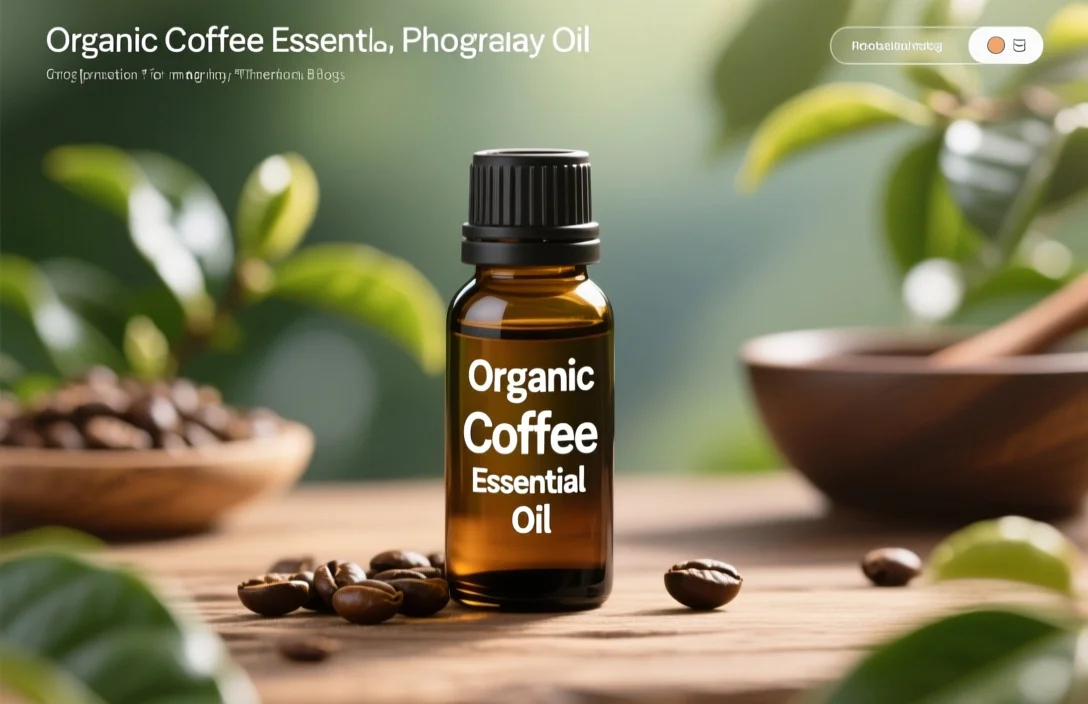
Organic coffee essential oil is a concentrated aromatic oil derived from coffee beans and used for fragrance, aromatherapy, and specialty skincare blends. This guide explains what it is, how it’s made, how to use it safely, and exactly what to check on labels before you buy.
What organic coffee essential oil is and how to think about it
Organic coffee essential oil names a product marketed as an essential oil whose raw material – coffee beans – was grown under an organic standard. Essential oils are volatile, aromatic fractions extracted from plant material; coffee-derived oils are collected for their characteristic roasted, chocolatey, and sometimes green notes. This guide treats “organic” as a supply-chain claim that should be backed by certification or documentation rather than an automatic guarantee of purity.
Roasted and green (unroasted) beans produce different aroma profiles. Roasted-bean oil emphasizes roasted, warm aromatics that many describe as bakery-like; green-bean oil smells greener and fresher. Extraction method matters more than the word “organic” for scent and chemistry. Aromatherapy and perfumery users choose a product by scent profile, extraction method, and available documentation such as a Certificate of Analysis (COA).
How organic coffee essential oil is extracted (and why it matters)
Extraction method changes what ends up in the bottle. Cold-pressing and steam distillation are traditional techniques for many botanicals, while supercritical CO2 extraction and solvent extraction are common for hard-to-distill materials. Coffee is an unusual raw material because much of its characteristic aroma is produced by roasting; the compounds that contribute to aroma are a mix of volatile and semi-volatile molecules, and not every method captures the same fractions.
Comparing the common extraction methods side by side clarifies trade-offs. CO2 extraction tends to capture heavier, non-volatile aromatics and often yields a fuller, more “coffee-like” aroma. Steam distillation can capture lighter volatiles but may favor green or sharper top notes. Solvent extraction and absolutes hold waxy or heavy aroma compounds useful in perfumery but can leave trace solvent residues unless processed and certified clean. Cold-press is rarely used for coffee because beans are not high in free oil like citrus peels.
| Method | Typical Notes / What it captures | Best for |
|---|---|---|
| Steam distillation | Lighter, more volatile aromatics; can taste “greener” | Aromatherapy or where lighter scent is desirable |
| Supercritical CO2 | Fuller aroma, includes heavier fractions and body | Perfumery and perfumers seeking a true coffee scent |
| Solvent extraction / absolute | Concentrated aroma with heavy base notes; may require purification | High-end perfumery and fragrance compounding |
| Cold-press (rare) | Minimal use with coffee; not typical | Not commonly used for coffee beans |
Common uses and practical application
Perfume and fragrance formulation uses coffee-derived oils for base and mid notes that add roastiness and depth. Aromatherapists and home users diffuse coffee oils for mood-lifting or focus-support aromas, although claims about stimulation should be treated cautiously because inhaled aroma does not equate to ingesting caffeine. Cosmetic formulators may include coffee oil in serums or balms to impart fragrance and possible skin-conditioning components, but formulation safety depends on concentration and full ingredient disclosure.
Practical blends to try include simple diffuser mixes and topical blends with a carrier oil. Follow these steps for safe home use:
- Dilute: Mix 1-3 drops of coffee oil into 5-10 mL of carrier oil for a skin patch test.
- Test: Apply a small amount to inner forearm and wait 24 hours for irritation.
- Diffuse: Use 1-3 drops in a diffuser with clean water for a 15-30 minute session.
- Layer: Combine coffee oil with citrus top notes or vanilla to round the aroma in perfumery.
- Store: Keep the prepared blends in amber glass containers away from heat and light.
Safety, topical use, and allergy considerations
Essential oils are concentrated and can cause irritation, sensitization, or allergic reactions when applied neat to skin. Coffee-derived oils may contain trace alkaloids or other bioactive molecules depending on the extraction method and whether roasted material was used. Consumers should assume topical use requires dilution and a patch test.
Pregnancy, nursing, pediatric use, and pets introduce additional caution. Some botanical extracts are contraindicated in pregnancy; this article does not list a comprehensive contraindication because verified safety data tied to specific extraction types and concentrations was not available. Request a COA and safety data sheet (SDS) from suppliers and consult a healthcare professional before using any essential oil if you are pregnant or nursing. Keep oils out of reach of children and avoid undiluted contact with eyes and mucous membranes.
what “organic” should look like and what to ask sellers
Label claims are useful only when backed by documentation. “Organic” can mean anything from certified-organic raw material to a seller’s own claim on otherwise uncertified supply chains. Buyers should look for explicit certification logos (for example, a national organic certifier) and botanical specifics: Latin name (botanical species or cultivar), extraction method, part used (seed, bean, fruit), country of origin, and batch number.
Ask sellers for these documents before purchase:
- Certificate of Analysis (COA) showing GC-MS or other analytical results.
- Certificate of organic status from an accredited certifier if “organic” is claimed.
- Material Safety Data Sheet (SDS) or Safety Data Sheet.
- Diffuser blends: 1-3 drops per 100 mL of water in a home ultrasonic diffuser for short sessions.
- Topical blends: 0.5-2.0% concentration in a carrier oil for adult, non-sensitive skin – start low and work up after patch testing.
- Perfume accords: Use coffee extract to anchor middle and base notes; balance with citrus or floral top notes to reduce sweetness.
- Storage tip: Label any blended product with blend date and composition. Discard blends if the aroma shifts markedly (rancid, metallic, or otherwise off).
- Lack of botanical name or extraction method on label.
- No response when you request a COA or SDS.
- Price that seems implausibly low compared to similar botanical extracts.
- Vague claims like “100% natural” with no traceability.
- Verify botanical name and part used.
- Confirm extraction method and intended use (diffuser vs topical vs perfumery).
- Request a current COA and SDS.
- Do a patch test at low dilution before extended topical use.
- Keep product away from children and pets until safety is confirmed.
- Note batch number and manufacture date on receipt for traceability.
| Extraction method and solvent history (if any). | Label Element | What to look for | Why it matters |
|---|---|---|---|
| Botanical name | Latin name (e.g., Coffea species) | Avoids botanical confusion | |
| Extraction method | CO2, steam distillation, absolute, etc. | Determines scent and chemical profile | |
| Organic certification | Certifier name and logo | Verifies organic claim if present | |
| COA availability | Test report showing major peaks | Confirms identity and major constituents | |
| Batch number & manufacture date | Traceability details | Enables quality tracking and recalls |
Comparing organic coffee essential oil to coffee CO2 extract, absolute, and synthetic coffee aromas
Direct summary: Coffee essential oil, CO2 extract, absolute, and synthetic coffee aromas are different products with distinct chemistry, typical uses, and safety profiles – match your choice to intended use. The table below presents side-by-side differences so you can pick the right form.
| Product Type | Chemical profile / characteristics | Common use |
|---|---|---|
| Organic coffee essential oil (steam-distilled) | Mix of lighter volatiles; can be greener; varies by roast | Diffusion, some aromatherapy, lighter fragrance notes |
| CO2 extract | Broad spectrum including heavier aromatics; close to roasted coffee scent | Perfumery, flavoring (food-safe grades), specialty fragrances |
| Absolute | Very concentrated, heavy base notes; may contain waxes and solvent residues if impurities not removed | High-end perfumery, accords |
| Synthetic coffee aroma | Composed of aroma chemicals to mimic coffee | Commercial fragrance products, where cost or consistency matters |
Chemical profiles influence use. Perfumers typically choose CO2 extracts or absolutes when they need the richness and mouthfeel of roasted coffee notes; aromatherapists and consumers working with diffusers or topical blends may opt for steam-distilled oils if available and if they prefer lighter profiles.
How to store, expected longevity, and DIY blending advice
Proper storage extends usable life and preserves aromatics. Store coffee-derived oils in dark glass bottles, keep them in a cool, stable environment away from heat sources, and minimize headspace to reduce oxidation. Refrigeration can help for some heavier extracts but may alter viscosity; check supplier guidance first.
Blending advice and concentration guidelines:
Common mistakes, warning signs, and how to avoid low-quality purchases
Expect inconsistency between batches unless you source from a supplier with strict quality control. Many shoppers assume “organic” equals “pure essential oil” or “food-safe” – those assumptions can be dangerous. A reputable seller provides COAs, lists extraction method, and discloses whether a product is intended for aromatherapy, topical use, or cosmetic use.
Warning signs and red flags:
Avoid impulse buying from marketplaces when documentation is missing. If a seller cannot or will not provide a COA and details about extraction, consider another supplier. Small-batch or artisan producers may provide excellent products, but you still need the same documentation to verify claims.
Practical checklist before use or purchase
Follow this checklist when evaluating an organic coffee essential oil for purchase or use:
Use this checklist as a minimum due-diligence routine. Sellers who prioritize transparency should have these documents ready and answer questions about roast level, bean origin, and processing conditions.
FAQ
Is organic coffee essential oil the same as coffee fragrance oil?
No. Coffee fragrance oils are usually synthetic blends or carrier-encapsulated aroma mixes designed to mimic coffee scent. Organic coffee essential oil is claimed to be derived from organic coffee beans using a botanical extraction method. Ask for the extraction type and COA to confirm.
Can I use organic coffee essential oil in skincare?
You can include it in skincare only after confirming the supplier’s recommended dilution, a patch test, and the product’s suitability for topical use as stated in the SDS. Avoid using oils without clear topical-use guidance.
Does organic coffee essential oil contain caffeine?
Presence of caffeine depends on the extraction method and whether soluble alkaloids were co-extracted. Do not assume caffeine-free; request analytical data if caffeine content matters for your application.
How long does organic coffee essential oil last?
Shelf life depends on extraction, packaging, and storage. Expect aromatics to change over time; ask the supplier for stability guidance and keep bottles tightly sealed away from heat and light.
Can I diffuse coffee oil around pets?
Diffusing essential oils around pets can carry risk. Ask a veterinarian about the specific product and avoid prolonged diffusion near birds, cats, or animals with respiratory issues until safety is confirmed.
Practical verdict and next
If you want a true coffee aroma for perfumery or concentrated fragrance, prioritize CO2 extracts or absolutes and request a COA. If you prefer a lighter, possibly greener coffee aroma for simple diffusion, seek a steam-distilled oil and confirm organic certification and SDS. Your next step: pick one or two suppliers, request COAs and SDS documents, and perform a small test purchase for sensory evaluation and a topical patch test.

- Espresso Tastes Watery? 10 Common Causes and How to Fix It - October 23, 2026
- 10 Common Coffee Equipment Cleaning Mistakes and How to Avoid Them - October 23, 2026
- 17 Common Coffee Grinder Problems and How to Fix Them - October 23, 2026