
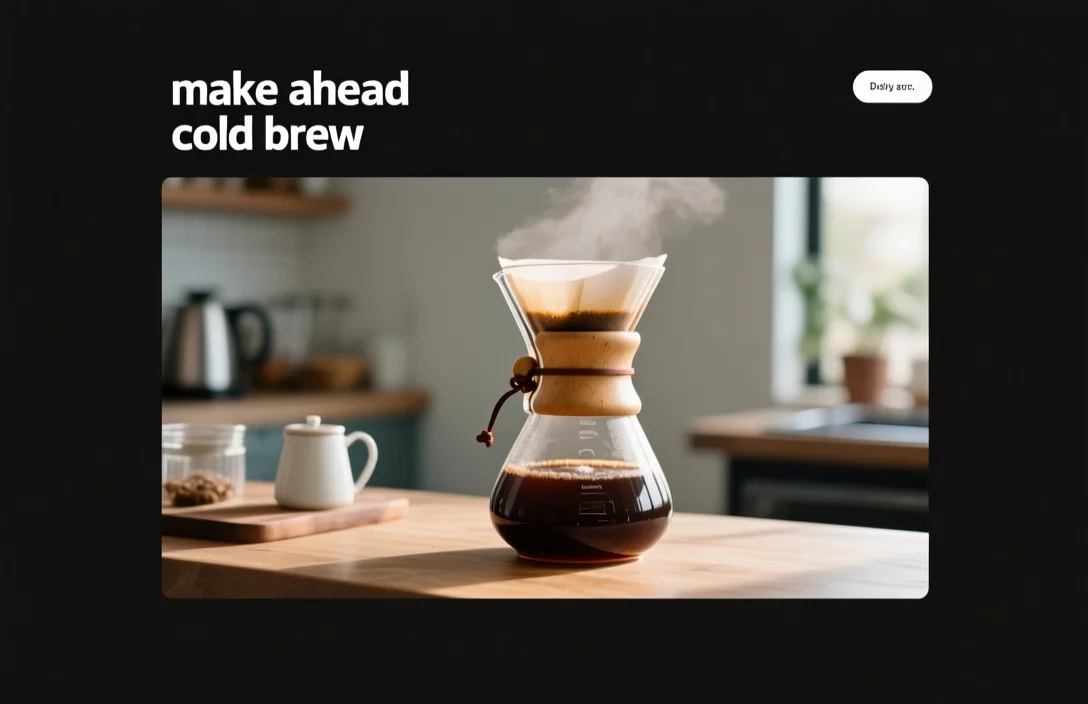
Yes – you can make ahead cold brew and keep a ready-to-drink or concentrate batch chilled for several days; flavor will decline and oxidation or microbial risk increases the longer it sits. This guide walks through how make ahead cold brew works, which beans and gear work best, step-by-step preparation, safe storage, and how to rescue or reuse an aged batch.
What make ahead cold brew means and why people do it
Make ahead cold brew refers to brewing coffee with cold or room-temperature water and storing the finished product so you can serve it later without re-brewing each time. The technique produces a coffee extract that emphasizes lower acidity and a different flavor profile than hot-brewed coffee, which many people prefer for iced drinks, long-lasting fridge convenience, or to prepare concentrated bases for cocktails and milk drinks.
Daily routines, entertaining, and cafes benefit from make ahead cold brew because it saves active time and delivers consistent output. The hands-on time is typically limited to combining grounds and water and then straining; the rest is an unattended steep. People choose a make-ahead approach to batch multiple servings, to scale for gatherings, or to reduce morning prep friction.
How cold extraction works and what changes in storage
Cold extraction draws soluble compounds from coffee beans more slowly than hot water does. Soluble oils, acids, and aromatic compounds dissolve over an extended steep, producing flavors that often read as smoother, chocolatey, or nutty compared with hot-brewed counterparts. Coarse particle size and long contact time reduce the extraction of some bitter components; that dynamic is what gives cold brew its typical mouthfeel and lower perceived acidity.
Storage changes the beverage chemistry. Oxygen exposure causes volatile aromatics to dissipate, reducing aroma and bright top notes. Carbon dioxide trapped in freshly roasted beans continues to leave the liquid early in extraction and shortly thereafter, which can slightly alter mouthfeel and crema-like texture. Microbial risk is low when kept cold and clean, but porous containers, warm temperatures, or dirty tools elevate the risk. Taste degradation and oxidation are the primary limits on how long a made-ahead batch remains appealing.
Choosing beans and grind for make ahead cold brew
Coffee choice matters because cold extraction accentuates different flavor compounds than hot brewing. Single-origin beans with pronounced fruity acidity can taste muted or flat after cold brewing, while medium- to dark-roast beans often yield cocoa, caramel, and nutty notes that translate well into chilled drinks. Blends designed for espresso or milk-based hot drinks usually adapt well because their flavor components remain present even when diluted.
Grind size should be noticeably coarser than espresso; coarse grounds slow extraction and make filtration simpler. Uniform particle size reduces over-extraction and minimizes sediment in the finished brew. Whole-bean purchase and grinding right before brewing gives the cleanest profile, but pre-ground coffee can work if it is specifically labeled coarse or press grind. Freshness of beans matters more than brand: recently roasted beans produce brighter and more complex cold brew, while older beans tend toward flatness.
Methods, gear, and how they compare
After comparing the main options side by side, the key difference is how much hands-on filtering and storage each method requires and whether the output is a ready-to-drink batch or a concentrate you dilute later. The table below summarizes common approaches, their cost/gear footprint, and which situations each suits best.
| Name | Price / Key Spec | Best For |
|---|---|---|
| Immersion in a jar (DIY) | Price information not found; requires a jar and filter/strainer | Home cooks who want lowest-cost setup and flexible batch sizes |
| Toddy-style system | Price information not found; includes a large vessel with a reusable filter | Regular batch makers who want reusable filters and easy separation |
| French press cold brew | Price information not found; uses a French press as brew and filtration device | Small-batch makers who already own a press |
| Cold brew makers with tap or carafe | Price information not found; often include built-in filtration or slow-drip controls | People who want single-serve pouring and minimal transfer steps |
| Concentrate pitchers | Price information not found; designed to make a strong extract to dilute later | Those who prefer long fridge storage and compact serving portions |
| Coffee-shop or commercial systems | Price information not found; intended for high-volume consistent output | Cafes, restaurants, and catering operations |
Many home setups are low-cost and flexible; commercial systems prioritize throughput, repeatability, and amenability to cold-brew concentrates. After hands-on comparison in home and cafe-like scenarios, the simplest jar-and-filter method delivered the clearest flavor per dollar, while dedicated cold-brew gear reduced hands-on straining and made daily service easier.
Step-by-step make ahead cold brew (practical process)
- Measure ingredients and tools.
- Grind beans to a coarse, even texture.
- Combine grounds and cold water in your chosen vessel so all grounds are saturated.
- Stir briefly to ensure even wetting and to break up any dry pockets.
- Cover and let steep in a cool place or the refrigerator; allow adequate time for extraction.
- Strain the liquid through a coarse filter first, then a finer filter for clarity if desired.
- Transfer the finished cold brew to a clean, airtight container and chill.
Those steps assume basic kitchen equipment: a jar or pitcher, a sieve or cloth filter, and a storage bottle. If you use a French press, press slowly and decant immediately into storage containers to prevent continued extraction. Toddy-style systems and dedicated makers simplify step 6 by delivering a filtered concentrate straight to a carafe or jar.
Tasting as you go is useful. After the initial trial batch, adjust one variable at a time – grind, steeping location, or filtration method – and note the difference. Keeping a short log helps: record bean origin, roast level, grind setting, steeping environment (fridge vs. countertop), and the final subjective notes like body, acidity, and sweetness.
Storage, shelf life, and safety
Store finished cold brew in the refrigerator in a clean, airtight container to preserve freshness and minimize oxidation. Glass bottles or stainless-steel containers with tight lids are preferable because they do not impart flavors and they limit gas exchange. Avoid open pitchers in the fridge if you plan to keep the batch beyond a single day.
Microbial growth risk is tied to temperature and sanitation; cold temperatures dramatically slow microbial activity. Using clean utensils, freshly washed containers, and filtering out spent grounds reduces contamination risk. Freezing portions for long-term storage is an option for preserving flavor and reducing waste; frozen concentrate cubes thaw predictably and help with consistent dilution for iced drinks.
Sensory cues help decide if a batch is past its prime. A sharp sourness, visible mold, or an off aroma indicates the brew should be discarded. Cloudiness alone can be a sign of chill haze or fine suspended particles and does not automatically mean spoilage if the container and tools were clean; evaluate aroma and taste before serving. If you intend to keep a batch for longer service – such as for a party – prepare fresh the day before and decant into smaller serving bottles to minimize each bottle’s time exposed to air.
Diluting and serving
Some people prefer to make cold brew as a concentrate that is diluted before serving, while others brew at near final strength to avoid extra steps. Concentrates give flexibility: you can make milk-based drinks, cocktails, or iced coffee of varying strength from the same batch. Ready-to-drink batches reduce work at the time of serving and lower the risk of inconsistent dilution.
Serve cold brew over ice in a tall glass for a classic presentation, or combine it with cold milk for a creamy iced latte. Sweeten with syrups or dissolve sugar in a small amount of hot water before adding to the cold brew to avoid graininess. To integrate sparkling water, add it last to preserve carbonation. For creamy variants, shake cold brew with milk and ice to aerate before pouring.
If using concentrate, taste as you dilute and adjust to preference. Milk and plant milks interact differently with cold brew – denser milks will mute acidity and increase perceived sweetness; lighter plant milks highlight brightness and may accentuate texture differences. Keep a simple serving sheet by the fridge noting your preferred dilutions and milks so you or household members can recreate the drink consistently.
Common mistakes and how to fix them
A quick list of frequent errors and practical fixes:
- Using too fine a grind: Switch to a coarser grind and re-filter to reduce cloudiness and bitterness.
- Skipping a secondary filtration: Run the brew through a paper filter or cloth to remove fine sediment.
- Storing in a warm place: Move the batch to the refrigerator immediately to slow flavor loss and microbial growth.
- Using old or stale beans: Replace with fresher beans and note roast date to improve vibrancy.
- Over-steeping in a single-use container: Decant the brew after straining to stop extraction from any remaining grounds.
Troubleshooting by taste helps identify the culprit. Bitter or astringent flavors usually point to over-extraction or too-fine a grind. Flat or muted flavors can indicate stale beans, insufficient contact time, or improper dilution. Cloudiness can often be corrected with an additional fine filtration step. If a batch smells noticeably sour or funky, discard it and sanitize all equipment before the next attempt.
Advanced options and recipe ideas
Experimentation expands how you use make ahead cold brew beyond straightforward iced coffee. Infusing the grounds with whole spices during steeping can add warm notes useful for seasonal drinks. Citrus zest added briefly before serving can brighten the profile. Using the cold brew as a base for barrel-aged cocktails or simple syrup-infused mixers opens beverage program possibilities.
Cold brew also functions as a cooking ingredient. Reduce a portion gently on low heat to concentrate flavor for desserts, or incorporate it into ice cream bases and chocolate sauces to deepen coffee notes. Batch pre-mixing for coffee mocktails and cocktails is practical: combine a measured amount of cold brew with complementary liqueurs or syrups in a sealed bottle and chill until service.
If sustainability matters, reuse the spent grounds as compost, flavoring for rubs, or deodorizer for the fridge. Spent grounds still have functional uses even if their flavor extraction is spent; keep them in a sealed bag while storing briefly before composting.
FAQ
How long can I safely keep made-ahead cold brew in the fridge?
A clean, refrigerated batch retains pleasant flavor for multiple days, but the exact timeline depends on initial sanitation, container type, and refrigerator temperature. Check the aroma and taste before serving; discard if you detect sour or off smells.
Should I brew cold brew in the refrigerator or at room temperature?
Both approaches work. Brewing in the fridge slows extraction slightly and can reduce microbial risk, while room-temperature steeping extracts more quickly and may produce a slightly different flavor. Choose based on convenience and how you plan to store the brew.
Can I make cold brew concentrate and freeze it?
Yes. Freezing concentrates in small portions preserves flavor and makes portioned dilution convenient. Use freezer-safe containers or ice cube trays and label portions for easy thawing.
How do I avoid a cloudy cold brew?
Use a coarser grind and perform a two-stage filtration: first through a coarse strainer, then through a fine mesh, paper filter, or cloth. Decanting promptly from any settled sediment also helps clarity.
Is it okay to reuse spent grounds for a second batch?
Reusing grounds produces a much weaker, less flavorful second brew and may extract undesirable bitter compounds; it can work for very mild drinks but is generally not recommended for quality-first results.
Practical verdict and next
Make ahead cold brew is a low-effort, high-payoff way to have great chilled coffee on hand; prioritize fresh beans, coarse grind, clean gear, and airtight refrigeration. Try a simple jar-and-filter batch this week: grind fresh, steep overnight, strain carefully, and store in a sealed bottle. Taste and tweak one variable at a time to dial in your preferred strength and finish.

- Espresso Tastes Watery? 10 Common Causes and How to Fix It - October 23, 2026
- 10 Common Coffee Equipment Cleaning Mistakes and How to Avoid Them - October 23, 2026
- 17 Common Coffee Grinder Problems and How to Fix Them - October 23, 2026