
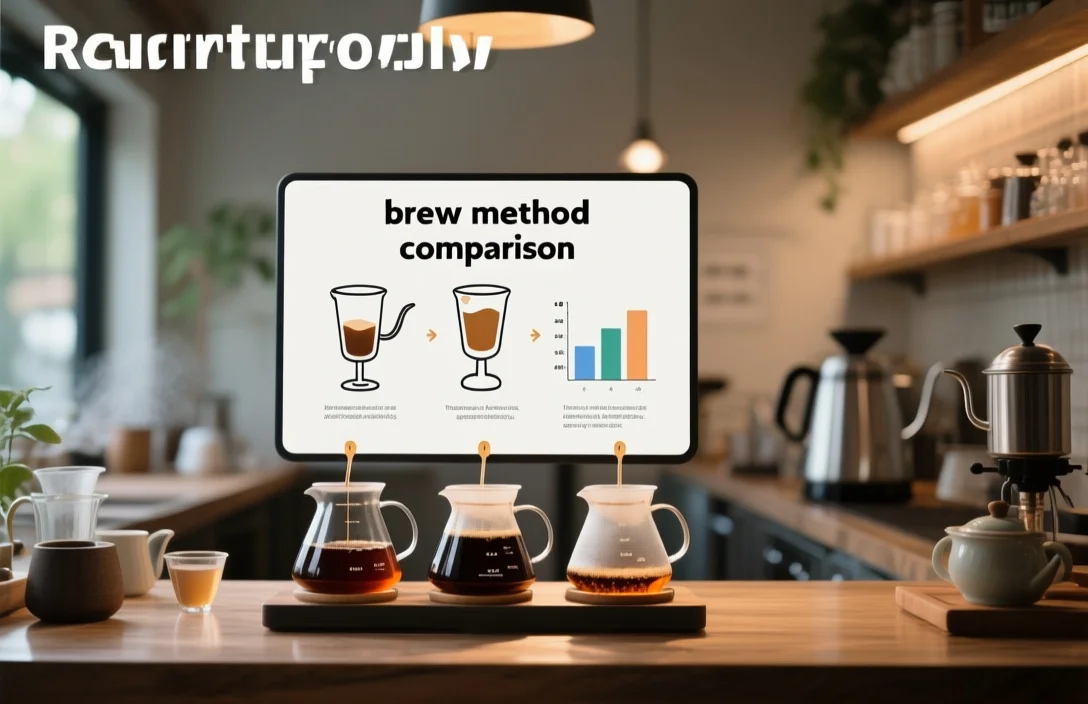
Verdict: for most people, pour-over or a good auto-drip machine is the safest place to start. Pour-over gives you the cleanest cup and the most control. Auto-drip wins on convenience. AeroPress is the best all-around pick if you want speed and flexibility, and French press is the right answer if you want a heavier cup with more body.
That is the short version. The longer version is more useful: the best brew method depends on how much time you have, how much gear you want to own, and what you want the coffee to taste like.
How I’d compare the main brew methods
I would keep the comparison to five things that actually matter at home: flavor clarity, body, brew time, gear cost, and daily cleanup. Those are the differences people feel every morning, which is why they matter more than abstract praise.
| Name | Price / Key Spec | Best For |
|---|---|---|
| Pour-over (V60, Kalita Wave) | Low to moderate; dripper, filters, kettle | Clean, nuanced cups; drinkers who like control |
| Auto drip (standard home machine) | Low to moderate; fully automatic | Fast, consistent morning coffee for households |
| AeroPress | Low; portable device, paper or metal filter | Quick brewing and travel-friendly use |
| French press | Low; glass or metal beaker with plunger | Full-bodied coffee with oils |
| Espresso (home machine or pod) | Moderate to high; pump machine and grinder | Concentrated shots for milk drinks and espresso drinkers |
| Cold brew | Low to moderate; coarse grind, long steeping | Smooth iced coffee and batch brewing |
| Moka pot / stovetop | Low; stovetop pot | Strong, concentrated coffee without a pump |
| Siphon (vacuum pot) | Moderate to high; specialty gear | Clean, delicate brewing and a more involved process |
What each method does in the cup
Pour-over relies on a steady pour of hot water through coffee and a paper or metal filter. The result is a clean cup with clearer flavor separation. Paper filters remove more oils and fine sediment, so the coffee tastes brighter and lighter in body.
AeroPress works through short immersion and pressure. That gives it range. With paper filters and a quick press, the cup is crisp and clean. With a metal filter or a different brew style, it can feel fuller and richer. For the price, it gives you an unusual amount of control.
French press is an immersion method. Coffee steeps in hot water, then a metal mesh separates the grounds. The metal filter lets oils and tiny particles through, which is why French press coffee feels heavier and more textured. If someone says they want coffee that tastes “strong,” this is often what they mean.
Auto-drip machines heat water and drip it through grounds into a carafe. They are built for routine. The better ones are consistent and easy to live with. Flavor depends a lot on grind size, bean freshness, and the machine’s brew cycle, so the brewer matters, but it is not the whole story.
Espresso uses high pressure to force water through finely ground coffee. That creates a concentrated shot with intense aroma and crema. It is also the method that demands the most from your grinder, machine, and technique. Good espresso at home is possible, but it takes attention.
Cold brew is a long steep at low temperature. It pulls out a smoother, less acidic cup and often ends up as a concentrate you dilute with water or milk. If you want something easy to keep in the fridge and pour over ice, this method is hard to beat.
Moka pot brewing uses steam pressure in a stovetop chamber to push water through coffee. It makes a strong, concentrated cup that lands between drip and espresso. It can turn bitter if overheated, so this method rewards a little care.
Siphon brewing uses vacuum and immersion, then pulls the coffee back through filtration as it cools. The cup is usually clean and delicate. It is more about technique and process than speed.
The tradeoffs that actually change the result
When people talk about coffee tasting “clean,” they usually mean clarity. Pour-over and siphon tend to sit at the top of that category. Paper filters help separate the liquid from oils and fine grounds, which makes flavors easier to pick apart.
Body is different. It is the weight and texture of the coffee on your tongue. French press and Moka pot usually make fuller cups because more oils and fines remain in the drink. That texture is part of their appeal.
Extraction is the balancing act behind all of this. Too little and coffee tastes sour or thin. Too much and it turns bitter or flat. Grind size, water temperature, and contact time all affect extraction. Finer grinds extract faster. Hotter water extracts faster. Longer contact time pulls more from the grounds.
Some methods give you more room to correct course. Pour-over and AeroPress are easy to tweak. You can change pour rate, water temperature, or steep time and taste the difference. Auto-drip machines and pod systems are more about repeatability. That is useful, but it leaves less room to adjust.
Speed and convenience matter more than people admit
For most people, morning coffee is about getting something good without turning the kitchen into a project.
Auto-drip and pod machines are the quickest options. They handle the water, the timing, and most of the mess.
AeroPress and Moka pot sit in the middle. They take a couple of minutes and need a bit of attention, but they are small and easy to store. I would especially point to AeroPress if cleanup matters. The spent puck is simple to remove, and the parts rinse fast.
French press takes a little more time because the brew needs to steep before you press. The hands-on work is small, but the total wait is longer.
Cold brew is the opposite. It barely asks anything of you up front, but it takes hours. That makes it a good fit for people who like to make one batch and keep it in the fridge.
Espresso is the least forgiving if you want convenience. Grind, dose, tamp, temperature, and maintenance all matter. A good shot can be worth the effort. So can the frustration, if you are not ready for the routine.
What the gear costs and what you’ll keep replacing
Pour-over is one of the cheapest ways to make excellent coffee. You need a dripper, filters, and a kettle. A gooseneck kettle helps with control. A temperature-controlled kettle helps more, but I would treat that as a later upgrade rather than the first purchase.
Auto-drip machines vary widely. Basic models are affordable. Better ones add features like pre-infusion and more controlled brew cycles. Those can improve consistency, but they also raise the price and give you more parts that can eventually fail.
AeroPress is low-cost and low-maintenance. Replacement filters are cheap, and the device itself is simple. That is a big part of its appeal.
French press is also inexpensive. The tradeoff is durability. Glass models can break. Metal models last longer, but they cost more and behave a little differently with heat.
Espresso is where the budget starts to climb. The machine is only part of the cost. A burr grinder matters just as much, and often more. If you want good espresso, plan for a serious upfront spend and ongoing upkeep.
Cold brew is cheap to start. A jar or dedicated brewer is usually enough. The main practical issue is fridge space, especially if you make it in quantity.
Which method I’d choose, based on the kind of drinker you are
If you want predictability and several cups a day, I would start with a quality auto-drip machine or a pour-over setup. Auto-drip is easier. Pour-over gives you more control and a cleaner cup. Both work well if you use fresh beans and keep the equipment clean.
If you want one good cup fast, AeroPress is my first recommendation. It is compact, forgiving, and easy to clean. That makes it a good fit for commuters, travelers, and anyone who does not want to commit to a more expensive setup.
If you like a heavier cup with more texture, choose French press. Use a coarse grind. That helps reduce bitterness and sediment. This is the method I’d point to for people who want coffee that feels substantial.
If your drink of choice is a latte, cappuccino, or straight espresso, then a proper espresso setup makes sense. If you want something simpler and cheaper that still gives a concentrated result, Moka pot is the middle ground.
If you want smooth iced coffee or a batch you can keep in the fridge, cold brew is the most forgiving option.
If you care as much about the process as the cup, siphon is the one that gives you the most visual drama and a very clean result. It is a method for people who like the ritual.
A simple routine you can actually follow
I would not overcomplicate the first week. Pick one method and make the same coffee a few times before you start changing things.
- Weigh the coffee. For a single pour-over cup, start with 15-20 grams.
- Heat the water to near-boiling, then let it rest briefly.
- Rinse paper filters if your brewer uses them. That helps remove paper taste and warms the brewer.
- Bloom the grounds with a small pour and wait 20-40 seconds.
- Finish the brew, or let the coffee steep for the method you are using.
- Serve right away so the cup does not keep extracting in the vessel.
That basic pattern works for pour-over, AeroPress, and French press. The details change, but the discipline stays the same. A scale and thermometer make this easier, and they cost less than most people expect.
Mistakes that ruin good coffee faster than bad beans do
Grinding too fine for the method is a common problem. It makes immersion brews bitter and can leave too much sediment in the cup. Match the grind to the brewer instead of using one setting for everything.
Using stale beans is another obvious one, but people do it all the time. Coffee loses aroma quickly once it is roasted. Keep beans in an airtight container, away from light and heat, and buy only what you will use soon.
Water temperature matters more than many beginners think. Too hot, and the coffee tastes harsh. Too cool, and it tastes sour or weak. Near-boiling water is a good starting point for most methods.
Cleaning is easy to ignore and easy to regret. Old oils cling to brewers and change the taste of fresh coffee. Rinse after use, replace filters when needed, and descale or deep-clean equipment according to the manufacturer’s directions.
Skipping the bloom in pour-over or siphon is another small mistake that has a noticeable effect. It is a short step, and I would keep it in the routine.
What to buy first
If you can only upgrade one thing, buy a burr grinder. Grind consistency affects extraction more than almost anything else.
After that, choose the brewer that matches your habits. Pour-over and AeroPress are the best low-cost options for flexibility. Auto-drip is the practical pick if you want automation. Espresso makes sense only if you are willing to spend more and learn the process.
A gooseneck kettle is worth it for pour-over. A scale is worth it for nearly everything. Filters are not glamorous, but they matter. Paper filters give you a cleaner cup. Metal filters give you more body.
How to tell whether a brew is off
If the coffee tastes sour, I would try a finer grind or slightly hotter water. That usually means under-extraction.
If it tastes bitter or hollow, go the other way. Use a coarser grind or shorten the brew time.
If the cup feels thin, increase the dose or grind a little finer.
If there is too much sediment, use paper filters or adjust the grind coarser for immersion brewing.
If the coffee feels flat, look at freshness first. Then look at roast level. Darker roasts can taste more roasty than nuanced, which is fine if that is what you want, but it changes what the method can show you.
FAQ
Which brew method is easiest for a beginner?
AeroPress and a basic auto-drip machine are the easiest ways to get dependable coffee without much fuss. AeroPress is forgiving. Auto-drip is hands-off.
Can I make espresso without an espresso machine?
A Moka pot gives you a concentrated, espresso-like cup on the stovetop. It is not the same thing as a true espresso shot, but it gets closer than drip coffee does.
How important is grind size?
Very important. It is one of the main variables that controls extraction. Coarse for French press, medium for drip, fine for espresso is the basic rule.
Is cold brew less acidic?
It usually tastes less acidic because the brewing process extracts fewer acidic compounds at low temperature. That smoother taste is part of why people reach for it.
How often should I clean coffee gear?
Rinse daily parts after each use. Do deeper cleaning on a regular schedule, especially for espresso machines and grinders. The harder the water and the more you use the equipment, the more often it needs attention.
Bottom line
If you want a single, practical starting point, I would buy a burr grinder and choose either AeroPress or pour-over. AeroPress is the easier all-purpose pick. Pour-over gives you the most transparent cup and teaches you more about what coffee is doing in the mug.
Pick one method. Make it the same way three times. Change only the grind if you need to adjust the taste. That is usually enough to tell you whether you prefer clarity, body, speed, or convenience.

- Espresso Tastes Watery? 10 Common Causes and How to Fix It - October 23, 2026
- 10 Common Coffee Equipment Cleaning Mistakes and How to Avoid Them - October 23, 2026
- 17 Common Coffee Grinder Problems and How to Fix Them - October 23, 2026