
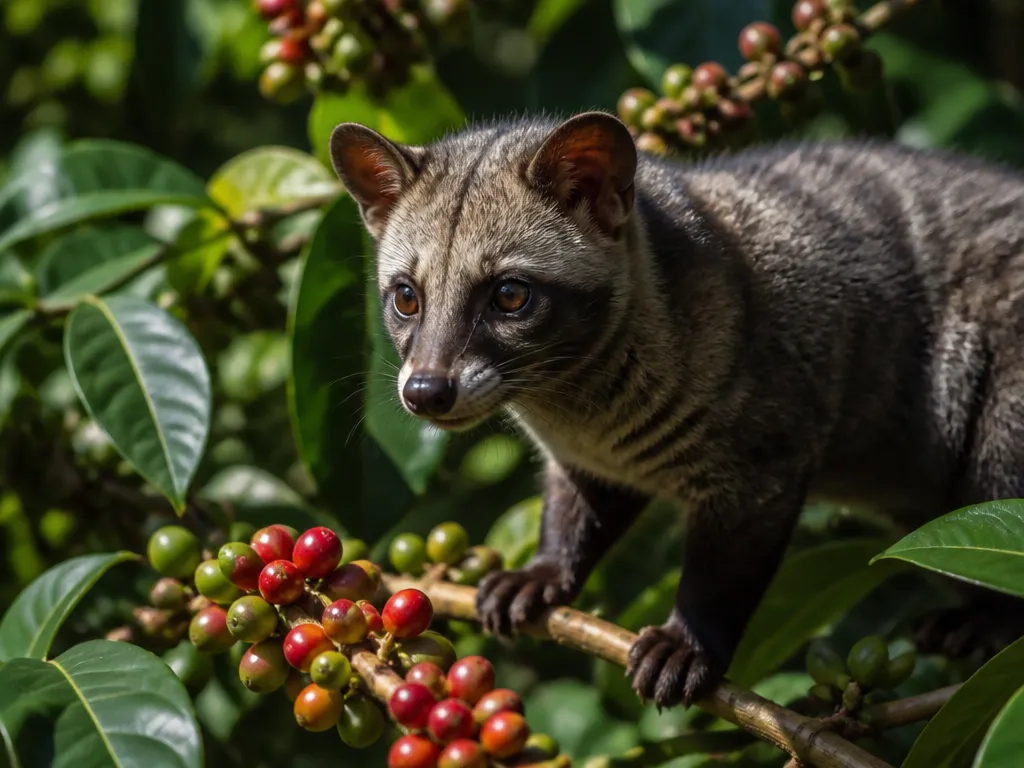
The animal behind kopi luwak is the Asian palm civet, a small, cat-like mammal that eats coffee cherries and excretes the beans. During digestion, enzymes and natural gut conditions alter the beans before they are collected, cleaned, dried, and roasted.
Wild-sourced kopi luwak can cost around $1,300 per kilogram, and a cup may run $35 to $100. The high price reflects scarce supply, labor-intensive collection, processing, and the coffee’s unusual origin. It also attracts misleading claims, so sourcing and animal-handling details matter before you buy.
Key Takeaways
- The animal is a civet. Asian palm civets eat the ripe coffee cherries used for kopi luwak.
- Digestion changes the beans. Enzymes and natural gut conditions help transform the beans before they are cleaned and roasted.
- Wild supply is limited. Wild-sourced beans are scarce, which is why prices can reach about $1,300 per kilogram.
- Flavor varies by processing. The civet’s diet, bean handling after collection, and roasting all affect the cup.
- Price offers one clue. Retail listings show wild kopi luwak at levels such as $45-$60 per 100g, with some “wild” lots priced far higher.
- Impostors are common. If a seller cannot explain sourcing and animal handling, treat the product with suspicion.
Which Animal Makes Kopi Luwak?
The luwak coffee animal is the Asian palm civet. In Indonesia, “kopi” means coffee and “luwak” refers to the civet, so the name directly connects the coffee to the animal.
Kopi luwak is also called “civet coffee.” Sellers use both names interchangeably, and product descriptions may identify the animal as an Asian palm civet or civet cat.
Some people assume the beans come from a squirrel or another jungle animal. That is generally a marketing variation, not the animal associated with genuine kopi luwak.
Why Is the Asian Palm Civet Used?
Asian palm civets eat ripe coffee cherries and pass the coffee beans through their digestive tract. The fruit pulp is digested, while the beans typically remain intact enough to recover.
The final coffee depends on what happens before and after digestion. Before the civet eats, cherry quality and ripeness matter. After excretion, cleaning, drying, and roasting can push the flavor in very different directions.
Sourcing also creates the industry’s main ethical divide. Some operations claim to collect beans from wild civets, while others keep civets in captivity. Captive operations have drawn widespread criticism, particularly when animals are confined, fed poor diets, or kept in unsanitary conditions.
How Is Kopi Luwak Made?
Civets eat coffee cherries in a plantation or forest environment. Digestion partially breaks down the fruit and exposes the beans to natural fermentation in the digestive tract.
Workers then collect the excreted beans, wash and clean them, dry them, and roast them. Roasting determines much of the final taste, and poor roasting can overwhelm any character created during digestion.
Flavor can vary from bag to bag because the civet’s diet affects the enzymes and fermentation conditions applied to the beans. Cleaning, drying, and roast profile can then amplify or mute those effects.
What Does Luwak Coffee Taste Like?
Luwak coffee is often described as earthy, with musty, chocolate, and nutty notes. Some drinkers find that combination complex; others find it strange on the first taste.
There is no single luwak flavor profile. The cup depends on the bean’s origin, how it was cleaned and dried after digestion, and the roaster’s chosen roast level.
A light-to-medium roast usually preserves more nuance and may emphasize nutty flavors. A darker roast can make the coffee more chocolatey and smoky while masking some of the fermentation character.
Why Is Kopi Luwak So Expensive?
Kopi luwak costs more because collection is labor-intensive and the wild-sourced supply is limited. One ballpark for wild-sourced beans is around $1,300 per kilogram, reflecting the time and work required to find and collect them.
Branding and sourcing claims also affect the price. Retail listings show wild kopi luwak at different price points based on origin, weight, and seller, including examples such as $45-$60 per 100g and higher-priced “wild” lots.
You are paying for several layers rather than coffee alone: beans recovered from civets, cleaning and drying, roasting, and the small-batch work involved in sourcing and processing them.
Kopi luwak price
| Product listed | Size | Price shown |
|---|---|---|
| Amazon | Wild Kopi Luwak Coffee (100g) | $45-$60 |
| Harrods | Wild Kopi Luwak Coffee (250g) | £500 (~$635) |
| BuyLuwakCoffee | Wild Kopi Luwak Coffee (100g) | $79 |
| Volcanica Coffee | Wild Kopi Luwak Coffee (4oz / 113g) | $79 |
| NusaCoffee | Wild Kopi Luwak Coffee (100g) | $89 |
| Coffee Direct | Kopi Luwak Coffee (100g) | £59 (~$75) |
Where to Buy Indonesian Luwak Coffee
In the United States, start with sellers that provide concrete product details instead of vague stories. Check the stated origin, whether the seller claims wild or captive sourcing, and the roast date or handling information.
Mainstream retailers and specialty coffee sellers carry kopi luwak, and some advertise “wild-sourced, organic Arabica” lots. Prices vary widely, so compare products only when their sourcing claims and package sizes are similar.
For a tasting, choose one reasonably priced bag that clearly explains its “wild” claim, brew it fresh, and compare it with a bag from another seller. If both coffees taste muddy or suspiciously identical, the claimed animal process may not be responsible for the flavor.
How to Spot Fake Kopi Luwak
Pricing can provide another warning sign. A product priced like ordinary specialty coffee while claiming genuine digestion by civets deserves scrutiny. Wild-sourced prices can be around $1,300 per kilogram, while retail examples for wild 100g bags range from $45-$60 to $89, depending on the seller and packaging.
Packaging should also identify whether the coffee is whole bean or ground and explain how it was roasted. A product that emphasizes “rare digestion fermentation” while saying little about roast and handling fits a common impostor pattern.
Kopi luwak authenticity
- Question vague guarantees and “bucket list” hype that comes without specific sourcing information.
FAQ
What luwak coffee animal makes kopi luwak?
The luwak coffee animal is the Asian palm civet. The civet eats coffee cherries, digests the fruit pulp, and passes the beans, which are then recovered, cleaned, dried, and roasted for brewing.
Is kopi luwak the same as civet coffee?
Yes. Kopi luwak is also called civet coffee. Both names usually refer to beans recovered from Asian palm civets after digestion. Product listings may use “luwak” alone, but the name still refers to the civet origin.
How much does real kopi luwak cost in the US?
Prices vary by sourcing and seller. Wild-sourced examples include $45-$60 per 100g, $79 per 100g, and £500 (~$635) per 250g at certain retailers. Some references also put wild-sourced beans at around $1,300 per kilogram.
How do I brew kopi luwak if I buy it online?
Brew it like a specialty coffee and keep your method consistent. Use a burr grinder for a consistent grind, heat water to 195-205°F (90-96°C), use about 2 tablespoons of coffee per 6 ounces of water, and choose a pour-over, French press, siphon, or espresso method.
What is the most common mistake people make when buying kopi luwak?
Many buyers assume every “kopi luwak” listing is genuine. Vague sourcing claims and unusually low prices are warning signs.

- Rocket R NINE ONE Edizione Speciale: Features and Buying Guide - October 25, 2026
- LUCCA A53 Mini V2 Espresso Machine: Features and Buying Guide - October 25, 2026
- Caffena Coffee Nuova Simonelli Appia Life 2GR Espresso Machine: Features and Buying Guide - October 25, 2026