
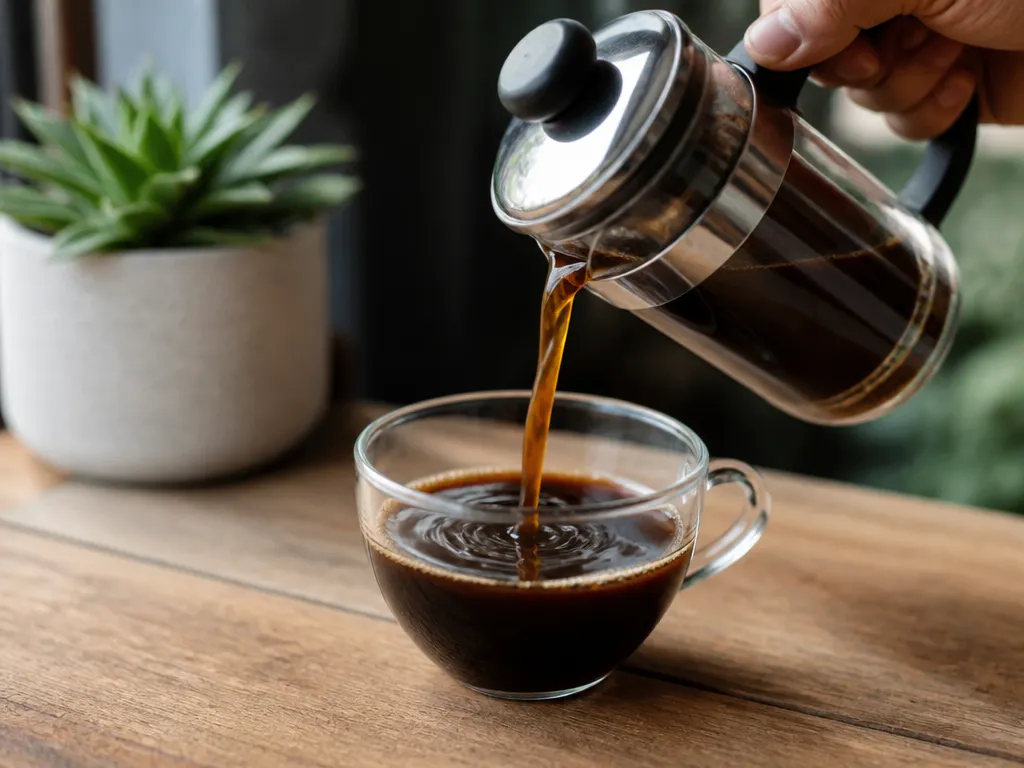
Strong coffee is less about “more caffeine” than about concentration and extraction. If your coffee tastes weak, watery, or bland, you can usually improve it in 10 minutes by changing the grind size, water temperature, brew ratio, or brew time. Use one adjustment at a time so you know which change worked.
To make coffee stronger, use a slightly finer grind, hotter water around 195-205°F (90-96°C), or a lower coffee-to-water ratio – more coffee per ounce or gram. If the cup turns bitter or harsh, reduce extraction by coarsening the grind, lowering the temperature, or shortening the brew time.
The Fastest Ways to Strengthen Coffee
- Start with grind size – Finer grounds increase extraction and strength, but change the setting by only 1 notch at a time.
- Use hot water – Aim for about 195-205°F (90-96°C) to extract more flavor without scorching the coffee.
- Adjust the brew ratio – More coffee per amount of water makes a stronger cup. Try 1:15 instead of 1:17.
- Control brew time – Longer contact can increase strength until the coffee becomes bitter or harsh.
- Match the adjustment to your method – Espresso, pour-over, drip, and immersion brewing respond differently to grind, time, and agitation.
- Back off when bitterness appears – Coarsen the grind slightly, lower the temperature a bit, or reduce brew time.
How to Make Coffee Stronger With Grind Size
A finer grind is the fastest setting to change when coffee tastes weak. Smaller particles give water more surface area to work with, which usually produces a more intense cup with fuller body and stronger flavor.
With a burr grinder, go finer by a small step, then repeat the same dose and ratio. That makes the result easier to judge. A blade grinder produces a less consistent mix of particle sizes, so some grounds may under-extract while fines over-extract in the same cup. If you use one, grind in shorter pulses to improve consistency before making smaller adjustments.
Quick test (10 minutes):
- Keep the coffee dose, water amount, and brewing method the same.
- Grind 1 step finer.
- Brew and taste.
- If the coffee is still weak, go 1 more step finer next time. If it tastes bitter or harsh, stop and move coarser.
What to expect:
- If the coffee is still watery, the grind is likely too coarse for your method.
- If it tastes sharper or more bitter, you may have gone too fine for the current brew time or temperature.
For pour-over and most drip brewers, try grinding a little finer than usual. French press usually needs a coarser grind rather than anything close to espresso-fine. Fine grounds create more sediment and can over-extract during immersion, so ratio and brew time are usually better French press adjustments.
How Water Temperature Affects Strength
Hotter water extracts more flavor compounds, so water temperature can make a weak coffee taste fuller. Water that is too cool tends to under-extract, leaving the cup sour, thin, or flat because fewer compounds dissolve into the brew.
For most brewing methods, use 195-205°F (90-96°C). You do not need to chase one exact number if your kettle or coffee maker does not hold a precise temperature. Consistency matters more. Water used shortly after boiling is often close to the target range, while water that sits too long or comes from a cooler tank extracts less effectively.
Try this temperature adjustment:
- If the coffee tastes weak or thin, use slightly hotter water on the next brew or wait less time after boiling.
- If it tastes bitter, dry, or scorched, lower the temperature slightly or use a slightly coarser grind.
Temperature works together with brew time. Hotter water and longer contact can push the coffee into over-extraction quickly.
How to Fix Weak Coffee With Brew Ratio
Brew ratio is the most direct way to make coffee stronger because it changes how much coffee you dissolve into a given amount of water. If the recipe is too dilute, better technique will not fully solve the blandness.
A lower ratio means more coffee per amount of water. A recipe at 1:15 coffee to water by weight makes a stronger cup than 1:17. If you currently use 1:17, try 1:16 for a smaller adjustment.
| Coffee dose | Water amount | Ratio (approx.) | Strength direction |
|---|---|---|---|
| 20 g | 340 g | 1:17 | Baseline, lighter |
| 20 g | 320 g | 1:16 | Stronger |
| 20 g | 300 g | 1:15 | Stronger, more intense |
A scale makes these changes repeatable, but you can still use the same principle without weighing. The usual move is to use more coffee with the same amount of water, rather than steeping longer. Ratio increases strength without pushing bitterness as quickly as extended time or a much finer grind.
Rule of thumb:
- If the coffee tastes watery, increase the coffee dose or decrease the water.
- If it tastes strong but thin, adjust the ratio and consider a small grind or temperature change.
Does Brew Time Change Coffee Strength?
Brew time can increase perceived strength, but longer is not always better. More contact usually increases extraction until the cup passes its sweet spot and becomes bitter or harsh.
Drip machines limit brew time through their flow rate and filter bed, so extending contact may require a grind adjustment. Pour-over gives you more control because grind size and pouring technique affect how quickly water moves through the coffee bed.
Time changes extraction, and extraction changes strength. It also changes the balance of flavors. If extending the brew does little, the grind may be too coarse, allowing water to pass too quickly, or the method may limit contact in another way.
Practical guidance:
- If the coffee is weak and you cannot grind much finer, extend brew time slightly. With immersion methods, use a slightly longer steep.
- If the coffee becomes bitter as time increases, stop extending the brew. Coarsen the grind or reduce contact instead.
Immersion example (French press style):
- Small time changes can have a large effect. Moving from 4 minutes to 6 minutes can take a cup from strong to unpleasant quickly, especially when the grind is already on the fine side.
How Brewing Methods Change Extraction
Each brewing method changes how water contacts the grounds, how long that contact lasts, and how much agitation occurs. The same grind and ratio can taste very different in espresso, pour-over, drip, and French press.
Espresso uses pressure, high turbulence, and a short brew time, making it especially sensitive to grind size. A small grind adjustment can change extraction substantially. “Brew it longer” is usually not the best espresso fix. Adjust grind and dose first, and keep time changes minimal.
Pour-over relies on water flow through a filter, so grind size and water distribution matter. A drawdown that is too fast can indicate under-extraction, while one that is too slow can produce bitterness from over-extraction. A slightly finer grind is usually a better starting point than simply pouring for longer.
French press is an immersion method. Extraction continues until you plunge and separate the grounds from the water, so brew time has more influence than it does in drip brewing. A grind that is too fine can add sediment and over-extraction, creating bitterness even when the ratio is reasonable.
Match the adjustment to the method:
- With immersion brewing, adjust ratio and time first, then fine-tune the grind.
- With pour-over or drip, adjust grind first, then temperature, then ratio.
- With espresso, adjust grind, dose, and yield targets first, then temperature.
How to Use More Coffee Without Overpowering the Cup
More coffee can increase strength, but the goal is to add intensity without making the cup harsh. An overpowering result usually comes from excessive extraction – a fine grind, hot water, or long brew time – or from changing the ratio too dramatically.
Make stepwise changes instead of jumping from 1:17 to 1:13. If the coffee is weak, move from 1:17 to 1:16 first. That adds strength without forcing a major change in extraction.
Increase strength without wrecking the flavor:
- Increase the coffee dose by 5-10% or reduce the water by 5-10%.
- Keep the grind size and temperature the same for the next trial.
- Taste the result before changing another setting.
- If the cup becomes bitter or dry, coarsen the grind slightly or lower the temperature a touch before trying an even lower ratio.
If you want stronger coffee with sweetness and clarity, do not push extraction as far as possible. Strong can mean more coffee flavor, not more bitterness. Ratio controls intensity, while grind and temperature help determine whether that intensity tastes balanced.
For example, if a pour-over at 1:17 tastes weak, move to 1:16. If it becomes harsh, keep the 1:16 ratio but coarsen the grind by one step or brew slightly cooler, while staying within the 195-205°F range.
How to Increase Strength Without Bitterness
Bitterness usually means the coffee has been extracted beyond what the beans and method can deliver cleanly. Common causes include a grind that is too fine, water that is too hot, and brew time that is too long for the recipe.
The cleanest way to increase strength is to separate strength from over-extraction. Adjusting the ratio can make the coffee more intense without increasing bitterness as quickly as a finer grind or longer brew time.
Use this troubleshooting guide:
- Weak and sour or acidic: Grind slightly finer, increase the temperature, or lower the ratio modestly.
- Strong but harsh or dry: Coarsen the grind by one step, lower the temperature a little, or shorten the brew time slightly.
- Bitterness that grows with time: Stop extending the brew and adjust the grind coarser first.
- Bitterness with no recipe change: Check temperature consistency and look for excess fines, especially if you use a blade grinder.
Stale coffee or scorched storage can also create bitterness. If every stronger brew tastes bitter despite recipe changes, the coffee itself may be past its best. Grind, temperature, and ratio adjustments cannot fully remove stale roast flavors.
Aim for a cup that tastes full without leaving a scratchy or overly dry finish. If you cross that line, reduce one extraction variable before changing the ratio again.
FAQ
What coffee-to-water ratio makes coffee stronger?
Move toward 1:15 coffee to water by weight instead of 1:17. For a smaller change, try 1:16 first. Keep the dose and water amount consistent between brews so you can tell whether the grinder, temperature, and method are producing the desired increase in strength.
How do I make stronger coffee in a drip coffee maker?
Increase the coffee dose to lower the ratio and use water around 195-205°F (90-96°C). Then try a slightly finer grind if you grind the beans yourself or your machine has a grinder. If you use pre-ground coffee, focus on the ratio because grind adjustments may be limited.
Does stronger coffee mean more caffeine?
Not automatically. Stronger flavor usually comes from higher extraction, more coffee per amount of water, or both. Caffeine depends on the dose and brewing parameters, so a coffee that tastes strong does not necessarily contain the most caffeine.
How can I make espresso taste stronger without bitterness?
Adjust the grind finer by a small step while keeping yield and time within your normal range. If the espresso becomes bitter or harsh, go coarser rather than extending the brew. Adjust dose and ratio before pushing extraction further, because espresso bitterness often appears when extraction is too high.
Why does my coffee turn bitter when I try to make it stronger?
Bitterness often indicates over-extraction. Coarsen the grind, lower the water temperature slightly, or shorten the brew time. Also check for an inconsistent grind, especially from a blade grinder, and avoid leaving coffee in contact with the grounds longer than your method requires.
For the quickest next step, choose your brewing method and make one controlled change: grind 1 step finer or lower the ratio by one step, such as 1:17 to 1:16. Keep everything else the same, taste the result, and either continue in that direction or reverse the setting that introduced bitterness.

- Unlocking the Venti: Discover the Perfect Shot Count for Your Drink - October 13, 2026
- Unpacking the Buzz: Caffeine Levels in Café Bustelo Espresso - October 13, 2026
- How to Fix Bitter Coffee: 10 Expert Ways to Improve the Taste - October 4, 2026