
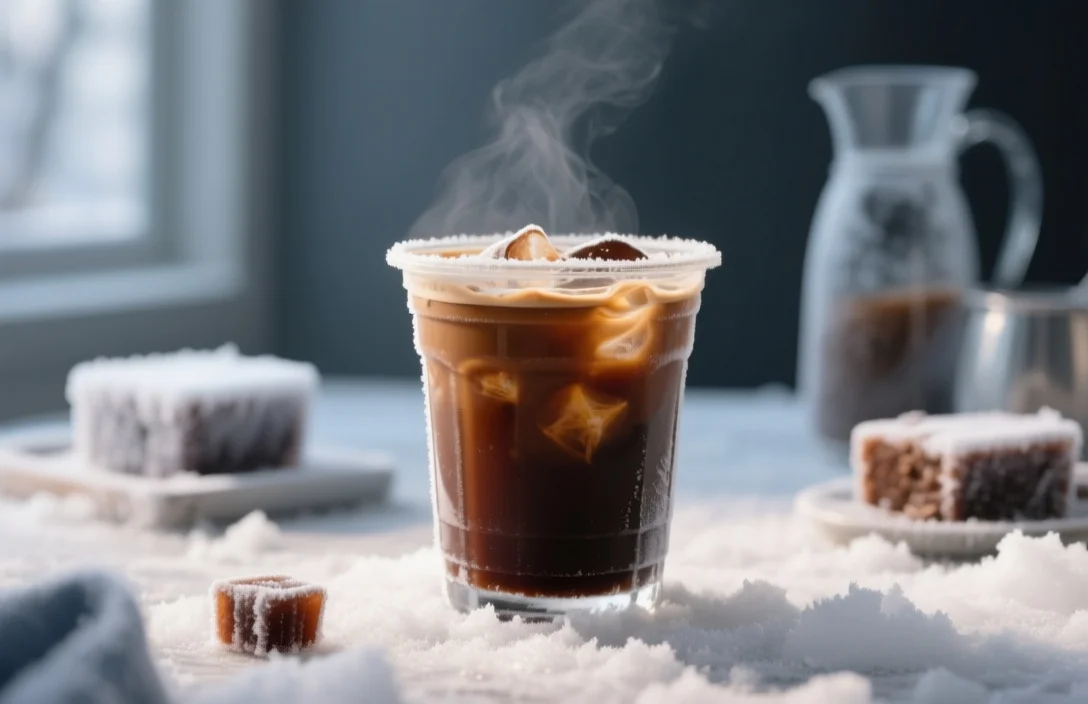
Frozen coffee recipes give you slushy, popsicle, or creamy coffee treats that beat standard iced coffee on texture and novelty. This guide shows clear, kitchen-tested recipes – plus equipment, timing, doneness cues, substitutions, storage, and troubleshooting – so you can make a reliable frozen coffee at home.
What frozen coffee recipes are and when to make them
Frozen coffee recipes convert brewed or concentrated coffee into a frozen format: blended frappés, crystalline granitas, molded popsicles, or ice-cream-style affogato treats. The difference from iced coffee is texture and dilution control; frozen formats either suspend coffee solids in a frozen matrix or use frozen coffee to avoid watering down the drink as ice melts.
Many situations call for a frozen coffee. Hot afternoons, outdoor gatherings, and portable treats for kids (use decaf for them) benefit from popsicles and granitas. Quick, cafe-style frappés work well when you have a blender and want something drinkable through a straw. Make-ahead frozen coffee also solves timing for parties: granita and popsicles can be stored for days or weeks in the freezer.
My approach when testing these recipes prioritized three criteria: straightforward technique, predictable texture after freezing, and flexibility for substitutions. Recipes that met all three became the core of the selection below. Expect to adjust sugar and dairy to taste; the instructions include explicit substitution options.
How freezing changes coffee flavor and texture
Freezing alters coffee in two important ways: solute concentration and ice-crystal formation. Solutes such as dissolved oils, sugars, and acids remain in the unfrozen fraction as water crystallizes, which concentrates flavor in the remaining liquid until the mixture is fully frozen. That concentration explains why granitas taste brighter than the starting liquid when scooped part-frozen.
Ice-crystal size controls mouthfeel. Rapid freezing (very cold freezer, small molds) tends to create finer crystals and a smoother texture. Slow freezing yields larger crystals and more granular, slightly crunchy textures. Blending crushed or shaved frozen coffee with liquids smooths out crystals by physical disruption, creating frappé textures. Practical takeaway – use coffee ice cubes to avoid dilution, and pre-chill ingredients to help make smaller crystals when freezing.
Must-have equipment and ingredients
Every recipe below requires only a few kitchen basics. Prioritizing gear helps keep texture consistent.
Essential equipment:
- Blender with at least 500 W motor (for frappés and creamy blends).
- Shallow baking dish or rimmed sheet pan (for granita).
- Popsicle molds or small paper cups and sticks.
- Fine-mesh sieve or chinois (optional, for filtering grounds or removing foam).
- Ice cube trays (for coffee ice cubes).
Basic ingredient list:
- Strong brewed coffee or cold brew concentrate.
- Sweetener: granulated sugar, simple syrup, honey, or flavored syrups.
- Dairy or dairy alternatives: whole milk, half-and-half, oat milk, or coconut milk.
- Ice or pre-frozen coffee ice cubes.
Reasoning behind items: a higher-fat dairy gives creamier mouthfeel and smoother blends; simple syrup integrates better into cold mixtures than granulated sugar; and coffee ice cubes eliminate dilution while contributing flavor. Keep extra brewed coffee on hand for adjusting consistency.
Three frozen coffee recipes you should know
This section contains three practical, tested frozen coffee recipes: a classic frappé, a coffee granita, and coffee popsicles. Each recipe lists quick result, ingredients/equipment, timing, method, doneness cues, substitutions, storage, and troubleshooting.
Classic Coffee Frappé (blender)
Quick result: A smooth, creamy cold-coffee drink with a velvety straw-able texture.
Ingredients:
- 1 cup strongly brewed coffee, chilled (or 1/2 cup cold brew concentrate + 1/2 cup water)
- 1 cup whole milk or oat milk
- 1 to 2 tablespoons simple syrup or 1 tablespoon granulated sugar
- 1 to 1.5 cups ice cubes or 6 frozen coffee ice cubes
- Optional: 1/2 teaspoon vanilla extract, pinch of salt, whipped cream to finish
Equipment: blender, tall glass
Timing: 5-7 minutes active, serve immediately.
Method:
- Add chilled coffee, milk, and sweetener to the blender.
- Top with ice cubes or frozen coffee cubes.
- Secure the lid and blend on medium-high until smooth, about 30-45 seconds. Pulse first if your blender struggles.
- Taste and adjust sweetness or milk; blend 5-10 seconds more if needed.
- Pour into a tall glass and top with whipped cream if desired.
Doneness cues: mixture should be pourable but thick enough to coat the back of a spoon; no visible large ice shards remain.
Substitutions: use decaf coffee for a caffeine-free version; swap whole milk for canned coconut milk for a richer vegan frappé; use flavored syrup instead of vanilla for variation.
Storage: best consumed immediately; if you must store, freeze in an airtight container and re-blend briefly before serving.
Troubleshooting: if the drink separates or is watery, add more ice and re-blend to rebuild the emulsion. If it’s too thick, add splash of cold coffee or milk.
Coffee Granita
Quick result: A flaky, spoonable frozen coffee, bright and slushy.
Ingredients:
- 3 cups strong brewed coffee, hot
- 1/2 to 1 cup simple syrup (adjust to taste)
- Pinch of salt
- Optional: 1 tablespoon liqueur (Amaretto, Kahlúa) per batch for demi-freeze texture
Equipment: rimmed baking dish (9×13 or similar), fork, airtight container
Timing: 4-8 hours total, 10 minutes active per stir session.
Method:
- Stir hot brewed coffee with simple syrup and salt until syrup dissolves. Cool to room temperature, then chill in refrigerator 30-60 minutes.
- Pour chilled mixture into a shallow rimmed baking dish and place flat in the coldest part of the freezer.
- After 45 minutes, scrape the freezing edges with a fork toward the center to break crystals.
- Repeat scraping every 30-60 minutes for 3-4 hours until the entire surface forms flaky crystals.
- Transfer granita to a shallow container and store in the freezer until serving. Scrape with a fork before serving to fluff the crystals.
Doneness cues: the texture should be crystalline and granular when scraped; a glossy, slushy crust indicates it’s time to break crystals.
Substitutions: replace part of the water with milk for creamier granita; for sweet variations, mix in chocolate or caramel sauce after initial freezing.
Storage: keeps airtight for up to 1 week without significant texture loss; prolonged storage darkens flavor.
Troubleshooting: if the granita freezes solid, let it sit at room temperature 5-10 minutes then scrape vigorously with a fork. If it tastes flat, stir in a teaspoon of fresh coffee or espresso and briefly re-freeze.
Coffee Popsicles
Quick result: Portable, made-ahead coffee popsicles with easy flavor swaps.
Ingredients (makes 6 standard popsicles):
- 2 cups strongly brewed coffee, chilled
- 1 cup milk or dairy alternative
- 1/3 to 1/2 cup simple syrup (adjust to sweetness)
- Optional: 2 tablespoons cocoa powder for mocha popsicles
Equipment: popsicle molds or small paper cups and wooden sticks
Timing: 6-8 hours freeze time, 10 minutes active.
Method:
- Whisk chilled coffee, milk, simple syrup, and any flavorings until smooth.
- Pour mixture into molds leaving a small headspace.
- Freeze 30-60 minutes until partially set, insert sticks, then freeze fully 5-7 hours.
- To unmold, run molds under warm water for 10-20 seconds to loosen.
- Serve immediately or store in a freezer-safe bag.
Doneness cues: center should be fully frozen; edges easily release from molds with brief warm rinse.
Substitutions: replace milk with sweetened condensed milk for rich, slower-melting popsicles; swap coffee for cold brew for a less acidic result.
Storage: well-wrapped popsicles keep for 2-3 weeks in a deep freezer; avoid repeated thaw-refreeze cycles.
Troubleshooting: if mixture separates in the mold, whisk a tablespoon of gelatin dissolved in warm water into the mix (or use 1 tablespoon cornstarch slurry) before pouring to stabilize.
Variants and trade-offs
Different frozen coffee types suit different goals – portability, creaminess, or intensity. The following table ranks three common variants by texture, prep time, and best-for scenarios.
| Name | Key Spec (texture / prep time) | Best For |
|---|---|---|
| Frappé (blended) | Smooth, creamy / ~10 minutes | Quick café-style drink at home |
| Granita | Flaky, crystalline / 4-8 hours hands-on intermittent | Make-ahead dessert, bright flavor |
| Popsicle | Solid, portable / 6-8 hours set time | On-the-go treat, portioned servings |
Trade-offs to consider: frappés require a blender and are best right away; granitas need intermittent attention but can be paused during freezing; popsicles are hands-off during freeze but require molds. Caffeine level varies by brew strength and portion size; choose cold brew concentrate for higher caffeine per ounce and decaf for family-friendly versions.
Practical tips and substitutions for common dietary needs
Home cooks often need to swap ingredients without changing texture too much. Listed substitutions preserve consistency and flavor.
Milk and dairy swaps:
- Whole milk -> oat milk: use slightly less oat milk if it tastes watery; full-fat canned coconut milk yields the creamiest result.
- Half-and-half -> evaporated milk: evaporated milk adds body but tastes slightly cooked; balance with a splash of fresh milk.
Sweetener swaps:
- Granulated sugar -> simple syrup: simple syrup dissolves reliably in cold liquids.
- Sugar -> honey or maple: reduce quantity slightly; adjust to taste.
- Sugar -> non-nutritive sweeteners: stevia or erythritol can leave cooling or metallic notes; combine with a small amount of syrup for mouthfeel.
Flavor additions:
- Cocoa powder: add 1-2 tablespoons for mocha flavor; sieve to avoid lumps.
- Spices: cinnamon, cardamom, or nutmeg at 1/8 to 1/4 teaspoon per batch.
- Alcohol: 1 to 2 tablespoons liqueur prevents full freezing and yields a softer texture for granitas and popsicles.
Pro tips for texture:
- Use coffee ice cubes to prevent dilution when blending.
- Pre-chill blender jar and ingredients to reduce frosting on blender blades and create finer crystals.
- For vegan creaminess, blend a tablespoon of neutral oil (light coconut oil or vegetable oil) with the mixture – only a small amount is needed to mimic dairy fat.
Storage, make-ahead, and reheating or serving later
Planning ahead makes frozen coffee a party-friendly option. Each format has different storage windows and revival techniques.
Make-ahead windows:
- Granita: keeps 5-7 days in an airtight container; fluff with a fork before serving.
- Popsicles: keep 2-3 weeks in a deep freezer; wrap individually in plastic to prevent freezer burn.
- Frappé: best within 1 hour; store in freezer as an ice block and re-blend later.
Revival techniques:
- Re-blend frozen frappé blocks in a blender with a splash of cold liquid.
- For frozen granita that’s over-frozen, let sit 5-10 minutes at room temperature then scrape to re-create flaky texture.
- If popsicles develop ice crystals, transfer to fridge 10 minutes before serving for easier biting.
Avoid repeated thaw-refreeze cycles. Each cycle enlarges ice crystals and dulls flavor. Use airtight packaging to minimize freezer-odors transfer.
Common mistakes and how to fix them
Frozen coffee can fail in predictable ways; knowing the fix saves time.
Mistake: watery or diluted flavor.
Fix: use coffee ice cubes, increase brew strength, or add a small amount of instant espresso powder dissolved in hot water before cooling.
Mistake: overly icy, large crystals in blended drinks.
Fix: pre-freeze the coffee in smaller cubes, use crushed ice instead of large cubes, or pulse-blend so blades chop crystals more evenly.
Mistake: too bitter or astringent.
Fix: reduce brew time or use a less-extracted brewing method. Add a pinch of salt or a small amount of dairy (or dairy alternative) to round bitterness. Sugar also masks bitterness but can mask other flavors.
Mistake: popsicles that don’t set properly.
Fix: ensure molds are fully frozen in the coldest part of the freezer and insert sticks only after partial set. For mixtures that refuse to firm, add stabilizers like a teaspoon of gelatin (non-vegan) or use higher-fat milk.
Mistake: lack of body or thin mouthfeel.
Fix: add 1 to 2 tablespoons of sweetened condensed milk or 1/4 cup more dairy; for vegan options, incorporate a tablespoon of coconut cream.
Advanced technique
Professional cafés use concentrated coffee, chilled emulsions, and controlled freezing to get consistent texture. Home cooks can mimic some techniques to upgrade results.
Make a cold brew concentrate: steep coarse-ground coffee in cold water for 12-18 hours, then strain. Concentrate yields deeper flavor with less acidity and makes better frozen textures because you can use less water and more dissolved solids.
Create coffee foam or crema: whip room-temperature milk or a dairy-free creamer with a handheld frother and fold into blended frappé at the end for a layered mouthfeel.
Layered treats: pour a thickened vanilla custard layer into popsicle molds, freeze slightly, then add coffee layer. This yields a coffee-vanilla bar that looks professional and balances bitterness.
Emulsions and mouthfeel: blending a small amount of vegetable glycerin (used in culinary small amounts) or a tablespoon of neutral oil improves creaminess and slows crystallization in granitas and popsicles.
Troubleshooting specific problems
This compact troubleshooting checklist addresses precise failures and quick fixes.
Problem: Frozen coffee turns gritty or sandy.
Solution: Graininess often comes from undissolved sugar or cocoa. Use simple syrup and sift powdered ingredients into the base before freezing.
Problem: Persistent off-flavors from freezer.
Solution: Store frozen coffee in airtight containers and place a layer of plastic wrap directly on the surface before sealing to prevent odor absorption.
Problem: Mold or spoilage in dairy-based popsicles.
Solution: Ensure dairy was pasteurized and that prep surfaces were clean. Freeze promptly and don’t leave molds out at room temperature for long during assembly.
Problem: Sticking to molds or tearing when unmolding.
Solution: Run the outside of molds briefly under warm water for 10-20 seconds; twist gently while pulling to release.
Problem: Too sweet after freezing.
Solution: Freezing suppresses sweetness perception. Reduce added sugar in trial batches by 10-20 percent and adjust after freezing.
FAQ
Can I use instant coffee for frozen coffee recipes?
Instant coffee works in a pinch and dissolves easily in hot water to create a strong base. Flavor will be different than brewed or cold brew; use a smaller amount and taste before freezing.
How long do frozen coffee popsicles last in the freezer?
Properly sealed popsicles keep best quality for 2-3 weeks. Quality declines afterward due to freezer burn and flavor oxidation.
Will freezing kill caffeine?
Freezing does not change caffeine content. Portion control matters if you want to reduce caffeine intake; use decaf coffee or dilute with more milk.
Can I make these recipes sugar-free?
Yes. Use erythritol or monk fruit blends to reduce sugar but test small batches first because non-sugar sweeteners alter mouthfeel and perceived freezing point.
Is cold brew better than hot-brewed coffee for freezing?
Cold brew provides lower acidity and fuller body, which often translates to a smoother frozen product. Strong hot-brewed coffee also works if chilled quickly and used with coffee ice cubes.
How do I prevent freezer burn on granita or popsicles?
Store in airtight containers; press plastic wrap directly on the surface of granita; double-wrap popsicles and keep them in the coldest part of the freezer.
My practical verdict: pick the format that matches your time and equipment. Want something fast and creamy? Make the frappé. Planning ahead for a party? Granita or popsicles are better choices. Next action: choose one recipe above, gather the ingredients listed, and make a single test batch so you can tailor sweetness and strength to your taste before scaling up.

- Espresso Tastes Watery? 10 Common Causes and How to Fix It - October 23, 2026
- 10 Common Coffee Equipment Cleaning Mistakes and How to Avoid Them - October 23, 2026
- 17 Common Coffee Grinder Problems and How to Fix Them - October 23, 2026