
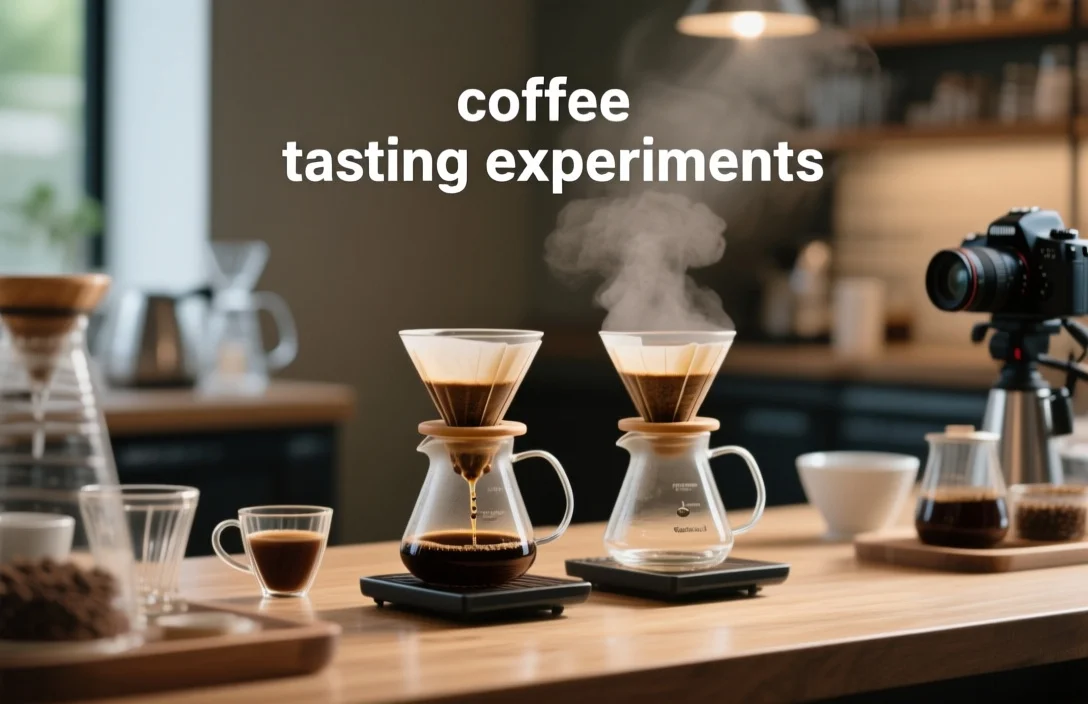
A reliable way to learn how different factors change flavor is to run a structured coffee tasting experiment: control everything you can, change one variable at a time, and record what you perceive. Coffee tasting experiments are most useful when you plan them around a clear question – for example, “Does grind size affect sweetness more than roast level?” – and then use blind tasting and repeated trials to reduce bias.
How to Set Up Coffee Tasting Experiments
Start with a clear, single research question that you can test in a single session. Choose whether you want to compare coffees, brewing variables, water, or storage, and write that objective at the top of your tasting log. Plan to change only one variable between samples; that isolation makes results actionable.
Gather simple equipment before you begin. Use a scale, a grinder you can repeatably set, identical mugs or cupping bowls, a method to label samples without revealing identity, and plain water that you use consistently. Prepare a tidy tasting area with neutral lighting and no strong ambient smells.
- Decide the variable to test and pick two or three levels of that variable.
- Prepare sample labels that hide identities; assign random codes.
- Use the same beans, roast date, and storage for all samples when the variable is not bean-specific.
- Brew each sample using identical equipment and timing cues; pour into identical cups.
- Smell, slurp, and record sensations on a tasting form; note aroma, acidity, sweetness, body, and aftertaste.
- Repeat each sample at least once, swapping order to check consistency.
- Debrief immediately after tasting; compare notes, then repeat the experiment on a different day if results are inconclusive.
What Variables Matter Most
Origin and varietal drive the raw flavor potential of a coffee. Beans from different regions tend to present characteristic notes because of soil, altitude, and processing; varietal differences change acidity and sweetness profiles. Roast level then shifts those base characteristics toward brighter or more caramelized flavors.
Grind size, water temperature and chemistry, extraction time, and brew method determine how those potential flavors are expressed in the cup. Freshness and storage method affect volatile aromatics; stale beans will taste flat regardless of other controls. Dose and coffee-to-water contact influence perceived strength and body.
- Origin / varietal: shapes base flavor profile and acidity.
- Roast level: moves flavors from fruity/acidic to caramel/roasty.
- Grind size: controls extraction rate and perceived bitterness.
- Water quality: modifies clarity and sweetness; mineral content matters.
- Brew method: changes contact time and flavor balance.
- Freshness: influences aroma and brightness.
- Dose: affects intensity and viscosity.
Blind Protocols and Bias Control
Blind tasting removes visual or label cues that influence judgment. Cover sample labels with opaque identifiers and randomize the tasting order so that preconceptions about a brand, label, or origin do not color perception. Randomization prevents position bias where the first or last cup appears systematically different.
Palate fatigue and carryover distort small differences unless you plan for neutralizers and breaks. Rinse with plain water between samples, breathe fresh air, and allow short rests between sips. Spitting is a common practice in formal cupping to avoid fatigue during large panels.
- Randomize order using shuffled codes or a phone-based randomizer.
- Blind all identifying information; reveal results only after scoring.
- Use consistent serving order for duplicates to detect palate drift.
- Include a control sample in each set to check consistency across sessions.
- Record who tasted what and when to track panelist effects.
Measuring and Recording Results
Choose a simple tasting form before you start and stick to it. A reliable sheet will separate aroma, sweetness, acidity, body, balance, and aftertaste and will include space for a short free-text note that uses the words you naturally reach for. Numeric scoring is useful for comparison but pair it with written descriptors to capture subtleties.
Label each entry with a code, the sample descriptor (kept blind), and time of tasting. Note physical controls such as grinder setting, water source, and brew method so you can reproduce the trial. Use consistent language across sessions to make later comparisons easier.
- Use a sliding scale or fixed-point score and define each level briefly.
- Keep a glossary of descriptors so words mean the same thing across sessions.
- Record environmental notes like room temperature or a strong scented interruption.
- Photograph grounds and brewed cups if visual changes might explain flavor shifts.
- Archive tasting sheets in a single folder for trend analysis.
Common Experimental Designs
Choosing a design depends on your question and on cost, time, and sample throughput. Cupping-style comparisons are efficient for many coffees, while paired side-by-side brews let you focus on a single variable in depth. Repeated-measures designs reduce the number of unique beans needed by testing the same sample across conditions multiple times.
Trade-offs will determine whether you run many short sessions or a few deep sessions. Short sessions with a few samples reduce fatigue and let you repeat trials across days. Longer sessions permit more conditions but increase the risk of palate exhaustion. Choose the design that matches what you will act on: buy more beans, change grinder settings, or alter water treatment.
| Name | Price / Key Spec | Best For |
|---|---|---|
| Cupping session | Low equipment: cupping spoons, bowls, grinder | Comparing many coffees quickly to rank preferences |
| Paired brew test | Low-to-moderate: two identical brews side by side | Isolating a single variable such as grind or roast |
| Water chemistry trial | Moderate: uses bottled waters with different mineral profiles | Identifying how water affects clarity and sweetness |
| Roast-level comparison | Moderate: needs same-origin beans roasted at different profiles | Assessing how roast shifts acidity and body |
| Dose-response test | Low: varying dose while keeping other parameters fixed | Finding the strength range you prefer |
| Brew method switch | Low: apply two or more brewing devices | Choosing the best brew method for a specific bean |
Analyzing Results and Making Decisions
Treat your data as directional rather than absolute unless you used large, replicated panels with controlled variables. Look for consistent trends across repetitions: did one sample repeatedly score higher for sweetness or clarity? Consistency across days strengthens confidence in a practical change. Make decisions that are reversible and low-cost first, such as adjusting grind or water source.
Quantitative comparisons help when you plan to implement changes at scale. Average scores can indicate a clear winner, but dispersion – how much individual scores vary – shows how robust the effect is across tasters. Use median values when your sample size is small and one outlier might skew the mean.
- Compute averages and medians for each attribute across reps.
- Check standard deviation informally by noting how spread out scores are.
- Mark effects that appear only once as anecdotal until replicated.
- Prioritize changes that consistently improved attributes you care about.
- Retest after making a change to confirm the improvement under normal conditions.
Practical
Pick fresh beans and a single brew method and then run one of these focused experiments. Each example below includes a short purpose statement, a plan, and a simple tasting protocol.
Experiment A – Grind Size Impact
Purpose: See how grind coarseness shifts extraction and perceived bitterness.
Plan: Choose three grind settings across a practical range for your brew method. Keep dose, water, and brew time identical while brewing each grind level.
Tasting protocol: Randomize order, taste blind, score bitterness, sweetness, and body, then repeat once.
Experiment B – Roast Level Demonstration
Purpose: Understand roast-driven changes in acidity and aromatics.
Plan: Source the same origin roasted at two distinct levels or use a retailer sample labeled with roast level. Use identical grind and brew.
Tasting protocol: Present samples blind, note dominant aroma notes and acidity character, and discuss differences immediately after tasting.
Experiment C – Water Profile Quick Test
Purpose: Evaluate whether your tap water is masking brightness.
Plan: Brew a single coffee with your tap water, a bottled low-mineral water, and a bottled higher-mineral water if available. Keep all else identical.
Tasting protocol: Serve blind and record clarity, sweetness, and aftertaste. Repeat later with a second roast to check persistence.
Common Mistakes and How to Avoid Them
Rushing through samples and changing multiple variables at once are frequent pitfalls. Avoid trying to test roast and grind in the same session unless your goal explicitly maps their interaction. Label confusion or revealing identities mid-session contaminates results; use opaque labels and a separate key sheet kept out of the tasting area.
Ignoring palate fatigue will make subtle differences disappear. Plan shorter sessions with fewer samples or use spitting for heavy sessions. Failing to repeat results across days leads to overconfidence in one-off outcomes; schedule follow-up tests for promising findings.
- Test one variable per session whenever possible.
- Blind labels and use a shuffled order to reduce expectation bias.
- Limit sample count per session to preserve sensory acuity.
- Repeat promising results on another day before acting.
- Keep tasting notes structured so future comparisons are straightforward.
How to Scale Experiments for Groups or Cafes
Train a small panel to use the same vocabulary and scoring system before you run a comparative trial. Calibration sessions where everyone tastes the same set and discusses descriptors help align expectations. Assign specific roles during a tasting – pourer, scorekeeper, timekeeper – to maintain consistency.
Record and aggregate panel results in a simple spreadsheet to spot consistent trends. Rotate the order of presentation across panelists and sessions to avoid order effects. Use small shifts first in a commercial setting: adjust grinder settings in small steps and test again before changing wholesale.
- Calibrate your panel with reference samples to anchor terms.
- Use identical disposables to avoid cross-sample aroma contamination.
- Keep service flow consistent between sessions for reliable comparisons.
- Implement one change at a time in a café setting to evaluate customer feedback.
FAQ
How often should I repeat a tasting experiment?
Repeat the experiment on at least two different days to check for consistency across sessions. This reduces the chance that a single environmental factor or momentary palate condition produced the observed effect.
Can I run meaningful tests with just one taster?
Yes, single-taster experiments can reveal large effects if you control variables strictly and repeat trials. Treat results as personal preferences rather than broadly generalizable findings.
Do I need expensive tools like refractometers?
No. Many useful experiments require only a consistent grinder, a scale, and consistent water. Refractometers and lab tools add precision for advanced testing but are not required for practical, decision-oriented experiments.
What is a good sample size for comparing coffees?
Small sessions with two-to-six samples avoid palate fatigue and are easier to repeat. The ideal number depends on your tolerance for fatigue and the precision you need to act; fewer samples with repetitions on multiple days often beats a single long session.
Should I spit or swallow during tasting?
Spitting prevents alcohol-like palate fatigue and helps maintain sensitivity during longer panels. Swallowing is fine for short sessions focused on enjoyment rather than high-throughput evaluation.
How do I choose descriptors if I don’t know tasting vocabulary?
Use ordinary words you find meaningful – floral, citrus, caramel, woody, clean – and record analogies you understand. Build a short glossary over time to keep language consistent across sessions.
A short practical verdict: start with one clear question, keep sessions small and blind, and record both scores and short notes. Pick a single low-cost variable to change first – for most home tasters, grind or water will deliver actionable results faster than changing beans or roast. Your next step is to plan one session this week: choose the variable you care most about, set up blind cups, and run a repeatable three-sample test.

- Espresso Tastes Watery? 10 Common Causes and How to Fix It - October 23, 2026
- 10 Common Coffee Equipment Cleaning Mistakes and How to Avoid Them - October 23, 2026
- 17 Common Coffee Grinder Problems and How to Fix Them - October 23, 2026