
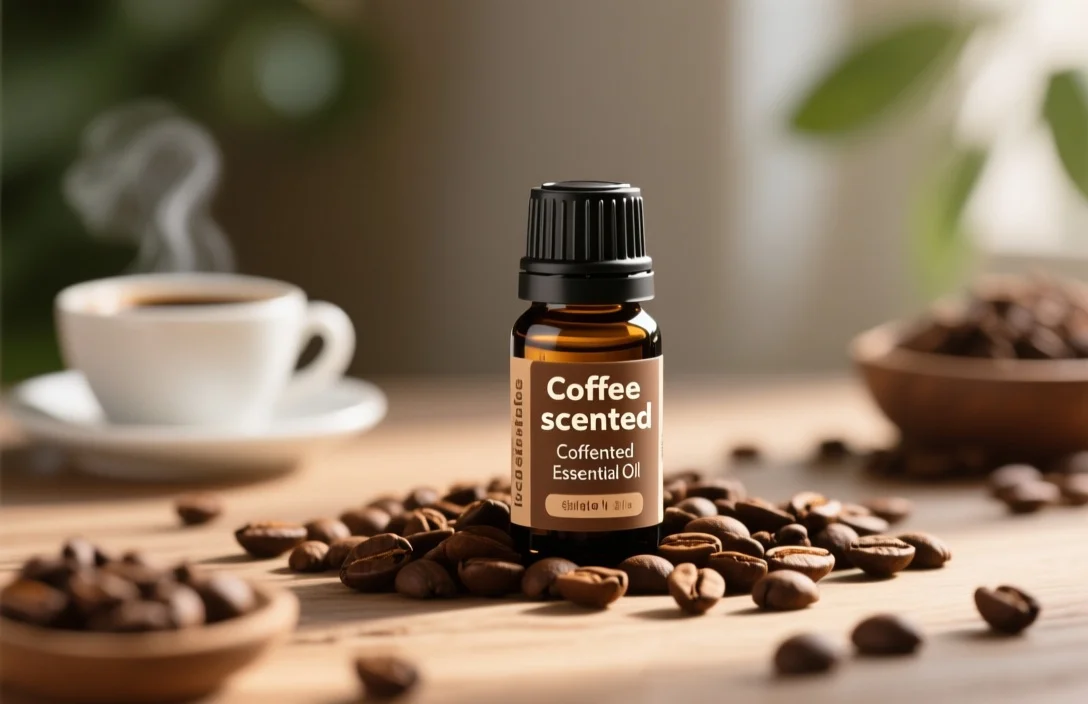
Yes, coffee scented essential oil is a label you’ll find on the market, but the products behind that label vary: some are true botanical extracts (often called coffee CO2 extract or coffee absolute), others are fragrance oils formulated to smell like coffee, and a few are carrier oils simply infused with ground beans. This guide explains those differences, how to use any coffee-scented product safely, how to choose the right type for your project, and what to avoid when buying or blending.
What “coffee scented essential oil” refers to
A short, practical definition: coffee scented essential oil is any concentrated oil product sold for its coffee aroma rather than for nutrition. Manufacturers sell three practical categories under that name – botanical extracts derived from coffee beans, synthetic or blended fragrance oils that mimic roasted coffee, and infused carrier oils that carry coffee aroma. Each category behaves differently in a diffuser, in topical use, and in perfumery.
Label wording is decisive. Products named “CO2 extract”, “coffee absolute”, or “coffee oil” usually indicate a concentrated botanical extract obtained with solvents or CO2 extraction rather than steam distillation. Items that list “fragrance”, “fragrance oil”, “parfum”, or a long INCI fragrance list typically contain synthetic aroma molecules. Bottles that list a simple carrier oil plus “infused with coffee” are usually mild infusion blends meant for cosmetics or massage. Reading the ingredients line is the fastest way to know which one you have.
How coffee aroma is created (what’s inside the bottle)
Coffee scent comes from hundreds of volatile aroma molecules created during roasting and present in green beans in different amounts. A single roasted bean can release acids, aldehydes, pyrazines, and phenolic compounds that combine into the familiar coffee note. Extraction method determines which molecules survive into the final oil and how stable the aroma will be.
CO2 extraction and solvent extraction capture heavier, less-volatile molecules that give depth and body to the scent; those extracts are often labeled “coffee absolute” or “CO2 extract”. Fragrance oils are blends of synthetic aroma chemicals and natural fractionates chosen to reproduce the roast, bitter, and sweet facets of coffee; manufacturers tune these blends to be consistent and long-lasting. Infused carrier oils capture only the most extractable and oil-soluble aroma compounds and tend to smell more subtle and fresher, like steeped coffee rather than a concentrated roast.
Scent performance differs by type. Botanical extracts can be intensely aromatic in a perfume or soap but often cost more and may be less stable in high-temperature applications. Fragrance oils are engineered for candles and wax melts because they perform predictably at temperature and over shelf life. Infused oils work well for topical massage or as a low-cost fragrance in body oils but do not typically provide the punch required in commercial perfumery.
Common uses and realistic effects
People choose coffee-scented oils for four practical purposes: home fragrance, personal fragrance/perfumes, craft use (soap, candle, wax melts), and topical products (massage oils, balms). Each application favors a different product type: fragrance oils for candles, CO2 extracts for perfumes and soaps, and infused carrier oils for skin-contact products.
Aromatherapy-style claims about coffee scent – such as improved alertness or mood changes – are user-reported outcomes rather than guaranteed clinical effects. Many consumers report feeling mentally stimulated or comforted by coffee aroma because the scent is strongly associated with waking and ritual. Producers of coffee-scented products rarely position them as medical or therapeutic; treat any health or cognitive claims with caution and consult a healthcare practitioner for medical concerns.
Practical trade-offs when choosing a coffee aroma: botanical extracts bring complexity and authenticity but can be costly and may contain allergenic natural constituents; fragrance oils give consistency and value for home-fragrance uses but can include synthetic components that some buyers prefer to avoid; infused carrier oils provide gentle scent and direct skin use but rarely carry enough aroma for candles or concentrated perfume.
How to use coffee-scented oil safely (diffuser, topical, candles)
Start with safe handling fundamentals: always read the product label, check the ingredient list, and follow manufacturer usage instructions. When a label is missing detailed guidance, default to conservative use – less is better than more for concentrated aroma materials.
Diffuser use typically requires a few drops in water for ultrasonic models or a small quantity on reeds for passive diffusers. Fragrance oils and CO2 extracts behave differently in heat; fragrance oils are formulated for candles and wax melts and therefore resist thermal breakdown, while botanical extracts can darken or morph under sustained heat. Test any new product in a small quantity before committing it to a full candle batch or long-running diffuser.
Topical application requires an initial patch test. Start by mixing one drop of your coffee-scented product with a teaspoon of a neutral carrier oil (for example, fractionated coconut oil or jojoba) and apply to a small skin area. Discontinue use if you notice redness, itching, or irritation. If no reaction occurs after 24 hours, you can consider a slightly higher but still diluted application for a massage or personal fragrance. Avoid applying concentrated extracts directly to mucous membranes or broken skin.
Pets and children require special caution. Do not use diffuser or candle formulations in small, poorly ventilated rooms where infants, pregnant people, or animals spend extended time without consulting a veterinarian or pediatrician. Some aroma chemicals that are safe for human use can cause respiratory or neurological symptoms in sensitive pets, particularly birds, cats, and small mammals.
How to choose a product
Comparing the main product categories side by side makes selection quicker. Ranked by usage fit (home fragrance, perfumery, topical), then by typical labeling clarity.
| Name | Price / Key Spec | Best For |
|---|---|---|
| Coffee CO2 Extract / Coffee Absolute | Price varies; labeled “CO2 extract” or “absolute”; concentrated, complex aroma | Perfume formulations, high-end soap where authentic roast character is required |
| Coffee Fragrance Oil | Price varies; labeled “fragrance” or “parfum”; synthetic blends optimized for performance | Candles, wax melts, room sprays, economical home fragrance |
| Coffee-Infused Carrier Oil | Price varies; lists carrier oil + “infused with coffee” or coffee grounds | Topical body oils, massage blends, mild cosmetic scenting |
Buying checklist:
- Read the ingredient list. Look for “CO2 extract”, “absolute”, “parfum”, or a named carrier oil. Exact wording tells you whether molecules are natural, synthetic, or both.
- Check intended use. If the product description mentions “candle use” or “hot throw”, it’s likely a fragrance oil formulated for heat. If the label recommends dilution and patch testing, it may be intended for topical use.
- Inspect allergen or advisory statements. Natural extracts can carry allergenic constituents; responsible sellers list warnings or suggest patch testing.
- Note packaging. Dark glass bottles with airtight caps preserve aroma longer than clear plastics or untreated tins.
- Review return and testing policies. Sellers that allow small sample sizes or sample vials remove risk for first-time buyers.
How to make a simple coffee-scented oil at home (five-step recipe)
Follow this basic infusion method for craft or topical use when you need a mild coffee aroma from kitchen supplies. Use clean tools and fresh coffee beans or grounds.
- Measure: Place 1/2 cup of whole roasted coffee beans into a clean, dry glass jar that seals tightly. Choose beans with the aroma profile you prefer (darker roasts for smoky notes, medium roasts for balanced notes).
- Add carrier: Pour enough neutral carrier oil to cover the beans completely; typical choices include sweet almond oil, jojoba, or fractionated coconut oil.
- Steep: Seal the jar and store it in a warm, dark place. Gently swirl the jar once a day to help diffusion. Allow steeping for 1 to 4 weeks depending on desired strength.
- Strain: When the scent reaches your target intensity, strain the oil through a fine mesh or cheesecloth into another clean jar, pressing solids gently to recover oil.
- Store: Label the bottle with date and roast type, then keep it in a cool, dark cupboard. Use within a reasonable period and discard if it smells rancid or shows clouding.
Optional variations: Warm infusion uses a double boiler at low heat for 1-2 hours to accelerate aroma transfer; cold infusion minimizes heat-related aroma changes but takes longer. Alcohol extraction (vodka) followed by blending with carrier oil can yield a stronger scent appropriate for personal perfumes; handle flammable solvents and proper ventilation when using alcohol.
How coffee-scented oils behave in craft projects (soap, candle, perfume)
Soap makers choose coffee extracts for the roasted, gourmand facets they add to bars; the complex molecules in CO2 extract can survive saponification better than more delicate top notes. Candle makers prefer fragrance oils designed for hot throw because those blends include heat-stable aroma components and are tested in wax matrices for consistent performance.
Perfume formulators use coffee absolutes sparingly as base or middle notes that add dark, roasted depth to gourmand accords. Coffee notes blend well with vanilla, cacao, and tonka for edible-smelling perfumes, and they pair with florals and spices when a contrast is needed.
Testing is essential. When adding coffee-scented materials to a formula, create small-scale test batches and evaluate cold throw (room fragrance from an unlit candle) and hot throw (scent while burning) for candles. For soaps, cure a small sample and evaluate scent retention after 4 to 6 weeks; some extracts change character during saponification and curing.
Common mistakes, warning signs, and what to avoid
Avoid using any concentrated aroma oil undiluted on skin. Skin irritation, contact dermatitis, and sensitization can result from direct application of concentrated extracts or fragrance blends. Never assume a product labeled “natural” is hypoallergenic – natural constituents can be powerful allergens.
Do not assume all “coffee-scented” bottles are safe for candles or for topical use. Manufacturers choose formulation methods for specific applications. Using a botanical extract formulated for perfume in a candle can yield a weak hot throw or cause the scent to transform unpleasantly under heat. Conversely, candle fragrance oils can contain heavy solvent carriers and synthetics unsuitable for skin contact.
Watch for changes in smell, color, or clarity. Oxidation or contamination can make an oil smell stale, sour, or rancid. If a bottle develops sediment, cloudiness, or an off-odor, discard it. Pay attention to product advisory statements; labels that omit warnings or batch numbers offer less transparency.
Pet safety is a special warning area. Some aroma chemicals that are safe for people can be toxic to pets, especially cats. Keep diffusers and candles out of rooms where sensitive animals spend a lot of time, and consult a veterinarian for guidance specific to your pet species.
Storage, shelf life, and labeling clues
Store coffee-scented oils in cool, dark places away from direct sunlight. Dark glass bottles with tight caps and minimal headspace slow oxidation. Frequent opening accelerates aroma loss by allowing volatile molecules to evaporate.
Sellers sometimes display explicit shelf life segments in their product information. Product pages can list options such as “Up to 179 Days”, “180 to 272 Days”, “273 to 365 Days”, or “Over a Year” for different items. Treat such categories as indicative rather than absolute; shelf life depends on formulation, packaging, and storage conditions. If long-term performance matters for a project, buy small batches more often rather than stocking a large supply.
Label clues that matter:
- “CO2 extract”, “absolute”, or botanical names indicate a plant-derived concentrate.
- “Fragrance”, “parfum”, or a long INCI fragrance list signals a synthetic or blended fragrance oil.
- A named carrier oil plus “infused” indicates a mild cosmetic-grade infusion.
- Batch codes and production dates improve traceability and indicate a brand’s transparency.
Practical buying tips for U.S. shoppers
Buy samples or 1 mL tester vials when possible to verify aroma before committing to larger bottles. Check return policies for fragrance products since scent preference is highly personal. For craft use, purchase from suppliers who list intended application (soap, candle, perfume, topical) and provide usage rates or technical data sheets.
Claim verification matters. If a seller calls a product “essential oil” but lists “fragrance” in the ingredients, treat the product as a fragrance oil. Prefer sellers who disclose extraction method and origin for botanical extracts and who supply safety data or suggested dilution for topical products.
Pricing signals are not definitive. High price often reflects low batch availability, complex extraction, or small-batch artisan production. Low price often indicates synthetic fragrance blends or diluted products. If you need an authentic coffee absolute for perfumery, expect to pay more than you would for a candle-grade fragrance oil.
FAQ
Is there a true “coffee essential oil” made by steam distillation?
True steam-distilled coffee essential oil is uncommon because the roasting and aroma chemistry of coffee do not lend themselves well to classic steam distillation. Many coffee aroma products are labelled as CO2 extracts, absolutes, or fragrance oils instead.
Can I use coffee-scented oil on my skin every day?
You can use a coffee-infused carrier oil on skin if it causes no reaction, but concentrated extracts and fragrance oils require dilution and a patch test first. Discontinue use if irritation appears and consult a dermatologist for persistent reactions.
Will coffee-scented oil keep its smell in candles?
Fragrance oils formulated for candle use tend to retain their aroma when burned, while botanical extracts can change or weaken under heat. Test a small candle sample before making larger batches for sale or gifting.
Are coffee fragrance oils safe around pets?
Some fragrance components can irritate or harm pets, particularly birds and cats. Use caution with diffusers and candles in spaces used by animals, and seek veterinary advice for species-specific guidance.
How long will a homemade coffee-infused oil last?
Shelf life depends on the carrier oil and storage. Rancidity risk increases with unsaturated carriers; storing in dark glass and using within a few months is a conservative approach. Discard if the oil smells off.
Can I blend coffee-scented oil with other aromas?
Yes. Coffee blends well with vanilla, caramel, cocoa, and warm spice notes in gourmand accords, and with floral or woody notes in more complex perfumes. Start with small trial blends and evaluate after a short rest period to allow the mix to settle.
A short practical verdict and next ste
If you want a bold, authentic roast note for perfumery or artisan soap, look for coffee CO2 extract or coffee absolute and request a small sample before buying. If you want reliable performance for candles or room sprays, choose a fragrance oil labeled for wax or candle use. When in doubt, order a tester vial, read the ingredient list carefully, and perform a patch test for any product that will touch skin.

- Espresso Tastes Watery? 10 Common Causes and How to Fix It - October 23, 2026
- 10 Common Coffee Equipment Cleaning Mistakes and How to Avoid Them - October 23, 2026
- 17 Common Coffee Grinder Problems and How to Fix Them - October 23, 2026