
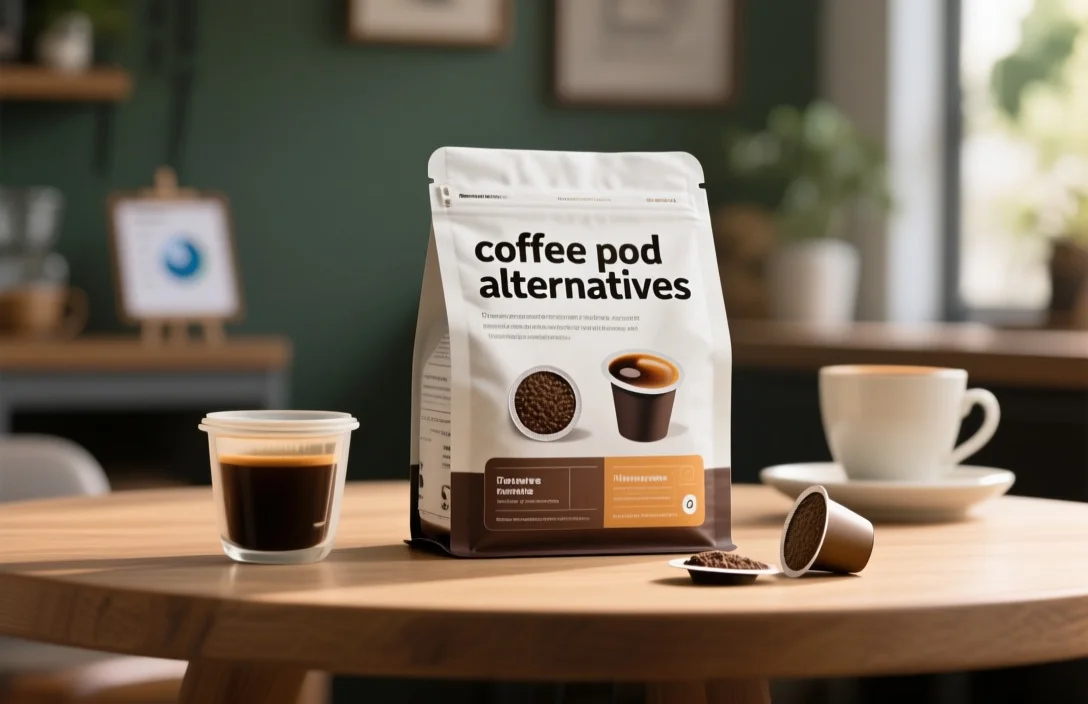
Coffee pod alternatives are worth considering if you want single-serve convenience without the steady pile of disposable pods. My practical view is simple: for most people, the best place to start is a reusable pod paired with a basic burr grinder. That gives you the closest thing to the pod routine you already know, while cutting waste and lowering long-term cost.
I ranked the main options by five things that matter in day-to-day use: brew quality, waste reduction, per-cup running cost, convenience, and machine compatibility. I also weighed them against the way people actually drink coffee at home, at work, and on the move. That usually matters more than the marketing copy on the box.
Top picks and ranking criteria
Best overall: Reusable metal capsule plus grinder
Best budget: French press
Best single-serve convenience: Refillable sealed capsules
Best fast and portable: Instant microground coffee or coffee bags
Best espresso-like option at home: Moka pot or manual lever espresso press
Best for office shared use: Large pour-over carafe or batch brewer
These picks reflect a basic tradeoff. If you want the least disruption, stay close to the pod system. If you want the best cup, step away from it.
What I looked at:
- Brew quality, meaning balance, body, and how well the method controls extraction.
- Waste reduction, especially single-use plastic and filter waste.
- Running cost, which is the price over time, not just the sticker price.
- Convenience, including brew time and cleanup.
- Flexibility, meaning whether you can use whole beans, change grind size, or tweak the recipe.
Quick comparison
| Name | Price / Key Spec | Best For |
|---|---|---|
| Reusable metal capsule | One-time purchase; exact prices vary | People who own capsule machines and want less waste |
| Refillable sealed capsules | Requires a compatible capsule brewer; one-time capsule purchase | Users who want pod-like convenience with custom coffee |
| French press | Low-cost manual brewer; metal or glass options | Budget-minded drinkers who like a fuller cup |
| AeroPress | Plastic manual brewer; fast, low-acidity results | Travelers and single-cup drinkers who want more control |
| Pour-over cone (V60/Chemex) | Filtered brew; paper or reusable filters | Clean-tasting cups and batch brewing |
| Moka pot | Stovetop espresso-style brewer | Espresso-like drinks without an espresso machine |
| Instant / coffee bags | Pre-measured, quick hot-water brew | Ultra-fast, portable single-cup needs |
| Single-serve manual brewer (travel press) | Compact press-style devices | Commuters and minimalists |
Exact retail prices and manufacturer specs were not available in the material used for this guide. If you are buying now, check current retailer listings before you decide.
Which alternative fits your routine
Here is the part I would actually use when choosing.
If you want to keep your current machine, go with a reusable capsule or a refillable sealed pod. If you are willing to give up the machine entirely, a French press or AeroPress is usually a better long-term buy. If you want the closest thing to espresso without paying for an espresso machine, a Moka pot is the clearer choice.
A pod-style brewer is fast because the system is closed. Manual brewers ask for a little more attention, but they usually give you better coffee for less money.
Reusable capsules and refillable systems
Reusable metal capsule
Metal capsules that mimic commercial pods usually come in two forms, a press-fit metal body or a refillable basket for measured grounds. Their strength is obvious, they are a one-time purchase and they work with many pod machines.
The tradeoff is consistency. Grind size and fill level matter a lot. Too fine, and you can choke the cup. Too coarse, and the coffee comes out thin. Cleanup is also part of the deal, because you need to rinse the capsule after each use.
My practical rule is to treat these like a precision tool, not a throw-in accessory. A medium-fine grind and a light tamp usually work better than trying to pack the coffee hard.
Refillable sealed capsules
Refillable sealed capsules try to behave more like factory pods. Grounds go into a shell that creates a pod-like pressure profile, so the brew feels familiar and the cleanup is still light.
This is the better choice if you care more about preserving the old routine than about exploring manual brewing. It is still a compromise, though. Model fit matters, and the capsule has to match your brewer. If compatibility is wrong, the convenience advantage disappears.
These systems work best with a burr grinder. That is the part people skip, then blame the capsule.
What to keep in mind
Capsule-based alternatives need more attention to grind and moisture than standard pods. Oily beans can clog small openings. Very coarse coffee can brew weak. If you switch to a reusable or refillable capsule, a consistent burr grinder is one of the few upgrades that really changes the result.
Manual single-cup brewers and small devices
AeroPress
AeroPress brews quickly with a short steep and a plunge. The result is clean, fairly low in acidity, and easy to repeat once you settle on a routine.
It is a strong choice for travel, small kitchens, and anyone who wants one cup without much cleanup. It is also more flexible than it looks. You can make a concentrated shot, an Americano-style cup, or a fuller immersion brew.
Its limits are just as clear. Capacity is small, and it is still a manual process. I would choose it when I want control and speed, not when I need a pot for several people.
French press
French press coffee is fuller and heavier because the grounds steep directly in hot water, then are filtered with metal mesh. That gives you body, but also some sediment.
This is one of the simplest ways to make good coffee without a pod machine. It is also cheap. If you are building a budget setup from scratch, I would put this near the top of the list.
The main caution is heat and timing. Glass models can feel fragile, and if coffee sits too long in the press, it can turn bitter. Decant it when it is ready. Do not leave it sitting there.
Pour-over cone
Pour-over cones give a cleaner cup, but they ask more from the person brewing. Water temperature, pour pattern, and bloom time all matter.
That is why I would not recommend pour-over as the easiest swap from pods. It is better for people who want to pay attention and who like a more articulate cup. It also scales nicely. You can make one cup or several, depending on the setup.
If you want clarity and are willing to practice a little, this is a serious option.
Moka pot
A Moka pot sits in a useful middle ground. It makes a concentrated coffee that feels stronger than drip and more intense than a press brew, without an espresso machine.
This is the best option for people chasing espresso-like coffee at home without buying a full espresso setup. It does take some care. Medium-fine grind, low to medium heat, and patience usually work better than trying to force it.
Used badly, it can taste bitter. Used well, it gives you a strong cup with a lot more presence than standard pod coffee.
Instant coffee and coffee bags
Instant microground coffee and coffee bags are the simplest answer of all. Hot water, cup, done.
I would keep these in the conversation because convenience is the whole point for some people. They are useful for travel, emergency kits, offices, and days when speed matters more than brewing nuance.
The tradeoff is obvious. You give up fresh-ground flavor and much of the control you get from other methods. That is acceptable in the right setting. It is not a fair comparison if your only goal is better taste.
Tradeoffs you cannot avoid
Moving away from disposable pods always costs you something. Usually it is one of three things: time, technique, or equipment.
Reusable capsules save time, but you have to clean them and you have to get the grind right. Manual brewers ask for more technique, but they usually give better flavor and lower per-cup cost. Buying whole beans and a grinder costs more up front, but it usually pays off in freshness and consistency.
Maintenance changes too. Metal capsules need rinsing. French press screens need cleaning and sometimes replacement. AeroPress filters need replacing unless you use a reusable one. Built-in pod machines still need descaling on the same schedule whether you use pods or refillables.
Waste is another practical issue. Permanent filters and reusable capsules reduce single-use plastic. Paper filters create more trash, but they are easier to compost in places that accept them. Instant coffee and coffee bags create packaging waste, so the real environmental result depends on the brand and how it packages its product.
How to choose without overthinking it
My practical checklist is short:
- Decide whether you care more about convenience or flavor.
- Decide whether you want to keep your current pod machine.
- Count how many cups you make each week.
- Buy a burr grinder if you care about taste.
- Pick a cleanup level you can live with.
If you make more than 10 cups a week, the economics start to move toward whole-bean solutions. That is not a magic number, but it is a useful one. At that point, the gap between pods and manual brewers becomes harder to ignore.
A grinder matters more than people expect. Blade grinders are a weak link. They make consistency harder, and consistency is what these alternatives need.
Best choices by use case
For commuters who need speed
Refillable sealed capsules or instant coffee bags are the quickest options. They keep the routine short.
For a small household
AeroPress or French press works well for two or three people. Add a burr grinder and the results get more consistent.
For an office with shared coffee
A large pour-over carafe or batch brewer makes more sense than stacking up single-use pods.
For someone who wants espresso-like coffee at home
A Moka pot or a manual lever press is the better fit. It gives you concentration without an espresso machine.
For a budget-first setup
French press is hard to beat. It is simple, cheap, and capable of making a solid cup.
Cost and long-term value
Short-term and long-term costs do not line up very well here. A reusable setup usually costs more at the start and less over time. Disposable pods do the opposite. Pour-over and French press setups stay relatively cheap, since you are mostly paying for coffee and the occasional replacement part or filter.
Exact price comparisons were not available in the material used for this guide. If you are deciding now, I would look up current prices for the specific devices you are considering and do a simple break-even check.
The easiest version is this: take the one-time equipment cost, divide it by how many months you expect to use it, then add the cost of coffee per cup. That gives you a better picture than sticker price alone.
Environmental impact and disposal
Reusable capsules and permanent metal filters are the clearest way to cut single-use plastic waste. Paper filters reduce plastic too, but they create a different kind of waste stream. Instant coffee and small sachets are light and convenient, yet they still depend on packaging choices that vary by brand.
If landfill reduction is your main concern, I would look first at permanent filters, reusable capsules, and bulk whole beans with minimal packaging. Paper filters can still make sense if composting is available and accepted where you live.
Do check local recycling and composting rules. Packaging that looks recyclable is not always accepted where you are.
FAQ
Will reusable capsules damage my pod machine?
There is some risk if the capsule is the wrong size or installed badly, or if grounds leak into the machine. Careful use lowers that risk. Check your machine’s manual before you buy anything.
Can I use any grind with refillable pods?
No. Very fine espresso grind can clog the outlet, and very coarse grind can leave the cup weak. Medium-fine is usually safer for many capsules, but the right choice depends on the device. A consistent burr grinder helps.
Which manual brewer makes the strongest single cup?
Moka pots and AeroPress, especially with a concentrated recipe, tend to make the strongest single cup. Strength depends on dose and water ratio as much as method.
How often should I clean reusable capsules?
Rinse after each use. If you brew daily, I would do a deeper clean weekly and check gaskets and channels monthly.
Bottom line
If you want to stay close to the pod routine, start with a reusable capsule or a refillable sealed insert that fits your machine. Pair it with a basic burr grinder. That is the cleanest path away from disposable pods without making your morning routine feel complicated.
If flavor matters more than convenience, I would skip the pod system entirely and buy an AeroPress, pour-over cone, or French press, along with a grinder. Those methods ask for a little more from you, but they usually give you more back.
My final recommendation is straightforward. Choose the least disruptive option if you value speed, or choose a manual brewer if you value taste. Then check current retailer prices for the exact model before you buy.

- Espresso Tastes Watery? 10 Common Causes and How to Fix It - October 23, 2026
- 10 Common Coffee Equipment Cleaning Mistakes and How to Avoid Them - October 23, 2026
- 17 Common Coffee Grinder Problems and How to Fix Them - October 23, 2026