
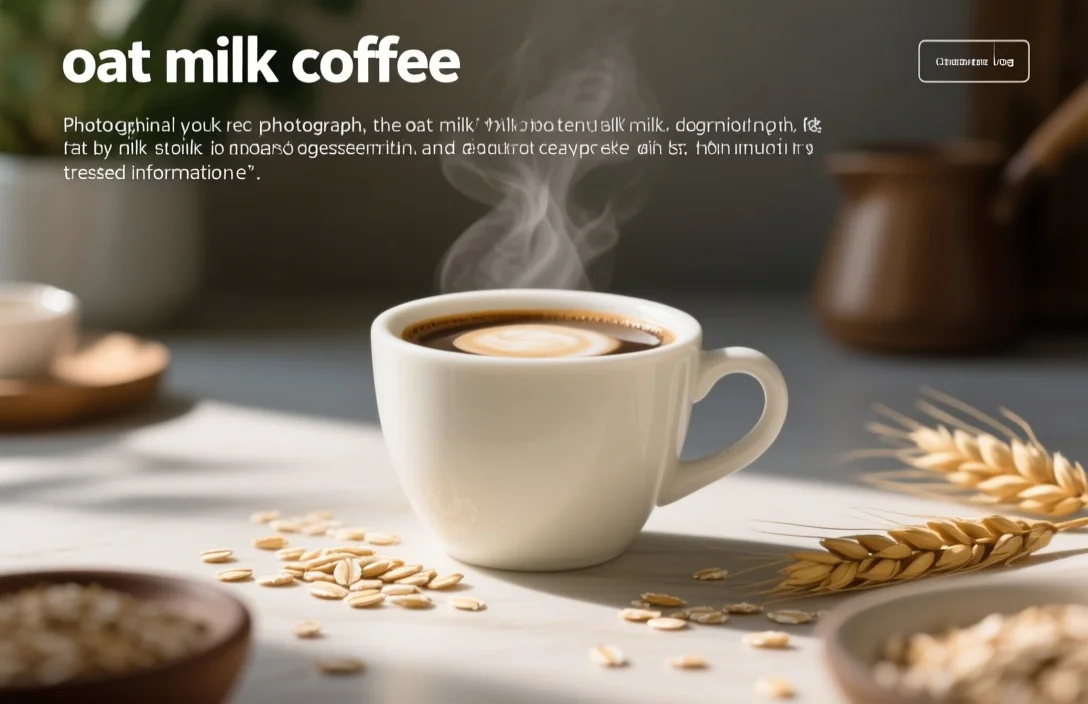
Oat milk coffee is simply coffee made with oat-based milk instead of dairy; it delivers a naturally creamy mouthfeel and neutral sweetness that most people find closer to dairy than other plant milks. Read ingredient labels and pick a “barista” or homemade version if you want stable froth, low added sugar, and the best latte texture.
What oat milk coffee is and why people choose it
Oat milk coffee pairs espresso or brewed coffee with milk made from oats and water, sometimes with oils, salt, or stabilizers added to the packaged product. Many home drinkers and cafés prefer oat milk because it produces a thick, silky mouthfeel and neutral sweetness without dairy proteins, making it suitable for lactose-intolerant customers and many vegans.
Demand has increased because oats taste less “beany” than soy and less thin than many nut milks in hot drinks. Those who prioritize sustainability often mention oats as a plant-based option with relatively low barriers to scaling, while people with nut allergies choose oat milk as a safe alternative. Expect variation between homemade oat milk, shelf-stable cartons, and barista-formulated commercial products.
How oat milk changes a cup of coffee
Barista-quality oat milk tends to create a fuller mouthfeel and smoother crema integration than most other plant milks. The soluble fiber found in oats – notably beta-glucan – contributes to viscosity in whole-oat preparations. That thicker texture coats the palate and holds microfoam better, which helps with latte art and keeps a cappuccino from separating quickly.
Heat sensitivity and composition affect how oat milk performs with espresso and drip coffee. Products with added oils and emulsifiers are written for steaming and aeration; they tolerate higher temperatures and regular milk steaming cycles. Plain, low-fat oat beverages will thin out when steamed and may break or separate on contact with hot espresso because they lack stabilizers that help proteins and fat suspend evenly.
what the evidence supports and what it doesn’t
Whole oats contain beta-glucan, a soluble fiber that has been linked to modest reductions in blood cholesterol and effects on post-meal glucose and satiety. The meta-analyses by Tang et al. (2015) and Tiwari & Cummins (2011) are commonly cited for associations between whole-grain intake or beta-glucan and cardiovascular markers. A review by Rebello et al. (2015) also discusses oats and satiety mechanisms, and Slavin (2013) describes fiber and prebiotic effects.
Translating benefits from whole oats to commercial oat milk requires caution. Processing typically removes much of the oat grain’s insoluble matrix and can reduce beta-glucan concentration per serving. Manufacturers sometimes add soluble oat extracts back in, but product labels rarely quantify beta-glucan per serving. Rely on explicit nutrient listings when a health claim is important to you; do not assume benefits of whole oats are preserved intact in every oat milk carton.
What to look for on the label
Read the ingredient list first, then the Nutrition Facts panel. Homemade oat milk contains two items: oats and water. Packaged products often add sunflower or rapeseed oil, salt, stabilizers like gellan gum or carrageenan, and sweeteners. If you want stable foam and a fuller mouthfeel, pick a barista formulation that lists oil or emulsifiers early in the ingredients. If you want minimal processing, choose short ingredient lists without oils or added sugar.
Fortification matters if you replace dairy regularly. Many commercial oat milks are fortified with calcium, vitamin D, and B12; amounts vary by brand. Use the Nutrition Facts panel to confirm whether the calcium content matches dairy (check percent Daily Value). Everyone with a restricted diet should check for added sugars, stated in grams per serving. Products labeled “unsweetened” still can contain a touch of sugar from native oats; verify the grams on the nutrition label to compare.
How to make and steam oat milk at home
- Measure: Use one cup of rolled oats to three cups of water for a neutral, drinkable concentration.
- Blend: Combine oats and water in a high-speed blender and process for 20-30 seconds until smooth.
- Strain: Pour the blend through a fine mesh strainer or a thin cloth into a bowl; press gently to extract liquid without over-extracting sliminess.
- Chill: Refrigerate the liquid for at least 30 minutes; cold oat milk froths and steams more predictably.
- Heat and aerate: Steam or heat gently to 55-65°C (130-150°F) for lattes; avoid boiling to reduce separation risk.
- Add fat if needed: Stir in 1-2 teaspoons of neutral oil or a tablespoon of oat cream for longer-lasting microfoam.
- Froth: Use a steam wand, handheld milk frother, or Aeroccino; aim for tight microfoam (small bubbles) for latte art.
- Store: Keep refrigerated and use within 4-5 days; homemade oat milk separates on standing – shake before each use.
Follow these steps to get consistent results. Baristas often prefer commercial barista blends because they have emulsifiers and oils that mimic milk proteins; do not be surprised if homemade oat milk requires extra fat or patience to froth well.
Comparison table – oat milk options and trade-offs
| Name | Price / Key Spec | Best For |
|---|---|---|
| Homemade oat milk | Low cost per cup; variable viscosity; minimal ingredients | Home cooks who want control and low additives |
| Barista-formulated commercial oat milk | Higher cost per cup; contains oils/emulsifiers for stable foam | Cafés, home baristas, and anyone wanting consistent latte texture |
| Shelf-stable plain oat milk (no added oils) | Moderate cost; long shelf life unopened; lighter mouthfeel | Cold coffee, cereal, or pantry-stable use |
Compare the three options by your priorities: ingredient simplicity, froth performance, or shelf stability. Homemade gives you the fewest additives and the lowest cost per cup, but requires effort and usually needs added fat if you want café-quality foam. Barista blends create the most reliable steamed milk and handle repeated steaming without breaking. Shelf-stable cartons last longer without refrigeration but are usually lighter when foamed and less satisfying in hot drinks.
Ordering oat milk coffee at a café
Ask for “barista oat milk” or specify a brand if the café carries a labeled option; many cafés provide a barista-specific oat milk for a small surcharge. Request lower steaming temperatures if you prefer sweeter, less “cooked” flavor; overheating may accentuate cereal notes and increase the chance of separation. If latte art matters to you, order a latte rather than an Americano with oat milk – higher milk-to-espresso ratios give the milk more chance to show fine microfoam.
Communicate preferences clearly to the barista. Say whether you want “extra foam,” “no foam,” or a “gentle steam” and specify sweetness (plain, sweetened, or syrup). Cross-contact can be an issue for people with severe allergies; state any allergy to gluten or oats explicitly and ask about the milk handling and pitcher-cleaning routine. Some shops use a separate steam pitcher for plant milks; that reduces cross-contact with dairy proteins.
Common mistakes and how to avoid them
Mistake: Over-blending oats at home and extracting a slimy texture. Fix: Blend for a short time and strain promptly; cold water and quick blending reduce mucilage release. Mistake: Expecting all oat milks to foam like dairy. Fix: Pick a barista-formulated product or add a small amount of neutral oil or oat cream to homemade versions before steaming.
Mistake: Assuming oat milk contains the same nutrients as whole oats. Fix: Read the Nutrition Facts – commercial processing removes many components of whole grains. Mistake: Steaming at very high temperatures. Fix: Steam to recommended ranges (warm, not boiling) to keep emulsifiers working and reduce the chance of split milk. Mistake: Reheating leftover oat milk in the microwave aggressively. Fix: Heat gently on the stove or in short bursts at medium power while stirring.
Troubleshooting: foam that collapses, grainy texture, or off-flavors
If foam collapses quickly, the likely cause is low overall fat/emulsifier content in the milk or overheating. Try a different brand labeled “barista,” or add about 1 teaspoon of a neutral oil to 8 ounces of oat milk before frothing. If the texture is grainy or sandy, it may come from under-straining homemade milk or using instant oats with coarse particles; strain through a finer cloth or use rolled oats instead of steel-cut oats.
If you notice a pronounced cereal or fermented note after heating, check the “use by” date and the storage method. Oat milk that has been open for more than the manufacturer’s recommended window, or stored at fluctuating temperatures, can develop off-flavors. For best flavor, store unopened cartons according to the label, keep opened cartons refrigerated, and discard any product that separates and smells sour.
Environmental and allergy considerations
Oats are a cereal grain (Avena sativa) grown widely, and many consumers pick oat milk for its plant-based profile. Farming impacts differ regionally and depend on practices like irrigation, fertilization, and transport, so avoid assuming one universal environmental footprint. People with nut allergies frequently turn to oat milk, but those with celiac disease or non-celiac gluten sensitivity should check for certified gluten-free labeling because cross-contamination can occur during processing.
Look for explicit allergen statements and certifications when buying for someone with severe allergies. “May contain” warnings and shared-facility notes are relevant. Oat milk sold as “gluten-free” should come from oats handled under gluten-free protocols; otherwise, trace gluten can remain.
Practical recipes and ratios for oat milk coffee
- Classic oat latte: Pull a single or double shot of espresso and add 6-8 oz steamed oat milk for a standard 12-16 oz latte. Use a barista blend for the best milk texture.
- Iced oat milk latte: Combine 2 ounces espresso with 6 ounces chilled oat milk and ice. Shake or stir to combine. Sweeten to taste.
- Oat flat white: Pull a double ristretto and add 4-5 oz microfoamed oat milk for a stronger coffee-to-milk balance.
- Oat mocha: Stir 1 tablespoon cocoa powder with a teaspoon of hot water to make a paste, add espresso, then top with steamed oat milk. Add sweetener if the oat milk is unsweetened.
Adjust ratios to taste. For home espresso machines, lower the steam wand temperature slightly compared with cow’s milk, and aim for shorter steam times to preserve microfoam stability.
FAQ
Will oat milk make my coffee taste like oatmeal?
Not necessarily. Many commercial oat milks are formulated to minimize cooked-oat flavor, especially barista blends that include oils and stabilizers. Homemade oat milk can taste more cereal-like if blended too long; brief blending and a good strain reduce that note.
Is oat milk healthier than cow’s milk?
Oat milk and cow’s milk offer different nutrient profiles. Whole oats contain beta-glucan, linked to cholesterol and glycemic benefits in studies of whole grains, but those benefits do not automatically carry over to all oat milk products. Check labels for added sugars and fortification if nutrient equivalence is important.
Can I froth oat milk for latte art?
Yes, but performance depends on the oat milk. Barista-formulated products froth and hold microfoam best. Homemade oat milk sometimes requires added fat (a teaspoon of neutral oil per cup) to stabilize foam for latte art.
Is oat milk safe for people with celiac disease?
Only purchase oat milk labeled “gluten-free” if you need to avoid gluten. Cross-contact during oat processing is common, and brands that test and certify as gluten-free are the safer choice.
How long does opened oat milk last?
Follow the manufacturer’s recommendation on the carton. Many opened cartons remain good for 7-10 days under refrigeration, but some suggest a shorter window. Homemade oat milk usually keeps 4-5 days refrigerated.
Verdict and next
Oat milk coffee is a reliable, tasty alternative to dairy with a creamy mouthfeel that makes lattes and cappuccinos satisfyingly close to dairy versions. Choose a barista-formulated commercial oat milk for consistent foam and café-style texture, or make a simple homemade batch if you want minimal ingredients and lower cost. Next step: try a small carton of an unsweetened barista oat milk at home and compare it to your favorite dairy latte to judge texture and sweetness.

- Espresso Tastes Watery? 10 Common Causes and How to Fix It - October 23, 2026
- 10 Common Coffee Equipment Cleaning Mistakes and How to Avoid Them - October 23, 2026
- 17 Common Coffee Grinder Problems and How to Fix Them - October 23, 2026