
By a Certified Nutritionist & Functional Wellness Specialist | Updated April 2025
our morning cup of coffee is one of the most studied, most consumed, and most emotionally significant beverages on the planet. So when a new contender shows up claiming to do everything regular coffee does but better, cleaner, and with a side of medicinal mushrooms it’s worth paying serious attention.
Mushroom coffee has exploded from a niche wellness trend into a mainstream industry, generating hundreds of millions in global sales and spawning dedicated brands, celebrity endorsements, and breathless social media content. But behind the marketing hype lies a genuinely interesting question: does mushroom coffee actually deliver on its promises, and is it worth switching from your beloved regular brew?
As someone who has spent years studying functional nutrition and has tested both beverages extensively, I can give you a straight, science-grounded answer. This guide covers everything you need to know about mushroom coffee vs regular coffee — the ingredients, the caffeine, the health benefits, the downsides, the cost, the taste, and ultimately, which one is right for you.
Let’s start with the basics.
What Is Mushroom Coffee?
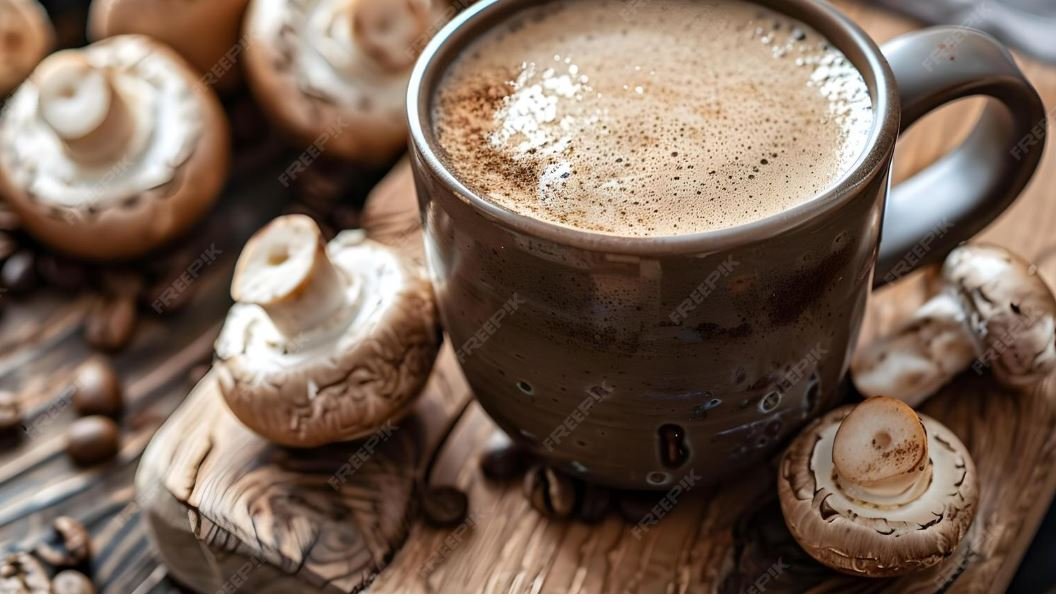
Mushroom coffee blends regular coffee with medicinal mushroom extracts like Chaga, Reishi, Lion’s Mane, and Turkey Tail to create a smooth, nutty drink. Because mushroom powder has no caffeine and is often mixed 1-to-1 with coffee, mushroom coffee usually has about half the caffeine of regular coffee.
It is critically important to clarify one thing immediately, because it confuses almost every first-time buyer: mushroom coffee is coffee with added mushroom extract, so you won’t have mushroom pieces floating in your cup of joe. It tastes similar to normal coffee but has a slightly nuttier or earthier flavor. People make this drink by drying mushrooms, extracting their beneficial ingredients, and adding those to regular coffee.
And just as importantly — these are not psychedelic mushrooms. The mushrooms used in mushroom coffee — lion’s mane, reishi, chaga, cordyceps, and turkey tail — are functional/medicinal species. They contain zero psilocybin and have no psychoactive effects.
Although it’s currently a trending coffee blend, this concept is far from new. According to online sources, mushrooms were used as a coffee substitute in Finland during World War II, when coffee beans weren’t available. The modern mushroom coffee movement, however, was popularized in the 2010s and has become one of the fastest-growing segments of the functional beverage market.
What Is Regular Coffee?

Regular coffee needs less introduction, but its science is worth reviewing because it forms the baseline against which mushroom coffee must be judged.
Coffee contains a complex mixture of bioactive compounds with plausible biological mechanisms for benefiting health. It has been shown to contribute a large proportion of daily intake of dietary antioxidant, greater than tea, fruit, and vegetables. Chlorogenic acid is the most abundant antioxidant in coffee; though it is degraded by roasting, alternative antioxidant organic compounds are formed.
In 2025, regular coffee received remarkable official recognition. The U.S. Food and Drug Administration (FDA) has officially recognized coffee with less than five calories per serving as a “healthy” beverage. This announcement recognizes coffee’s low calorie count and its natural richness in antioxidants and bioactive compounds.
A cup of standard brewed coffee contains approximately 95–200 mg of caffeine, depending on the roast, grind, and brewing method. It is the world’s most widely consumed psychoactive substance, and the research behind its effects on the human body is extraordinarily deep.
The Four Key Mushrooms in Mushroom Coffee — What Each One Does
Understanding what you’re actually getting in a cup of mushroom coffee requires knowing the individual mushrooms. Common varieties used in mushroom coffee mixes include chaga, lion’s mane, reishi, cordyceps, king trumpet, and turkey tail, all chosen for their real (or perceived) health benefits.
Here is what the current science says about each of the four most common species:
Lion’s Mane (Hericium erinaceus) — The Brain Mushroom
Lion’s Mane is associated with cognitive support. It is the most researched mushroom in the blend for neurological effects, and it has generated the most compelling evidence. A 2023 study by Sarah Docherty published in Nutrients found that a single 1.8 g dose of Lion’s Mane mushroom improved reaction speed within 60 minutes and reduced stress after 28 days in healthy young adults.
A 2024 analysis also found that lion’s mane helped boost cognition and energy in older adults. The mechanism is believed to involve nerve growth factor (NGF) stimulation — compounds in Lion’s Mane called hericenones and erinacines may encourage the growth and repair of nerve cells in the brain.
Reishi (Ganoderma lucidum) — The Stress and Sleep Mushroom
Reishi is known for immunomodulatory effects. Beyond immunity, it is the primary adaptogen in many mushroom coffee blends — the ingredient most responsible for the claim that mushroom coffee helps manage stress. Adaptogens can affect how much cortisol — a hormone produced in times of stress — your body releases. If the adaptogens in mushroom coffee reduce the amount of cortisol in your system, that may help reduce the effect that stress can have on your body.
Reishi extracts show potential for reducing blood cholesterol levels and in turn reducing the risk of heart disease.
Chaga (Inonotus obliquus) — The Antioxidant Powerhouse
Chaga is prized for its antioxidant properties. It grows on birch trees across northern boreal forests — including Canada and Russia — and contains an exceptionally high concentration of antioxidants. A 2023 review found that chaga has multiple benefits for the immune system and systemic health, including potential antimicrobial, anti-inflammatory, anticancer, and antioxidant effects.
However, Chaga carries a specific warning: chaga mushrooms are high in oxalates and are known to affect and increase kidney stones. People with kidney conditions or a history of kidney stones should consult a healthcare provider before consuming Chaga regularly.
Cordyceps (Cordyceps militaris) — The Energy and Performance Mushroom
Cordyceps has been linked to energy enhancement. Unlike caffeine, which delivers energy through adenosine receptor blockade (essentially forcing alertness), cordyceps may work through a fundamentally different mechanism. Cordyceps mushrooms may enhance people’s oxygen usage and increase cellular energy (ATP production), potentially improving energy levels and reducing fatigue. This may also aid endurance and recovery in exercise.
Caffeine: The Most Important Difference
For many people, the caffeine content is the single most decisive factor in choosing between mushroom coffee and regular coffee.
The amount of caffeine in an 8 oz cup of mushroom coffee varies widely depending on the brand, mushroom ratio, bean variety, and brewing method. While many popular brands contain about 45 to 50 milligrams, levels can range from as low as 10 mg to over 110 mg. The caffeine amount in mushroom coffee is roughly half that of a regular coffee cup, which typically has between 95 to 200 milligrams.
This has meaningful real-world implications:
Who benefits from less caffeine:
- People sensitive to caffeine who experience jitters, anxiety, or heart palpitations from regular coffee
- Anyone struggling with sleep quality — high caffeine intake, especially in the afternoon, disrupts sleep architecture
- People who experience afternoon energy crashes after high-caffeine morning coffee
- Those with high blood pressure or cardiovascular conditions advised to moderate caffeine
Who may miss the full caffeine effect:
- People who rely on their morning coffee for a strong, immediate cognitive boost
- Athletes who use caffeine strategically for performance enhancement
- Anyone who simply prefers the energizing intensity of a full-strength espresso or drip coffee
It’s worth noting that caffeine itself has substantial documented health benefits — which we’ll address below. Choosing mushroom coffee’s lower caffeine may mean losing some of those benefits while gaining the mushroom-specific advantages.
Health Benefits: Regular Coffee Backed by Decades of Research
Regular coffee’s health credentials are extraordinarily well-documented. This is not marketing it is the conclusion of thousands of peer-reviewed studies conducted over decades.
Brain Health and Dementia Prevention
A long-term study found that moderate consumption of caffeinated coffee or tea was linked to an 18% lower risk of dementia and better cognitive performance over time. The benefits appeared strongest at 2–3 cups of coffee or 1–2 cups of tea daily and even held true for people genetically predisposed to dementia.
There is also substantial evidence that coffee’s unique compounds are linked to brain function and mental health benefits, including reduced risk of age-related cognitive decline and neurodegenerative diseases like Alzheimer’s and dementia.
Longevity
One of the most striking findings from recent research: regular coffee consumption adds an average of 1.8 years of healthy living to a person’s life — meaning not only do they live longer, but also healthier lives. The increased healthy life expectancy attributed to regular coffee consumption is seen in both men and women.
Chronic Disease Risk Reduction
Research shows that drinking coffee has been associated with a decreased risk of heart disease and stroke, type 2 diabetes, Alzheimer’s and dementia, and multiple cancers.
The research from 2024 reinforces the idea that coffee, when drunk in moderation and at the right times of the day, can support a healthy lifestyle. Health experts generally recommend limiting coffee consumption to three to five cups per day, which corresponds to approximately 400 mg of caffeine.
Antioxidant Leadership
Coffee has been shown to contribute a large proportion of daily intake of dietary antioxidant, greater than tea, fruit, and vegetables. For most people in Western countries, coffee is the single largest daily source of antioxidants — which is remarkable and often underappreciated.
Health Benefits: Mushroom Coffee — Promising But Still Emerging
Here is where intellectual honesty becomes essential. The individual mushrooms used in mushroom coffee have genuine, documented bioactivity. The question is whether those benefits survive the extraction, drying, blending, and brewing process — and whether the doses in commercial mushroom coffee are high enough to produce meaningful effects.
According to a recent review published in the journal Molecules, medicinal mushrooms popular in many fungi-infused coffee blends do have immune-boosting properties and may help regulate metabolism.
Other possible, but largely unproven, benefits of drinking mushroom coffee include: less stress through adaptogen effects on cortisol, reduced inflammation from mushroom polyphenols and antioxidants, a stronger immune system from the same polyphenol compounds, and better sleep from reduced caffeine combined with potential adaptogenic effects.
The critical limitation, acknowledged by virtually every credible medical institution, is this: although there’s some promising evidence available, more research including humans is needed to verify those health effects, especially in mushroom coffee blends.
While adaptogens in medicinal mushrooms are linked to health claims like better immunity and stress response, most evidence is from lab or animal studies. Human research on mushroom coffee is limited.
The honest summary: the mushrooms themselves have real and documented health properties. Whether a daily cup of mushroom coffee delivers a clinically meaningful dose of those properties remains scientifically uncertain. This is not reason to dismiss mushroom coffee — it is reason to approach it with calibrated expectations.
Taste: What Does Mushroom Coffee Actually Taste Like?
This is a question that stops many curious people from ever trying mushroom coffee. The name sounds unappetizing. The reality is far more palatable.
By the time they’re harvested, dried, and processed, the mushrooms in this brew are barely noticeable, particularly when they’re blended with coffee beans. Most people report a “nutty” or “earthy” taste — or they don’t notice any flavor at all.
Mushroom coffee has a light roast flavor with earthy, nutty umami tones and a smooth finish, and it is less acidic than regular coffee.
The reduced acidity is a genuine advantage for people with acid reflux, gastritis, or sensitive stomachs. Regular coffee’s high acidity is a well-known irritant for a significant portion of daily coffee drinkers. Mushroom coffee — particularly blends with Chaga, which has a mild, slightly vanilla-like profile — is noticeably smoother and easier on the digestive system.
Among the four main mushrooms, the flavour impact varies: Lion’s Mane is mild and slightly sweet; Cordyceps is nearly flavourless; Chaga is mild with vanilla-like notes; Reishi can introduce bitterness if used in high doses and is the most likely to be noticeable in the cup.
Cost Comparison: The Price of Functional Benefits
This is one area where regular coffee wins decisively, and it’s worth being direct about it. Mushroom coffee costs about double what you’d pay for the average coffee, so deciding whether or not to try it is as much a financial decision as it is a nutritional one.
Average price comparison (per serving):
- Quality regular ground coffee: $0.25–$0.75 per cup
- Premium single-origin or specialty coffee: $0.75–$1.50 per cup
- Mushroom coffee (major brands): $1.50–$3.00 per cup
Over a year, if you drink one cup daily, that price difference adds up to between $450–$800 in additional cost compared to regular coffee. For a household of two coffee drinkers, the annual premium can exceed $1,500.
The cost question becomes: are the additional health properties of mushroom coffee worth that premium? For casual wellness explorers, possibly. For people with specific health goals around stress, sleep, or cognitive support, the case is stronger. For budget-conscious families, regular coffee with a strong dietary foundation is likely the more sensible choice.
Side Effects and Who Should Be Cautious
Both beverages carry potential side effects, and honest guidance requires addressing both.
Regular Coffee Side Effects:
- Jitteriness, anxiety, and heart palpitations at high doses
- Sleep disruption when consumed in the afternoon or evening
- Digestive irritation and acid reflux due to high acidity
- Dependency and caffeine withdrawal headaches
- Not recommended during pregnancy above 200 mg caffeine per day
Mushroom Coffee Side Effects: Digestive sensitivity: Some people experience mild bloating or stomach discomfort when first introducing mushroom extracts. The recommendation is to start with a half-dose and build up over a week or two. Drug interactions: Reishi has mild blood-thinning properties and may interact with anticoagulant medications. Chaga is high in oxalates and vitamin K, which could affect those on warfarin or similar drugs.
Mushroom coffee can interact with medications, especially antidepressants, blood thinners, blood pressure meds, diabetes drugs, and immunosuppressants. Anyone on prescription medication should consult their healthcare provider before adding mushroom coffee to their daily routine.
Head-to-Head Comparison: Mushroom Coffee vs Regular Coffee
| Category | Regular Coffee | Mushroom Coffee |
|---|---|---|
| Caffeine per cup | 95–200 mg | 45–110 mg |
| Antioxidants | Very high (chlorogenic acids) | Moderate (coffee + mushroom polyphenols) |
| Cognitive boost | Strong, immediate (caffeine) | Mild, gradual (Lion’s Mane) |
| Stress reduction | May increase cortisol | May reduce cortisol (Reishi) |
| Immune support | Moderate (antioxidants) | Higher potential (beta-glucans) |
| Sleep impact | Negative at high doses | Better (lower caffeine + adaptogens) |
| Acidity | High | Lower |
| Cost | Low–moderate | High |
| Scientific backing | Decades of human studies | Emerging, mostly preclinical |
| Taste | Bold, familiar | Smooth, earthy/nutty |
| Digestive impact | Can irritate | Generally gentler |
Who Should Choose Mushroom Coffee?
Based on the evidence, mushroom coffee is most likely to offer meaningful benefit to these groups:
Caffeine-sensitive individuals. If regular coffee makes you anxious, jittery, or disrupts your sleep but you still want a warm, coffee-like morning ritual with mild energy support, mushroom coffee is an excellent fit.
People prioritising stress management. If you are dealing with chronic stress, elevated cortisol, or anxiety, the adaptogenic properties of Reishi and other mushrooms in the blend may complement other stress-management strategies.
Those seeking cognitive support over time. Lion’s Mane requires consistent use over weeks to months to potentially show effects. If you are interested in long-term cognitive support rather than an immediate boost, mushroom coffee consumed daily is a reasonable approach.
People with acid reflux or sensitive stomachs. The lower acidity of mushroom coffee makes it a more stomach-friendly morning beverage than regular coffee for people who experience GI discomfort.
Who Should Stick With Regular Coffee?
People who rely on caffeine for performance. If your morning coffee is a non-negotiable tool for focus, physical performance, or managing a demanding cognitive workload, regular coffee’s caffeine content is difficult to replace.
Budget-conscious households. At twice the price per cup, mushroom coffee’s premium is difficult to justify if the evidence base remains limited.
Anyone on multiple medications. The drug interaction risks of mushroom extracts — particularly Reishi with blood thinners and Chaga with kidney conditions — make mushroom coffee a conversation to have with your doctor first.
People who simply love their coffee. Regular coffee’s extraordinary health profile — its antioxidant richness, its longevity associations, its cognitive protection research — means there is absolutely no health imperative to switch. Regular coffee, consumed in moderation, is among the most health-positive beverages on earth.
Can You Combine Both?
The good news is that this is not a binary decision. Many health-conscious coffee drinkers take a pragmatic middle path:
- Morning: Regular coffee for the full caffeine and antioxidant effect during peak cognitive demand hours
- Afternoon: Mushroom coffee as a lower-caffeine replacement that satisfies the coffee ritual without disrupting evening sleep
- Supplementing separately: Taking Lion’s Mane, Reishi, or Chaga as standalone supplements (capsules or tinctures) at proven therapeutic doses, alongside regular coffee — rather than relying on the diluted amounts in blended mushroom coffee products
This approach gives you the proven benefits of regular coffee while exploring the functional mushroom benefits at more reliable dosing.
The Verdict: Mushroom Coffee vs Regular Coffee
Regular coffee is one of the most extensively studied beverages in human history, with decades of robust evidence showing associations with reduced dementia risk, lower chronic disease rates, significant antioxidant activity, and even increased healthy lifespan. It is inexpensive, universally available, and delicious. Its caffeine content is both its primary asset and its primary liability.
Mushroom coffee is a genuinely interesting functional beverage with real bioactive potential. Its lower caffeine, adaptogenic properties, and additional immune and cognitive compounds make it a legitimate wellness choice — particularly for caffeine-sensitive individuals, stressed professionals, and anyone seeking a smoother, lower-acid morning beverage. Its primary limitations are cost, limited human clinical evidence for the blended product specifically, and drug interaction considerations.
Neither beverage is universally superior. The right choice depends entirely on your body chemistry, health goals, budget, and lifestyle. But now you have everything you need to make that choice with clarity, confidence, and the science to back it up.

- Unlocking the Venti: Discover the Perfect Shot Count for Your Drink - October 13, 2026
- Unpacking the Buzz: Caffeine Levels in Café Bustelo Espresso - October 13, 2026
- How to Fix Bitter Coffee: 10 Expert Ways to Improve the Taste - October 4, 2026