
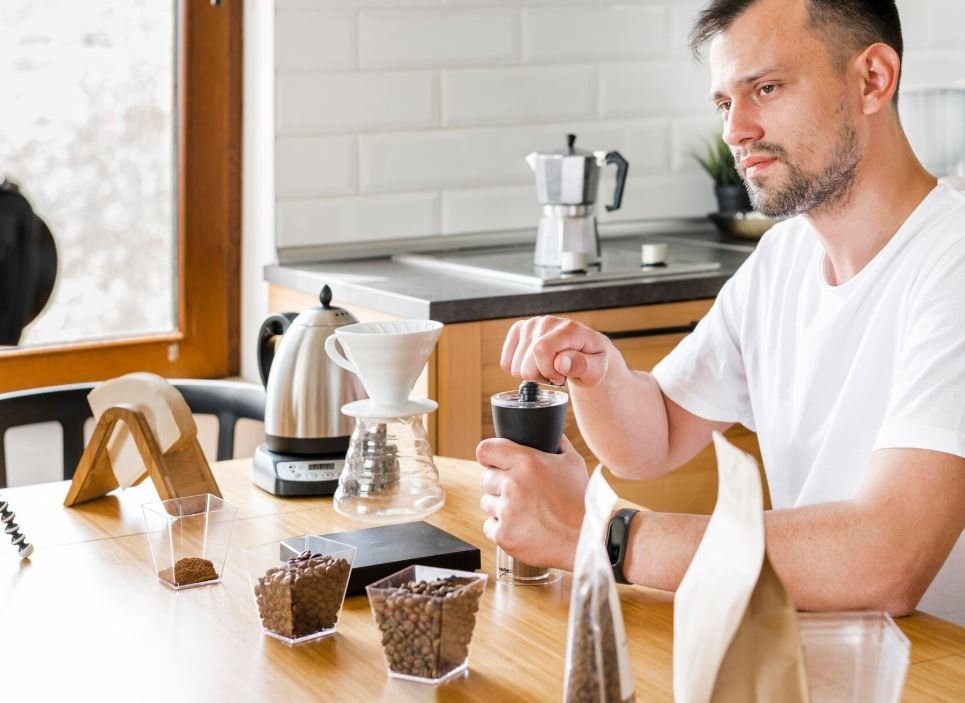
You want stronger coffee flavor and better aroma. Grinding coffee beans at home changes how coffee tastes because freshness drops fast after grinding. This guide explains how home grinding affects flavor, what improves taste, and when it does not matter.
What Happens When You Grind Coffee Beans
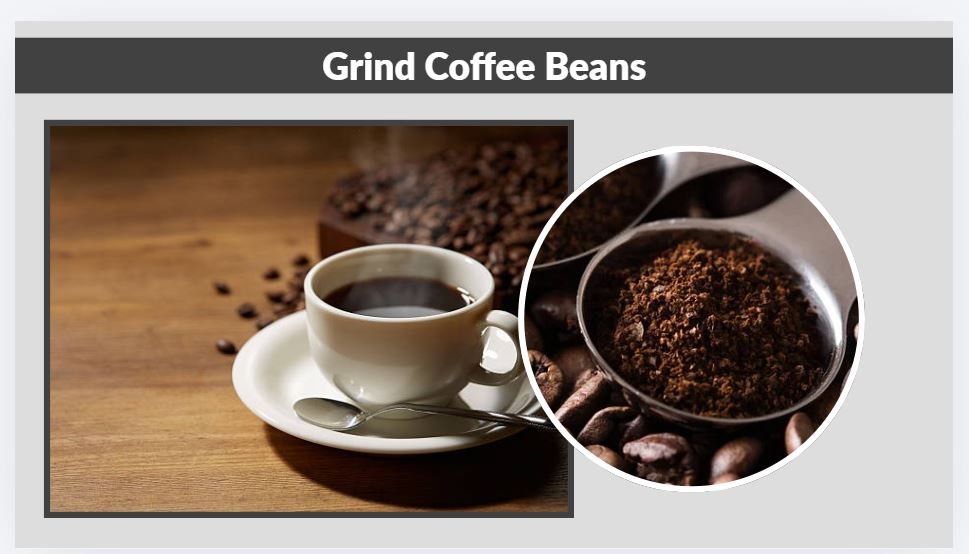
Grinding coffee changes its structure and stability. Whole beans protect internal compounds from air and light. Once you grind them, the surface area increases sharply. This speeds up aroma loss and oxidation. The result is faster flavor decline. Brewing quality depends on how fresh you grind and how quickly you use the coffee after grinding.
- Grinding exposes more surface area to air
- Volatile oils start evaporating
- Flavor complexity reduces
Aroma Loss Starts Immediately
Fresh coffee aroma comes from volatile compounds trapped inside the bean. Grinding releases them into the air. This process starts within seconds. The longer ground coffee sits, the weaker the smell and taste become. You lose depth and richness in the final cup.
- Grinding exposes more surface area to air
- Volatile oils start evaporating
- Aroma weakens within minutes
- Flavor complexity reduces
Oxidation Increases
Oxidation happens when oxygen reacts with coffee compounds. This changes both taste and aroma. Fresh beans resist this process. Ground coffee does not. The result is faster staling and quality loss.
- Oxygen breaks down flavor compounds
- Coffee tastes flat over time
- Bitterness becomes more noticeable
Why Fresh Grinding Improves Flavor
Fresh grinding keeps coffee closer to its natural state. You control freshness, grind size, and brewing consistency. This leads to better taste and aroma in every cup.
- Fresh grind keeps aromatic compounds active
- Better sensory experience
- More intense coffee character
Stronger Aroma
Freshly ground coffee releases a strong and complex smell. This aroma comes from oils and volatile compounds still intact at the moment of grinding. It improves the drinking experience before and during brewing.
- Fresh grind keeps aromatic compounds active
- Rich smell when brewing
- Better sensory experience
- More intense coffee character
Better Flavor Balance
Fresh grinding preserves natural coffee structure. This leads to cleaner taste notes. Bitterness reduces and natural sweetness becomes more noticeable. Acidity feels smoother and more balanced.
- Sweetness feels clearer
- Acidity becomes balanced
- Less stale bitterness
Control Over Grind Size
Grind size changes extraction rate during brewing. Fresh grinding lets you match grind level with your method. This improves consistency and taste quality.
- Fine grind for espresso
- Medium grind for drip coffee
- Coarse grind for French press
Home Grinding vs Pre-Ground Coffee
Home Ground Coffee
Home grinding gives you full control over freshness and taste. You grind beans just before brewing, which protects aroma and essential oils. This method produces a richer and more complex cup because compounds stay intact until extraction. It also allows you to adjust grind size based on brewing method, which improves consistency and flavor balance.
- Maximum flavor retention
- Better aroma release
- Full control over brewing style
Pre-Ground Coffee
Pre-ground coffee is processed in bulk and exposed to air for longer periods. This leads to faster oxidation and flavor loss. You lose aromatic oils before brewing starts. It is convenient but trades freshness for speed. Taste becomes flatter compared to freshly ground beans.
- Faster oxidation
- Reduced aroma
- Limited freshness window
Best Time to Grind Coffee Beans
Grinding time directly affects flavor quality. Coffee starts losing aroma within minutes after grinding, so timing matters. Grinding too early reduces freshness and weakens taste. For best results, grind only what you need right before brewing. This preserves natural oils and improves extraction.
- Grind just before brewing
- Avoid grinding in bulk
- Use within minutes for best flavor
Equipment for Home Grinding
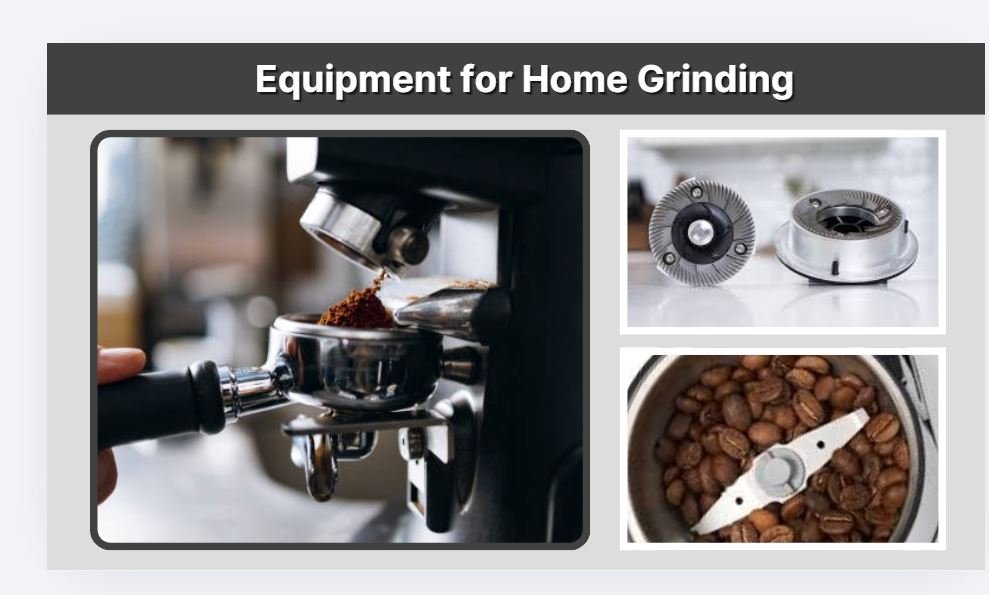
The type of grinder you use affects grind consistency and extraction quality. Uniform grind size improves brewing balance. Poor grinders create uneven particles, which lead to weak or bitter coffee. Choosing the right grinder improves overall coffee experience.
Burr Grinder
Burr grinders crush beans evenly between two surfaces. This gives consistent particle size and better extraction control. It is preferred for quality coffee preparation.
- Uniform particle size
- Better extraction balance
- Higher flavor control
Blade Grinder
Blade grinders chop beans using spinning blades. This creates uneven particle sizes and inconsistent brewing results. It is cheaper but less precise.
- Uneven grind size
- Less consistent flavor
- Works for basic use
Factors That Affect Coffee Flavor
Grinding is only one part of coffee quality. Several other factors influence final taste. Even perfect grinding cannot fix poor beans or incorrect brewing conditions.
- Bean freshness before grinding
- Roast level (light, medium, dark)
- Water temperature
- Brewing method
Each factor works together to create the final flavor profile in your cup.
Common Mistakes That Reduce Flavor
Coffee loses quality when basic handling steps are ignored. Most flavor issues come from timing, storage, and grind size errors. Even high quality beans produce weak coffee if these mistakes happen. Freshness drops fast once beans are exposed to air. Understanding these mistakes helps you protect aroma, taste, and extraction balance.
- Grinding too early
- Using wrong grind size
- Storing ground coffee in open air
- Using old beans
Grinding too early
Grinding in advance exposes coffee to oxygen for too long. Volatile oils evaporate quickly. Flavor becomes flat before brewing starts. Best practice is grinding just before use.
Using wrong grind size
Wrong grind size breaks extraction balance. Fine grind over-extracts and tastes bitter. Coarse grind under-extracts and tastes weak.
Storing ground coffee in open air
Open storage speeds oxidation. Coffee loses aroma and becomes stale within hours. Airtight containers slow this process but do not stop it fully.
Using old beans
Old beans already lose natural oils before grinding. Even perfect grinding cannot restore lost flavor compounds. Fresh roast date matters more than brand.
Who Benefits Most from Home Grinding
Home grinding improves coffee quality, but the impact depends on your taste sensitivity and brewing style. Some users notice major improvement while others experience only small changes. The biggest gains come from people who focus on flavor precision and brewing control.
- Coffee enthusiasts
- Espresso drinkers
- People who value aroma and taste quality
Coffee enthusiasts
You notice small flavor differences. Fresh grinding gives you clearer taste notes, better aroma, and stronger body in each cup.
Espresso drinkers
Espresso needs precise extraction. Fresh grinding improves pressure balance and crema quality. Pre-ground coffee often reduces consistency.
People who value aroma and taste quality
If you focus on smell and flavor complexity, fresh grinding gives a noticeable upgrade. It enhances both brewing and drinking experience.
When Home Grinding May Not Matter
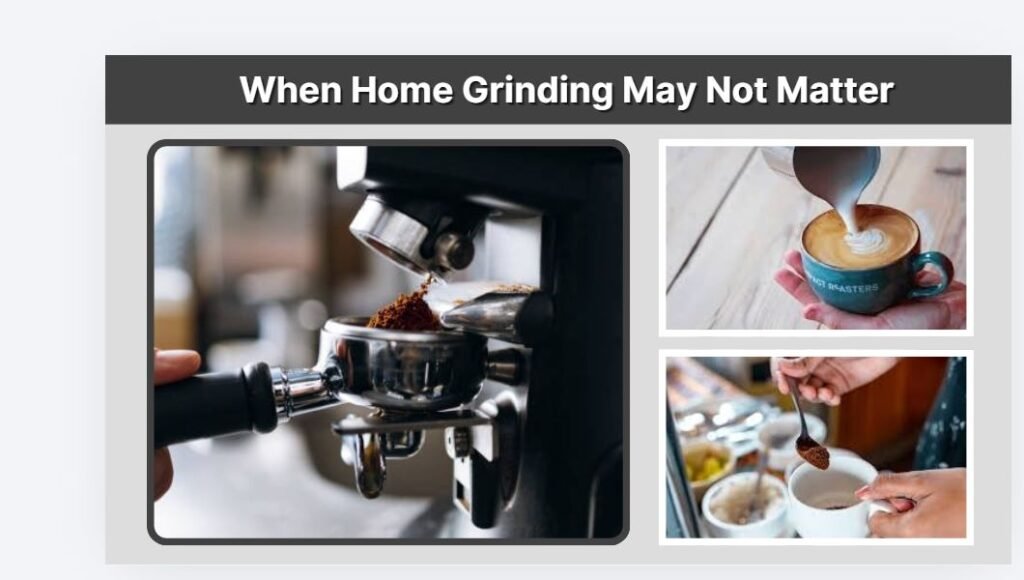
Home grinding is not essential for every coffee drinker. Some people do not notice major differences due to how they consume coffee or their taste preferences. In these cases, convenience matters more than precision.
- Instant coffee users
- Milk-heavy coffee drinks
- Casual drinkers with low sensitivity
Instant coffee users
Instant coffee is already pre-processed. Grinding does not apply, so flavor difference is irrelevant.
Milk-heavy coffee drinks
Milk, sugar, and syrups mask coffee flavor. Subtle differences from grinding become less noticeable.
Casual drinkers with low sensitivity
If coffee is mainly for caffeine, small flavor changes do not matter much. Convenience becomes the priority.
Final Verdict
Home grinding improves coffee quality in a clear and measurable way. Fresh grinding protects aroma, flavor compounds, and extraction balance. The biggest advantage comes from control over timing and grind size. You get more consistent and richer coffee when you grind right before brewing.
- Home grinding improves flavor and aroma
- Biggest impact comes from freshness and control
- Best results come from grinding right before brewing
FAQs
How long does ground coffee stay fresh
Ground coffee stays fresh for 15 to 30 minutes at peak flavor. After that, aroma and oils start to degrade quickly.
What grinder gives the best taste
Burr grinders give the best taste. They create uniform particle size, which improves extraction balance and flavor clarity.
Does grind size affect caffeine strength
Grind size affects extraction rate. Finer grind extracts faster, which can slightly increase perceived strength, but caffeine content depends more on dose.
Can you store ground coffee safely
You can store it in airtight containers for a short time. Flavor still declines compared to fresh grinding.
Is pre-ground coffee always bad
Pre-ground coffee is not bad, but it is less fresh. It works for convenience but loses aroma and complexity faster than freshly ground beans.
You have not enough Humanizer words left. Upgrade your Surfer plan.

- Espresso Tastes Watery? 10 Common Causes and How to Fix It - October 23, 2026
- 10 Common Coffee Equipment Cleaning Mistakes and How to Avoid Them - October 23, 2026
- 17 Common Coffee Grinder Problems and How to Fix Them - October 23, 2026