
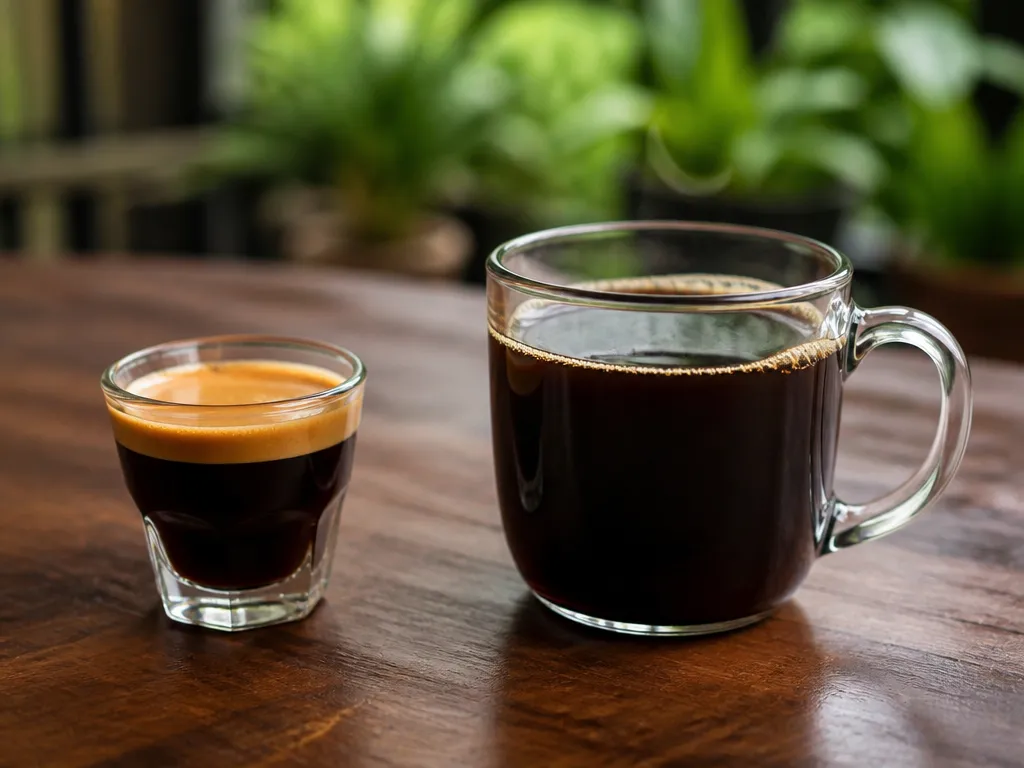
If you want a predictable caffeine dose, espresso is stronger per ounce, but drip coffee often delivers more caffeine per serving. A 1-ounce espresso shot typically contains about 63 mg of caffeine. Brewed coffee contains roughly 12 to 16 mg per ounce, so an 8- to 12-ounce drip coffee can match or exceed one or two espresso shots.
The useful comparison is milligrams per serving, not whether a drink tastes “strong.” Serving size, grind, brew time, water temperature, and equipment all affect the amount you get.
Key Takeaways
- Espresso has more caffeine per ounce. One 1-ounce shot typically contains about 63 mg.
- Drip coffee has less caffeine per ounce. Brewed coffee averages 12 to 16 mg per ounce.
- Serving size decides the winner. A 12-ounce drip coffee can contain more caffeine than two small espresso shots.
- Grind affects extraction. Espresso uses fine grounds; drip coffee uses medium grounds.
- Brew time changes the result. Drip coffee generally has longer contact time, while espresso brews in about 20 to 30 seconds.
- Equipment affects consistency. A repeatable espresso setup makes shot-based dosing easier; a drip brewer makes total caffeine depend heavily on cup size.
Espresso vs Drip Coffee Caffeine Per Serving
Espresso usually wins on caffeine concentration, while drip coffee usually wins on total caffeine per cup because the serving is larger. The baseline comparison is simple: 1 ounce of espresso contains about 63 mg of caffeine, while brewed coffee contains 12 to 16 mg per ounce.
| Drink Style (typical) | Assumed Liquid Volume | Caffeine estimate |
|---|---|---|
| 1 espresso shot | 1 oz | ~63 mg |
| 2 espresso shots (double) | 2 oz | ~126 mg |
| 8 oz drip coffee | 8 oz | ~96 to 128 mg |
| 12 oz drip coffee | 12 oz | ~144 to 192 mg |
A single espresso shot gives you a compact, concentrated dose. Two shots provide about 126 mg. An 8-ounce drip coffee lands around 96 to 128 mg, while a 12-ounce serving reaches roughly 144 to 192 mg.
My practical verdict: choose espresso when you want a smaller drink and a dose you can count by shots. Choose drip when you want more total caffeine in one larger serving.
What Is Espresso and How Is It Brewed?
Espresso is made by forcing nearly boiling water through finely ground coffee under pressure. The method produces a small, concentrated drink rather than a large cup of diluted coffee.
Espresso typically brews in about 20 to 30 seconds. Its fine grind gives water plenty of surface area to contact, while pressure pushes the water through the compact coffee bed quickly. The result is an intense flavor and a higher caffeine concentration per ounce.
Espresso uses a fine grind with a texture similar to table salt. Drip coffee generally uses a medium grind with a texture similar to kosher salt. The grind difference helps each method extract effectively within its typical brew time.
Espresso can taste stronger even when its total caffeine is similar to a serving of drip coffee. Less water surrounds the extracted coffee, so each sip contains a denser mix of coffee compounds. Flavor intensity and total caffeine are related, but they are not the same measurement.
Compare Caffeine by Serving Size
Milligrams per ounce provide the cleanest way to compare espresso and drip coffee. Start with the amount you drink, then multiply by the appropriate estimate:
- Espresso: about 63 mg per 1 ounce shot
- Drip coffee: about 12 to 16 mg per ounce
Two shots of espresso equal about 2 ounces, giving you roughly 126 mg of caffeine. A 12-ounce drip coffee contains about 144 to 192 mg, based on the 12 to 16 mg per ounce range.
That calculation changes with serving size. An 8-ounce drip coffee contains about 96 to 128 mg, which may be less caffeine than a double espresso at the upper end of the espresso estimate. A larger drip coffee can easily overtake it.
What Changes the Caffeine?
Coffee beans affect caffeine, but grind size and serving amount give you more practical control over your final dose. If you want a repeatable caffeine routine, use the same coffee amount, grind setting, brew method, and serving volume each time.
Espresso uses a fine (like table salt) grind. Drip coffee uses a medium (like kosher salt) grind. The finer espresso grind increases surface area and supports fast extraction during its short brew window. The medium drip grind allows water to pass through more gradually during the longer brew.
Use the grind that matches the brewing method:
- Espresso: fine and consistent, with a texture that supports tamping.
- Drip: medium and consistent, usually suited to a paper filter.
- Avoid grinding drip coffee so fine that water moves too slowly and the coffee becomes over-extracted.
Roast level is a poor way to predict caffeine. Darker roasts often taste more intense, but “dark equals more caffeine” is not a rule you can rely on. Control serving volume and extraction instead.
Changing grind size can change how much caffeine reaches the cup because it changes extraction. A finer grind may extract more quickly; a grind that is too fine can slow the flow and alter the balance of the brew. The final amount also depends on how much coffee you use and how much liquid you drink.
How Brewing Method Changes Caffeine Extraction
Espresso relies on fine grounds, pressure, and a short contact time. The coffee is brewed in roughly 20 to 30 seconds, producing a concentrated result in a small volume.
Drip coffee relies on gravity. Water passes through medium grounds over a longer wetting and brewing period, then collects in a much larger volume. That longer contact time can extract caffeine gradually across the brew.
The practical difference looks like this:
- Espresso: high caffeine concentration per ounce, small final volume, short brewing window.
- Drip: lower caffeine concentration per ounce, longer brewing process, larger final volume.
For espresso, the basic process is consistent: grind the beans finely, heat water to about 200 to 205 degrees F, and brew quickly to produce a double shot or two single shots. Water temperature, grind, dose, and brew time all influence the final result.
Espresso is easier to dose by shot count. Drip coffee is easier to overconsume because a larger cup can seem like one ordinary serving even when it contains considerably more caffeine.
Espresso Machine vs Drip Brewer
An espresso machine primarily affects caffeine through dose consistency and extraction control. If the machine, grinder, and coffee dose remain consistent, each shot should deliver a relatively similar caffeine amount. You can then adjust your intake in simple increments: one shot, two shots, or more.
A drip brewer controls how much water reaches the grounds and how evenly the grounds become saturated. Once the coffee is brewed, your total caffeine depends heavily on the amount you pour. A full pot or large mug can contain several times the caffeine of a small serving.
If caffeine consistency is your priority, watch these factors:
- Espresso machine: keep shot volume and grind consistent. A small change in coffee dose can change the caffeine per serving.
- Drip brewer: measure the finished cup size. At 12 to 16 mg per ounce, each additional ounce increases the total caffeine.
- Either method: keep your coffee amount, grind, water, and serving size stable if you want repeatable results.
Choose equipment based on how you prefer to manage caffeine. If you want a target near 120 mg, espresso makes shot counting straightforward. If you prefer one larger drink and do not mind a wider caffeine range, drip coffee is simpler.
The machine itself does not magically add caffeine. It mainly changes the consistency of the dose, extraction, and final volume. Volume remains the biggest driver of total caffeine in a drip serving.
Espresso vs Drip for Energy and Timing
Espresso suits people who want a small drink and a clearly defined dose. One shot provides about 63 mg, while a double provides about 126 mg. Because the serving is small, you can consume that caffeine quickly without drinking a large amount of liquid.
Drip coffee suits people who prefer a larger drink or want to sip caffeine over part of the morning. An 8- to 12-ounce serving contains roughly 96 to 192 mg using the 12 to 16 mg per ounce range. Drinking it gradually can spread out the experience, although the total dose still depends on the amount in the cup.
Choose espresso if you:
- Need a compact drink.
- Want to count caffeine by shot.
- Prefer a fast, concentrated serving.
- Do not want to drink a large volume of coffee.
Choose drip coffee if you:
- Prefer a full mug.
- Want more total caffeine per serving.
- Like sipping coffee over a longer period.
- Want a simple brewing routine.
If drip coffee makes you feel wired too quickly, reduce the cup size or drink fewer ounces before switching methods. If espresso feels too intense, one shot instead of two gives you a smaller, easier-to-control dose.
FAQ
Is espresso more caffeinated than drip per serving?
Not necessarily. A large drip serving, such as 8 to 12 ounces, can match or exceed two espresso shots.
How much caffeine is in a double shot of espresso?
A common baseline is 63 mg per 1 ounce shot. A double shot is about 2 ounces, so it contains roughly 126 mg of caffeine. The actual amount can vary with coffee dose, grind, extraction, and how the espresso is measured.
Which gives a faster caffeine hit, espresso or drip?
Espresso often feels faster because it is concentrated and usually consumed in a small volume. The speed also depends on how quickly you drink it, but espresso makes it easier to consume a defined amount all at once.
Can I compare caffeine without knowing my exact recipe?
Yes. Use the serving volume and the per-ounce baseline. For 1 ounce of espresso, estimate 63 mg. For 12 ounces of drip coffee, estimate 144 to 192 mg using 12 to 16 mg per ounce.
What is a common mistake people make when choosing between espresso and drip?
People often compare taste or drink names instead of caffeine dose. A small espresso may taste stronger than a large drip coffee while containing less total caffeine. Compare ounces and milligrams rather than relying on the word “strong.”

- Unlocking the Venti: Discover the Perfect Shot Count for Your Drink - October 13, 2026
- Unpacking the Buzz: Caffeine Levels in Café Bustelo Espresso - October 13, 2026
- How to Fix Bitter Coffee: 10 Expert Ways to Improve the Taste - October 4, 2026