
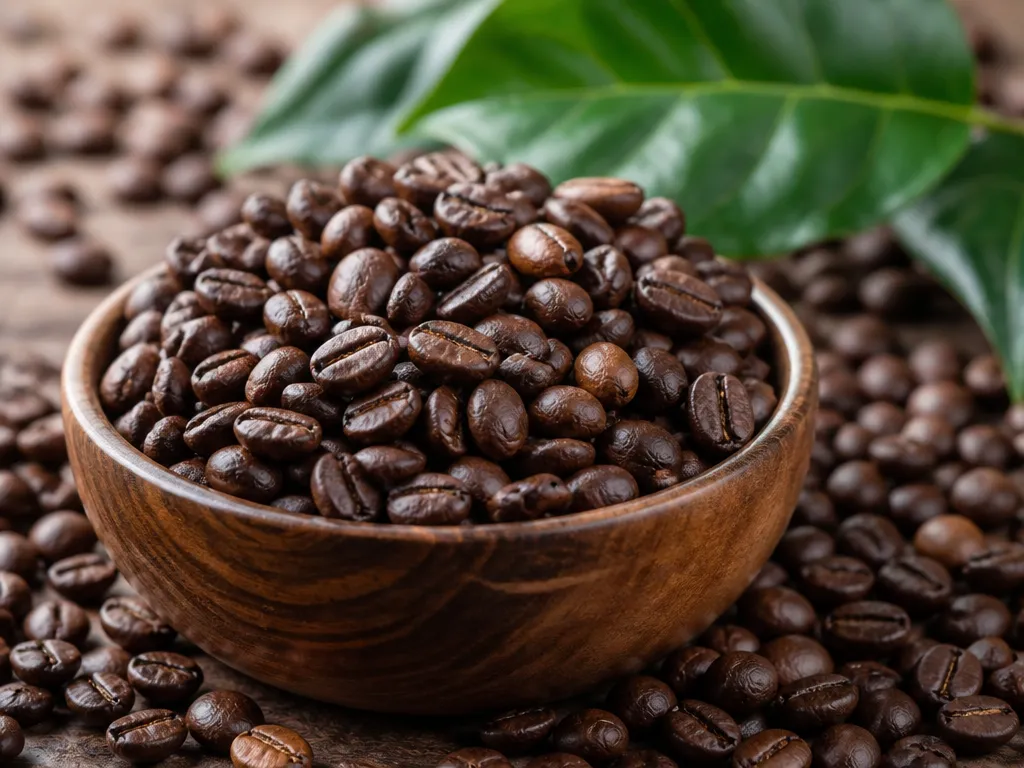
Coffee beans with the most caffeine are robusta beans. Robusta contains 50-60% more caffeine than arabica, making species the most useful buying clue. If you want more caffeine from whole-bean or ground coffee, look for packages labeled “robusta” or blends that list robusta as an ingredient. Then use a consistent brew method, since dose and extraction affect how much caffeine reaches your cup.
- Start with species. Robusta contains 50-60% more caffeine than arabica.
- Do not trust roast alone. Roasting affects flavor more reliably than it predicts caffeine content.
- Read the label. Look for “robusta” or a blend that identifies its robusta content.
- Cherry timing matters to farming, not necessarily caffeine. A coffee cherry matures in nearly 1 year after first flowering.
- Tree age affects production. Coffee trees begin producing cherries at about 3 years and reach full production around 5 years.
- Brew consistently. Dose, grind size, and water contact usually affect your cup more than marketing claims about strength.
Why Robusta Has More Caffeine Than Arabica
The buying strategy is simple: choose beans likely to contain more caffeine per gram, then brew them consistently enough to extract that caffeine. You do not need to memorize coffee chemistry. Check the species on the package, use a measured dose, and avoid judging caffeine by roast color or flavor intensity alone.
Which Has More Caffeine?
Arabica and robusta are the two species most commonly listed on coffee packaging, and they differ in more than taste. Global production is about 62% arabica and 38% robusta, with both species sold as single-origin coffees and blends.
Robusta generally grows in tougher conditions. It is often cultivated at lower altitudes with warmer temperatures, while arabica is commonly grown at higher altitudes with milder temperatures. Robusta trees are also described as more resistant to disease and parasites.
How to Identify High-Caffeine Coffee Beans
Look for the word robusta on the bag. Many coffees marketed as “strong” are heavily roasted arabica or blends that never specify their species. They may taste bold without containing as much caffeine as a robusta-based coffee.
If a package says “arabica” only, expect it to be lower in caffeine than a robusta-based option. If it says “blend,” check whether the label names robusta as an ingredient and, if available, gives its percentage.
How Coffee Cherries Develop
Coffee beans are seeds inside coffee cherries. A coffee cherry matures in nearly 1 year after first flowering, and a coffee tree begins producing cherries at about 3 years, reaching full cherry production around 5 years.
Those timelines affect farming, harvest planning, and crop consistency, but they do not determine caffeine as directly as species does. Cherry development and processing have a greater effect on flavor than on the caffeine figures shoppers usually compare.
The seed develops inside the cherry and becomes the coffee bean after drying, roasting, and grinding. Growing conditions, harvest timing, and processing can all change the final flavor, even when two coffees come from the same species.
What Coffee Comes From: The Coffee Tree
Coffee is made from the roasted and ground seeds of the coffee plant. Those seeds grow inside coffee cherries, which are dried and processed before the beans are roasted and ground.
Coffee trees can live up to 100 years, and flowers and cherries may appear at different stages on the same plant. That production cycle explains why coffee farms work around harvest seasons and crop years rather than producing an identical crop every day.
When a coffee brand mentions harvest timing or crop year, it is describing when the tree produced its cherries and how the crop was processed. Those choices can shape the flavor in your cup, but they do not override the caffeine difference between robusta and arabica.
How Tree Age Affects Coffee Production and Flavor
A coffee tree can live about 100 years, but it does not produce its best crop immediately. The period when a coffee tree is generally most productive is 7-20 years, when farms aim for more consistent yields and quality.
Tree age is not the main caffeine variable. Farm management, growing conditions, and processing still affect how consistent the coffee tastes from one batch to the next.
You will notice those factors most in the cup. Beans from the same farm and crop year can taste different from one harvest to another, even when the species remains the same.
How to Choose Coffee Beans for Maximum Caffeine
Read the package carefully. Treat vague terms such as “extra bold,” “caffeinated,” and “strong” as flavor or marketing language unless the label also identifies the species.
Your brewing routine determines how much of that caffeine ends up in the cup. Use an adequate dose, a consistent grind, and enough water contact time. A standard hot brew typically extracts caffeine more reliably than a quick, weak rinse. The same robusta bean can taste very different depending on processing and brewing, so caffeine and flavor may require separate decisions.
A 60-Second Buying
- Prefer robusta. Choose bags labeled robusta or robusta blends.
- Confirm the species. Do not rely on “strong” or “bold” language that fails to name arabica or robusta.
- Compare the actual coffee. If two bags make similar intensity claims, the robusta option usually offers more caffeine.
- Treat roast as a flavor choice. Roast level is not your primary caffeine indicator.
- Control your brew. Keep grind size, dose, and water contact time consistent.
Caffeine Comparison by Coffee Species
| Coffee type | Key spec | Best for |
|---|---|---|
| Robusta | Contains 50-60% more caffeine than arabica | Maximum caffeine per gram |
| Arabica | Contains caffeine, but less than robusta | Cleaner flavor with moderate caffeine |
Do not overthink the perfect bean if your brewing method changes from cup to cup. Switching from arabica to robusta will usually make a bigger difference than moving between roast shades. After that, adjust your dose and brew strength to control the result.
FAQ
What coffee has the most caffeine, arabica or robusta?
Robusta has more caffeine, so it is the better choice when caffeine is your buying priority. If the label says “arabica” only, expect less caffeine than you would get from a robusta-based option.
Does a darker roast have more caffeine?
Roast level changes flavor and can affect extraction, but species provides the clearer caffeine advantage. Choosing robusta is generally a better strategy than choosing the darkest roast.
How long does it take a coffee tree to start producing cherries?
A coffee tree begins producing cherries at about 3 years and reaches full cherry production around 5 years. Trees can live up to 100 years, with the period of general greatest productivity lasting 7-20 years.
How can I brew coffee for more caffeine at home?
Use a stronger, more consistent brew. Increase the coffee dose, keep the grind uniform, and allow enough water contact time. Even a higher-caffeine bean can produce a weaker cup if you under-dose it or extract it inconsistently.
Are robusta coffees safe to drink?
For most healthy adults, moderate coffee consumption is generally considered acceptable, but caffeine affects people differently. If you are sensitive to caffeine, start with smaller portions, especially when drinking robusta because it contains more caffeine than arabica.

- How to Fix Bitter Coffee: 10 Expert Ways to Improve the Taste - October 4, 2026
- Why Does My Coffee Taste Bad? 20 Common Problems and Fixes - October 4, 2026
- How to Get Better Crema With Café Bustelo Coffee - October 2, 2026