
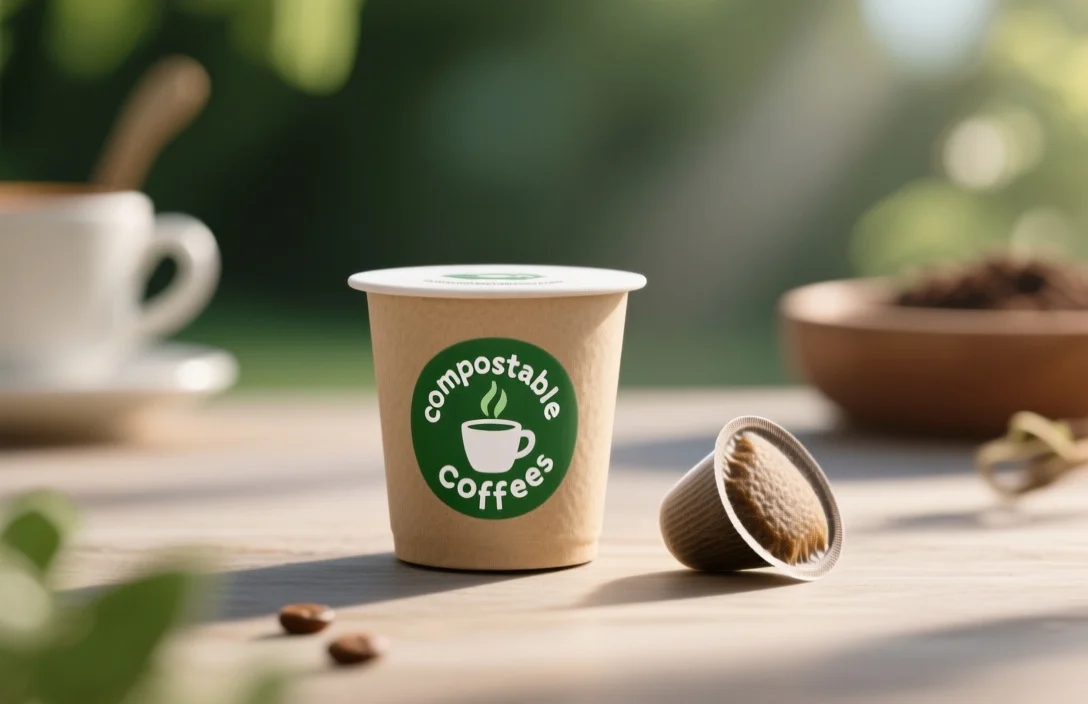
Yes, compostable coffee pods can cut the plastic and aluminum heading to landfill, but only if you match the pod’s certification to the right disposal route and local composting infrastructure. This guide explains what compostable coffee pods are, how their compostability is certified, how they behave in Keurig and Nespresso machines, and the exact steps you should take to make the switch without ending up with mushy brews or a pile of non-compostable waste.
What compostable coffee pods are (short definition and direct answer)
Compostable coffee pods are single‑serve capsules made with plant‑based plastics, fiber, or other biodegradable materials that are designed to break down under composting conditions. A small subset of these pods carries certifications that specify whether they will decompose in a home compost bin or require an industrial/commercial composting facility. Most product listings and buyer reviews emphasize two decisions every shopper must make: brewer compatibility and the type of composting infrastructure available where they live.
Compostability differs from recyclability and reusability in material and end‑of‑life outcome. Recyclable pods usually contain aluminum or conventional plastic and demand municipal recycling that accepts mixed materials, while reusable pods are refillable but still depend on correct cleaning and filter choice to deliver a good cup. Choosing a compostable pod shifts the environmental question from “can I recycle this?” to “can my local composting system accept this product?”
How compostable materials and certifications work
Plant‑based polymers, molded fiber, and compostable films are the three common construction approaches for compostable pods. Manufacturers that use plant‑based polymers generally rely on a polymer cup and a compostable lid film; molded fiber pods replace plastic with a pressed paper or fiber cup; and mesh or filter approaches use plant‑derived meshes inside a compostable hull. Each construction behaves differently under heat and pressure in single‑serve machines, and these behaviors explain why some compostable pods work well while others leak or open during brewing.
Certification names tell you where a pod will break down. BPI (Biodegradable Products Institute) certification and DIN CERTCO are frequently applied to pods that require commercial composting conditions. Some companies advertise “home compostable” with certificates from programs such as Compost HOME or a BPI Seedling mark that explicitly allows home‑scale composting. A practical rule is to read the label or product page for those exact names – BPI, DIN CERTCO, Compost HOME, or Seedling – and then confirm the disposal route they specify. Certification also touches on additives: some brands explicitly state they avoid BPA, PFAS, and aluminum to ensure the material is compatible with composting microbial action.
Municipal composting infrastructure is the other half of the checklist. Industrial facilities reach higher temperatures and controlled oxygen levels that reliably break down many commercial compostable materials; most backyard compost piles do not reach those same conditions. Checking your local compost facility’s acceptance list is necessary before assuming a “compostable” pod will disappear in your curbside compost bin.
what to check before you buy
Keurig-compatible and Nespresso OriginalLine machines are the common targets for compostable pods, but compatibility is only part of the performance story. Brewing success depends on pod shape, lid seal design, and the coffee dose inside the capsule. Some compostable pods pack 13 grams of coffee per pod; others use smaller doses that produce a weaker cup unless you select a darker roast or a concentrate blend. Exact coffee weights appear on some product pages – for example, a mid‑range option lists 13 grams per pod – and that number matters if you prefer espresso‑strength extraction.
Heat and pressure interact with plant‑based materials differently than with rigid plastic or aluminum. Mesh‑based bases and heat‑sealed lids generally score better in user reviews for retaining grounds and maintaining a clean brew cycle. Common mechanical failures reported in product testing and customer feedback include lid seals popping open during brew, mesh bases allowing fine grind bypass, and pods swelling if the material is water‑sorptive. A short compatibility checklist you can use before buying includes:
- Confirm machine compatibility on the product page (K‑Cup vs. Nespresso OriginalLine).
- Check for exact coffee weight per pod if you prefer stronger cups.
- Look for “heat‑sealed lid” or “film lid” claims if you want a reliable seal.
- Read verified user reviews for reported mid‑brew failures on your specific brewer model.
Pods made from molded fiber sometimes need a slightly different grind or tamp in manufacturing to avoid too‑fast flow-through. Pods with a plant‑based plastic rim plus a sealed film lid tend to be the most “drop‑in” replacements for conventional single‑serve systems.
Disposal realities
Home composting and commercial/industrial composting are not interchangeable for most compostable pods. BPI or DIN CERTCO marks often mean a product meets the standards for commercial composting and will break down at high temperatures in municipal or commercial systems. A few brands explicitly list “home compostable” and display certificates that permit decomposition in backyard compost piles; however, those are the minority compared with commercially certified pods.
Local acceptance is the practical bottleneck. Some municipal compost programs accept certified compostable packaging and rigid items; others limit intake to food scraps only. Checking a public facility’s acceptance rules will tell you if sealed pods are allowed. The EPA’s composting guidance describes how managed aerobic decomposition works and why commercial facilities achieve faster, more complete breakdown; that same guidance is useful when you plan to drop off certified compostable packaging. If you do not have access to a commercial facility, and the pod is only certified for industrial composting, your options are to:
- Use a municipal drop‑off that lists certified packaging as acceptable.
- Contact your local compost operator for clarification about certified pod acceptance.
- Consider returning to reusable or recyclable pod alternatives to avoid sending inappropriate material to backyard compost.
Preparing pods correctly lowers contamination risk at facilities. Emptying the grounds into your food‑waste bin is often preferable because the organic coffee content is desirable for composters. Some facilities request pods left intact if the pod is certified and labeled; others prefer grounds separated because processing equipment and customer preferences differ. Confirm the preferred prep method for your facility before you decide on a brand.
Comparison table: leading compostable pod options, price or key spec, and best use
Ranked by consumer visibility and available product details, then by clear compostability claims on product pages.
| Name | Price / Key Spec | Best For |
|---|---|---|
| San Francisco Bay Coffee (One Cup) | BPI‑certified plant‑based mesh; variety packs available | Buyers wanting consistent flavor and broad roast options |
| Happy Belly (Amazon brand) | 96 count package; labeled 100% compostable pods | High‑volume, budget buyers seeking large boxes |
| Tayst | 100% compostable pods; Keurig compatibility claimed | Value‑oriented eco option for Keurig users |
| Cameron’s Coffee Single Serve Pods | Plant‑based materials; 72 total per pack | Fans of light roast and organic blends |
| Woken (Nespresso OriginalLine pods) | Get started $32; 50 capsule subscription $32/month; home‑compostable claim with certifications | Nespresso OriginalLine users wanting home‑compostable espresso pods |
| Joe Knows Coffee | 50 count; BPI‑certified compostable (listed) | Dark roast drinkers preferring robust cups |
| Ekocups Organic | 13 grams coffee per pod; organic dark roast | Those who want a heavier dose per pod for fuller extraction |
| Newman’s Own Organics | 48 count; USDA Organic and Fair Trade claims | Buyers who prioritize organic and fair‑trade sourcing |
| The Organic Coffee Co. | 80 count; fully compostable listed | Office or household with mid‑to‑high consumption |
Table notes: Price entries for subscription services reflect manufacturer statements on their product pages. Product pages sometimes show promotional or region‑specific pricing; confirm current price on the brand site before ordering.
Trade‑offs, risks, and common mistakes buyers make
Choosing compostable pods introduces practical trade‑offs between convenience, brew quality, and end‑of‑life handling. Compostable pods can reduce landfill contribution but only if you actually channel them into an appropriate composting stream. Some shoppers assume that a “compostable” label always means home compostable; that misreading leads to material contamination of backyard bins and frustrated compost operators. Other trade‑offs include flavor and brewing reliability; certain compostable materials require design adjustments that can slightly change extraction speed and crema on espresso.
Common mistakes that cause the worst user experiences often come down to mismatches and incorrect preparation. A list of avoidable pitfalls includes:
- Buying a pod labeled “compostable” without checking whether it requires industrial composting.
- Assuming every retail compostable pod fits all Keurig models; some report lid failures on older or low‑pressure brewers.
- Throwing intact, uncertified pods into home compost piles and finding slow or no decomposition months later.
- Expecting identical flavor or strength from compostable pods compared with aluminum‑sealed specialty capsules.
- Failing to check coffee weight per pod when you prefer espresso‑strength shots.
A realistic expectation and a short equipment test will prevent most of these failures. Reuse and recycling alternatives remain valid options where composting routes are not available.
How to switch to compostable pods without breaking your routine
Follow this step‑by‑step plan ranked by ease of testing, then by minimizing waste risk.
- Check machine compatibility on the product page and confirm it matches your brewer model.
- Order a small trial pack (10-20 pods) instead of a large box to test brewing performance.
- Run a water‑only cycle first to confirm the pod seat and needle alignment; listen for abnormal leaks.
- Brew one pod and inspect the spent pod for lid integrity and grounds migration.
- If the pod seals and the cup is acceptable, empty the used pod according to local composting rules – either separate the grounds or drop the intact pod at an accepted facility.
- If the brew failed, try another compostable brand with a sealed film lid or a molded fiber option; keep a small reusable pod box as a fallback.
Testing steps reduce the chance of a bulk purchase that doesn’t perform. Many manufacturers offer subscription discounts – Woken, for example, advertises a “get started for $32” entry option and a subscription at a stated monthly figure for a 50‑capsule plan – but commit only after a successful trial in your machine.
Practical maintenance tips after switching: clean your brewer’s puncture needles regularly, use medium‑fine grinds in reusable alternatives, and store compostable pods in sealed bags to preserve freshness. Rotation on subscription models is useful, but verify the cancellation and skip rules before locking into recurring charges.
How to prepare pods for composting and how to find a facility
Separate the steps for backyard compost users and for those with access to municipal or commercial facilities. Backyard compost piles usually prefer loose organic matter and active microbial conditions; many commercial compostable plastics do not break down there. Industrial facilities accept a wider range of certified compostable packaging because controlled high temperatures destroy persistent bioplastics and accelerate biodegradation.
Guidance to find the right disposal path:
- Search municipal composting or yard waste programs for an “accepted materials” list and for any vendor instructions about certified packaging.
- Use websites or phone lines of local compost operators to ask whether BPI, DIN CERTCO, or “home compostable” certified pods are permitted.
- If your municipality has a drop‑off for compostable packaging, follow the facility’s preferred prep method – some want pods emptied of grounds; others accept intact certified items.
- If no facility accepts the pods, compost the grounds at home after emptying and recycle or trash the hull according to the product label.
A realistic fallback is to empty grounds into food waste and compost those at home while disposing of the remaining pod shell through the manufacturer return program if one exists, or as waste if the shell is not accepted anywhere. That split approach preserves the beneficial coffee grounds for compost and avoids contaminating home compost with non‑home‑certified polymers.
FAQ
Are compostable coffee pods truly better for the environment?
Compostable pods reduce reliance on aluminum and plastic only if they enter a composting stream that matches their certification; otherwise, they may degrade slowly or contaminate recycling or backyard compost. Verify local acceptance and certification before declaring a net environmental benefit.
Can I home compost all compostable coffee pods?
No. Many pods carry certifications that require industrial composting conditions; only a minority advertise home compostability with a specific certificate. Read the product label and certification name for the disposal route permitted.
Will compostable pods work in my Keurig or Nespresso machine?
Some brands explicitly list Keurig or Nespresso OriginalLine compatibility and are designed as drop‑in replacements, but mechanical issues with seals and mesh can occur. Buy a small trial pack to validate brewing performance on your model.
Should I separate grounds from the pod before composting?
Local facility rules differ. Some composters prefer empty pods because coffee grounds are valuable feedstock; others accept intact certified pods. Contact your municipal compost operator to follow their prep guidance.
Do compostable pods keep coffee fresh as long as standard pods?
Packaging and freshness seals matter more than the pod body material. Some compostable pods use sealed inner bags or sealed film lids to preserve freshness; confirm the product’s packaging approach if long shelf life matters.
Where can I find a nearby industrial composting facility?
Municipal websites and the EPA’s composting guidance pages are good starting points to find lists of commercial compost operators and acceptance rules. Calling or emailing the facility yields the most reliable answer for newer compostable packaging types.
A short verdict and next ste
Compostable coffee pods can be a practical lower‑waste alternative if you pick pods with the right certification and confirm local composting acceptance. Start with a small trial pack from a brand that lists the certification by name, confirm machine fit, and then check municipal compost rules before you commit to a subscription.

- Espresso Tastes Watery? 10 Common Causes and How to Fix It - October 23, 2026
- 10 Common Coffee Equipment Cleaning Mistakes and How to Avoid Them - October 23, 2026
- 17 Common Coffee Grinder Problems and How to Fix Them - October 23, 2026