
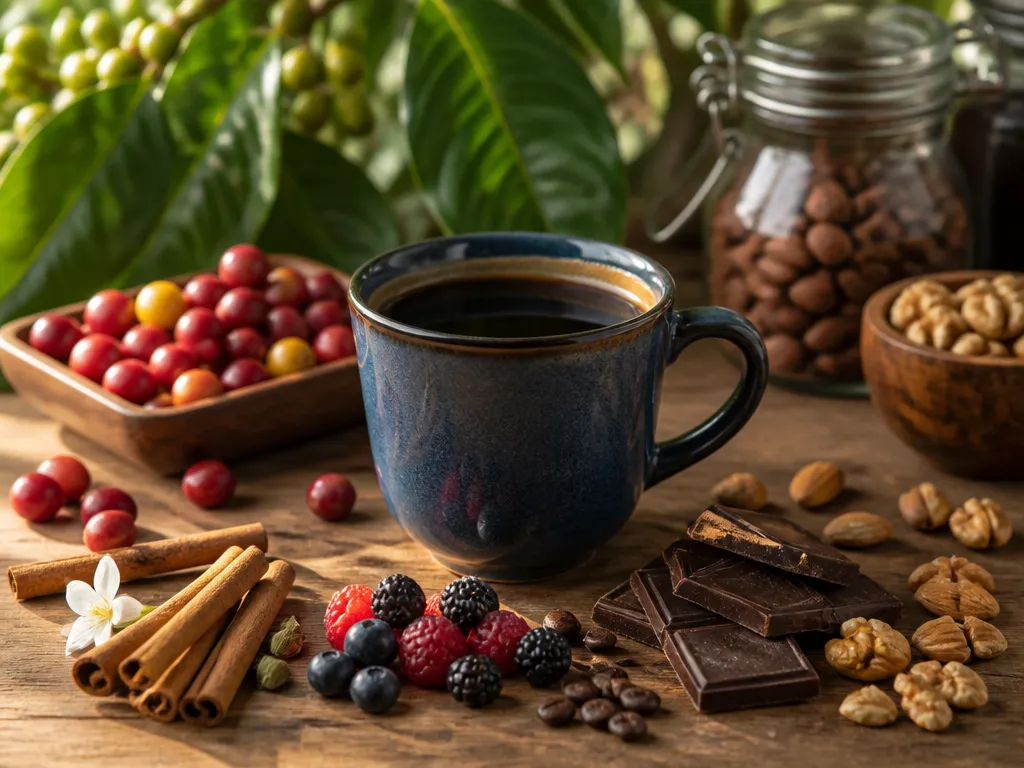
Coffee can taste like berries, chocolate, or citrus, even when you buy “the same” bag twice. Flavor comes from how the beans were grown (origin), what happened after harvest (process), and how they were heated (roast). These factors shape the acidity, sweetness, body, and bitterness you experience. Once you understand those connections, you can choose coffee more confidently at the store and adjust your brew at home.
Coffee flavor profiles are the taste and aroma descriptors used to predict what you may notice in a cup, such as “lemon,” “caramel,” or “cocoa.” They are useful guides, not guarantees. Origin, process, and roast level shift the balance between bright and winey acidity, light and heavy body, and sweetness and bitterness.
Key Takeaways
- Taster notes predict flavor trends, not guarantees, because brewing and grind change the result.
- Origin shifts fruitiness and florals, since climate and soil affect sugar and aromatic compounds.
- Process changes sweetness and acidity, with washed coffees often tasting cleaner and natural coffees often tasting fruitier.
- Roast controls brightness versus roast flavors, with lighter roasts retaining more acidity and origin character.
- Acidity types vary – “bright” feels sharp, “juicy” feels rounded, and “winey” feels complex and fermented.
- Dial in your brew by adjusting grind size, dose, water temperature, and brew time for the profile you want.
Coffee Flavor Profiles Explained by Taster Notes
Taster notes are short labels used to describe coffee in a consistent way. When a bag lists “citrus,” “chocolate,” or “black cherry,” the note points to an aroma and flavor family you may notice in the cup. It gives you a starting point for deciding whether the coffee sounds appealing.
Taster notes are not a perfect prediction. Two people can taste the same coffee and disagree because taste and smell vary from person to person. Brewing changes the result, too. A grind that is too fine, water that is too hot, or a brew that runs too long can push roastiness and bitterness forward. A grind that is too coarse or an under-extracted brew can taste thin or sour.
Treat the notes as a direction rather than a promise. Repeated patterns across the bag are usually more useful than one unusual descriptor. For example, “citrus” paired with “stone fruit” suggests a different cup from “cocoa” paired with “caramel.” Check the roast level as well. Light, medium, and dark roasts can determine how clearly those notes appear.
Read common note language this way:
- Fruit notes such as citrus, berry, and stone fruit often suggest higher-perceived acidity and aromatic brightness.
- Sweet notes such as caramel, honey, and brown sugar often suggest noticeable sweetness and less harshness from over-roasting.
- Chocolate and nut notes often point to smoother, more roasted sweetness, especially in medium roasts.
- Floral notes such as jasmine and rose often appear more clearly in lighter roasts and clean, well-developed brews.
Match the profile you want – bright and fruity or chocolatey and smooth – to the roast level, then tune the brew so you do not bury those characteristics.
How Origin, Process, and Roast Shape Coffee Flavor
Origin establishes the coffee’s starting flavor range. Region, elevation, and variety influence which sugars and aromatic compounds develop in the bean. Different growing conditions can produce different natural tendencies. Some coffees are commonly described as citrusy and floral, while others lean chocolatey and nutty. The final cup still depends on processing, roasting, grinding, and brewing.
Process determines how the fruit sugars and fermentation byproducts are handled after harvest. Washed, or wet-processed, coffees often taste cleaner and more sharply defined. Natural, or dry-processed, coffees often taste fruitier and more intense. Honey-processed coffees usually fall between those styles, with sweetness and acidity that can feel more rounded than in washed coffee. These are tendencies, not rules, because producers use many variations within each method.
Roast level is the final major influence before brewing. Lighter roasts preserve more origin character and usually taste more acidic, with clearer fruit and floral notes. Medium roasts balance acidity with caramel and chocolate flavors. Dark roasts move toward deeper roasted flavors and reduce the clarity of origin notes, which is why they often taste more like cocoa, smoke, or toast than citrus.
Connect the three layers before you buy:
- Origin sets the palette – fruit, florals, nuts, or cocoa.
- Process changes how clean or fruit-forward that palette tastes.
- Roast shifts the cup toward bright and detailed at the lighter end or roasty and mellow at the darker end.
For a fruity cup without excessive sharpness, choose a lighter or light-medium roast and avoid brewing it in a way that over-extracts. For cozy chocolate sweetness, a medium roast is often more forgiving and easier to brew consistently across different grinders and brewers.
Think of roast as the brightness control, process as the sweetness and fruit-intensity control, and origin as the control for which fruits and florals appear most clearly.
Coffee Acidity: Bright, Juicy, or Winey
Acidity in coffee is not the sourness of spoiled food. It is the perception of brightness, sharpness, and sparkle created by acids and balanced by sweetness and bitterness. Its texture can change the entire character of a cup.
Bright acidity feels crisp and noticeable, like lemon zest or grapefruit. It often appears in lighter roasts and brews designed for clarity. Brightness should feel sharp but clean rather than harsh.
Juicy acidity feels rounded and almost syrupy, like ripe berries or orange juice with sweetness behind it. Juicy coffee usually combines clear flavor with enough sweetness to soften the sharper edge.
Winey acidity feels deeper and more complex, like fruit skins or fermentation. It may remind you of grapes, berries, or a layered tang. Coffees with more fermentation influence often show this character when the roast and extraction preserve those compounds.
Use these simple distinctions when tasting:
- Bright – the acidity arrives first and feels sharp.
- Juicy – the acidity blends into a broader sweet-fruit impression.
- Winey – the acidity brings depth, complexity, and a mature fruit character.
Brewing determines which quality comes forward. Under-extraction can make acidity taste sour and thin. Over-extraction can add harshness and bitterness that hide the pleasant part of the acidity. Hotter water extracts more from the grounds, but it can also push bitterness into the foreground if you overshoot.
Make small changes when targeting a particular acidity. Adjust one variable at a time, then taste again. A 1-2°C change, a 0.5 second brew time change, or a small grind adjustment can move a cup from bright but pleasant to sharp and unpleasant, or from thin and sour to juicy and sweet.
Coffee Body and Mouthfeel: Light, Medium, or Heavy
Body is the sense of fullness a coffee leaves in your mouth. It includes viscosity, weight, and the way the liquid coats your tongue. Two coffees can share similar flavor notes while feeling completely different because extraction, roast, and brewing method shape body.
Light-bodied coffee feels crisp and airy. Individual flavors may seem more separated, and the cup can have extra sparkle without much lingering richness. Light bodies are common with lighter roasts and carefully controlled recipes, including shorter contact times or coarser grinds that still reach good extraction.
Medium body feels balanced and carries sweetness without becoming heavy. Many people find chocolate notes easiest to taste clearly at this level, especially in medium roasts.
Heavy-bodied coffee feels syrupy or dense. The texture lingers longer, and flavors may feel more blended. Higher extraction, darker roasts, longer immersion, and brewing methods with denser filter resistance can all produce heavier body.
Body changes how taste registers. More body can make a coffee with sharp acidity feel rounder. Less body can make a bitter coffee feel cleaner and allow sweetness to return.
Match body to the experience you want:
- For clarity and brightness: Aim for light to medium body.
- For comfort and sweetness: Aim for medium body.
- For syrupy richness: Aim for heavy body, but watch for bitterness.
You can change body without changing the beans. A finer grind and hotter water tend to increase extraction, which often increases body. A shorter brew time or coarser grind often reduces body. Those changes can also soften acidity if the original brew was unbalanced.
Choose between a crisp or cozy texture first, then adjust extraction to match. Most home brews land in the medium range, making it a practical starting point for anyone new to flavor profiling.
Balancing Bitterness and Sweetness in Coffee
Bitterness is not automatically bad. It becomes unpleasant when it overwhelms sweetness or tastes dry, harsh, and lingering. Sweetness comes partly from the coffee itself and partly from extraction – how much of its soluble compounds enter the cup. Bean composition, roast level, and brewing determine the balance.
Some coffees naturally lean sweeter, especially those with fruit-forward character and enough solubility. Others emphasize cocoa and roast notes, so their sweetness resembles caramel or chocolate rather than fruit. Darker roasts usually reduce perceived acidity but can increase roast-driven bitterness when brewed too hot or too fine.
Over-extraction is the most common cause of harsh bitterness. A grind that is too fine, water that is too hot, or a brew that runs too long can pull extra compounds that taste bitter and dry. Under-extraction more often produces sourness, thinness, or a lack of sweetness, although an unbalanced cup can sometimes taste bitter as well.
Sweetness usually requires less extraction than people expect. You need enough extraction to unlock it, then you need to stop before bitterness takes over. Small adjustments help you stay inside that window.
Use the cup to choose your next move:
- Bitter and dry – reduce extraction with a coarser grind, shorter brew, or cooler water.
- Bitter but also sweet – you are probably close; make only tiny adjustments.
- Sour and thin – increase extraction with a finer grind, longer brew, or hotter water.
- Sour but improving – you are near the right range, so keep tuning carefully.
Different beans respond differently. Bright, citrusy coffee may benefit from slightly cooler, gentler brewing to preserve clarity and control bitterness. Cocoa-and-caramel coffee may benefit from a little more extraction to emphasize sweetness, as long as the brew does not become roasty and bitter.
Coffee Flavor Wheel
A flavor wheel groups tasting notes into families, making it easier to describe what you enjoy and find similar coffees. Common categories include fruit, floral, nutty, chocolate, caramel, and spice. The point is not to identify one perfect descriptor. It is to recognize patterns in what you taste.
Look for clusters on a coffee bag. A coffee described with citrus and berry notes will probably emphasize brightness and fruit aroma. A coffee described with cocoa and caramel will probably offer smoother sweetness and more roast presence.
Use this practical note wheel without a printed graphic:
| Flavor family | Common taster notes | What it usually feels like |
|---|---|---|
| Citrus | lemon, lime, orange zest | bright, crisp acidity |
| Stone fruit | peach, apricot, nectarine | juicy sweetness, medium body |
| Berries | strawberry, blueberry, raspberry | juicy to winey acidity |
| Floral | jasmine, rose, lavender | lighter roast clarity, aromatic lift |
| Caramel | caramel, brown sugar | medium body, rounded sweetness |
| Chocolate | cocoa, dark chocolate | smooth finish, lower perceived acidity |
| Nutty | almond, hazelnut | balanced sweetness, often medium roast |
| Spices | cinnamon, clove, cocoa dust | warmth in finish, can ride with chocolate |
To find your preferred profile, choose 2 flavor families you enjoy and one you prefer to avoid. You might love citrus and chocolate but dislike winey fermentation notes. When shopping, prioritize bags with notes from the families you like, then check the roast level to keep acidity within your comfort zone.
Flavor families also make brewing problems easier to diagnose. If caramel starts tasting burnt or dry, extraction may have gone too far. If citrus starts tasting sour, the coffee may be under-extracted or brewed with water that was too cool.
Use the note families as a compass, then adjust brewing until the flavors you enjoy become more prominent.
How to Brew for the Coffee Flavor Profile You Want
Brewing for a specific profile means controlling extraction and bitterness. Pour-over, an AeroPress-style immersion method, and espresso all create different water-to-coffee contact patterns, but the same variables still guide the result: grind size, water temperature, and brew time.
Bright, Citrus-Forward Coffee
Prioritize clarity. Use a slightly finer grind than you would for a chocolatey cup, but avoid brewing for too long or too hot. The goal is crisp acidity without harshness.
- If the cup tastes sour or watery, increase extraction with a finer grind or slightly longer contact.
- If it tastes sharp and dry, reduce extraction with a coarser grind or shorter contact.
Juicy, Berry-Like Coffee
Aim for balanced extraction and enough sweetness to support the acidity. This usually means working near the middle of your grinder adjustment and keeping the water hot enough to extract without intensifying bitterness.
- If the cup tastes flat, it is often under-extracted.
- If it tastes harsh, it is often over-extracted.
Winey and Complex Coffee
Preserve the coffee’s fermentation and aromatic character by avoiding aggressive over-extraction. Keep the brew within a controlled range.
- If the winey notes feel muted, try a little more extraction.
- If they taste sour and unpleasant, reduce extraction and manage temperature.
Medium, Chocolatey Coffee
Prioritize sweetness and body without letting roast bitterness take over. Medium roasts often tolerate a broader brewing window, which makes them popular for everyday coffee.
- If the cup tastes bitter and smoky, reduce extraction.
- If it tastes weak and the chocolate notes are missing, increase extraction slightly.
Light- and Heavy-Bodied Coffee
Body depends on extraction and contact time.
- For light body, use a coarser grind or shorter contact time.
- For heavy body, use a finer grind, a longer contact method, or a brewing method that extracts more thoroughly.
Heavy body comes with a trade-off. Push extraction too far and bitterness rises quickly.
Use this tuning checklist with any brewer:
- Fix grind first if the cup is too bitter or too sour.
- Then adjust brew time in small increments.
- Change temperature last because large temperature shifts can alter several flavor dimensions at once.
- Keep dose and water consistent for more consistent results.
If a light roast tastes sharply bitter instead of bright and citrusy, extraction is probably too aggressive. Go one step coarser, keep everything else the same, and taste again. If a medium roast feels thin and lacks caramel sweetness, go one step finer or brew it slightly longer so the cup develops more sweetness.
Choose the target first – bright, juicy, winey, chocolatey, or heavy – then adjust extraction in small steps until the flavor families you like become dominant.
FAQ
What are the most common coffee flavor notes you’ll see on bags?
Common notes include citrus such as lemon and orange zest, berries such as strawberry and blueberry, florals such as jasmine and rose, caramel such as brown sugar, chocolate such as cocoa, nuts such as almond and hazelnut, and spices such as cinnamon and clove. Bags often list several notes because a cup can contain more than one dominant flavor family. Roast level usually determines whether those notes taste crisp in a lighter roast or more blended and roast-forward in a darker one.
Why does the same coffee taste different in my cup?
Different brewing recipes change extraction, which shifts bitterness, sweetness, and perceived acidity. Grind size is the biggest driver, followed by water temperature and brew time. Grinder type, including burr versus blade, and water quality can change the result as well.
Does a lighter roast always taste more acidic?
Lighter roasts usually have more perceived acidity and more origin character than darker roasts. The type of acidity – bright, juicy, or winey – still depends on process and brewing. Over-extracting a light roast can make the acidity harsh rather than bright, so roast level is a strong cue, not a guarantee.
How do I brew to reduce bitterness while keeping flavor?
Reduce extraction when bitterness tastes dry or harsh. Move to a slightly coarser grind, shorten the brew time, or lower the water temperature by a small amount. Keep the dose and total brew water the same so you can identify the effect of the change. Once the bitterness improves, use a slightly finer grind or longer brew only if sweetness has dropped out.
What’s the most common mistake when chasing a specific flavor profile?
Another common mistake is reaching for a finer grind and hotter water whenever coffee tastes weak, which can quickly push the brew into bitterness. Pick a target profile and taste repeatedly until the sweetness and flavor families you want become clear.

- Unlocking the Venti: Discover the Perfect Shot Count for Your Drink - October 13, 2026
- Unpacking the Buzz: Caffeine Levels in Café Bustelo Espresso - October 13, 2026
- How to Fix Bitter Coffee: 10 Expert Ways to Improve the Taste - October 4, 2026