
By a Certified Nutritionist & Functional Mushroom Specialist | Updated April 2025
Walk into a health store or browse online, and you’ll see dozens of mushroom coffee blends—Lion’s Mane for focus, Reishi for stress, Cordyceps for energy, and multi-mushroom mixes promising “everything.”
But here’s the key point most buyers miss: each mushroom does something different, and not all blends are designed for the same goal. Choosing without understanding the ingredients can mean paying for benefits you don’t actually need.
The mushroom coffee market is now worth billions of dollars, using a variety of mushroom species—each with its own effects, science, and purpose.
This guide breaks down the main types so you can quickly understand what each mushroom coffee actually does, who it’s for, and what the science really supports—without the marketing hype.
What All Mushroom Coffees Have in Common
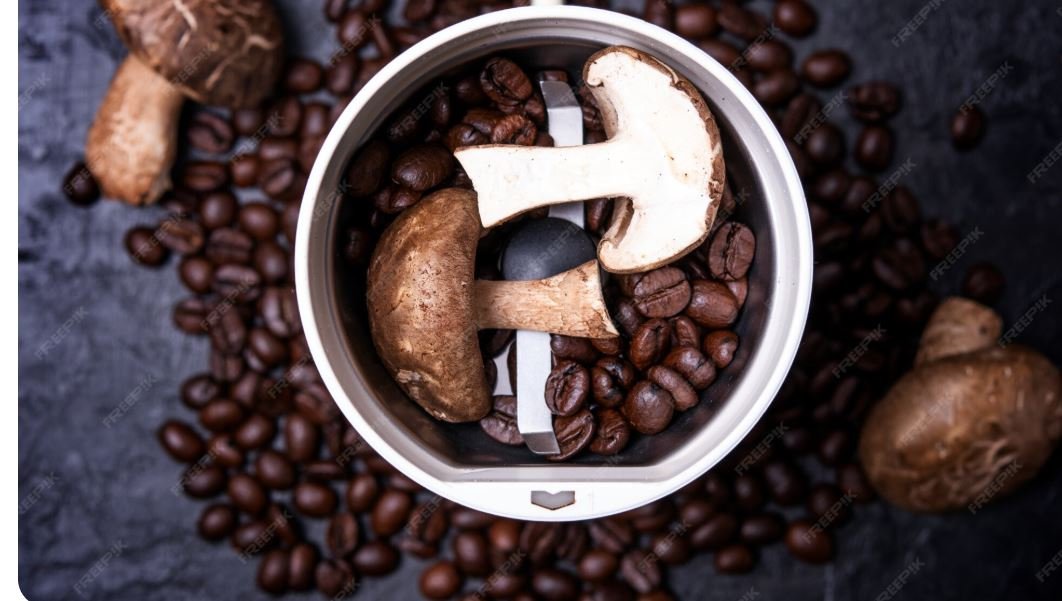
Mushroom coffee is a blend of regular ground coffee and powdered medicinal mushroom extracts. The mushrooms are dried, ground, and processed to concentrate their bioactive compounds. Common mushroom extracts are then combined with coffee beans in a typical ratio of 50–70% coffee to 30–50% mushroom extract.
A typical serving delivers 250–500 mg of mushroom extract alongside 50–80 mg of caffeine — roughly half the caffeine of a standard cup of coffee. This lower caffeine content is one of mushroom coffee’s most consistent practical advantages across all varieties.
The specific health effects, however, vary enormously depending on which mushroom is in the blend. Here are all 11, ranked from most to least commonly used in commercial products.
1. Lion’s Mane Mushroom Coffee Hericium erinaceus
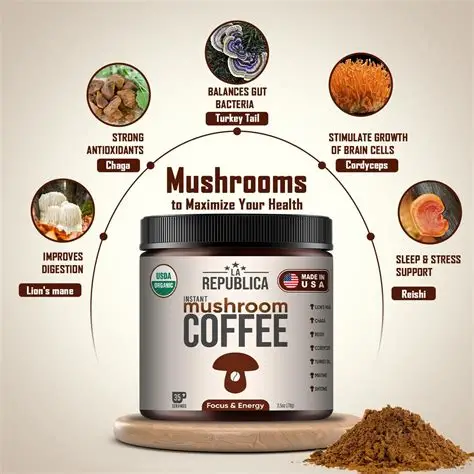
Best For: Focus, Memory, Cognitive Performance
Lion’s Mane is the undisputed star of the mushroom coffee world and for good reason. It is the most researched functional mushroom for brain health, and the science behind it is more compelling than any other species in this category.
Lion’s Mane supports cognitive function, enhances memory, and may help reduce symptoms of anxiety and depression, according to emerging clinical research. A 2023 study by Sarah Docherty published in Nutrients found that a single 1.8 g dose of Lion’s Mane mushroom improved reaction speed within 60 minutes and reduced stress after 28 days in healthy young adults.
The mechanism behind these effects involves two unique compound classes found exclusively in Lion’s Mane: hericenones (from the fruiting body) and erinacines (from the mycelium). Both have been shown to stimulate Nerve Growth Factor (NGF) — a protein essential for the growth, maintenance, and survival of neurons in the brain. This NGF stimulation is what makes Lion’s Mane the go-to mushroom for cognitive support.
Flavour in coffee: Mild, slightly sweet, barely noticeable the most coffee-compatible mushroom on this list.
Science strength: Strong multiple human studies with positive outcomes on memory, focus, and mood.
Best for: Students, knowledge workers, anyone experiencing brain fog, age-related cognitive concerns, or high mental workload.
Important note: Benefits from Lion’s Mane are cumulative. Consistent daily consumption over 4–8 weeks is required to notice meaningful cognitive effects. Don’t judge this mushroom after three cups.
2. Chaga Mushroom Coffee Inonotus obliquus
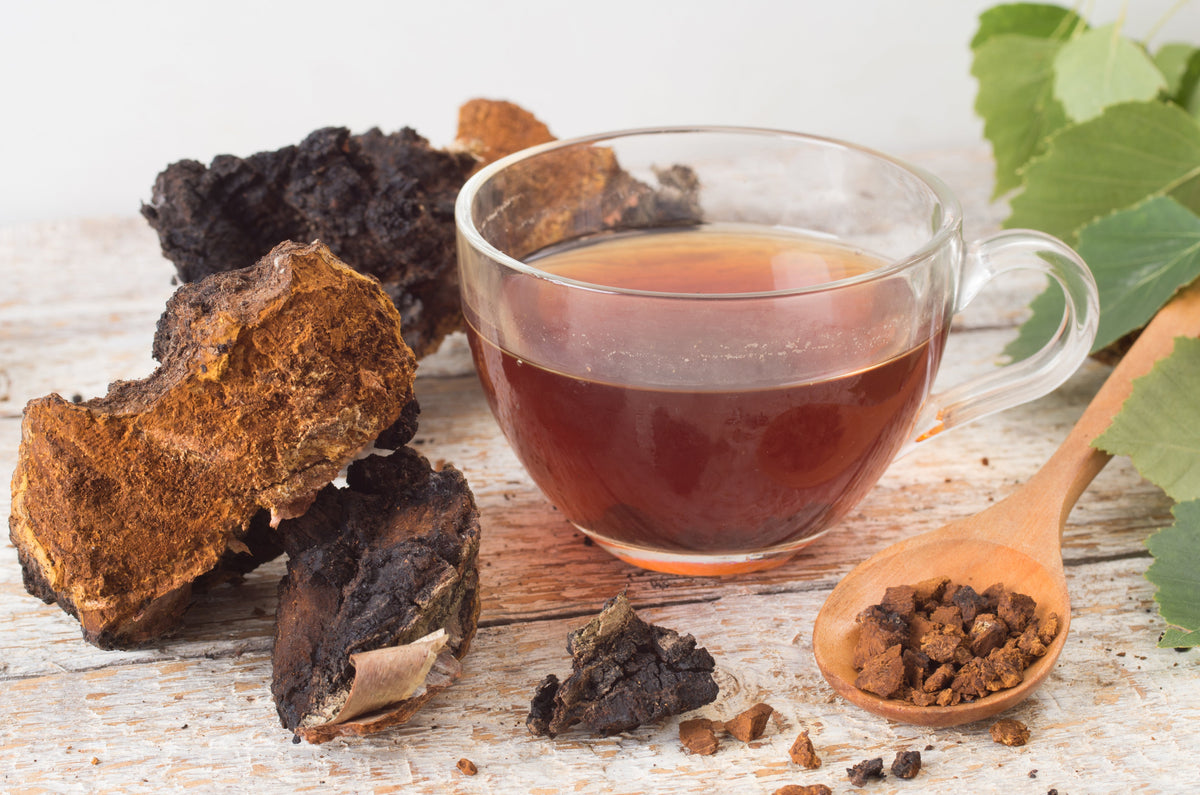
Best For: Antioxidants, Immune Support, Gut Health
Chaga is the most popular type of mushroom extract globally, making up about 28.5% of all mushroom extract products in the world as of 2022. It grows on birch trees in cold northern forests including Canada, Russia, Scandinavia, and northern China — and has been used in traditional medicine for centuries.
Chaga is prized for its antioxidant properties. It contains beta-glucans, melanin, and betulinic acid. The betulinic acid comes from the birch bark Chaga grows on, and is currently under active investigation for its anti-inflammatory properties. Chaga’s melanin content gives it one of the highest ORAC (Oxygen Radical Absorbance Capacity) antioxidant scores of any natural food source.
A 2023 review found that Chaga has multiple benefits for the immune system and systemic health, including potential antimicrobial, anti-inflammatory, anticancer, and antioxidant effects.
Historically, mushrooms were used as a coffee substitute in Finland during World War II when coffee beans weren’t available — and Chaga was the primary species used. It has a naturally mild, slightly vanilla-like, earthy flavour that blends more seamlessly with coffee than almost any other mushroom.
Flavour in coffee: Mild, smooth, with faint vanilla and earthy undertones.
Science strength: Good preclinical evidence; emerging human studies.
Best for: People focused on immune resilience, antioxidant support, and anti-inflammatory lifestyle approaches.
Caution: Chaga mushrooms are high in oxalates and are known to affect and increase kidney stones. People with kidney conditions, a history of kidney stones, or those on warfarin should consult a doctor before consuming Chaga regularly.
3. Reishi Mushroom Coffee — Ganoderma lucidum

Best For: Stress Relief, Sleep Quality, Immune Modulation
Reishi has been called the “Mushroom of Immortality” in Traditional Chinese Medicine for over 2,000 years and while that title may be ambitious, its documented effects on stress physiology are among the most clinically supported of any functional mushroom.
Reishi is known for immunomodulatory effects. It contains triterpenes and polysaccharides. The triterpenes specifically ganoderic acids — are responsible for Reishi’s adaptogenic activity. As an adaptogen, Reishi helps regulate the body’s cortisol response, potentially reducing the physiological impact of chronic stress without sedation or impairment.
A 2012 study in the Journal of Medicinal Food found that 1,680 mg of Reishi extract taken daily for eight weeks significantly improved fatigue scores and overall wellbeing in 132 participants with chronic fatigue — one of the most compelling human trials for any functional mushroom.
Flavour in coffee: Noticeably earthy and mildly bitter, especially at higher doses. This is the mushroom most likely to affect the taste of your coffee if present in large quantities.
Science strength: Good — multiple human studies on stress, fatigue, and immune modulation.
Best for: High-stress professionals, people with poor sleep quality, those dealing with burnout or chronic fatigue, or anyone seeking to improve immune resilience.
⚠️ Drug interaction: Reishi may have mild blood-thinning properties. Chaga is high in vitamin K and oxalates. Anyone on anticoagulant medications should discuss Reishi use with their healthcare provider.
4. Cordyceps Mushroom Coffee Cordyceps militaris / Ophiocordyceps sinensis

Best For: Energy, Athletic Performance, Oxygen Utilisation
Cordyceps is the athlete’s mushroom — and it earns that title through a mechanism that is fundamentally different from caffeine’s stimulant effect. While caffeine energises by blocking adenosine receptors in the brain (forcing alertness), Cordyceps works at the cellular level.
A bioactive compound that is unique to Cordyceps, known as Cordycepin, has been shown to improve adenosine triphosphate (ATP) production and increase cellular energy. Given that ATP serves as the primary energy currency of cells, its efficient production is critical for muscle function and physical performance.
Cordyceps has also been shown to enhance oxygen uptake (VO₂ max), making it particularly valuable for endurance athletes. Traditionally used in Tibetan medicine to combat altitude sickness, Cordyceps was famously brought to international attention in 1993 when Chinese Olympic runners broke world records and credited their performance to Cordyceps supplementation.
Flavour in coffee: Nearly flavourless — one of the mildest-tasting mushrooms in any blend.
Science strength: Moderate — promising human studies on exercise performance; more large-scale trials needed.
Best for: Athletes, active individuals, people experiencing fatigue or low energy, anyone looking for clean energy without additional caffeine stimulation.
5. Turkey Tail Mushroom Coffee Trametes versicolor

Best For: Gut Health, Immune Function, Gut Microbiome Support
Turkey Tail is the immune specialist of the mushroom coffee world — and it has the most robust clinical evidence of any mushroom on this list for a very specific application: immune support in cancer patients.
Turkey Tail provides gut and immune health benefits through PSK and PSP polysaccharides. PSK (polysaccharide-K) has been extensively studied in Japan, where it is approved as an adjunct cancer therapy. Multiple randomised controlled trials have shown PSK from Turkey Tail improves survival rates and quality of life in patients with gastric, colorectal, and breast cancer when used alongside conventional treatment.
Beyond oncology, Turkey Tail is increasingly recognised for its prebiotic properties — the polysaccharides feed beneficial gut bacteria, supporting microbiome diversity and digestive health. A 2014 study in ISRN Oncology found that Turkey Tail supplementation significantly increased populations of beneficial Bifidobacterium and Lactobacillus species in human participants.
Flavour in coffee: Earthy, mild. Not prominently detectable in a well-blended coffee product.
Science strength: Strong for immune and microbiome support — some of the best clinical evidence of all functional mushrooms.
Best for: People focused on immune resilience, gut health, or microbiome support; those undergoing or recovering from medical treatments (always with physician guidance).
6. Shiitake Mushroom Coffee — Lentinus edodes
Best For: Heart Health, Liver Support, Immune Function
Shiitake was most likely the first mushroom that humans ever deliberately cultivated, and it remains one of the most nutritionally dense fungi on earth. In mushroom coffee, it occupies a somewhat different role from the “medicinal” mushrooms above — its benefits are broader and more nutritional in character.
Shiitake is high in protein, fiber, vitamins, and minerals, is rich in Lentinan, a beta glucan polysaccharide, and has powerful therapeutic qualities that support the liver, cardiovascular system, and immune system.
Lentinan, Shiitake’s primary bioactive compound, has been approved in Japan as an intravenous treatment to support cancer therapy — one of the few mushroom compounds to achieve pharmaceutical status. At the dietary level, Shiitake consumption has been associated with reduced LDL cholesterol levels and improved liver enzyme profiles in multiple human studies.
Flavour in coffee: Slightly smoky, earthy, umami — can lend a pleasant depth to dark roast coffee blends.
Science strength: Good nutritional and moderate clinical evidence.
Best for: People interested in cardiovascular support, liver health, and comprehensive nutritional supplementation.
7. Maitake Mushroom Coffee — Grifola frondosa
Best For: Blood Sugar Balance, Immune Support, Metabolic Health
Maitake — known as “Hen of the Woods” or the “Dancing Mushroom” in Japan — is one of the most metabolically targeted functional mushrooms available. Its primary distinction is a set of unique beta-glucan compounds that appear to specifically support insulin sensitivity and blood sugar regulation.
Maitake mushrooms are known for their immune-boosting properties and ability to support healthy blood sugar levels and reduce insulin resistance. They are rich in nutritional content and contain unique, immunomodulating beta glucan compounds as well as vitamins B and C, and minerals like potassium, copper, and zinc.
The primary health benefits of Maitake mushroom are to help maintain healthy blood pressure and support immune function. Maitake mushrooms support immune function by stimulating the immune system’s lymphocytes, natural killer cells, monocytes, and T-helper cells.
Flavour in coffee: Rich, woodsy, mildly earthy — one of the more flavourful additions to a mushroom blend.
Science strength: Moderate, with particularly promising studies on blood glucose regulation.
Best for: People managing blood sugar levels, metabolic health concerns, or those seeking broad immune system reinforcement. Particularly relevant for pre-diabetic individuals (always under medical supervision).
8. Tremella Mushroom Coffee — Tremella fuciformis
Best For: Skin Health, Hydration, Anti-Aging
Tremella is the most unusual entry on this list — because its primary benefits have nothing to do with your brain, your immune system, or your energy levels. Tremella’s standout quality is its impact on skin health and hydration, making it the only mushroom coffee with a genuinely compelling beauty-wellness application.
The primary health benefits of Tremella mushrooms include promoting a healthy, youthful complexion with their potent anti-aging properties. The unique polysaccharides found in Tremella fuciformis are known for their intense hydrating properties, much like hyaluronic acid, without the cost of high-end anti-aging cosmetic products. In fact, these polysaccharides are smaller than hyaluronic acid, allowing them to penetrate the skin more easily.
In Traditional Chinese Medicine, Tremella has been used for centuries as a beauty tonic and skin nourisher. Legend has it that Yang Guifei, one of the “Four Great Beauties” of Chinese history, used Tremella to maintain her famously flawless complexion. Modern research is beginning to substantiate this ancient use — studies have shown that Tremella polysaccharides may protect the skin from UV damage and improve moisture retention more effectively than hyaluronic acid.
Flavour in coffee: Extremely mild, nearly tasteless — adds no discernible flavour to blends.
Science strength: Early but promising, particularly for skin-specific applications.
Best for: People interested in skin health, anti-aging benefits, and internal hydration support. Excellent addition to mushroom coffee for women focused on beauty-wellness applications.
9. King Trumpet Mushroom Coffee — Pleurotus eryngii
Best For: Antioxidants, Cholesterol Management, Anti-Inflammation
King Trumpet (also called King Oyster) is a large, meaty mushroom widely used in culinary cooking across Asia and Europe, and increasingly finding its way into functional mushroom coffee blends. Its inclusion is driven primarily by its impressive ergothioneine content.
Ergothioneine is a naturally occurring amino acid and antioxidant that the human body cannot synthesise itself — it must be obtained from dietary sources, and mushrooms are one of the only significant food sources. King Trumpet mushrooms have exceptionally high levels of ergothioneine, which has been linked to cellular protection against oxidative stress, anti-inflammatory activity, and potential cardiovascular benefits.
King Trumpet mushrooms are also rich in dietary fibre and contain compounds that have shown cholesterol-lowering properties in preliminary studies, supporting cardiovascular health alongside their antioxidant benefits.
Flavour in coffee: Very mild, subtly earthy — compatible with most coffee roast profiles.
Science strength: Emerging, with solid nutritional foundation and promising antioxidant evidence.
Best for: People focused on cardiovascular health, antioxidant protection, and anti-inflammatory dietary strategies.
10. Agaricus Blazei Mushroom Coffee — Agaricus blazei Murrill
Best For: Immune Modulation, Healthy Aging, Metabolic Support
Agaricus Blazei, known as the “Mushroom of the Sun” in Brazil and “Himematsutake” in Japan, is one of the most beta-glucan-rich mushrooms in existence — and one of the least well-known in the Western wellness market, despite having a research history spanning decades in both Brazilian and Japanese traditional medicine.
The Himematsutake Mushroom (Agaricus blazei) is valued for its immune-boosting and healthy-aging properties. They’re rich in polysaccharides, fiber, and minerals such as potassium, calcium, and magnesium.
Agaricus Blazei has been studied specifically for its potential role in managing Type 2 Diabetes, where it appears to support insulin sensitivity and glycaemic control. It has also demonstrated immune-modulating effects in cancer patients in several clinical trials, and has been investigated for its effects on cholesterol and liver health.
Flavour in coffee: Mild, slightly sweet and almond-like — one of the more pleasant-tasting functional mushrooms.
Science strength: Moderate-to-good for immune and metabolic applications; well-studied relative to its market profile.
Best for: People interested in comprehensive immune support, healthy aging, metabolic health, and antioxidant protection.
11. Willow Bracket Mushroom Coffee — Phellinus igniarius
Best For: Antioxidant Protection, Anti-Inflammatory Support
Willow Bracket is the newest and least mainstream entry on this list — a functional mushroom that is beginning to appear in premium 10-in-1 and 11-in-1 mushroom coffee blends, particularly in products targeting comprehensive antioxidant coverage.
Also known as “Fire Sponge” or “Horse Hoof Fungus,” Willow Bracket is a wood-rotting polypore mushroom that grows on willow, birch, and oak trees across Europe, Asia, and North America. Like Chaga (which grows on birch), it contains high concentrations of polyphenols and beta-glucans that give it potent antioxidant and anti-inflammatory properties.
Traditional medicine in East Asia has used Willow Bracket for stomach ailments, inflammation, and as a general tonic for centuries. Modern research, while still early, has identified several bioactive compounds in Phellinus igniarius with anti-inflammatory, antioxidant, and potential neuroprotective properties.
Flavour in coffee: Mild, earthy — similar to Chaga in profile.
Science strength: Emerging — traditional use history is robust; clinical evidence is early-stage.
Best for: People building a comprehensive antioxidant and anti-inflammatory lifestyle, or those already using premium multi-mushroom blends.
How to Choose the Right Mushroom Coffee Type for You
With 11 mushrooms to choose from, the selection process can feel overwhelming. Here is a simplified framework based on your primary health goal:
| Health Goal | Primary Mushroom | Supporting Mushroom |
|---|---|---|
| Focus & memory | Lion’s Mane | Cordyceps |
| Stress & anxiety | Reishi | Lion’s Mane |
| Energy & exercise | Cordyceps | Reishi |
| Immune strength | Chaga | Turkey Tail, Reishi |
| Gut health | Turkey Tail | Maitake, Shiitake |
| Blood sugar balance | Maitake | Agaricus Blazei |
| Skin & anti-aging | Tremella | Chaga |
| Heart health | Shiitake | King Trumpet |
| Antioxidant coverage | Chaga | King Trumpet, Willow Bracket |
| General wellness | Multi-mushroom blend | All of the above |
Single-Mushroom vs. Multi-Mushroom Blends: Which Is Better?
This is one of the most common questions in the mushroom coffee space — and it doesn’t have a single right answer.
Single-mushroom coffees (like a pure Lion’s Mane + coffee blend) deliver a higher concentration of one specific mushroom, making them better suited to people with a clear, targeted health goal — such as improving cognitive performance or managing stress specifically. They also make it easier to track whether the mushroom is producing any noticeable effect.
Multi-mushroom blends (5-in-1, 7-in-1, 10-in-1, 11-in-1) are growing in popularity because they offer broad-spectrum wellness coverage. There is also emerging evidence of synergistic effects — when Lion’s Mane, Reishi, Chaga, and Cordyceps work together, each addressing a different aspect of health, the combined benefit may exceed the sum of individual parts.
The trade-off is dosing. A typical serving of a 10-mushroom blend contains 250–500 mg of total mushroom extract — spread across 10 species, that works out to just 25–50 mg per mushroom per serving. Most clinical studies on individual mushrooms used doses of 750–3,000 mg per day. Multi-mushroom blends are best positioned as a daily wellness ritual and microbiome support tool rather than a targeted therapeutic intervention.
The practical recommendation: If you have a specific health goal (cognitive support, stress management, athletic performance), choose a single or dual-mushroom coffee that features your target species prominently. If you’re interested in general wellness and coverage, a quality 7-in-1 or higher blend from a reputable brand is a reasonable daily choice.
What to Look for When Buying Mushroom Coffee
Not all mushroom coffees are created equal. The supplement industry has limited regulation, and quality varies dramatically between brands. These are the non-negotiable criteria when evaluating any mushroom coffee product:
Fruiting Body vs. Mycelium The fruiting body (the mushroom cap and stem you’d recognise visually) contains the highest concentrations of bioactive beta-glucans and other therapeutic compounds. Mycelium (the root-like network) is cheaper to produce but contains significantly lower concentrations of the beneficial compounds — and often includes grain filler from the growing medium. Always choose products that specify fruiting body extract.
Beta-Glucan Content Beta-glucans are the primary bioactive compounds responsible for most of the immune and health benefits of functional mushrooms. Quality products specify beta-glucan percentage on the label — look for a minimum of 20–30% beta-glucans in any mushroom extract.
Third-Party Testing Look for products with independent third-party testing certificates confirming the species identity, beta-glucan content, and absence of heavy metals and contaminants.
Organic Certification Mushrooms are extraordinary bioaccumulators — they absorb whatever is in their growing environment, including heavy metals, pesticides, and toxins. Organic certification matters far more for mushroom products than for most other supplements.
Transparency on Dosing Quality brands list exactly how much of each mushroom extract is in each serving. Proprietary blends that don’t disclose individual mushroom quantities are a red flag.
Are There Any Side Effects?
For most healthy adults, mushroom coffee is well tolerated. The most common side effects are mild digestive discomfort — bloating or stomach sensitivity — when first starting, particularly with Chaga or Reishi. Starting with half the recommended serving and building up over a week minimises this.
Key cautions to be aware of across all mushroom coffee types:
- Kidney conditions: Chaga is high in oxalates — avoid or limit with a history of kidney stones
- Blood thinners (warfarin, aspirin): Reishi has mild anticoagulant properties
- Blood sugar medications: Maitake and Agaricus Blazei may affect insulin sensitivity
- Autoimmune conditions: Some mushrooms stimulate immune activity discuss with your doctor if you have an autoimmune disorder
- Pregnancy and breastfeeding: Insufficient safety data avoid unless advised otherwise by a healthcare provider
- Prescription medications: Several mushrooms influence liver enzymes always check with your pharmacist
Final Thoughts
The mushroom coffee category has matured enormously. What began as a niche wellness experiment in health food stores has become a sophisticated, science-informed category with genuine functional benefits provided you choose the right mushroom for your specific needs and purchase from brands that are transparent about their sourcing, extraction methods, and dosing.
Lion’s Mane remains the most evidence-backed choice for cognitive support. Chaga leads for antioxidant coverage. Reishi is the stress and sleep specialist. Cordyceps is the athlete’s ally. Turkey Tail is the gut and immune champion. And blends featuring all of them, plus Shiitake, Maitake, Tremella, King Trumpet, Agaricus Blazei, and Willow Bracket, offer the most comprehensive daily wellness foundation available in a single cup.
The right mushroom coffee for you depends entirely on your health goals, your lifestyle, and your budget. But with this guide, you now have everything you need to make that choice with genuine expertise — and get the most from every cup.

- Espresso Tastes Watery? 10 Common Causes and How to Fix It - October 23, 2026
- 10 Common Coffee Equipment Cleaning Mistakes and How to Avoid Them - October 23, 2026
- 17 Common Coffee Grinder Problems and How to Fix Them - October 23, 2026