
If you have ever woken up in a quiet villa in Ubud or grabbed a quick breakfast at a bustling local warung in Canggu, you know that Bali coffee is an experience all its own. It is dark, intensely aromatic, slightly chocolaty, and unapologetically bold.
Often served with a thick layer of fine grounds settled at the bottom of the glass, traditional Balinese coffee known locally as Kopi Tubruk doesn’t rely on fancy espresso machines, calibrated tampers, or delicate paper filters. Instead, it relies on good beans, boiling water, patience, and a specific pouring technique that brings out the soul of the island’s volcanic soil.
Bringing that exact flavor into your own kitchen is surprisingly simple, provided you understand a few key secrets about the beans, the grind, and the brew method. Whether you want to recreate the traditional muddy-bottomed street style or adapt Kintamani Arabica beans to your morning pour-over, this guide walks you through everything you need to know about how to make Bali coffee at home.
What Makes Bali Coffee So Unique?
Before you boil your kettle, it helps to understand what is actually inside a bag of Bali coffee. Indonesia is one of the world’s largest coffee producers, famous for regions like Sumatra, Java, and Sulawesi. Bali, however, offers two very distinct coffee personalities depending on how the beans are grown and processed.
1. The Volcanic Terroir of Kintamani
Most specialty coffee in Bali grows in the Kintamani highlands, situated on the fertile volcanic slopes of Mount Batur. Because this region sits at an elevation of 1,200 to 1,600 meters above sea level, the cool mountain air slows down the maturation of the coffee cherries, allowing complex sugars to develop inside the beans.
What truly sets Kintamani coffee apart is the traditional Subak Abian farming system. Balinese farmers practice intercropping, growing coffee trees right alongside citrus orchards (like tangerines and oranges), cacao, and vanilla. As a result, washed Bali Kintamani Arabica beans naturally absorb subtle, bright notes of lemon, sweet orange, and caramel, balanced by a medium body and clean finish.
2. Traditional Balinese Robusta
On the flip side, if you order a standard cup of Kopi Bali at a local market or roadside stall, you are likely drinking Balinese Robusta (or a dark-roasted blend of Arabica and Robusta). Grown at lower altitudes in areas like Pupuan and Tabanan, this coffee is roasted dark—often until the oils glisten on the surface of the beans.
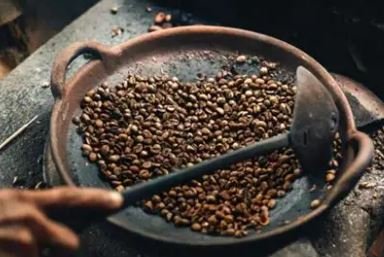
Traditional Balinese roasters sometimes even roast the beans in large woks over wood fires, occasionally adding a touch of coconut, corn, or palm sugar during the roasting process to create a smoky, velvety, low-acidity brew with notes of dark chocolate, roasted nuts, and toasted spice.
What You Need to Make Traditional Bali Coffee
One of the best things about making authentic Bali coffee is that you do not need any specialized coffee gear. In fact, using a paper filter will strip away the heavy, syrupy body that defines the drink.
Ingredients
- Coffee Beans: 15 to 20 grams (about 2 to 3 heaped tablespoons) of authentic Bali coffee. Use Bali Kintamani Arabica for a brighter, smoother cup, or dark-roasted Bali Robusta for that classic, punchy local warung kick.
- Water: 200 to 250 ml (about 1 cup) of filtered water.
- Sweetener (Optional): 1 to 2 teaspoons of Gula Aren (Indonesian palm sugar) or raw cane sugar. Traditional Bali coffee is rarely served without a touch of sweetness to balance the dark roast.
- Milk or Creamer (Optional): Sweetened condensed milk (susu kental manis) if you want to make Kopi Susu.
Equipment
- A Kettle: Any stovetop or electric kettle will do.
- A Coffee Grinder: Ideally a burr grinder, though pre-ground Bali coffee works great too.
- A Sturdy Mug or Thick Glass: Clear tempered glasses are traditional in Bali because you can see the grounds settle.
- A Spoon: For stirring and skimming.
Step-by-Step: How to Make Traditional Bali Coffee (Kopi Tubruk)
Kopi Tubruk literally translates to “collision coffee,” referring to the way boiling water collides directly with finely ground coffee in the cup. Because there is no filter separating the grounds from the water, extraction happens rapidly, and gravity does the rest of the work.
Step 1: Get the Grind Size Right
If you are grinding whole beans at home, aim for a fine to medium-fine grind—similar to table salt or fine sand.
- Why it matters: If the grind is too coarse (like French press), the coffee grounds will float stubbornly at the top of your cup instead of sinking, making it nearly impossible to drink without getting a mouthful of grit. If it is too fine (like Turkish powder), it will turn into a muddy sludge that over-extracts and tastes overly bitter.
Step 2: Prep Your Cup and Sweetener
Warm up your mug or glass by rinsing it with a splash of hot water, then dumping the water out. Add your 15 to 20 grams of ground Bali coffee directly into the bottom of the dry cup.
If you take sugar in your coffee, add it right now on top of the dry coffee grounds before pouring the water. In Bali, adding palm sugar (gula aren) at the very beginning allows the boiling water to melt the sugar into a syrup that coats the coffee particles, subtly altering how the flavors extract and helping the grounds sink faster.
Step 3: Boil the Water
Bring your filtered water to a full, rolling boil ($100^\circ\text{C}$ / $212^\circ\text{F}$). Unlike delicate light-roast pour-overs that require cooler water ($92^\circ\text{C}$–$94^\circ\text{C}$), Kopi Tubruk relies on scalding-hot water to immediately saturate the dark-roasted grounds and force them to release their oils and gases.
Step 4: The Two-Stage Pour
Do not dump all the water in at once. A two-stage pour ensures even extraction and prevents the coffee from foaming over the rim.
- The Bloom: Pour just enough boiling water (about 40–50 ml) to completely wet the coffee grounds. Give it a quick, gentle stir with your spoon and let it sit for 20 to 30 seconds. You will see a thick, bubbly brown crust form on top as trapped carbon dioxide escapes.
- The Fill: Pour the remaining boiling water steadily in a circular motion until your cup is filled to about half an inch below the rim.
Step 5: Stir and Wait (The Most Important Step)
Give the brew a thorough, vigorous stir for about 5 seconds so every bit of coffee and sugar is fully dissolved and suspended.
Now, put the spoon down and walk away for 3 to 4 minutes. Do not touch the cup. During this resting period, the coffee finishes brewing while gravity pulls the saturated grounds down to the bottom of the glass.
Step 6: Skim the Crust and Serve
After 4 minutes, you may notice a thin layer of golden foam and a few stubborn floating grounds still resting on the surface. Use your spoon to gently skim off any floating foam or stray particles—or simply tap the side of the glass lightly with your spoon, which breaks the surface tension and causes the remaining grounds to sink immediately.
How to Drink It Without Eating the Grounds
Drinking Kopi Tubruk takes a tiny bit of technique:
- Never stir it again once the grounds have settled.
- Sip slowly from the top, tilting the glass gently rather than tipping it back aggressively.
- Stop at the bottom inch. When you reach the last half-inch to an inch of liquid, stop drinking. That dark, velvety layer at the bottom is the ampas (coffee sediment), meant to be left behind in the cup.
3 Popular Variations of Bali Coffee You Can Try
Once you master the classic Kopi Tubruk, you can easily customize your cup using ingredients found in almost every Balinese household.
1. Kopi Susu Bali (Balinese Sweet Milk Coffee)
If you find traditional dark-roasted Bali coffee a bit too intense on its own, make Kopi Susu. Before adding your coffee grounds and boiling water, pour 1 to 2 tablespoons of sweetened condensed milk into the bottom of your glass. Brew the coffee right on top of the condensed milk, stir well, let the grounds settle for 4 minutes, and enjoy a rich, dessert-like cup.
2. Kopi Jahe (Balinese Ginger Coffee)
During rainy afternoons in the Balinese mountains, locals often brew their coffee with fresh ginger for warmth and digestion. Smash a 1-inch piece of fresh ginger with the flat side of a knife until bruised, drop it into the bottom of your mug along with your coffee grounds and palm sugar, and pour boiling water over everything. The spicy warmth of the ginger pairs remarkably well with the earthy, chocolate notes of Bali beans.
3. Bali Kintamani Pour-Over (Modern Cafe Style)
If you bought a bag of light-to-medium roast 100% Bali Kintamani Arabica and prefer a clean, sediment-free cup, skip the Tubruk method and use a V60 or Chemex instead:
- Use a medium grind (like sea salt) and a 1:15 coffee-to-water ratio (20g coffee to 300g water).
- Heat your water to $93^\circ\text{C}$ ($200^\circ\text{F}$).
- Bloom with 50g of water for 45 seconds, then pour the rest in slow concentric circles over 2 minutes and 30 seconds.
- This method highlights the bright tangerine, lemon zest, and floral honey notes that specialty coffee lovers adore about Bali.
Pro Tips for Buying and Storing Bali Coffee
- Check the Roast Date: Freshness makes all the difference. Look for whole beans roasted within the last 2 to 4 weeks rather than dusty bags sitting on a souvenir shelf for months.
- Know Your Label: Look for “Bali Kintamani” if you want smooth, citrusy Arabica, or “Kopi Bali Bubuk” (ground Bali coffee) if you want the authentic, fine-ground dark roast designed specifically for Kopi Tubruk.
- Store It Airtight: Keep your beans or grounds in an opaque, airtight container at room temperature away from sunlight and stove heat. Avoid storing coffee in the fridge or freezer, as moisture and food odors quickly ruin the delicate oils.
Troubleshooting Your Brew
| Problem | Likely Cause | Quick Fix |
| Grounds won’t sink to the bottom | The grind is too coarse, or the water wasn’t hot enough when poured. | Grind slightly finer next time, use water right off the boil, and tap the side of the mug after 4 minutes. |
| The coffee tastes overly bitter or burnt | Over-extraction from water sitting too long on dark-roasted Robusta, or grinding too fine. | Coarsen the grind slightly, reduce coffee dose to 15g, or add a teaspoon of palm sugar. |
| The cup tastes weak or watery | Too much water for the amount of coffee used. | Stick to a strict ratio of roughly 1 gram of coffee per 12–13 ml of water (about 2 heaped tablespoons per 8 oz cup). |
Making Bali coffee at home is a reminder that great coffee doesn’t need to be complicated. All it takes is good volcanic beans, boiling water, and four quiet minutes to let everything settle before taking your first rich, aromatic sip.

- Glasgow Coffee Machine Repair Recommendations: Complete Guide - November 23, 2026
- 7 Key Lessons for Starting a Successful Peanut Business - November 23, 2026
- The Best Domestic Coffee Roasting Setup: Complete Home Guide - November 23, 2026