
To brew dark roast coffee, focus on slightly coarser grounds, lower water temperatures (around 195-200°F), and careful extraction times to balance its robust flavor without bitterness.
Brewing a truly exceptional cup of dark roast coffee is an art form, a delicate dance between rich flavors and potential bitterness. While some might shy away from its intense character, understanding how to brew dark roast coffee correctly can unlock a world of deep, complex notes, from smoky cocoa to caramelized sweetness. As someone who has spent years exploring the nuances of coffee brewing, I've learned that dark roasts, despite their bold reputation, demand a thoughtful approach to truly shine. This comprehensive guide will equip you with the knowledge and practical tips to master the art of brewing dark roast coffee, transforming your daily ritual into an extraordinary experience.

Understanding Dark Roast Coffee
Dark roast coffee beans are roasted longer and at higher temperatures than their lighter counterparts, developing a distinct profile that many coffee lovers adore. This extensive roasting process alters the bean's chemical structure, bringing out oils and reducing acidity.
What Defines a Dark Roast?
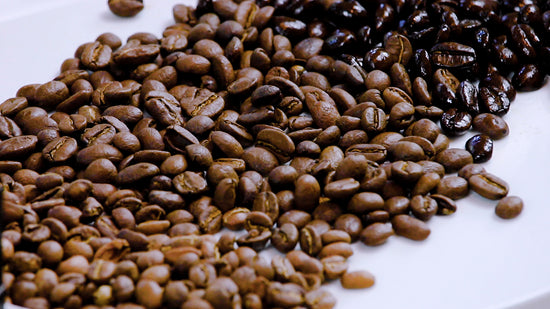
Dark roasts are typically characterized by their deep, dark brown color, often appearing shiny due to the oils brought to the surface. The internal temperature during roasting can reach well over 450°F, pushing the beans past the "second crack" — an audible popping sound that signifies significant internal changes. This process diminishes the original varietal characteristics of the coffee bean, replacing them with roasty, often smoky, and bold flavors derived from the caramelization of sugars and breakdown of organic compounds.
Flavor Profile and Characteristics
When you learn how to brew dark roast coffee, you'll discover a spectrum of flavors. Expect notes of chocolate, caramel, nuts, and a smoky finish. The body tends to be heavier, with a pronounced richness that coats the palate. Acidity is significantly lower compared to lighter roasts, which contributes to its smooth, often bittersweet profile. Popular dark roasts include French Roast, Italian Roast, and Espresso Roast, each with subtle variations in intensity and flavor.
Common Misconceptions
One prevalent misconception is that dark roast coffee contains more caffeine. In reality, the longer roasting process burns off some caffeine, meaning that a light roast often has a slightly higher caffeine content by weight. Another myth is that dark roasts are inherently bitter. While over-extraction can certainly lead to bitterness, a properly brewed dark roast should exhibit a pleasant bitterness balanced with sweetness and body, much like dark chocolate. Understanding these nuances is crucial for anyone keen on how to brew dark roast coffee effectively.
Essential Equipment for Brewing Dark Roast
Having the right tools is fundamental to consistently brewing delicious dark roast coffee. Just as a chef needs quality ingredients and utensils, a home barista benefits greatly from reliable equipment.
Grinder Selection
A high-quality burr grinder is perhaps the most critical piece of equipment. Unlike blade grinders, which chop beans unevenly, a burr grinder produces a consistent particle size, essential for even extraction. For dark roasts, an even grind helps manage bitterness. Conical burr grinders are excellent for home use, offering a range of settings from fine espresso to coarse French press, allowing you to precisely control the grind for your chosen brewing method.
Brewing Device Options
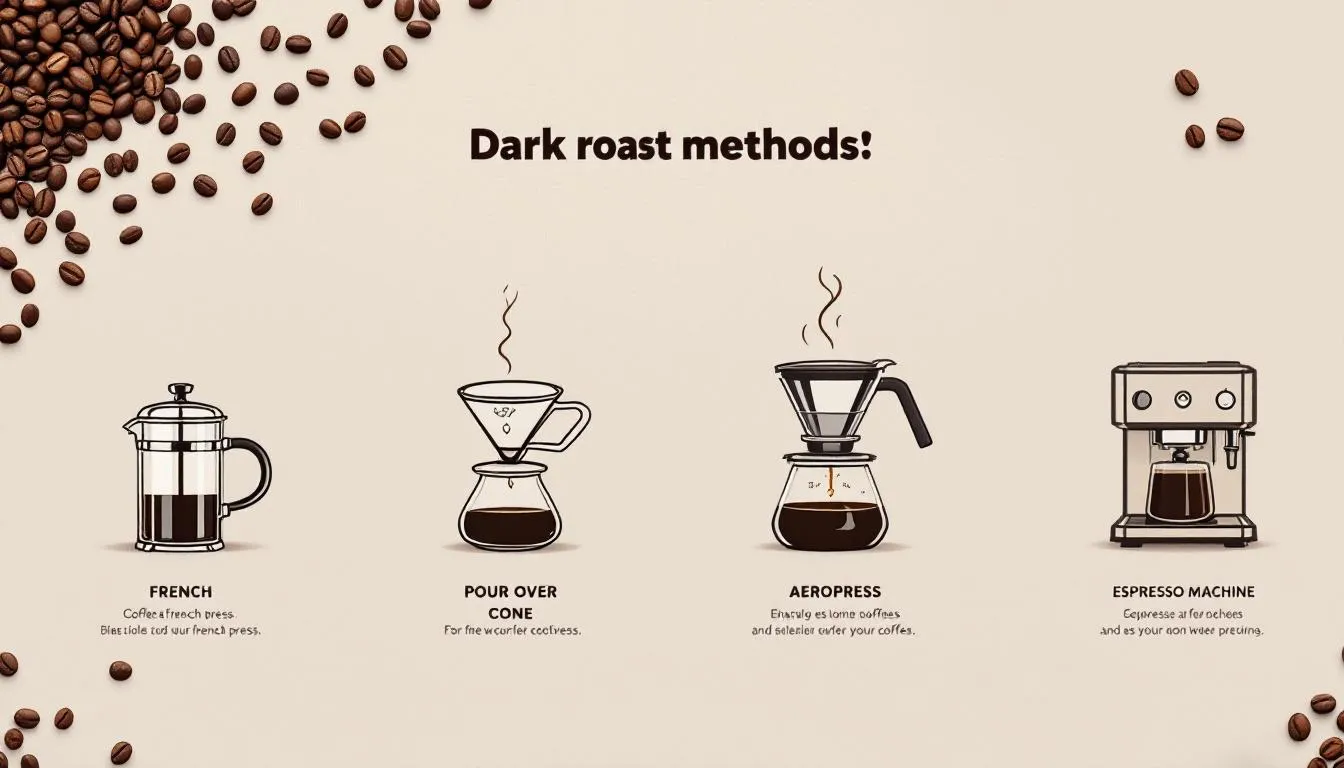
The choice of brewing device significantly impacts the final taste of your dark roast.
- French Press: Ideal for a full-bodied, rich cup.
- Pour Over (e.g., Hario V60, Chemex): Excellent for clarity and highlighting subtle notes within the roast.
- Automatic Drip Coffee Maker: Convenient for daily brewing, though less control over variables.
- Espresso Machine: Perfect for intense, concentrated shots.
- Aeropress: Versatile, allowing for strong, clean cups or espresso-style concentrates.
Measuring Tools and Water Kettle
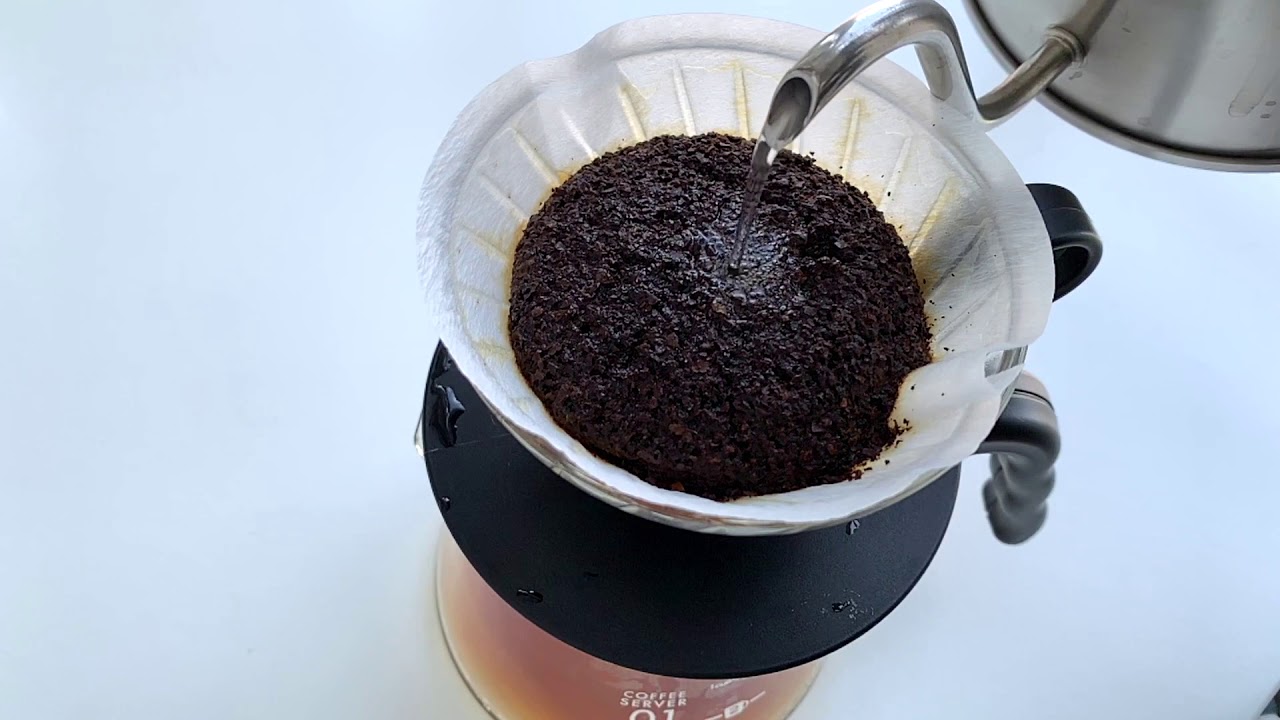
Precision is key when learning how to brew dark roast coffee. A digital scale for measuring coffee beans and water ensures accuracy, allowing you to replicate successful brews. A gooseneck kettle, especially one with temperature control, is invaluable for pour-over methods, providing steady, even water flow and precise temperature management. Maintaining the correct water temperature is paramount to extracting the best flavors from your dark roast.
The Art of Grinding Dark Roast Beans
Grinding dark roast beans correctly is a pivotal step in the brewing process. It's often where people go wrong, leading to either an overly bitter or disappointingly weak cup. My experience tells me that patience and precision at this stage truly pay off.
Why Grind Size Matters
Grind size dictates the surface area of the coffee exposed to water, directly impacting extraction rate. Too fine a grind for a particular method and you risk over-extracting, leading to bitterness and astringency, which dark roasts are already prone to. Too coarse, and you'll under-extract, resulting in a weak, sour, or watery coffee. For dark roasts, which tend to be more brittle due to longer roasting, finding that sweet spot is even more crucial. A slightly coarser grind than you might use for a medium roast can often help mitigate potential bitterness when brewing dark roast coffee.
Recommended Grind Settings for Popular Methods
- French Press: Coarse, resembling sea salt. This allows for proper immersion without excessive fines muddying the cup.
- Pour Over: Medium-fine, like table salt or sand. This provides optimal resistance for a controlled drip.
- Automatic Drip: Medium, similar to coarse sand. A good balance for most drip machines.
- Espresso: Very fine, like powdered sugar. The high pressure of an espresso machine requires a very fine grind for adequate extraction.
- Aeropress: Fine to medium-fine, depending on the desired brew strength and immersion time.
Freshness is Key
Grinding your beans just before brewing is non-negotiable for the best flavor. Once ground, coffee rapidly loses its aromatics and flavors due to oxidation. Dark roasts, with their oils already on the surface, can go stale even faster once ground. Always invest in whole beans and a quality grinder; it's the single most impactful upgrade you can make to improve your home brewing, especially when learning how to brew dark roast coffee.
Mastering Water Temperature and Quality
Water is over 98% of your coffee, so its quality and temperature play an immense role in how your dark roast coffee tastes. Neglecting these aspects is like trying to bake a gourmet cake with substandard ingredients; the results will never truly impress.
Ideal Brewing Temperature
The ideal water temperature for brewing coffee, including dark roasts, generally falls between 195°F and 205°F (90-96°C). For dark roasts, I often find that leaning towards the lower end of this spectrum, around 195-200°F, helps to prevent over-extraction and mitigate bitterness. Water that is too hot can aggressively extract bitter compounds, while water that is too cool will under-extract, resulting in a flat or sour taste. A temperature-controlled kettle is a game-changer for achieving this precision, allowing you to consistently hit the sweet spot when you brew dark roast coffee.
The Impact of Water Quality
The water you use should be filtered and free from strong odors or tastes. Tap water, depending on your location, can contain chlorine, minerals, or other impurities that can drastically alter the flavor of your coffee. Hard water, rich in minerals, can hinder proper extraction, while overly soft water can lead to a flat taste. My personal preference is filtered water, ideally with a balanced mineral content (around 150 ppm total dissolved solids), which allows the inherent flavors of the dark roast to shine through without interference. It’s a simple change that yields significant improvements in your final cup when learning how to brew dark roast coffee.
Brewing Methods Tailored for Dark Roasts
Each brewing method offers a unique experience, accentuating different characteristics of dark roast coffee. Understanding these differences helps you choose the best way to brew dark roast coffee to your preference.
French Press: Richness Unleashed
The French Press is a favorite for dark roasts due to its full immersion brewing method, which yields a rich, heavy-bodied cup.
- Grind: Coarse, like sea salt.
- Ratio: Start with a 1:15 coffee-to-water ratio (e.g., 60g coffee for 900g water).
- Temperature: Water at 195-200°F.
- Process: Add coffee to the preheated French Press. Pour half the water, stir gently to ensure all grounds are saturated (the "bloom"). After 30 seconds, pour the remaining water.
- Steep: Let it steep for 3-4 minutes. For darker roasts, sometimes even 3 minutes is enough to prevent bitterness.
- Plunge: Slowly and steadily press the plunger down. Serve immediately.
This method excels at bringing out the bold chocolate and smoky notes in dark roasts.
Pour Over: Clarity and Control
Pour over methods (like Hario V60 or Chemex) can produce a remarkably clean and nuanced cup of dark roast, highlighting its inherent sweetness without the muddiness.
- Grind: Medium-fine, like table salt.
- Ratio: Aim for 1:16 to 1:17 coffee-to-water ratio.
- Temperature: Water at 195-200°F.
- Process: Place a filter in your pour-over device and rinse it with hot water to remove paper taste and preheat the brewer. Discard rinse water. Add ground coffee.
- Bloom: Pour just enough water to saturate the grounds, let it bloom for 30-45 seconds.
- Pour: Slowly pour the remaining water in concentric circles, maintaining a steady flow. Aim for a total brew time of 2:30 to 3:30 minutes.
This method requires a bit more technique but offers incredible control over the extraction when you brew dark roast coffee.
Automatic Drip: Convenience Meets Flavor
For those who value convenience, a good automatic drip machine can still produce a respectable cup of dark roast. Look for machines with good showerhead dispersion and temperature control.
- Grind: Medium.
- Ratio: Use a 1:17 ratio for a balanced brew.
- Temperature: Ensure your machine heats water to at least 195°F.
- Process: Add filtered water to the reservoir and ground coffee to the filter basket. Start the machine.
While less hands-on, choosing quality beans and water remains paramount for a satisfying brew.
Espresso: Intense and Aromatic
Brewing espresso with dark roast coffee can result in a deeply aromatic, intense shot with a rich crema.
- Grind: Very fine, like powdered sugar.
- Dose: Typically 18-20g for a double shot.
- Temperature: Brew at 195-200°F (machine dependent).
- Extraction: Aim for a 25-30 second extraction time for a 2 oz shot.
Dark roasts often perform well as espresso, providing a strong foundation for milk-based drinks like lattes and cappuccinos.
Cold Brew: Smooth and Low Acidity
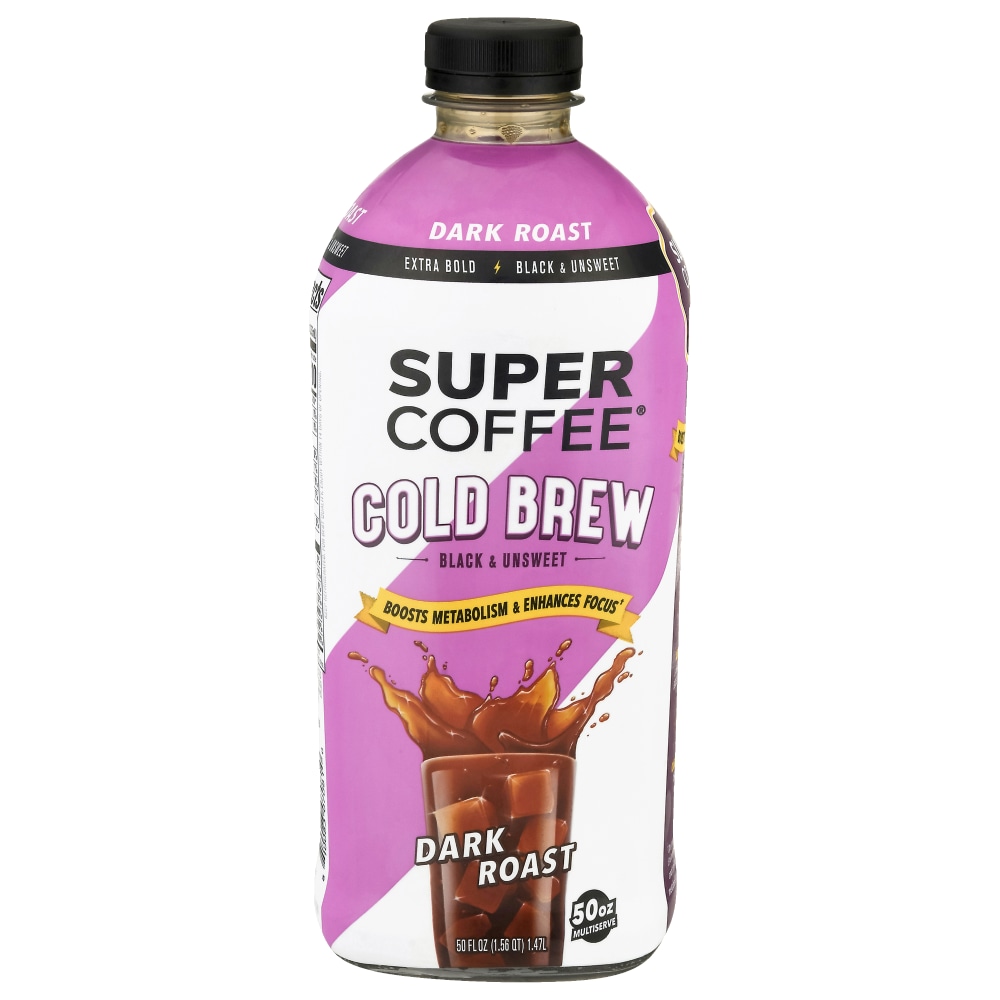
Cold brew is an exceptional way to brew dark roast coffee, producing a remarkably smooth, low-acid concentrate that minimizes bitterness.
- Grind: Very coarse, like cracked pepper.
- Ratio: Start with a 1:8 coffee-to-water ratio for a concentrate.
- Process: Combine coarse grounds and cold, filtered water in a large container. Stir gently to ensure all grounds are wet.
- Steep: Cover and let steep at room temperature or in the refrigerator for 12-24 hours. I usually go for 18 hours for a dark roast to get that deep flavor.
- Filter: Strain the concentrate through a fine-mesh sieve lined with cheesecloth or a dedicated cold brew filter.
Dilute the concentrate with water or milk to taste. This method is fantastic for taming the potential sharpness of a dark roast into a mellow, refreshing drink.

Achieving the Perfect Brew Ratio
The coffee-to-water ratio is one of the most fundamental variables in brewing, and mastering it is essential for consistently delicious dark roast coffee. It's often referred to as the "golden ratio," and for good reason—it’s the cornerstone of extraction.
The Golden Ratio
A widely accepted starting point for most brewing methods is a 1:15 to 1:18 coffee-to-water ratio. This means for every 1 gram of coffee, you use 15 to 18 grams (or milliliters) of water.
- For a rich, stronger cup: Lean towards 1:15.
- For a balanced, slightly lighter cup: Aim for 1:17 or 1:18.
When brewing dark roast coffee, I often find a 1:16 ratio to be a great starting point, providing enough strength without pushing into over-extraction too quickly. Using a digital scale to measure both coffee and water is crucial for achieving accuracy and consistency, allowing you to tweak the ratio confidently based on your preferences.
Adjusting for Personal Preference
The "perfect" ratio is ultimately subjective. Dark roasts, being bolder by nature, can sometimes taste intense at higher concentrations. If your dark roast coffee tastes too strong or bitter, consider slightly increasing your water-to-coffee ratio (e.g., from 1:15 to 1:16 or 1:17). Conversely, if it tastes weak or watery, reduce the water slightly. Don't be afraid to experiment within the recommended range. My personal journey with how to brew dark roast coffee has taught me that these small adjustments can make a world of difference, turning a good cup into a truly exceptional one tailored to my palate.
Troubleshooting Common Dark Roast Brewing Issues
Even with the best intentions, brewing dark roast coffee can present some challenges. Recognizing the signs of an imperfect brew and knowing how to adjust is a valuable skill. It's like a detective trying to solve a flavor mystery!
Over-Extraction: Bitter Taste
The most common culprit when brewing dark roast coffee is over-extraction, which leads to a harsh, acrid, or intensely bitter taste. This happens when too many undesirable compounds are pulled from the coffee grounds.
- Signs: Lingering bitterness, dry mouthfeel, metallic taste.
- Solutions:
- Coarsen your grind: A slightly coarser grind reduces surface area, slowing down extraction.
- Reduce brew time: Shorten the contact time between coffee and water.
- Lower water temperature: Brew with water at the lower end of the 195-205°F range (e.g., 195°F).
- Reduce agitation: Stir less during French Press or pour more gently for pour-over.
Under-Extraction: Weak and Sour
Conversely, under-extraction means not enough flavor compounds have been pulled from the coffee, resulting in a disappointing cup.
- Signs: Sour, thin, watery, grassy, or sharp taste; often lacks body.
- Solutions:
- Fine your grind: A finer grind increases surface area, speeding up extraction.
- Increase brew time: Allow for longer contact between coffee and water.
- Increase water temperature: Brew with water at the higher end of the 195-205°F range (e.g., 205°F).
- Increase agitation: Gentle stirring can help ensure all grounds are evenly wetted.
Managing Bitterness
Because dark roasts naturally have a more pronounced bitterness, it's about managing it, not eliminating it entirely. My key takeaway from years of trial and error is that starting with fresh, quality beans is paramount. After that, focusing on grind size, water temperature, and brew time will give you the most control. Don't be afraid to make small, incremental changes to one variable at a time until you achieve the balanced cup you desire. It’s all part of the rewarding journey of learning how to brew dark roast coffee perfectly.

My Personal Journey: Lessons from the Dark Side
I remember my first foray into truly understanding how to brew dark roast coffee. For years, I simply thought "dark roast means strong," and I'd brew it aggressively, often ending up with a cup so bitter it would make me wince. It wasn't until a barista friend, sensing my frustration, patiently walked me through the nuances that my perspective shifted entirely. He showed me that dark roasts, despite their bold exterior, demand a gentler hand in some respects.
The Importance of Experimentation
My biggest lesson has been the absolute necessity of experimentation. I initially clung to rigid "rules," but found that every dark roast bean, even from the same roaster, can behave slightly differently. For instance, I discovered that some French roasts benefit immensely from a minute less steep time in a French press than a standard medium roast. Or, with a particular Italian roast, bumping the water temperature down just a few degrees (to 195°F instead of 200°F) made the difference between a harsh cup and one with delightful cocoa notes. I started keeping a small logbook, noting grind size, water temperature, brew time, and my subjective tasting notes. This systematic approach transformed my understanding of how to brew dark roast coffee, moving me from guessing to informed adjustments.
Avoiding Common Pitfalls
One common mistake I made was grinding too fine, thinking it would make the coffee "stronger." Instead, it resulted in clogged filters and intensely bitter brews. Another pitfall was not considering the age of the roast. Dark roasts tend to lose their freshness faster due to surface oils. Brewing stale dark roast, no matter how perfectly, will always yield a flat, disappointing cup. My advice? Always buy freshly roasted beans and store them properly. I’ve learned that achieving a truly exceptional cup of dark roast coffee isn't about brute force, but about subtle, educated refinements, appreciating the delicate balance within its robust profile.
Frequently Asked Questions
What is the best way to store dark roast coffee beans?
Store dark roast coffee beans in an airtight container, away from light, heat, and moisture. Avoid the refrigerator, as condensation can degrade the beans; a cool, dark pantry is ideal.
Can I use dark roast coffee for cold brew?
Yes, dark roast coffee is excellent for cold brew, producing a smooth, low-acid concentrate with deep, chocolatey notes. The cold water extraction process naturally tames the roast's bitterness.
Does dark roast coffee have less caffeine than light roast?
Generally, dark roast coffee has slightly less caffeine by weight than light roast. The longer roasting process burns off some caffeine content, though the difference is often marginal.
Why does my dark roast coffee taste bitter?
Bitterness in dark roast coffee often indicates over-extraction. Try using a coarser grind, reducing brew time, or slightly lowering your water temperature (around 195-200°F) to mitigate this.
What is the ideal water temperature for brewing dark roast coffee?
The ideal water temperature for brewing dark roast coffee is typically between 195-200°F (90-93°C). This range helps extract rich flavors without pulling out excessive bitterness.
Conclusion
Mastering how to brew dark roast coffee is a rewarding journey that elevates a simple daily ritual into a nuanced experience. By understanding the unique characteristics of dark roasts and precisely controlling variables like grind size, water temperature, and brew time, you can consistently unlock a cup brimming with rich, complex flavors, free from unwanted bitterness. The key lies in attentive preparation, a touch of experimentation, and a genuine appreciation for the robust character these beans offer.
I encourage you to apply these insights in your own kitchen. Experiment with different brewing methods, fine-tune your ratios, and discover the perfect expression of dark roast coffee that truly resonates with your palate. Share your experiences in the comments below or explore additional resources to deepen your coffee knowledge further. Your perfect cup of dark roast awaits!

- Unlocking the Venti: Discover the Perfect Shot Count for Your Drink - October 13, 2026
- Unpacking the Buzz: Caffeine Levels in Café Bustelo Espresso - October 13, 2026
- How to Fix Bitter Coffee: 10 Expert Ways to Improve the Taste - October 4, 2026