

The optimal coffee bloom duration typically ranges from 30 to 45 seconds, allowing for effective degassing and improved extraction.
Understanding precisely how long coffee should bloom is fundamental to achieving a superior brew, transforming a simple cup into an exquisite experience. As an experienced content writer and coffee enthusiast, I've spent countless hours meticulously refining brewing techniques, observing firsthand the profound impact of a properly executed bloom. This essential pre-infusion step, often overlooked by home brewers, is where the true magic of coffee flavor development begins. This article will delve into the intricacies of the coffee bloom, offering an in-depth analysis to empower you with the knowledge to consistently brew exceptional coffee.

What is Coffee Blooming and Why Does it Matter?
Coffee blooming is the initial stage of the brewing process where hot water is first introduced to freshly ground coffee. This brief pre-infusion causes the coffee grounds to expand and bubble, a phenomenon driven by the release of trapped carbon dioxide (CO2). Freshly roasted coffee beans naturally contain a significant amount of CO2, a byproduct of the roasting process. When ground, this CO2 is released more readily, and when hot water hits the grounds, it accelerates this release, causing the coffee bed to visibly "bloom."
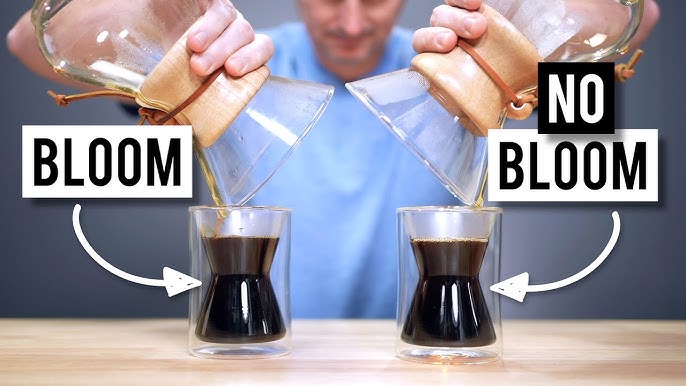
This degassing process is crucial because CO2, while natural, can create undesirable sour flavors and repel water during brewing. If the coffee isn't allowed to bloom, the escaping CO2 can create channels or uneven pockets within the coffee bed, leading to inconsistent extraction. Some parts of the coffee might be over-extracted (bitter), while others are under-extracted (sour), resulting in a muddy, unbalanced cup. From my own early brewing experiments, I distinctly recall the disappointment of a flat, underdeveloped cup when I rushed or skipped the bloom altogether. It taught me that patience during this initial phase is not just a recommendation but a necessity for unlocking the full potential of the coffee.
:max_bytes(150000):strip_icc()/__opt__aboutcom__coeus__resources__content_migration__serious_eats__seriouseats.com__2018__07__20180703-coffee-blooming-vicky-wasik-4-04bb75c20b0049c0a0b5bf687b961679.jpg)
The Science Behind the Bloom: Degassing and Extraction
The scientific principle behind the coffee bloom is rooted in solubility and gas dynamics. As hot water permeates the coffee grounds, it dissolves some of the coffee solids and initiates the release of CO2. This CO2 is highly soluble in water, and the sudden increase in temperature prompts it to effervesce, creating the visible bubbles and the rising "bloom." This rapid release of gas also serves to saturate the coffee grounds evenly with water.
This pre-wetting phase is critical because it ensures that subsequent water added during the main brew cycle can penetrate the coffee particles uniformly. Without proper degassing, the CO2 acts as a barrier, preventing water from reaching all the coffee solubles, leading to what brewers call "channeling." Channeling occurs when water finds the path of least resistance through the coffee bed, bypassing other grounds entirely. A well-executed bloom minimizes channeling, promoting a more even and efficient extraction of desirable flavors, aromas, and acids from the coffee.
A common query arises: "What happens if you don't bloom coffee?" Failing to bloom coffee can lead to an uneven extraction, where some coffee particles are over-extracted and others are under-extracted. This typically results in a cup that tastes both bitter and sour, lacking balance and clarity, and potentially having a thin body.

Factors Influencing Coffee Bloom Duration
Determining how long coffee should bloom isn't a one-size-fits-all answer, as several critical factors influence the ideal duration:
- Freshness of Beans: This is arguably the most significant factor. Fresher beans, typically within 4-14 days of roasting, will exhibit a more vigorous bloom due to higher CO2 content. As beans age, the CO2 naturally dissipates, leading to a less pronounced bloom. For very fresh beans, a slightly longer bloom might be beneficial, while older beans might require less time or show minimal bloom.
- Roast Level: Darker roasts tend to have more porous structures and release CO2 more rapidly, often blooming more vigorously and potentially for a shorter duration. Lighter roasts, being denser, may require a slightly longer bloom to fully degas.
- Grind Size: Finer grinds have more surface area exposed to water, meaning CO2 can escape quicker. However, the density of a fine grind can also trap CO2 initially, requiring proper saturation to release it. Coarser grinds have less surface area, and CO2 release can be slower and more controlled. Generally, a medium grind for pour-over will respond well to the standard 30-45 second bloom.
"Does grind size affect coffee bloom?" Absolutely. A finer grind will usually bloom more quickly and intensely than a coarser grind due to increased surface area, but too fine a grind can also compact and trap gas, necessitating careful observation.
- Water Temperature: Hotter water (ideally between 195-205°F or 90-96°C) accelerates the release of CO2 and the dissolution of coffee solids, making for a more efficient bloom. Using water that is too cool will result in a weak, ineffective bloom.
Through my years of brewing, I've found that paying close attention to the roast date and adjusting the bloom time accordingly yields the most consistent results. A super fresh, light roast might warrant a full 45-second bloom, while a two-week-old medium roast might be perfect at 30 seconds.

Optimal Coffee Bloom Times for Different Brewing Methods
The duration of your coffee bloom can also be tailored to the specific brewing method you're employing, as each method has unique contact times and extraction dynamics.
- Pour Over (e.g., Hario V60, Chemex): For manual pour-over methods, where precision is key, a bloom of 30 to 45 seconds is generally recommended. This allows sufficient time for degassing and ensures the coffee bed is fully saturated before the main pour, facilitating even extraction. The goal is a uniform rise and bubble release.
- French Press: With a French Press, the coffee grounds are fully immersed. A bloom of 30 to 60 seconds is common. Some brewers prefer to stir gently during this initial bloom phase to ensure all grounds are wetted. The longer contact time in a French Press allows a slightly longer bloom to still be effective.
- Aeropress: Due to the Aeropress's unique pressure-based extraction and shorter overall brew time, the bloom phase is often shorter, typically 10 to 20 seconds, or sometimes even integrated into the initial pour without a distinct pause. Its compact brewing chamber and fine grind naturally encourage rapid degassing.
- Espresso: In espresso preparation, the "bloom" is effectively handled by the pre-infusion phase, where a small amount of low-pressure water is applied to the puck for a few seconds (typically 3-10 seconds) before full pressure is applied. This gently saturates the coffee and releases CO2, mirroring the bloom's purpose.
Ultimately, how long should coffee bloom is also a matter of personal preference and experimentation within these established ranges. I’ve found that even within the same brewing method, subtle adjustments based on the specific bean and my desired flavor profile can make a noticeable difference.

How to Bloom Coffee Properly: A Step-by-Step Guide
Mastering the coffee bloom is a straightforward process that significantly elevates your brewing. Here’s a simple guide to ensure an effective bloom every time:
- Prepare Your Coffee and Water: Weigh your freshly ground coffee into your chosen brewing device. Heat your water to the optimal temperature, typically between 195-205°F (90-96°C).
- Add Bloom Water: Pour approximately twice the weight of your dry coffee grounds in hot water over the coffee. For example, if you're using 20 grams of coffee, add about 40 grams of water. Ensure all the grounds are saturated evenly.
- Observe and Swirl (Optional): Watch as the coffee grounds expand and bubble, forming a dome-like shape. This is your bloom. If you notice dry spots, you can gently swirl the brewer or use a spoon to lightly stir the grounds to ensure complete saturation. However, over-stirring can disrupt the bed too much.
- Time the Bloom: Let the coffee bloom for the recommended duration, typically 30 to 45 seconds for most pour-over methods, or as per the guidelines for your specific brew method mentioned above. During this time, the CO2 will escape, and the coffee bed will become fully saturated.
- Continue Brewing: Once the bloom time is complete, proceed with your regular brewing technique, adding the remaining water in your preferred pours.
This disciplined approach to blooming ensures that you’ve addressed the crucial degassing step, setting the stage for a well-extracted and flavorful cup.

Recognizing a Good Bloom vs. a Bad Bloom
Observing your coffee bloom can provide immediate feedback on the freshness of your beans and the effectiveness of your technique. Knowing what to look for helps in understanding how long should coffee bloom for your specific beans.
Characteristics of a Good Bloom:
- Vigorous Rise and Bubbles: The coffee grounds will visibly expand, forming a dome or "puffing up." You'll see numerous small bubbles escaping the surface, indicating active CO2 release.
- Distinct Aroma: A good bloom often releases a beautiful, intense aroma of freshly brewed coffee, a testament to the volatile compounds being liberated.
- Even Saturation: All the coffee grounds will appear uniformly wet, without any dry pockets or channeling.
Characteristics of a Bad Bloom:
- Flat or Minimal Rise: The coffee grounds show little to no expansion, remaining relatively flat in the brewer. There will be very few, if any, visible bubbles.
- No Aroma or Stale Scent: The absence of a rich coffee aroma, or perhaps a faint, stale smell, suggests the coffee is likely past its prime.
- Immediate Water Absorption: The water seems to soak into the coffee bed instantly without any resistance, indicating a lack of trapped CO2.
If you consistently observe a "bad bloom," it often points to stale coffee beans. While an optimal bloom is important, for stale beans, the impact of how long should coffee bloom is less significant because there's simply less CO2 to release. In such cases, the best solution is to get fresher beans. However, ensuring you still apply the bloom technique can help mitigate some of the negative effects of older coffee by at least ensuring even wetting.

Common Mistakes to Avoid When Blooming Coffee
Even with the best intentions, it's easy to make mistakes during the blooming phase that can compromise your final brew. Understanding these pitfalls can help ensure you consistently achieve a perfect bloom.
- Not Blooming at All: The most fundamental error is skipping the bloom entirely. As discussed, this leads to uneven extraction and a less flavorful cup. Always allocate those crucial 30-45 seconds.
- Using Too Little Water for the Bloom: If you don't add enough water to fully saturate all the grounds, parts of the coffee bed will remain dry, defeating the purpose of the bloom. Aim for roughly twice the weight of your coffee in water.
- Using Too Much Water: Conversely, using excessive water during the bloom can prematurely extract too many solubles, potentially leading to an over-extracted taste in the initial phase and disrupting the bed for subsequent pours. Stick to the 2:1 ratio.
- Rushing the Bloom: Impatience is detrimental. Cutting the bloom short means not all the CO2 has been released, leading to the same issues as not blooming at all. Allow the full recommended time for how long coffee should bloom.
- Using Stale Coffee Beans: While not a technique error, using old beans will result in a minimal or non-existent bloom, regardless of how perfectly you execute the steps. The best technique can't compensate for expired freshness. Always check your roast date!
- Ignoring Water Temperature: Using water that is too cold will not effectively trigger the CO2 release, leading to a weak bloom. Maintain the ideal brewing temperature range.
I've personally made the mistake of rushing the bloom many times in my early brewing days, thinking I could save a few seconds. Every time, I was met with a cup that lacked the vibrancy and balance I was striving for. It reinforced the lesson: respecting the process, especially the bloom, is paramount to brewing truly great coffee.
Frequently Asked Questions
Does blooming coffee make a big difference?
Yes, blooming coffee makes a significant difference. It allows trapped CO2 to escape, preventing uneven extraction and channeling, which results in a more balanced, flavorful, and aromatic cup of coffee.
Can you bloom coffee for too long?
While a sufficient bloom is important, blooming coffee for too long (e.g., several minutes) can lead to over-extraction of some solubles in that initial concentrated wetting phase. This could potentially contribute to a less balanced taste in the final brew, though the primary concern is usually too short a bloom.
What temperature water should I use for blooming?
You should use the same hot water temperature for blooming as you would for the rest of your brewing process, typically between 195-205°F (90-96°C). This optimal temperature effectively triggers the CO2 release.
Should I stir the coffee bloom?
Stirring the coffee bloom is optional. A gentle stir or swirl can help ensure all grounds are thoroughly saturated, especially if you notice dry spots. However, excessive stirring can disrupt the coffee bed, so proceed with caution if you choose to stir.
Is blooming necessary for all brewing methods?
Blooming is beneficial for most pour-over and immersion brewing methods like pour-overs, French press, and Aeropress. For espresso, the pre-infusion phase serves a similar purpose, releasing CO2 before the high-pressure extraction.
Conclusion
Mastering the coffee bloom is more than just an extra step in your brewing routine; it's a foundational technique that directly influences the quality and flavor profile of your final cup. By allowing your coffee to degas for the optimal duration – typically 30 to 45 seconds – you are actively preparing the coffee bed for a balanced and thorough extraction. Understanding factors like bean freshness, roast level, and grind size, and adapting your bloom time accordingly, will elevate your brewing from good to truly exceptional.
Experiment with these insights in your own kitchen. Pay attention to how long should coffee bloom for your specific beans and brewing method, and observe the subtle yet profound impact on your coffee's taste. The journey of coffee brewing is one of continuous discovery, and a perfectly executed bloom is a rewarding step along that path. Share your blooming experiences or any questions you might have in the comments below; let's continue to explore the art of exceptional coffee together.

- Unlocking the Venti: Discover the Perfect Shot Count for Your Drink - October 13, 2026
- Unpacking the Buzz: Caffeine Levels in Café Bustelo Espresso - October 13, 2026
- How to Fix Bitter Coffee: 10 Expert Ways to Improve the Taste - October 4, 2026