
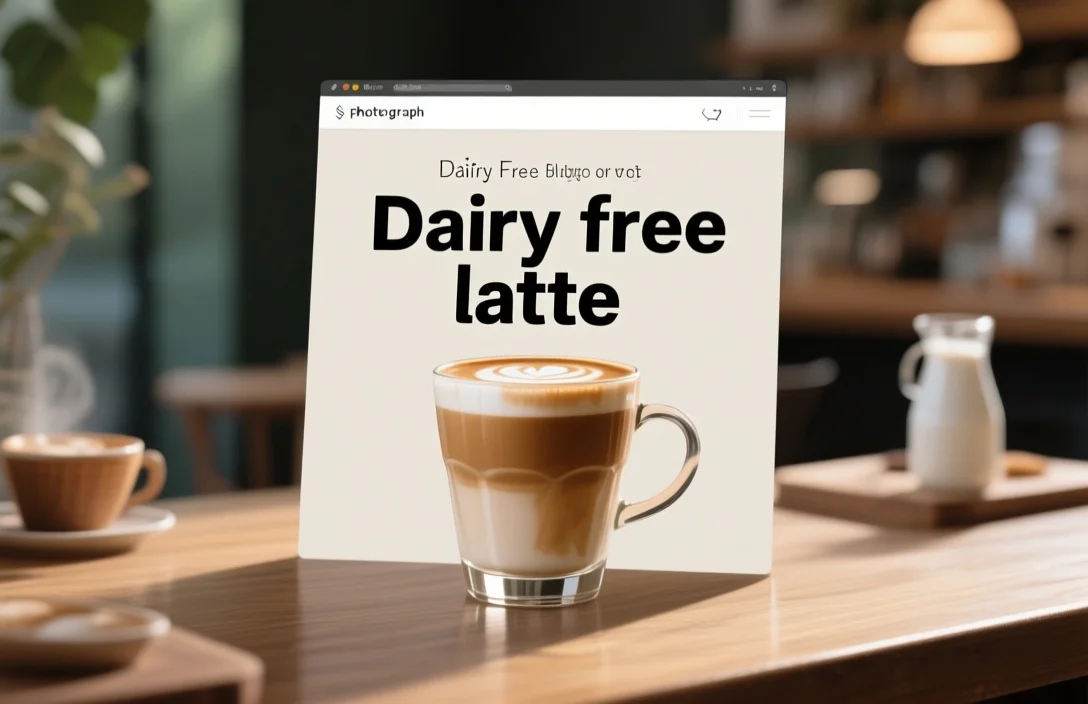
A dairy free latte is espresso combined with a plant-based milk that’s steamed or frothed to create velvety microfoam; you can order one at most cafés or make an excellent version at home. This guide explains which plant milks work best for texture and flavor, how to troubleshoot foaming problems, what to ask for at a café to avoid cross-contact, and how dairy and nondairy options compare nutritionally.
What a Dairy Free Latte Is
A true dairy free latte replaces cow’s milk with a plant milk while keeping the classic café ratio of espresso to milk. Traditional lattes use roughly one part espresso to three parts steamed milk; baristas mimic the same warmth and microfoam with oat, soy, almond, coconut, pea, or other non-dairy milks.
Barista-style microfoam depends on milk protein and fat interacting with steam; plant milks behave differently because their protein and fat compositions differ from dairy. Texture, taste, and sweetness all vary between milk types, so the finished latte can range from neutral and creamy to noticeably sweet or coconut-forward.
How Milk and Espresso Interact
Espresso extracts oils and soluble solids from ground coffee, producing an emulsion that benefits from a milk partner that creates stable microfoam. Steam injects tiny air bubbles into milk and denatures proteins to stabilize those bubbles; dairy’s casein and whey proteins are particularly good at this. Plant milks use different proteins or protein substitutes to perform the same job, which is why frothing outcomes are inconsistent across brands and types.
Fat content moderates creaminess while protein contributes to foam stability. Low-fat dairy often foams better than high-fat dairy because less fat allows proteins to form a stronger film around bubbles. Plant milks that have been formulated for barista use usually increase protein or add stabilizers so they can make a crema-like microfoam under steam. Barista blends also tend to have more neutral flavors and higher heat stability, which prevents curdling with espresso acidity.
Best Milk Alternatives for Lattes
After comparing the main options side by side, certain plant milks repeatedly show predictable strengths and weaknesses for lattes. Oat and soy are the most consistent for creating creamy texture and a pleasant mouthfeel. Almond and coconut provide distinctive flavor profiles but require brand-specific trial. Pea-based milks can match dairy’s protein content and therefore froth well, though availability varies.
Comparison table – Ranked by expected latte performance and practicality in cafés.
| Name | Price / Key Spec | Best For |
|---|---|---|
| Oat milk | Widely available; neutral, sweetish flavor; good steaming behavior with barista blends | Creamy lattes with mild sweetness |
| Soy milk | Higher protein; steams to stable microfoam on many brands | Classic latte texture, less sweet |
| Almond milk | Light, nutty flavor; variable froth depending on brand | Low-calorie lattes and nut-forward flavor |
| Coconut milk | Distinct coconut taste; higher fat, can separate if not barista-formulated | Tropical flavor, short foam life |
| Pea (yellow pea) milk | Higher protein content similar to dairy; stable foam in many barista versions | Protein-rich alternative with neutral flavor |
Label reading matters. Look for “barista edition” or “for coffee” on plant milks if your goal is consistent microfoam. Those formulations commonly add stabilizers and adjust protein/fat ratios to withstand steaming.
How to Make a Dairy Free Latte at Home
A reproducible home method reduces guesswork and gives you control over texture and sweetness. This section gives a stepwise approach that works for most domestic espresso or strong-brew setups.
Start with two short paragraphs that explain the approach and equipment. Espresso-level extraction and heated, aerated milk are the only essentials. A small automatic milk frother or hand-pump steam wand is helpful, but you can achieve acceptable results with an immersion blender or a jar shake-and-heat method.
Numbered recipe – one reliable dairy free latte
- Grind and dose espresso: grind fresh medium-fine for espresso and pull a 25-35 second shot for a single or double as your machine allows.
- Choose milk and volume: pour 6-8 fl oz of a barista-formulated oat or soy milk for a 12-16 fl oz latte.
- Steam or heat: use a steam wand to introduce air for the first 3-6 seconds, then submerge the tip to create microfoam until the pitcher surface reaches 140-150°F.
- Alternative frothing: heat milk to 140°F on the stove or microwave, then froth with an immersion frother or by shaking in a jar and tapping to settle big bubbles.
- Combine and pour: tilt the cup, start pouring from a height to sink the milk into the crema, then finish at the surface to create simple latte art or a smooth top.
Extra notes on timing and texture. Overheating plant milks causes separation and a cooked taste; stop steaming when 140-150°F is reached for most barista blends. If your milk separates or curdles when mixed with espresso, try a different brand or lower the milk temperature; acidity interacts differently with stabilizers in plant milks.
Ordering a Dairy Free Latte at a Café
A confident order reduces mistakes and the chance of cross-contact for allergy-sensitive customers. Tell the barista the exact milk you want and whether you need the milk steamed in a clean pitcher. Many cafés keep a separate steam pitcher for plant milks on request, though policies vary and cross-contact with dairy proteins can still occur on steam wands.
Clear phrasing works best. Say “I’d like a double espresso latte with oat milk, please – could you steam it in the separate pitcher?” If allergy is the reason, mention it briefly and ask if the café can change steam wands or clean them before use. Baristas often appreciate concise requests and will tell you whether they can accommodate.
Payment, upsells, and custom syrups. Plant milks sometimes carry a surcharge; expect staff to confirm an upcharge. If you prefer no added sugar, request drinks without flavored syrup or ask for a single pump. Taste differences are common between chains and independent cafés because each uses different plant-milk brands; sampling helps locate a reliable spot.
Nutrition Trade-Offs: Dairy vs Plant Milks
Harvard Health notes that dairy provides accessible calcium and protein, but dairy is not the only way to meet those needs. Adults up to age 50 need 1,000 milligrams (mg) of calcium per day, while women older than 50 and men older than 70 need 1,200 mg. A cup of milk typically supplies 250 mg to 350 mg of calcium, depending on the product, which makes dairy a convenient source for meeting those targets.
Fortified plant milks vary in calcium, vitamin D, and protein content; always check the Nutrition Facts and the fortification list. Some soy and pea-based milks offer protein levels similar to dairy, while many almond and coconut milks are low in protein unless specifically formulated. If you rely on non-dairy drinks for calcium, aim for brands that list calcium and vitamin D amounts on the label or continue getting calcium from other foods or supplements.
Practical nutrition checklist for dairy free latte drinkers:
- Check the Nutrition Facts panel for calcium, vitamin D, and protein per 1 cup serving.
- Prefer fortified soy or pea milk if you want protein parity with dairy.
- Relying on occasional lattes for nutrition is unrealistic; incorporate broader dietary calcium sources.
- Consider elderly or high-risk adults: their increased calcium need (1,200 mg for certain age groups) makes label reading more important.
Troubleshooting Foam and Flavor Problems
If your dairy free latte tastes thin, foams poorly, or separates, the issue is most likely the milk brand, temperature, or technique. Oat and soy milks usually foam well, yet some grocery brands are intended for drinking and do not contain the stabilizers used in barista blends. Curdling happens when acidity in coffee meets proteins or stabilizers that cannot handle heat or acid.
Step-by-step fixes you can try at home or ask for in a café:
- Switch to a barista-formulated plant milk if foam is weak.
- Lower steaming temperature to 140°F and focus on stretching for only 3-6 seconds.
- Tap and swirl the pitcher after steaming to break large bubbles and distribute microfoam.
- Try a shorter espresso shot or dilute with slightly less milk to reduce separation risk.
- For bitter coffee notes, use fresh beans and a slightly shorter extraction time; bitterness can amplify perceived separation.
Persistent separation on certain milk brands indicates incompatibility with espresso acidity rather than a skill issue. If a café consistently serves a separated latte, ask if they stock a different plant-milk brand or if they can steam your milk separately.
Common Mistakes and What to Avoid
Ordering or making dairy free lattes carries predictable pitfalls that most people can avoid with small changes. Expect differences in sweetness, body, and foam; treating plant milks as direct dairy substitutes creates disappointment. Many people assume all plant milks will froth like dairy, then overwork the milk or overheat it, which ruins texture.
Avoid these mistakes:
- Using unmarked “regular” plant milk for steaming when a barista blend is needed.
- Heating plant milk above 160°F – this causes a breakdown of proteins and stabilizers.
- Assuming no cross-contact if the café handles dairy; ask explicitly about cleaning procedures.
- Expecting almond or coconut to taste neutral – choose these for their flavor rather than neutrality.
- Skipping label checks when nutrition or allergen presence matters.
Small adjustments go a long way. Try tasting single-origin or lighter-roast coffees with plant milks if bitterness is an issue, and experiment with different milk-to-espresso ratios until you find a balance you enjoy.
Environmental and Cost Considerations
Lifecycle impacts vary widely between milk types, with water use, land use, and transport all affecting environmental footprints. Oat milk often rates favorably for lower water use compared with nut milks, while almond milk has higher irrigation needs; pea and soy milks present different trade-offs tied to agriculture and processing. Consumer priorities – water conservation, greenhouse gas emissions, or local sourcing – will influence which option you prefer.
Cost differences depend on brand, organic certification, and whether a product is a specialty barista formulation. Barista editions typically cost more than standard cartons because of added processing and stabilizers. If budget is a concern, buying larger cartons and experimenting at home reduces per-cup cost versus frequent café purchases.
Practical buying tips:
- Buy smaller amounts of new brands to test frothing and taste before committing to large cartons.
- Read ingredient lists if you want minimal processing; barista blends will list oils or stabilizers that improve steaming.
- Factor in café surcharges for plant milks when calculating regular coffee spend.
FAQ
Can I get the same foam with any plant milk?
Some plant milks foam better than others. Barista-formulated oat, soy, and pea milks are engineered to make stable microfoam; almond and coconut often require brand-specific trial and can produce larger, less stable bubbles unless a barista blend is used.
Is a dairy free latte less nutritious than a dairy latte?
Not necessarily. Nutrition depends on the plant milk’s fortification and protein content. Harvard Health notes that dairy supplies calcium readily, but many plant milks are fortified with calcium and vitamin D; protein parity is most consistent with soy and pea-based milks.
How can I avoid cross-contact with dairy at a café?
Ask the barista to steam your plant milk in a clean pitcher and to rinse or use a separate steam wand if possible. If an allergy is severe, inquire about the café’s allergen handling policy before ordering and consider making drinks at home to control exposure.
Will flavored syrups affect plant milk stability?
Flavored syrups typically do not cause instability, but adding acidic or dairy-containing syrups can interact with certain non-dairy stabilizers. Request syrups without milk or cream and taste small amounts to test for separation before ordering a large drink.
Which plant milk is best for latte art?
Oat and soy barista blends produce the most reliable microfoam for simple latte art because of their mouthfeel and foam stability. Pea milk can also work well in many cases; almond and coconut are less consistent.
Can I make a dairy free latte without an espresso machine?
Yes. Brew strong coffee or use concentrated methods like AeroPress or Moka pot and heat and froth plant milk using a handheld frother, French press, or jar-shake method. The texture won’t match a steam wand’s microfoam, but the drink will be enjoyable.
Practical verdict and next ste
For most people who want a consistent café-style texture, choose a barista-formulated oat or soy milk and ask for the milk to be steamed in a separate pitcher when ordering out. Try one new plant-milk brand at home this week using the numbered recipe here to find a flavor and texture you like; once you lock that in, ordering a dairy free latte will be a predictable, satisfying routine.

- Rocket R NINE ONE Edizione Speciale: Features and Buying Guide - October 25, 2026
- LUCCA A53 Mini V2 Espresso Machine: Features and Buying Guide - October 25, 2026
- Caffena Coffee Nuova Simonelli Appia Life 2GR Espresso Machine: Features and Buying Guide - October 25, 2026