
Coffee is one of the world’s most consumed beverages, yet one of its most misunderstood qualities is acidity. Many people equate acidity with bitterness or harshness, while others actively seek low-acid options for health reasons. The reality is far more nuanced acidity in coffee is a multi-layered chemical phenomenon shaped by bean variety, geographic origin, roasting level, processing method, brewing technique, and even the mineral content of your water.
This guide resolves common contradictions found in coffee literature and provides a science-backed, comprehensive look at everything you need to know about coffee acidity. Whether you are a casual drinker managing digestive sensitivity or a specialty enthusiast chasing the perfect bright cup, this reference covers the full picture.
1. What Is Acidity in Coffee?
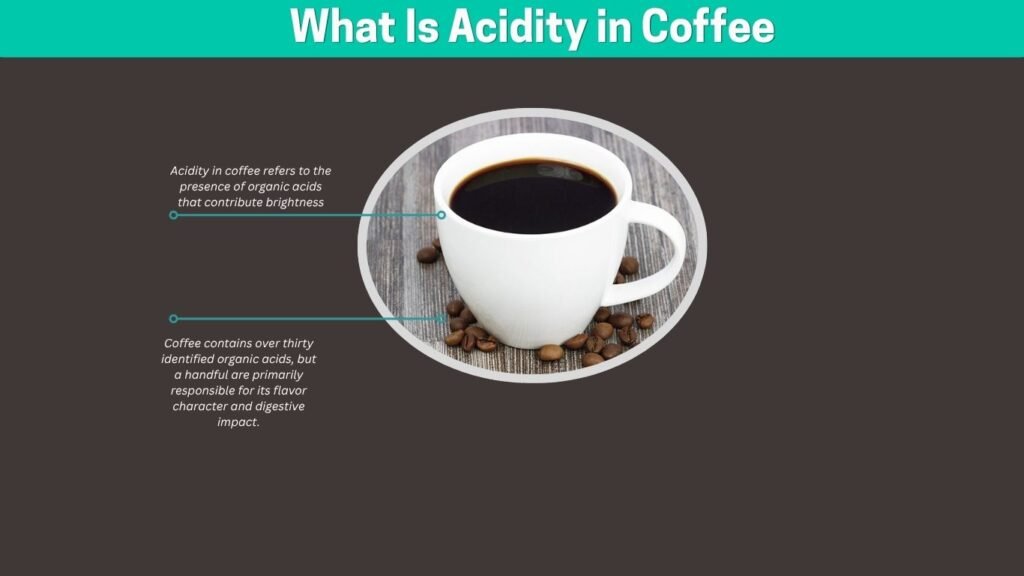
Acidity in coffee refers to the presence of organic acids that contribute brightness, complexity, and flavor to the brew. It is measured on the pH scale, where 7 is neutral, values below 7 are acidic, and values above 7 are alkaline. Most brewed coffee falls between pH 4.85 and 5.10 roughly comparable to a banana or mild tomato juice, and far less acidic than orange juice (around pH 3.5).
There are two distinct dimensions to understand, and confusing them is the source of most contradictions in coffee writing:
Perceived acidity refers to how tart, bright, or sharp a coffee tastes. This is a subjective sensory experience that depends heavily on flavor compounds, body, and sweetness. A coffee can taste very acidic without having a dramatically low pH, and vice versa.
Actual acidity (pH) is the measurable concentration of hydrogen ions in the liquid. This is an objective chemical measurement that does not always correspond to how acidic the coffee feels on the palate.
These two dimensions do not always align. A dark roast may taste smooth and mellow while still measuring a relatively low pH. A light roast may taste bright and lively without being dramatically more acidic in measured terms. Understanding this distinction is the key to navigating the conflicting claims you will encounter about roast level and acidity.
The Key Acids in Coffee
Coffee contains over thirty identified organic acids, but a handful are primarily responsible for its flavor character and digestive impact.
Chlorogenic acid is the most abundant acid in green coffee beans, making up roughly six to ten percent of the bean’s dry weight depending on variety. It contributes mild bitterness and body, and it is a powerful antioxidant associated with health benefits. Crucially, chlorogenic acid degrades significantly during roasting this is the primary reason dark roasts are lower in measurable acidity than light roasts.
Citric acid produces the bright, lemon-like tartness associated with high-altitude Ethiopian and Kenyan coffees. It partially breaks down during roasting, which is why lighter roasts from acidic origins taste noticeably tart while dark roasts from the same beans taste smoother.
Malic acid gives coffee a mild, apple-like quality. Common in washed-process beans, it breaks down gradually with increasing roast temperature.
Acetic acid produces a vinegary sharpness when present in excess, usually as a result of over-fermentation during processing. In trace amounts it can add complexity; in larger quantities it is considered a defect.
Quinic acid is perhaps the most important acid to understand for dark roast drinkers. It does not decrease with roasting — it actually increases, because it is a breakdown product of chlorogenic acid. Quinic acid is responsible for the harsh, sharp sourness found in over-roasted or stale coffee. This explains why very dark roasts are not always gentler on the stomach: they trade chlorogenic acidity for quinic harshness.
Phosphoric acid produces a clean, almost effervescent brightness particularly associated with certain African coffees. It is relatively stable across roast levels and contributes to the perception of sweetness and clarity.
Tartaric acid adds a subtle grape-like quality and is present in smaller amounts, varying by bean variety and origin.
Resolving the Contradiction: Are Dark Roasts Less Acidic?
You will frequently encounter two opposing claims: that dark roast beans have significantly less acidity than lighter roasts, and that acidity levels are actually similar across roast levels. Both statements contain truth, and the distinction lies entirely in what is being measured.
In terms of specific acids particularly chlorogenic acid dark roasts are measurably and significantly lower. The reduction can be substantial, with some studies showing chlorogenic acid content dropping by thirty to forty percent across the roasting spectrum from light to dark.
In terms of overall pH, the difference is much smaller. The measured pH of brewed light and dark roast coffee from the same origin often differs by less than 0.3 pH units a difference that is chemically real but not dramatic.
In terms of perceived acidity, dark roasts are considerably smoother. The bold, roasty flavor compounds created during prolonged roasting mask or override acidic taste receptors, making dark roasts feel much less acidic on the palate even when pH measurements are similar.
In terms of quinic acid specifically, dark roasts can contain more of this harsh compound, which can cause its own form of gastric irritation distinct from the bright acidity of lighter roasts.
The practical conclusion is this: dark roasts are genuinely lower in chlorogenic acids and have a smoother perceived acidity, making them a reasonable choice for those sensitive to coffee’s bright, tangy character. However, they are not dramatically lower in measured pH, and the increase in quinic acid means that very dark roasts are not a guaranteed solution for everyone with digestive sensitivity.
2. Arabica vs. Robusta
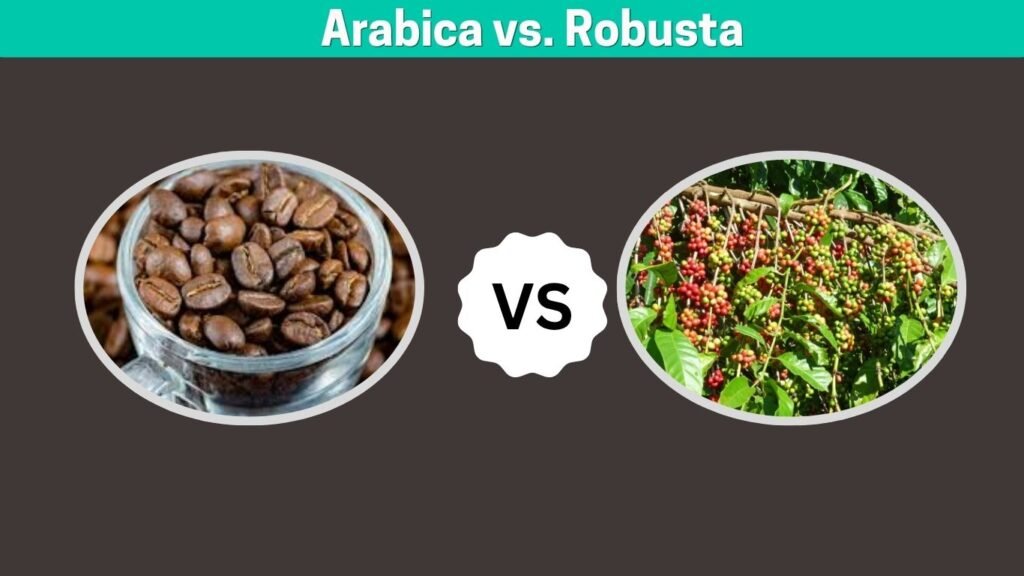
The two dominant commercial coffee species differ significantly in their acid profiles, and choosing between them is one of the most fundamental decisions affecting acidity.
Arabica beans contain approximately six to seven percent chlorogenic acid by dry weight and are characterized by higher perceived acidity with nuanced, complex flavor fruity, floral, and sweet notes depending on origin. The vast majority of specialty coffee is Arabica.
Robusta beans contain approximately seven to ten percent chlorogenic acid by dry weight, meaning they are technically higher in this specific acid. However, Robusta is also much higher in caffeine and produces a harsher, earthier, more bitter flavor that many perceive as less pleasantly acidic. Robusta is commonly used in espresso blends and instant coffee.
For those seeking genuinely low-acid coffee with good flavor, a dark-roasted, high-quality Arabica from a low-altitude origin is generally the best starting point. Robusta is not the answer to acidity sensitivity despite its different acid character.
Geographic Origin
Coffee acidity is profoundly shaped by where the bean is grown. Altitude, soil composition, average temperature, and rainfall patterns all influence the organic acid content of the bean before it ever reaches a roaster, and no amount of roasting or brewing can fully override the acidity baked into the bean at its origin.
High-altitude origins such as Ethiopia (grown at 1,800 to 2,200 meters) and Kenya (1,400 to 2,000 meters) produce beans with exceptional brightness and complexity. The slower growing conditions concentrate sugars and acids, creating the vibrant citric and phosphoric acidity these regions are famous for. These are excellent choices for those who love acidic coffee and challenging choices for those who want to avoid it.
Medium-altitude origins like Colombia (1,200 to 1,800 meters) and Guatemala (1,200 to 1,700 meters) produce balanced cups with moderate acidity — neither as piercing as East African coffees nor as mellow as low-altitude beans.
Low-altitude origins are the natural starting point for low-acid seekers. Brazilian farms, typically at 800 to 1,100 meters, produce naturally lower-acid beans with nutty, chocolatey, mild flavor profiles. Sumatran coffees from Indonesia are famous for their earthy, full-bodied, low-acid character, shaped both by lower altitude and unique processing methods. Hawaiian Kona coffee, grown at moderate altitude but in volcanic soil, produces a smooth, buttery, relatively low-acid cup.
For anyone specifically trying to minimize acidity, Brazilian or Sumatran dark roast represents the lowest-acid combination available in the mainstream market.
Processing Methods
How coffee cherries are processed after harvest substantially affects the acid content of the finished bean, and this factor is overlooked by most general coffee guides.
The washed or wet process involves removing all fruit from the bean before drying. This produces a clean, transparent cup where the bean’s inherent flavor and acidity shine through clearly. Washed coffees tend to have well-defined, bright acidity — the standard for Ethiopian and Kenyan coffees.
The natural or dry process leaves the beans to dry inside the whole fruit. The beans absorb sugars and flavor compounds from the drying cherry, producing complex, fruit-forward cups with a different type of acidity — often lower in tartness but rich in fermented fruit character. Ethiopian natural process coffees are prized for their blueberry and wine-like complexity.
The honey process removes the outer skin but leaves varying amounts of fruit mucilage on the bean during drying. This produces cups that sit between washed and natural in both acidity and sweetness, with a smooth body and balanced brightness.
The pulped natural or semi-washed method, particularly common in Brazil, removes the outer skin and most mucilage before drying. It tends to produce lower-acid, smooth, nutty cups that are among the most accessible for acid-sensitive drinkers.
When purchasing specialty coffee, the processing method is usually printed on the bag. For minimum acidity, look for natural or pulped natural processing paired with a low-altitude origin.
Altitude and Growing Conditions
Higher altitude means cooler average temperatures, slower cherry development, and denser bean structure. These conditions allow more time for sugars and complex acids to develop within the bean. Beans grown at 2,000 meters are inherently more acidic than beans from the same variety grown at 900 meters, regardless of what happens during roasting or brewing.
Soil composition also matters. Volcanic soils, common in many coffee-growing regions, are rich in minerals that influence flavor development. The phosphoric acid brightness characteristic of certain Kenyan coffees is partly a function of the mineral-rich soils of the Kenyan highlands.
3. The Chemistry of Roasting
Roasting transforms the dense, grassy green coffee bean through a cascade of chemical reactions that alter nearly every compound present. Two processes are most relevant to acidity.
The Maillard reaction begins around 150 degrees Celsius when amino acids and reducing sugars combine under heat to create hundreds of aromatic and flavor compounds. This is responsible for the characteristic caramel, chocolate, and roasted notes of coffee. It also consumes some of the sugars that might otherwise be perceived as sweetness, which indirectly affects how acidity is balanced in the final cup.
Pyrolysis occurs at higher temperatures above approximately 200 degrees Celsius, where organic molecules including acids begin to break down. Chlorogenic acids degrade significantly during this phase, while sugars caramelize and coffee oils migrate toward the bean surface. This is the primary chemical process behind the reduction in chlorogenic acidity across roast levels.
The net effect of longer, hotter roasting is a reduction in bright, complex acids and an increase in roasty, bitter, and smoky flavor compounds. The cup tastes darker, bolder, and less acidic — but the trade-off is a loss of the nuanced flavors and antioxidant compounds that characterize lighter roasts.
A Guide to Roast Levels
Light roasts are pulled from the roaster at around 180 to 205 degrees Celsius, just after or around the first crack of the bean. They retain the highest levels of chlorogenic acid, citric acid, and the original character of the bean’s origin. The cup is bright, often floral or fruity, sometimes tea-like in body, with prominent acidity. These are the roasts most valued in specialty coffee for origin expression.
Medium roasts reach approximately 210 to 220 degrees Celsius. The acidity is more balanced — still present but softened by increased sweetness from caramelization. Caramel, nutty, and mild chocolate notes develop. This roast level represents the best balance for those who want some brightness alongside smooth drinkability.
Medium-dark roasts, often called Full City or Vienna style, reach 225 to 230 degrees Celsius. Acidity drops further, chocolate and mild spice notes emerge, and the body becomes richer. Some bean oils appear on the surface. A good choice for those who want a smooth, flavorful cup without strong acidity.
Dark roasts reach 235 to 245 degrees Celsius. The roast character dominates over origin character. Flavors are smoky, bold, and bittersweet. Chlorogenic acid is substantially reduced, but quinic acid is higher. Body is full, bitterness is present.
Extra-dark roasts — sometimes called Italian, Espresso, or Charcoal roasts go beyond 245 degrees Celsius. At this extreme, almost all pleasant acids have broken down and been replaced by quinic acid and other harsh compounds. The beans may appear oily and dark. Despite assumptions, these roasts are not necessarily easier on sensitive stomachs and can taste sharply sour in a different and unpleasant way.
4. How Brewing Affects Acidity

Even with identical beans, different brewing methods extract acids at vastly different rates. The key variables are water temperature, contact time, pressure, grind size, and filtration. Mastering these variables gives any coffee drinker significant control over the acidity of the final cup, regardless of the roast level they choose.
Cold Brew
Cold brew produces the lowest-acid coffee of any brewing method. Coarsely ground coffee steeps in cold or room-temperature water for twelve to twenty-four hours. The low temperature dramatically reduces the extraction of acidic compounds, producing a smooth, naturally sweet, very low-acid concentrate. Studies have measured the pH of cold brew as roughly 0.3 to 0.5 pH units higher than hot-brewed coffee from the same beans.
Cold brew is the single most effective brewing-side intervention for acid-sensitive drinkers. It works regardless of roast level, though starting with a dark-roasted, low-altitude bean produces the smoothest possible result.
French Press
French press produces a full-bodied, relatively low-acid cup because the metal mesh filter allows coffee oils to remain in the beverage. These oils coat the palate and soften the perception of acidity. The lack of a paper filter is significant — paper filters absorb much of the oily material that provides this smoothing effect. Brewing time of four minutes at around 93 degrees Celsius produces a well-rounded, low-perceived-acid cup.
AeroPress
The AeroPress is uniquely versatile because its brew variables are highly adjustable. At standard settings with a paper filter, it produces a clean, medium-acid cup similar to espresso. Brewed with a lower temperature (around 80 degrees Celsius), longer steep time, and metal filter, it can produce a much lower-acid, fuller-bodied result closer to cold brew in character. It is an excellent tool for those who want to experiment with reducing acidity while maintaining brew quality.
Espresso
Espresso uses high pressure and a short extraction time of twenty to thirty seconds. Despite its intensity, espresso is not particularly high in acidity per serving — the small volume means total acid content per cup is moderate. However, the concentration can make acidity feel more intense on the palate. The quality of espresso extraction greatly affects acidity: under-extracted espresso tastes sourly acidic, while well-extracted espresso has a balanced, pleasant acidity.
Pour Over
Pour over methods such as the V60, Chemex, and Kalita Wave use paper filters and provide precise control over water flow and extraction. The paper filter removes oils, producing a clean, bright, transparent cup that highlights the bean’s original acidity. These methods are best suited to those who appreciate and seek acidity in coffee. For acid-sensitive drinkers, pour over is generally the least suitable standard hot-brew method.
Drip Machine
Standard automatic drip machines produce a moderately acidic cup, filtered through paper. Acidity varies considerably based on machine quality, water temperature consistency, and brewing time. Better machines that maintain proper temperature and brewing ratios produce a more balanced cup.
Water Temperature
Water temperature has a direct and measurable effect on acid extraction. The Specialty Coffee Association recommends a brewing temperature of 90 to 96 degrees Celsius for optimal extraction. For reducing acidity, brewing toward the lower end of this range or slightly below it extracts fewer acid compounds while still producing adequate flavor extraction. Brewing above 96 degrees Celsius can aggressively extract quinic acid and other harsh compounds, particularly from dark roasts.
Grind Size
Finer grinds create greater surface area, allowing faster and more complete extraction of all compounds including acids. Coarser grinds slow extraction, and acids — which extract relatively quickly — are proportionally less represented in the final cup. For reduced acidity, grinding slightly coarser than normal for your chosen brewing method is an easy and effective adjustment.
Water Quality and Mineral Content
Water chemistry is one of the most overlooked variables in coffee acidity, and it matters more than most casual drinkers realize. Water is not a neutral carrier — its mineral content actively affects how flavor compounds and acids are extracted from ground coffee.
Water with higher magnesium content enhances the extraction of certain flavor acids, making the cup taste brighter. Water that is very soft — low in all minerals, such as distilled or reverse-osmosis filtered water — can paradoxically make coffee taste sharper and more harshly acidic because it lacks the mineral buffering that moderates extraction.
The Specialty Coffee Association recommends water with a total dissolved solids (TDS) content of approximately 150 parts per million as the ideal brewing water. Very low TDS water (below 75 ppm) tends to produce flat, over-extracted, or harshly acidic results. Hard water above 250 ppm can dull flavors and contribute to scaling in machines, though it may produce a smoother perceived acidity.
For most home brewers, good quality filtered tap water is the best choice — it removes chlorine and sediment without stripping beneficial minerals. If you use very soft water and find your coffee tastes harsh, try switching to filtered tap water or consider a mineral-balanced water specifically designed for brewing.
5. Health Effects of Coffee Acidity
Digestive Health
Coffee acidity affects different people in different ways, and it is important to distinguish between the types of digestive discomfort coffee can cause.
Gastroesophageal reflux disease (GERD) and heartburn are among the most common reasons people seek low-acid coffee. Coffee — regardless of roast level — stimulates gastric acid secretion and relaxes the lower esophageal sphincter, the valve that prevents stomach acid from rising into the esophagus. This effect is driven partly by chlorogenic acids but also by other compounds including catechols and caffeine. Switching to dark roast or cold brew may reduce direct acid irritation, but will not eliminate this stimulant effect entirely.
Acid reflux sufferers may find genuine relief with dark roast or cold brew coffee, which have lower chlorogenic acid content and reduced acidity. The improvement is real but partial — individual responses vary considerably.
Irritable bowel syndrome (IBS) and related conditions are often aggravated by coffee, but the primary driver is typically caffeine’s stimulant effect on gut motility rather than acidity specifically. Choosing decaf — in a low-acid, dark-roasted form — may be more effective for these individuals than simply switching roast levels.
Gastritis and peptic ulcers involve an inflamed or damaged stomach lining that can be irritated by any acidic beverage. Cold brew and dark roast options are generally better tolerated, but individuals with active gastritis or ulcers should consult a physician before assuming any coffee is safe for their condition.
Dental Health
Dental enamel begins to erode when exposed to liquids with a pH below 5.5. Since most brewed coffee sits around pH 5.0, frequent coffee drinking does carry some risk of enamel erosion — particularly for those who sip coffee slowly over long periods, maximizing the duration of acid contact with teeth.
Several practical steps reduce this risk significantly. Rinsing your mouth with water immediately after drinking coffee neutralizes residual acidity. Drinking coffee in a shorter window rather than sipping over two or three hours dramatically reduces total acid contact time. Cold brew’s higher pH makes it somewhat gentler on enamel. Adding milk or a plant-based milk raises the pH of the beverage and further reduces erosion risk. Waiting thirty minutes after coffee before brushing teeth allows your enamel to remineralize before the mechanical abrasion of brushing.
Antioxidants and the Health Trade-Off
Chlorogenic acids are the primary antioxidants in coffee and are associated with several health benefits in research literature, including improved insulin sensitivity, reduced inflammation, and lower risk of certain chronic diseases. The coffee research showing health benefits in population studies is largely attributed to these compounds.
Dark roasts, with their significantly reduced chlorogenic acid content, provide fewer of these antioxidants than light or medium roasts. This represents a genuine and often unacknowledged trade-off: dark roasts are easier on the stomach for some people but offer measurably less antioxidant benefit.
For those who want to balance digestive comfort with health benefits, a medium roast from a low-acid origin represents a reasonable compromise. It has meaningfully lower acidity than a light roast while retaining more chlorogenic acids than a dark roast.
Other Health Considerations
Bone health research has associated very high coffee consumption with slightly lower calcium absorption, but this is primarily a caffeine effect rather than an acidity effect. Moderate consumption of up to three or four cups per day does not appear to pose significant bone health risks for most adults.
During pregnancy, health authorities generally recommend limiting caffeine to under 200 milligrams per day. Roast level affects caffeine content slightly — contrary to common belief, lighter roasts have marginally more caffeine than dark roasts because caffeine also degrades slightly with prolonged roasting but both are caffeinated. Decaf in any roast level is the safest choice if caffeine is a concern.
For those taking oral medications, coffee acidity can affect the absorption of some drugs. Always take medications with water rather than coffee, and consult a pharmacist or physician if you have concerns about specific drug interactions with coffee.
6. Storage, Freshness, and Acidity Over Time
How Aging Changes Acidity
Coffee is a perishable agricultural product. Once roasted, oxidation and off-gassing begin immediately, gradually transforming the flavor and acid character of the beans in ways that most casual drinkers do not anticipate.
In the first two to seven days after roasting, the beans are actively releasing carbon dioxide trapped during roasting. Brewing immediately after roasting can produce uneven extraction because the off-gassing CO2 interferes with water contact. The flavor may taste overly gassy or sharp.
From seven to twenty-one days post-roast is generally considered the peak flavor window for most coffees. The CO2 has largely dissipated, the roast has settled, and the acids are vibrant and well-balanced. This is when coffee tastes its best.
From twenty-one to sixty days post-roast, gradual staling sets in. The bright, desirable acids begin to fade and lose their clarity. Oils start to oxidize, producing a flat or musty character. The cup becomes less interesting and less pleasant, though still drinkable.
Beyond sixty days, significant staling has occurred. The coffee does not simply become less acidic in an agreeable way — it loses the appealing acids while retaining or developing unpleasant sourness from oxidized oils and compounds. Stale dark roast in particular can develop a particularly harsh, sharp note as the quinic acid character becomes more dominant in the absence of other flavors.
Best Storage Practices
Store roasted beans in an airtight container kept away from light, heat, and moisture. These four factors — oxygen, light, heat, and water — are the primary agents of staling, and minimizing exposure to all four extends freshness considerably.
Do not store coffee in the refrigerator. The temperature differential between the refrigerator and room temperature causes condensation to form on the beans when they are removed for use, introducing moisture that dramatically accelerates staling and flavor degradation.
Freezing is acceptable only for long-term storage of large quantities of unopened, vacuum-sealed bags. If you freeze coffee, remove the entire quantity you intend to use, allow it to thaw completely at room temperature before opening the bag, and never refreeze. Repeated freezing and thawing ruins coffee.
Buy coffee in quantities you will realistically consume within two to three weeks of the roast date. Whole beans stay fresh considerably longer than pre-ground coffee, which goes stale within days. Grind immediately before brewing whenever possible.
Always look for a roast date on the packaging rather than a best-by date. The roast date tells you precisely when the beans were roasted and allows you to calculate how fresh they are. A best-by date is often set arbitrarily and tells you very little about actual freshness.
7. Common Myths About Coffee Acidity Debunked
Myth: Dark roast has a dramatically lower pH than light roast. The measured pH difference between light and dark roast coffee brewed from the same beans is typically less than 0.3 pH units. The difference in perceived acidity is far more dramatic than the difference in actual pH. The frequent claim that dark roast is forty percent less acidic refers to specific acids particularly chlorogenic acid not overall pH.
Myth: Bitterness means low acidity. Bitterness and acidity are entirely different sensory experiences driven by different compounds. Dark roasts can be simultaneously lower in chlorogenic acidity and higher in bitter compounds from quinic acid, caffeine, and pyrazines created during roasting. A coffee can taste very bitter and quite acidic at the same time, particularly when over-extracted or over-roasted.
Myth: Espresso is more acidic than drip coffee. Espresso is more concentrated but not necessarily more acidic by pH. Per serving, the total acid content in a one-ounce espresso shot may be lower than in an eight-ounce drip coffee simply due to volume. The intensity of espresso can make acidity feel more pronounced, but this is a concentration effect rather than a chemical difference.
Myth: Adding cream or milk neutralizes coffee’s acidity. Dairy and plant-based milks do raise the pH of coffee slightly, shifting it toward more neutral territory. However, the effect on measured pH is modest. More significantly, the fats in dairy products coat the palate and smooth the perception of acidity, which is why a coffee with milk tastes noticeably less sharp. The perceptual effect is real; the chemical neutralization is limited.
Myth: Cold brew is always low-acid regardless of the beans. Cold brew dramatically reduces acidity through its brewing process, but the origin and roast of the beans still matter. A cold brew made with light-roasted Ethiopian beans will be more acidic than one made with dark-roasted Brazilian beans. The brewing method is a powerful variable, but it does not override the baseline acidity of the ingredient.
Myth: Decaf is less acidic than regular coffee. Decaffeination processes — whether Swiss Water, CO2, or solvent-based methods — target and remove caffeine but do not significantly alter the organic acid content of the bean. A decaf and a regular coffee from the same origin and roast level will have very similar acidity profiles. If acidity is the concern, choose low-acid beans in an appropriate roast; if caffeine is the concern, choose decaf — but do not expect decaf to solve an acidity problem.
Myth: All dark roasts taste the same and are equally low in acidity. Roast level is only one of many variables. A dark-roasted Ethiopian bean from a washed-process, high-altitude farm will still have a notably different and higher-acid character than a dark-roasted Brazilian bean from a low-altitude natural-process farm. Origin and processing set a baseline acidity that roasting modifies but cannot fully erase.
8. Practical Guide to Buying Low-Acid Coffee
What to Look For
When reading a coffee bag or product description, several pieces of information directly predict the acidity of the contents.
Origin is your first filter. Look for Brazil, Sumatra, or other Indonesian origins for naturally lower-acid beans. Avoid Ethiopian and Kenyan coffees if your priority is minimizing acidity.
Roast level is your second filter. Dark or medium-dark roast is appropriate for reduced acidity. Light and medium-light roasts, however beautiful and complex, will be higher in acidity.
Processing method, when listed, adds valuable information. Natural-process or pulped-natural beans will tend toward lower, fruitier acidity. Washed-process beans are typically brighter and more sharply acidic.
Roast date should be present on any quality coffee bag. Beans roasted within the past two to three weeks are in their prime. Do not purchase coffee without a visible roast date if freshness matters to you.
Low-acid labeling is offered by some producers and specialty roasters. These products sometimes use additional processing — such as steam treatment of green beans — to reduce acids beyond what roasting alone achieves. They can be valuable for those with significant acid sensitivity, though the flavor can be less complex.
Questions to Ask Your Roaster or Barista
A knowledgeable specialty coffee roaster can guide your selection far more precisely than any label. Ask where the beans are from and what altitude they were grown at. Ask how the beans were processed. Ask when the bags were roasted. Ask whether they have a recommendation for a smooth, low-acid option. A good roaster will have immediate answers to all of these questions and will appreciate the specificity.
9. Brewing for Lower Acidity A Practical Checklist
Start with low-acid beans: dark-roasted, Brazilian or Sumatran origin, natural or pulped-natural processing.
Choose cold brew or French press as your brewing method. If you prefer hot coffee, AeroPress at lower temperature is a strong option.
Use filtered tap water, ideally around 150 parts per million TDS. Avoid distilled or very soft water.
Brew at the lower end of the recommended temperature range, around 88 to 91 degrees Celsius for hot methods.
Grind slightly coarser than you normally would for your chosen method.
Consume coffee relatively quickly rather than leaving it on a warming plate or sipping it over several hours. Extended heat exposure increases bitterness and harshness.
Add a small amount of milk, oat milk, or almond milk if desired — this raises pH and reduces perceived acidity.
As a home remedy, a very small pinch of baking soda — no more than one-eighth of a teaspoon per full pot genuinely raises the pH of brewed coffee without noticeably affecting flavor. This is a simple and effective option for those with significant sensitivity.
10. Frequently Asked Questions
Are dark roast beans less acidic than light roast beans?
Yes, in meaningful ways but with important nuance. Dark roasts are significantly lower in chlorogenic acids, which are the primary acids in green coffee. They taste considerably smoother and less tangy. However, the measured pH difference is smaller than most people expect, and dark roasts contain higher levels of quinic acid, which can cause its own form of digestive irritation. For most acid-sensitive drinkers, dark roast is genuinely the better choice, but the improvement is not absolute.
Does brewing method matter more than roast level for acidity?
Both matter, and they interact. Cold brew can reduce the acidity of a light-roasted Ethiopian bean to something comparable to a hot-brewed dark roast. For maximum reduction, the best results come from combining low-acid beans with a low-acid brewing method dark roast from a low-altitude origin, brewed as cold brew.
Why does my stomach feel uncomfortable even with dark roast?
Dark roast reduces chlorogenic acid content, but coffee still contains compounds that stimulate gastric acid production and relax the esophageal sphincter regardless of roast level. Caffeine is one of these compounds. If dark roast still causes discomfort, consider trying cold brew, reducing consumption, adding milk, or switching to decaf. If discomfort persists, consult a physician persistent symptoms may indicate a condition that dietary adjustments alone will not resolve.
Is coffee acidity the same as coffee strength?
No. Strength refers to the concentration of dissolved coffee solids in the brew, controlled by the ratio of coffee to water. A very strong light roast and a dilute dark roast can have very different strengths while having comparable or even reversed acidity characteristics. They are independent variables, and adjusting one does not automatically adjust the other.
Can I reduce the acidity of coffee I have already brewed?
Yes. Adding milk raises pH and reduces perceived acidity. A small pinch of baking soda raises pH measurably. Letting very hot coffee cool slightly before drinking reduces the perception of acidity since heat amplifies tartness. These are finishing adjustments rather than solutions, but they are practical and genuinely effective.

- How to Steam Milk With an Espresso Machine: A Complete Beginner’s Guide - October 26, 2026
- How to Backflush an Espresso Machine: A Step-by-Step Cleaning Guide - October 26, 2026
- Is a 20 Bar Espresso Machine Good? Pressure, Performance, and Buying Guide - October 26, 2026