
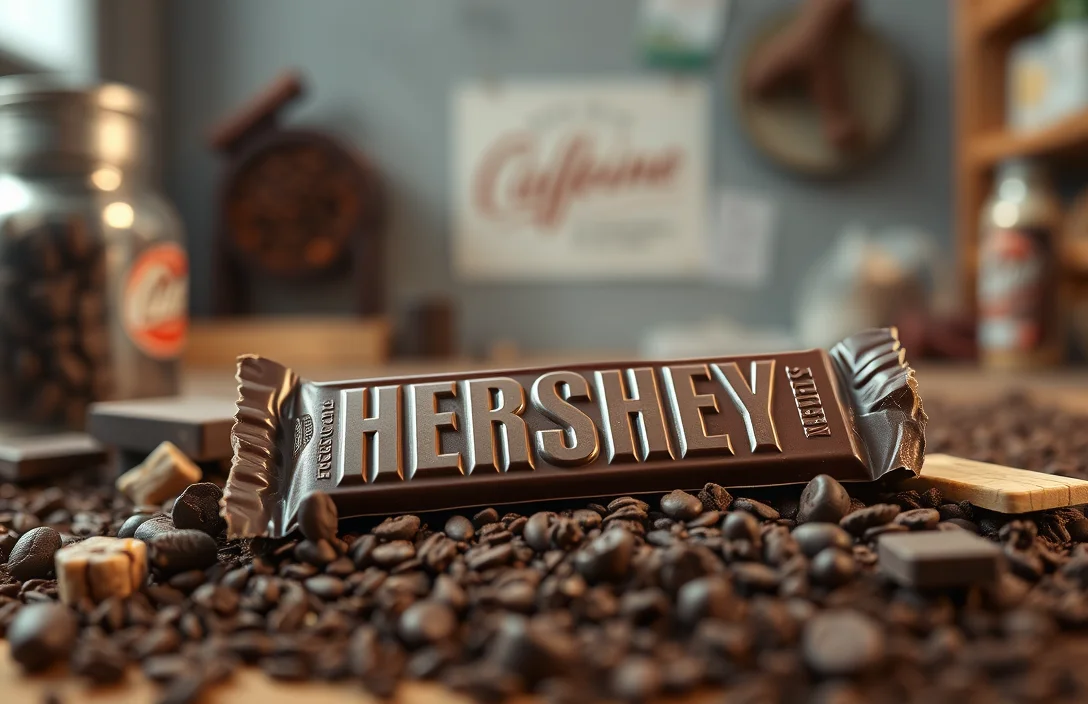
Hershey’s Milk Chocolate Bar contains approximately 9 milligrams of caffeine per standard 1.55-ounce bar. This amount is significantly lower than what you might find in a cup of coffee, making it an interesting option for chocolate lovers mindful of their caffeine intake.
Key points: Hershey bars have 9 mg of caffeine, much less than coffee. For comparison, an average 8-ounce cup of coffee contains about 95 mg. Enjoy chocolate without overwhelming your caffeine limits.
Caffeine Content in Hershey Bars
Hershey bars contain approximately 9 milligrams of caffeine per standard 1.55-ounce bar. This relatively low caffeine level can be surprising for chocolate lovers who are health-conscious. For comparison, a typical 8-ounce cup of coffee has about 95 milligrams of caffeine, illustrating how chocolate can fit into a moderate caffeine intake.
Chocolate naturally contains caffeine, but the amount varies significantly by type and brand. Milk chocolate, like Hershey’s, generally has less caffeine than dark chocolate due to lower cocoa content. Understanding the balance of flavor and caffeine is key for those watching their intake while still enjoying a sweet treat.
Each Hershey bar also includes other ingredients that can influence overall energy and enjoyment. Sugar, for instance, provides a quick source of energy, which works in tandem with caffeine to create a pleasant experience. Being mindful of these components can help you make informed snack choices that align with your dietary goals.
Monitoring your total caffeine consumption is essential, especially if combining multiple sources throughout the day. If you’re enjoying a Hershey bar, consider how it fits within your overall caffeine limits. Knowing the caffeine content helps maintain a healthy balance while savoring your favorite chocolate snack.
Comparative Caffeine Analysis with Other Chocolates
Caffeine levels vary significantly among chocolate brands, making comparisons essential for informed choices. Hershey bars contain approximately 9 milligrams of caffeine per standard 1.55-ounce bar. This amount is relatively low compared to darker chocolate options, which generally have higher caffeine concentrations due to greater cocoa content.
Milk chocolate options such as Cadbury’s Dairy Milk boast around 8 milligrams of caffeine per 1.4-ounce bar, closely aligning with Hershey’s offerings. In contrast, darker chocolates like Ghirardelli’s 72% cacao square can contain about 25 milligrams of caffeine per 0.6-ounce square, highlighting a substantial increase in caffeine content as cocoa percentage rises.
| Chocolate Brand | Caffeine Content (mg) | Serving Size |
|---|---|---|
| Hershey Bar | 9 | 1.55 oz |
| Cadbury Dairy Milk | 8 | 1.4 oz |
| Ghirardelli 72% Cacao | 25 | 0.6 oz |
Comparative insights show that while Hershey bars offer a modest caffeine boost, opting for darker chocolates can significantly increase caffeine intake. This information is crucial for those monitoring their consumption, allowing for better dietary choices tailored to individual health goals.
Health Effects of Caffeine from Chocolate
Caffeine can impact health positively and negatively, depending on your intake. Moderate consumption might enhance alertness and cognitive function, offering a boost during long days or workouts. Conversely, excessive intake can lead to jitters, anxiety, and disrupted sleep patterns. Understanding your limits is crucial for maintaining a healthy balance while enjoying chocolate treats.
- Moderation is key for enjoyment. Aim for a moderate intake of caffeine, ideally under 400 mg per day for most adults. A standard Hershey bar contains approximately 9 mg of caffeine, allowing you to enjoy chocolate without going overboard.
- Awareness of individual sensitivity matters. Each person’s tolerance to caffeine varies. Some may feel effects from small amounts, while others can consume more without issues. Listening to your body helps you determine your ideal intake.
- Timing of consumption influences effects. Enjoying chocolate in the morning or early afternoon can enhance focus and energy, while consuming it late in the day might disrupt sleep. Consider your daily schedule when indulging in chocolate snacks.
- Health conditions should be considered. Individuals with certain health issues, such as anxiety disorders or heart conditions, may need to limit caffeine intake. Consult with a healthcare professional if you have concerns about how caffeine from chocolate affects your health.
Serving Size and Caffeine Intake
Serving sizes significantly affect total caffeine consumption from chocolate products. For a typical Hershey bar, which weighs about 1.55 ounces (44 grams), the caffeine content is approximately 9 milligrams. Understanding how to manage portion sizes is essential for those monitoring their caffeine intake.
- Know the standard serving size. A standard Hershey bar is 1.55 ounces, and this is the amount that contains around 9 milligrams of caffeine.
- Consider how multiple servings add up. If you consume two bars, your caffeine intake doubles to 18 milligrams, which can impact your daily total.
- Evaluate your overall diet. Other foods and beverages, such as coffee or tea, also contain caffeine, so factor those in when assessing total intake.
- Monitor your reactions to caffeine. Individual sensitivity varies; what feels fine for one person might be too much for another.
Managing serving sizes helps maintain a balanced approach to enjoying chocolate while being mindful of caffeine levels. By tracking how much you consume, you can make informed decisions that align with your health goals.
Caffeine Tolerance and Individual Variability
Caffeine sensitivity varies significantly among individuals. Factors such as genetics, habitual intake, and overall health influence how caffeine affects each person. Understanding your own tolerance can help you make informed choices about chocolate consumption, particularly regarding caffeine content.
- Genetics plays a crucial role. Some people metabolize caffeine quickly, while others do so slowly. This difference can determine how much caffeine you can handle without experiencing side effects like jitters or insomnia.
- Frequency of caffeine consumption impacts sensitivity. Regular consumers may develop a tolerance, allowing them to enjoy chocolate without adverse effects. Conversely, infrequent users might feel the effects more strongly.
- Overall health conditions matter. Individuals with anxiety disorders or certain medical conditions might be more sensitive to caffeine. It’s essential to consider these factors when indulging in chocolate treats.
- Age can influence caffeine tolerance. Younger individuals generally process caffeine more efficiently than older adults, who may experience heightened sensitivity.
- Monitoring your body’s responses helps. Pay attention to how you feel after consuming chocolate with caffeine. Keeping a journal can aid in identifying your unique tolerance levels.
Decaffeinated Chocolate Alternatives
Seeking lower caffeine options can enhance your chocolate enjoyment without the jitters. Many brands offer decaffeinated chocolate products that maintain rich flavors while minimizing caffeine content. Look for chocolates labeled as “decaf” or “caffeine-free” to ensure a satisfying treat. These alternatives typically contain less than 5 mg of caffeine per serving, making them a safer choice for the caffeine-conscious consumer.
Exploring dark chocolate varieties with reduced caffeine can also provide delicious options. Many artisanal brands focus on crafting chocolates with lower cocoa content, which naturally contains less caffeine. Additionally, some chocolates are blended with ingredients like carob, which offers a sweet taste without the caffeine kick.
Checking ingredient labels can guide your selections. Some manufacturers specifically produce chocolate designed for those monitoring their caffeine intake, providing clear information on caffeine levels. You might also consider white chocolate, which usually contains negligible amounts of caffeine, as it is made from cocoa butter rather than cocoa solids.
Considering your health goals, opting for organic or specialty chocolates may provide added benefits. Many of these products are crafted without artificial additives or preservatives, aligning with a health-conscious lifestyle. Always prioritize brands that are transparent about their caffeine content to make informed choices.
Caffeine Levels in Other Common Snacks
Caffeine content varies widely among snacks beyond chocolate, and being informed helps in making healthier choices. For example, a standard serving of potato chips does not contain caffeine, while snacks like granola bars may include coffee or chocolate, contributing to their caffeine levels. Always check labels to understand what you’re consuming.
Energy bars often contain significant caffeine, sometimes exceeding levels found in chocolate. A typical energy bar can have between 30 to 100 milligrams per serving, depending on the brand and ingredients. This can be higher than the caffeine found in a Hershey bar, making it essential to evaluate the entire snack profile.
Soft drinks vary in caffeine content as well. A regular 12-ounce cola typically contains 30 to 50 milligrams of caffeine. Comparatively, a Hershey bar has much lower caffeine levels, which may be preferable for those monitoring their intake.
Granola and protein bars can also differ significantly. Many brands add coffee or chocolate, raising the caffeine content. Make sure to review nutritional information to assess your total caffeine consumption from various snack options.
Awareness of caffeine levels in snacks empowers better dietary choices. By comparing options like chocolate, energy bars, and sodas, you can enjoy your treats without exceeding your personal caffeine limits.
Quick Summary
- A standard Hershey chocolate bar contains approximately 9 milligrams of caffeine.
- The caffeine content in Hershey bars is significantly lower than that found in a typical cup of coffee.
- Dark chocolate varieties of Hershey bars may contain slightly higher caffeine levels compared to milk chocolate versions.
- Other chocolate products from Hershey, such as their cocoa or baking chocolate, may have varying caffeine amounts.
- Caffeine levels can vary based on the specific product and serving size.
- Moderate consumption of Hershey bars is generally considered safe for most individuals regarding caffeine intake.
- Always check packaging for the most accurate information on caffeine content in specific Hershey products.
Frequently Asked Questions
How much caffeine is in a standard Hershey bar?
A standard 1.55-ounce Hershey milk chocolate bar contains approximately 9 milligrams of caffeine. This is relatively low compared to other caffeinated snacks and beverages, making it a moderate choice for those mindful of their caffeine intake.
Is the caffeine content in Hershey’s dark chocolate bars different?
Yes, dark chocolate generally contains more caffeine than milk chocolate. For example, a 1.5-ounce Hershey’s Special Dark Chocolate Bar has about 20 milligrams of caffeine, which can be a consideration if you are particularly sensitive to caffeine.
How does the caffeine in a Hershey bar compare to a cup of coffee?
A standard cup of brewed coffee contains approximately 95 milligrams of caffeine per 8-ounce serving, significantly more than a Hershey bar. If you’re looking to limit caffeine, chocolate snacks like Hershey bars may be a better option compared to coffee.
Can consuming Hershey bars affect my sleep or anxiety levels?
Due to their caffeine content, consuming Hershey bars, especially in larger quantities or close to bedtime, could potentially impact sleep or increase anxiety levels for some individuals. It’s best to monitor your overall caffeine intake from all sources to maintain your health goals.
Are there any caffeine-free chocolate options available?
Yes, there are caffeine-free chocolate options available, often made from carob or specially processed cocoa. If you are particularly sensitive to caffeine, be sure to check labels and opt for products specifically labeled as caffeine-free.

- Unlocking the Venti: Discover the Perfect Shot Count for Your Drink - October 13, 2026
- Unpacking the Buzz: Caffeine Levels in Café Bustelo Espresso - October 13, 2026
- How to Fix Bitter Coffee: 10 Expert Ways to Improve the Taste - October 4, 2026