
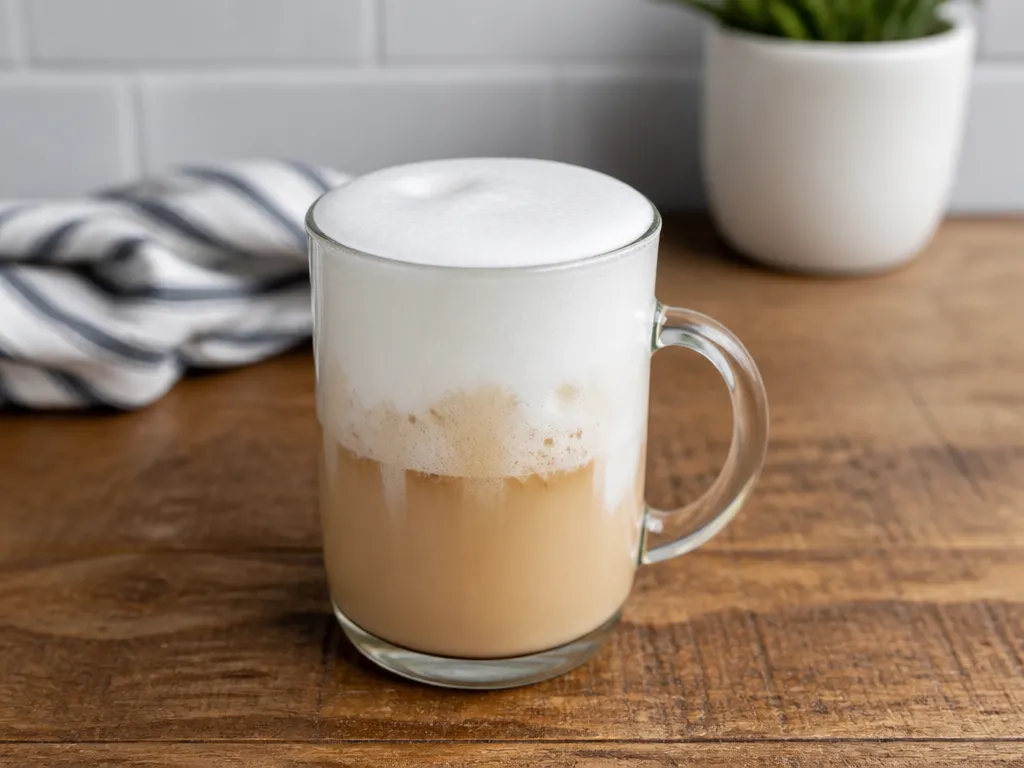
To make cold foam without heavy whipping cream, start with a chilled dairy or plant-based milk and aerate it with a handheld frother, whisk, blender, or siphon. Use the foam immediately, because non-cream foams can thin as they warm and sit.
There is no single validated stabilizer ratio that works across every milk, gum, lecithin product, and tool. For a dependable trial, use the smallest measured amount recommended on the stabilizer’s package, make a small batch, and adjust only after you see how it behaves. Keep the base cold, mix powders thoroughly, and stop frothing as soon as the foam looks uniform.
Baseline Cold Foam Without Heavy Cream
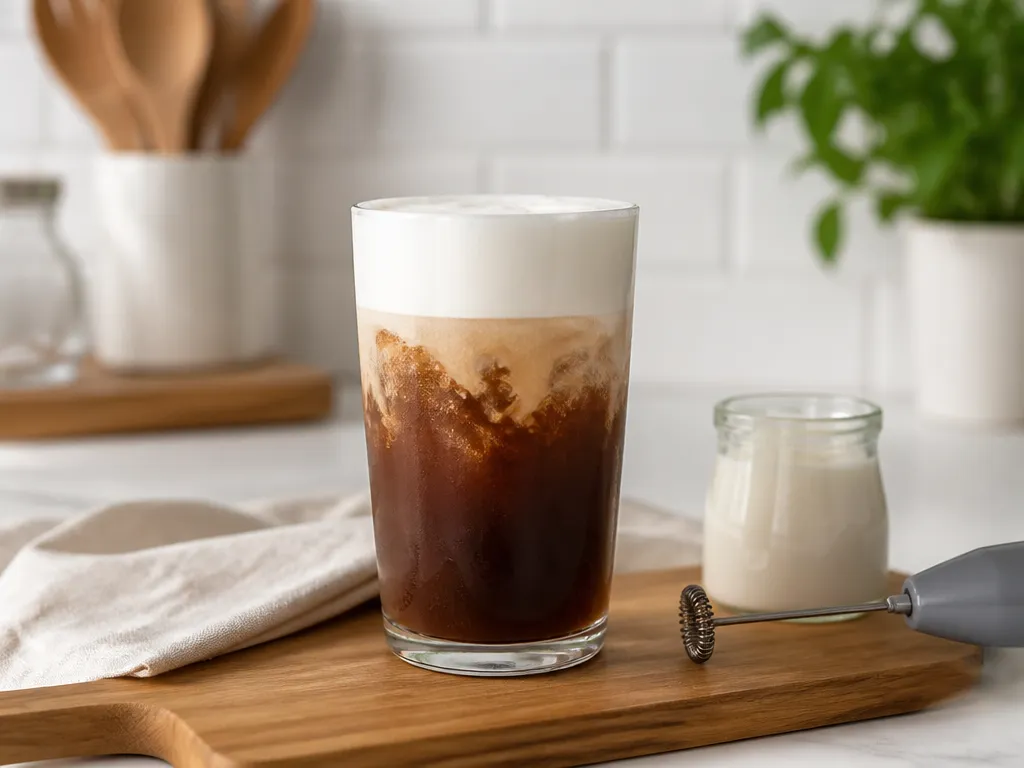
Use chilled dairy milk or a plant milk and froth it in a narrow container until a pale, airy layer forms. Sweeten the base before frothing if you want the flavor evenly distributed. Spoon or pour the foam onto the drink immediately.
Ingredients for one serving: Use enough chilled milk to top one drink. Dairy milk, soy milk, oat milk, or another milk alternative can work, although the result will vary by brand and formulation. Add sweetener to taste. If using a stabilizer, follow the product label rather than assuming that a dose for one gum or lecithin applies to another.
| Goal | What to aim for |
|---|---|
| Texture | Pale foam with fine bubbles, like soft shaving cream rather than large bubbles or watery froth |
| Service timing | Use immediately after frothing so the top stays thick |
| Sweetness | Start with a small amount of sugar or syrup, taste the base, and adjust before frothing |
Core equipment: You need one frothing tool and a cold-proof cup or jar. A handheld milk frother is the simplest option. A whisk and jar can work, but it usually takes more effort and produces less consistent bubbles. A spoon helps transfer the foam without breaking it.
Baseline method: Pour chilled milk into a narrow container. Stir in any sweetener or flavoring. Froth with the tool just below the surface until the liquid turns pale and the bubbles look small and even. Stop immediately and spoon the foam onto your drink.
Stability and serving notes: There is no dependable universal holding time for milk foam. Serve it right away. If the foam begins to look watery or the bubbles enlarge, use it rather than trying to re-froth it.
Optional flavorings: Vanilla, cinnamon, cocoa, caramel, and nut-free flavored syrups all work well. Mix cocoa thoroughly into the milk before frothing to reduce dry patches and grit.
How Cold Foam Forms Without Heavy Cream
Cold foam forms when agitation traps air in a liquid film. Milk proteins, plant-milk ingredients, emulsifiers, and thickeners can help that film resist breaking, but the result depends on the base and the tool.
Use the foam itself as your guide. Fine, even bubbles indicate a usable topping. Large bubbles, visible liquid underneath, or a watery surface indicate that the foam is draining or separating.
Foam Variables And Exact Measurements
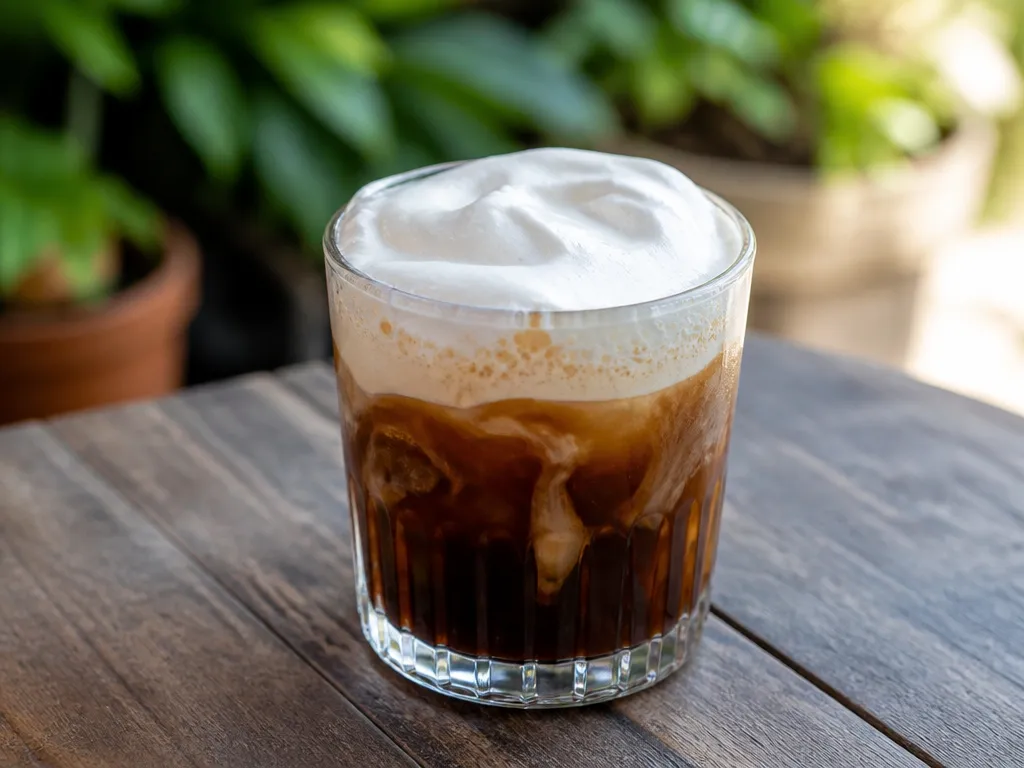
Cold foam depends on the milk’s protein, fat, sugar, and stabilizer content, as well as the tool. There is no universal exact measurement that can be applied safely to every brand. Treat any recipe quantity as a small test batch, and verify the stabilizer’s serving guidance on its package before scaling.
| Base liquid | What it may do | What you can pair it with |
|---|---|---|
| Dairy milk | Often produces a smooth, milky foam | A handheld frother or a small amount of lecithin used according to its label |
| Oat milk | Can give a creamy result, but brands vary in foaming performance | A frother and, if needed, a label-directed amount of xanthan |
| Almond milk | May produce a lighter foam that thins quickly | Aquafaba or another foaming aid, tested in a small batch |
| Soy milk | Can produce a substantial foam, depending on the product | A frother, lecithin, or guar used according to product directions |
| Coconut milk | Varies widely between carton and canned products and may separate | A blender or siphon after the mixture has been made uniform |
Fat and body: A richer or barista-style milk may feel creamier, but fat content alone does not guarantee stable foam. Check the product label and test the specific milk you plan to use.
Stabilizers and thickening aids: Use the smallest amount recommended for your product. Weighing powders is more consistent than using a volume spoon, but a kitchen scale may not register very small quantities accurately. If you cannot measure the amount reliably, choose a stabilizer with clear household directions or omit it.
Flavorings and sweeteners: Add a modest amount first. Thick syrups and large amounts of dissolved sugar can change the texture, so mix them into the liquid before frothing and adjust in the next batch if needed.
Tools: Use a frother for quick, small batches; a blender for thicker mixtures; and a siphon only when you are comfortable using and cleaning pressurized equipment. Keep the base cold and serve immediately with any tool.
Method 1: Dairy Milk Base With Lecithin
Dairy milk can make a pale, creamy foam with a handheld frother. Lecithin may improve the foam’s structure, but the correct amount depends on the product. Follow its package directions rather than relying on a fixed weight.
Ingredients: Chilled dairy milk for one drink, plus soy lecithin at the manufacturer’s recommended amount for that volume. Use a plain milk first so you can judge the texture before adding flavor.
Equipment: Use a small bowl or pitcher, an immersion blender or milk frother, and a scale if the lecithin label gives a weight-based instruction.
Step-by-step: Pour the chilled milk into a cold container. Disperse the lecithin thoroughly, following the product instructions. Froth with the head just below the surface until the milk looks lighter and the bubbles are even. Stop and spoon the foam onto the drink.
Texture and stability: Aim for a thick cap rather than a rigid mound. Its holding time will depend on the milk, lecithin, tool, and drink temperature, so serve immediately and treat any longer hold as a test result rather than a guarantee.
Flavor pairings: Vanilla, caramel, chocolate, cinnamon, and unsweetened cocoa work well. Add syrup or sugar to the milk before frothing, but start with a small amount and adjust after tasting.
Method 2: Barista Oat Milk Foam With Xanthan
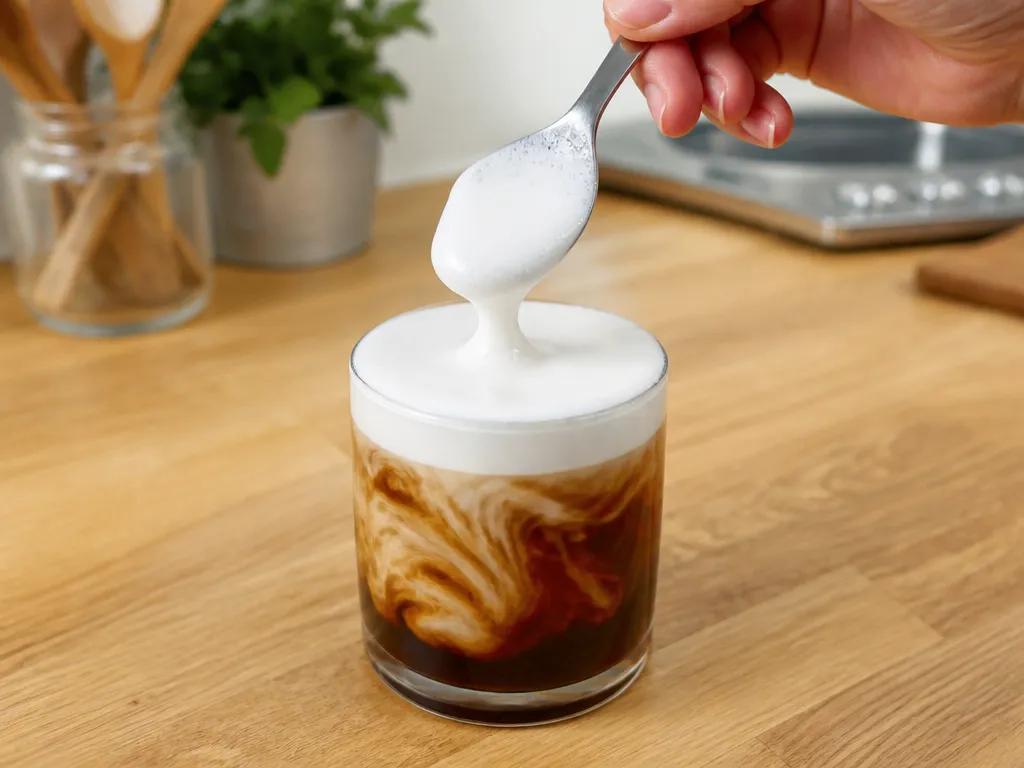
Oat milk can produce a smooth, velvety foam, particularly when the product is formulated for coffee drinks. Xanthan may add body, but it is easy to overuse. Follow the label’s recommended amount for the volume of oat milk in your batch.
Ingredients: Chilled oat milk, xanthan gum in the amount recommended on its package, and optional sugar or syrup.
Step-by-step:
Stabilization option: Use xanthan only when the package gives suitable directions for cold beverages. If the foam feels slimy or forms strings, use less in the next batch or omit it.
Texture target and stability: Look for small bubbles and a spoonable consistency. The foam may thin as it warms, so top the drink immediately before serving.
Flavor pairings: Vanilla, caramel, cinnamon, chocolate, and maple-style flavors suit oat milk. Mix liquid flavorings into the base before frothing. Add dry spices sparingly because they can leave grit.
Method 3: Almond Milk Foam With Aquafaba
Almond milk often produces a light foam that can benefit from a foaming aid. Aquafaba may help trap air, but its strength varies by brand and concentration. Begin with a small test batch and use the aquafaba amount recommended by the product or recipe you are following.
Batch size: Use enough chilled almond milk for one drink. Foaming aid: Add a measured amount of aquafaba, beginning conservatively so the foam does not taste beany or become loose.
| Ingredient | Amount | Role |
|---|---|---|
| Chilled almond milk | Enough for one serving | Foam base |
| Aquafaba | Use the amount recommended for your batch size and product | Foaming aid |
Equipment: Use a narrow chilled jar or beaker, a hand frother, a spoon, and a measuring tool suited to the aquafaba quantity.
Texture target: Look for fine bubbles and little visible liquid pooling. If the foam tastes strongly of chickpea, use less aquafaba or choose a more neutral product next time.
Flavor and sweetness: Vanilla, cocoa, cinnamon, and lightly sweetened syrups work well. Add sweetener before frothing for an even flavor, or add it to the drink if you want to keep the foam as light as possible.
Method 4: Soy Milk Foam With Lecithin Or Guar Gum
Soy milk can make a substantial foam, but results vary between unsweetened, sweetened, refrigerated, and shelf-stable products. Choose either lecithin or guar gum, not both for the first test batch. Use the chosen product’s recommended amount.
Ingredients: Chilled soy milk and either soy lecithin or guar gum, measured according to the stabilizer label for the amount of milk used.
Step-by-step, lecithin route: Disperse the lecithin thoroughly in the chilled soy milk. Froth in short bursts until the mixture looks lighter and thicker. Spoon it onto the drink immediately.
Step-by-step, guar gum route: Sprinkle the guar into the soy milk while whisking continuously. Let the mixture become uniform before frothing. Expect a denser texture than the lecithin route, and stop using it if the mixture becomes gummy.
Stability: Serve the foam immediately. A warmer drink, a long wait, or heavy pouring can thin the top layer.
Flavor pairings: Vanilla, cocoa, coffee, toasted flavors, and cinnamon complement soy milk. Add a small amount of syrup to the base before frothing and adjust in the next batch if the foam becomes too loose.
Method 5: Coconut Milk Foam With Siphon Or Blender
Coconut milk varies substantially between carton and canned products. Choose one type, stir or blend it until uniform, and test a small amount before making a full batch. A siphon can create a dense foam, while a blender produces a looser, airier topping.
Exact Recipe (Per Serving)
Use chilled coconut milk in an amount suitable for one drink. If using xanthan, follow the package directions for the amount of coconut milk in the batch. Do not assume that a quantity suitable for one product will work for another.
| Tool | How to build foam | Texture target | Stability |
|---|---|---|---|
| Siphon | Combine the uniform base with any label-directed stabilizer, strain if necessary, charge, and dispense according to the siphon instructions | Dense foam with a spoonable mound | Serve immediately |
| Blender | Blend the chilled base until visibly aerated, then spoon it onto the drink | Airier and looser than siphon foam | Serve immediately |
Step-by-step
Siphon route: Stir or blend the coconut milk until uniform. Add any stabilizer according to its label, then strain if the mixture contains lumps. Fill and charge the siphon only as its instructions allow. Dispense into a chilled cup or directly onto the drink, and serve at once.
Blender route: Blend the chilled coconut milk until it becomes visibly frothy. If using xanthan, disperse it thoroughly before blending. Spoon the foam onto the drink immediately because coconut mixtures may separate as they warm.
Flavor Pairings And Syrup Ratios
Coconut foam suits vanilla, caramel, chocolate, cinnamon, and toasted flavors. Add a small amount of syrup to the base before frothing and adjust after tasting. Thick or strongly concentrated syrups may change the foam, so dilute them only if the product directions allow it.
Foam Cheat Sheet, Troubleshooting, And Safety
Use the base that matches your preferred texture, then make a small test batch. Product formulations differ, so the quantities and holding times printed on one package should not be transferred automatically to another.
Printable Cheat Sheet (Ratios You Can Reuse)
Baseline: Chill the milk, froth until pale and even, and serve promptly.
Safety, Hygiene, And Cleaning Best Practices
Safety: Keep containers stable and do not overfill them when using a mixer. For a siphon, follow the manufacturer’s charging, storage, and pressure-release instructions exactly. Never open a pressurized siphon before it is safe to do so.
Hygiene: Milk, plant milk, and aquafaba are perishable foods. Use clean utensils and containers, refrigerate unused ingredients, and discard leftovers that have been left out or whose quality is uncertain.
Cleaning: Rinse equipment promptly. Wash gum or lecithin residue with warm water and detergent, then rinse until no slick film remains. Clean every siphon part according to its instructions and let components dry before storage.
Quick Summary
The simplest approach is chilled milk in a narrow container, frothed until pale and fine-bubbled, then served immediately. Dairy and soy milk often give a fuller result, while oat, almond, and coconut milk require more attention to brand, tool, and stabilizer.
Next action: choose one base, make a small test batch, and record the brand, stabilizer, tool, and texture. That trial will give you a more useful working ratio than transferring a fixed measurement between different products.
Frequently Asked Questions
Can I Make A Big Batch Of Cold Foam For Several Drinks At Once?
You can prepare a larger amount of base, but foam is easiest to serve when made in small rounds. Keep the unused base chilled, froth only what you need, and make another round when necessary. A large pitcher of finished foam is likely to thin while it waits.
I Avoid Dairy, Soy, Or Tree Nuts. Which Of These Methods Can I Still Use?
Choose the base by checking the full ingredient label and considering the stabilizer as well as the milk. A dairy-free milk may still contain an ingredient you avoid, and lecithin can be soy-derived.

- Espresso Bar Wedding: Ideas, Setup, Costs, and Tips for a Memorable Coffee Experience - November 11, 2026
- How Many Grams of Espresso Beans for a Double Shot? A Complete Brewing Guide - November 11, 2026
- Brasilia Espresso Machine: Features, Performance, Models, and Buying Guide - November 11, 2026