
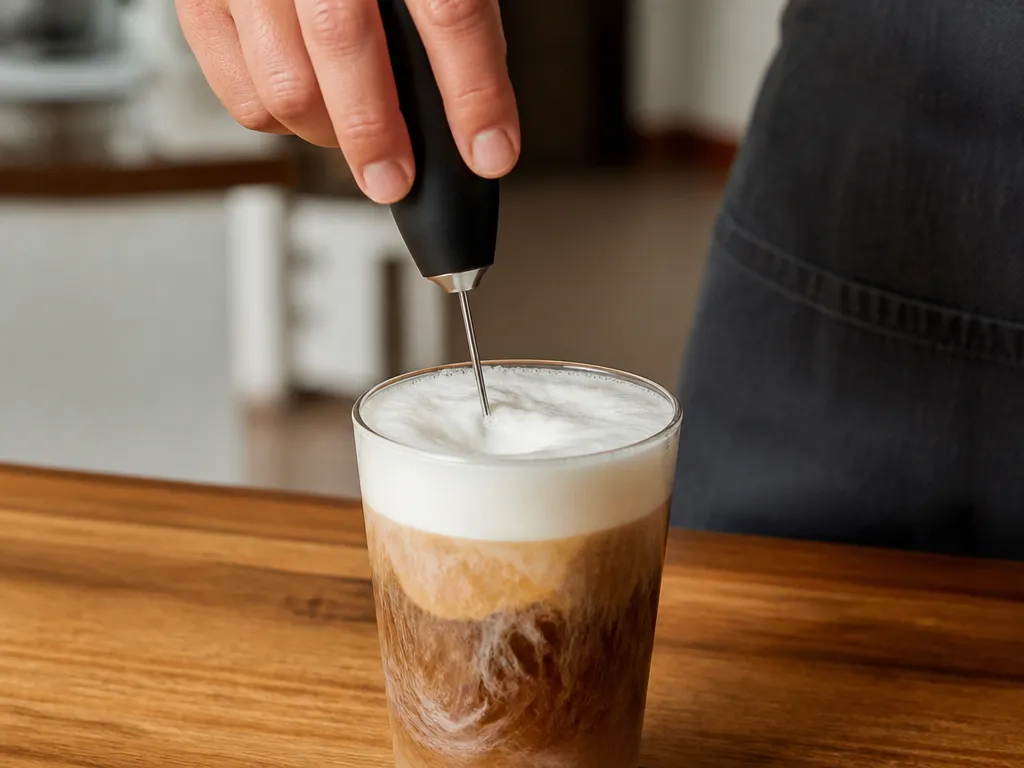
Yes – you can make cold foam with milk. For the most dependable starting point, use refrigerated milk at about 35 to 40°F (2 to 4°C), begin with whole milk or a barista-style plant milk, and aerate 30 to 60 seconds. Cold foam is easiest to use immediately because it gradually drains and loses volume after foaming.
Use 30 to 45 ml (1 to 1.5 oz) of milk for one drink. You can make more with a French press or dedicated foam maker, but leave enough room for the milk to expand. The exact result depends on the milk, container, tool, and agitation technique.
What Is Cold Foam?
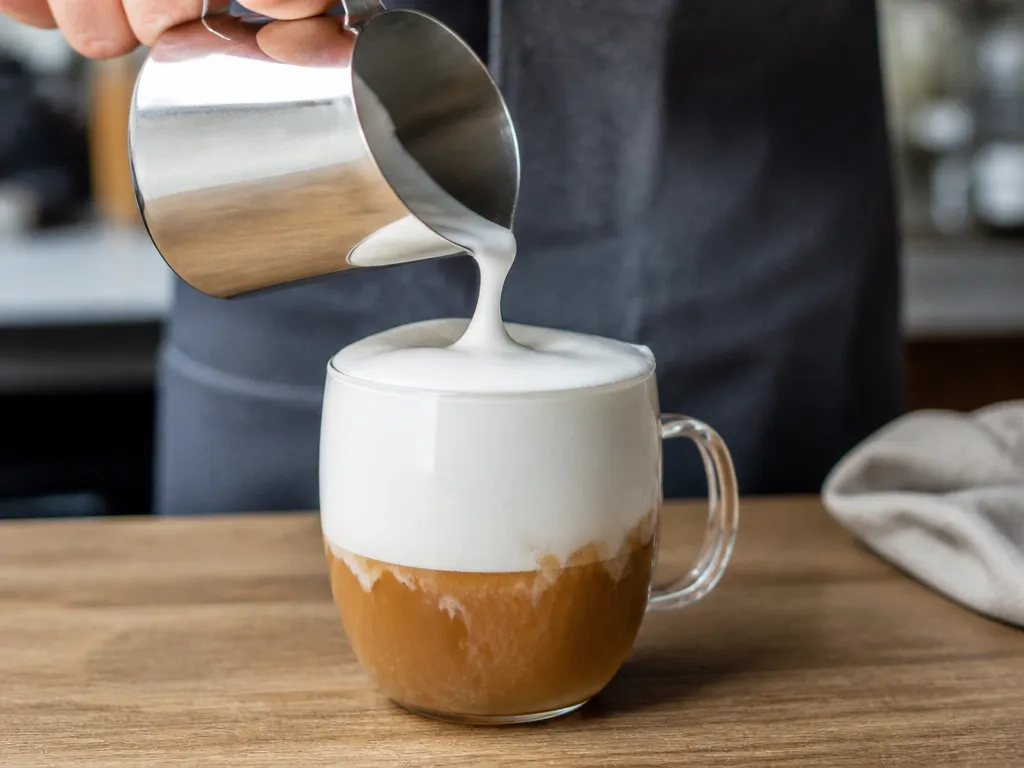
Cold foam is milk that has been aerated without heating it. The result is a light layer of small bubbles that can be poured or spooned over iced coffee, cold brew, tea, chocolate, or other chilled drinks. It is not simply milk with a few bubbles on top; properly aerated cold foam has enough body to sit briefly on the drink.
Hot foam is made by aerating milk while it is heated. Heat changes the milk’s texture and usually produces a warmer, denser cap that is more forgiving if it sits for a while. Cold foam remains cooler, softer, and more fluid, so it is best added just before serving.
| Feature | Cold foam | Hot foam |
|---|---|---|
| Starting condition | Cold milk, usually straight from the refrigerator | Milk aerated while being heated |
| Texture | Light, cool, and pourable | Warmer, thicker, and more latte-like |
| Best use | Iced coffee, cold brew, iced tea, and chilled chocolate | Lattes, cappuccinos, and other hot drinks |
| Serving window | Use promptly for the fullest foam | Generally more forgiving before serving |
Milk Temperature And Fat: The Starting Conditions
Start with cold milk rather than milk that has been sitting on the counter. A range of about 35 to 40°F (2 to 4°C) is a practical target. Chill the container as well if the foam will need to sit for more than a moment. Do not freeze the milk; partially frozen milk will not aerate evenly.
Fat level affects body and mouthfeel, but it is not the only variable. Whole milk is the easiest baseline for a creamy cap. 2% and skim milk can foam, especially when served immediately, while different plant milks can behave very differently even when they have similar fat content.
Milk-type Guide
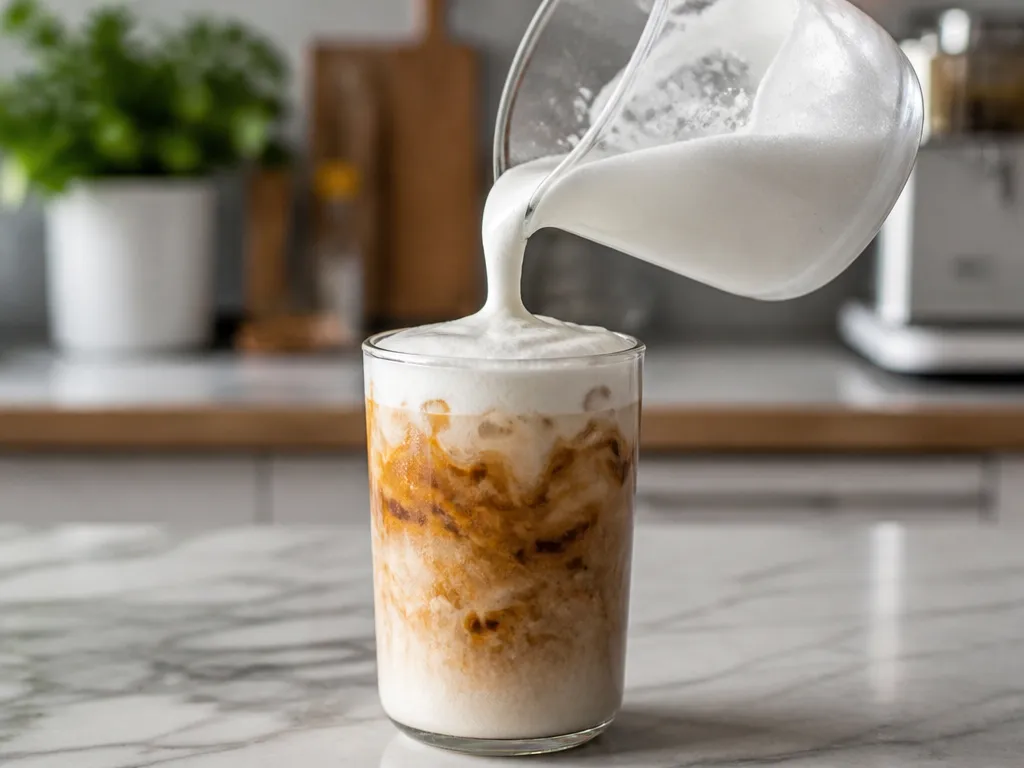
| Milk | Cold-foam result | Practical approach |
|---|---|---|
| Whole dairy milk | Creamy, fuller foam with a good starting balance of body and volume | Use as the baseline when learning or troubleshooting |
| 2% dairy milk | Light, usable foam that may thin sooner than whole milk | Froth cold and serve without delay |
| Skim dairy milk | Can create plenty of initial bubbles but may feel thin or become watery quickly | Use a fine-aerating tool and add immediately |
| Lactose-free dairy | Usually similar to regular dairy at the same fat level | Choose whole, 2%, or skim according to the texture you want |
| Soy milk | Often a strong non-dairy candidate because of its protein content, though products vary | Use chilled, unsweetened or barista-style milk and test a small batch |
| Oat milk | Often creamy, but foam height and stability are strongly product-dependent | Choose a barista-style version and serve promptly |
| Almond milk | May produce a light, airy layer that collapses quickly | Use a barista-style product and avoid over-agitating |
| Coconut or pea milk | Highly dependent on solids, protein, fat, and stabilizers in the product | Treat the first batch as a test and adjust the tool or timing |
“Barista style” is a useful starting label, not a guarantee. If a plant milk produces large bubbles or separates, try a different product before extending the whipping time. Longer agitation cannot always compensate for a base that does not form a stable foam.
Six Ways To Make Cold Foam
The six methods are a handheld frother, shaker, French press, hand whisk, dedicated foam maker, and blender. The quantities below are starting recipes for one or more drinks. Stop as soon as the foam has small, fairly uniform bubbles and enough body to sit on a drink. More agitation is not automatically better.
Quick-start Cold Foam Recipe
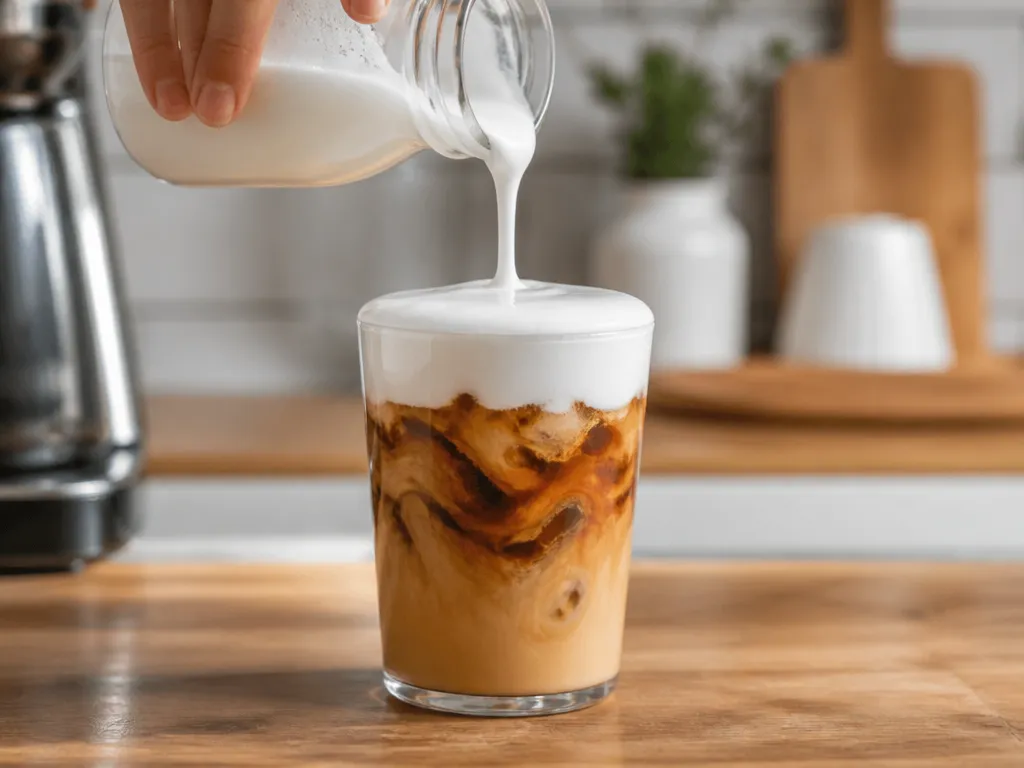
Makes: one generous topping for an iced drink. Best beginner milk: whole dairy milk. Add 30 to 45 ml (1 to 1.5 oz) of cold milk to a suitable container, aerate until the foam has small, even bubbles, and spoon it over the prepared drink.
Cold-foam Drink Ideas
| Drink | Drink ingredients | Cold foam |
|---|---|---|
| Vanilla cold-brew foam | 180 ml (6 oz) cold brew, 120 g (4 oz) ice, 15 ml (1 tablespoon) vanilla syrup | 30 ml (1 oz) milk plus 5 ml (1 teaspoon) vanilla syrup |
| Iced mocha foam | 180 ml (6 oz) cold milk, 30 ml (1 oz) chilled espresso, 10 ml (2 teaspoons) chocolate syrup, ice | 30 ml (1 oz) milk, unsweetened or with 2.5 ml (½ teaspoon) chocolate syrup |
| Cinnamon iced latte | 180 ml (6 oz) cold milk, 30 ml (1 oz) chilled espresso, 5 ml (1 teaspoon) maple syrup, ice | 30 ml (1 oz) milk with a pinch of cinnamon |
| Cold matcha foam | 180 ml (6 oz) cold water or milk, 1 teaspoon matcha, 10 ml (2 teaspoons) syrup, ice | 30 ml (1 oz) milk; add ¼ teaspoon sifted matcha after foaming if desired |
| Iced chai with foam | 180 ml (6 oz) chilled chai concentrate, 60 ml (2 oz) cold milk, ice | 30 ml (1 oz) milk with 5 ml (1 teaspoon) chai concentrate |
Troubleshooting Cold Foam
| Issue | Likely causes | Fix |
|---|---|---|
| No foam | Milk is too warm, the tool is not drawing in air, the batch is too large, or the milk is difficult to aerate | Chill the milk and container, reduce the amount, position the whisk just below the surface, or try whole dairy, soy, or barista-style oat milk |
| Weak or thin foam | Low-body milk, insufficient agitation, or foam that has already drained | Use a smaller, colder batch; froth until the volume increases, then serve immediately |
| Large bubbles | Whisk is too close to the surface, agitation is too aggressive, or the foam has not been circulated evenly | Lower the whisk slightly, use shorter bursts, and swirl or fold the foam gently before serving |
| Foam collapses quickly | Milk warmed during foaming, the foam was over-aerated, or the milk naturally has little body | Chill the equipment, shorten the cycle, use whole milk or a better-performing plant milk, and add the foam at the last moment |
Optional Stabilizers And Additives
Most cold foam does not need an additive. First improve the milk temperature, batch size, and agitation. If you are making a flavored topping or working with a plant milk that drains quickly, small additions can change the texture.
Cleaning And Maintenance
Rinse the frother, whisk, French press, or foam maker promptly after use, then wash and dry the parts according to the tool manufacturer’s instructions.
One-page Cold-foam Cheat Sheet
| Milk | Whole dairy for the easiest baseline; barista-style soy or oat for a plant option |
| Temperature | About 35 to 40°F (2 to 4°C) |
| Amount | 30 to 45 ml (1 to 1.5 oz) for one drink |
| Fastest method | Handheld frother for 20 to 40 seconds |
| No powered tool | Shaker for 30 to 60 seconds or whisk for 60 to 90 seconds |
| Best texture | Small, even bubbles; stop before the foam becomes dry or bubbly |
| Common fix | Use colder milk, a smaller batch, and shorter agitation bursts |
| Serving rule | Prepare the drink first, foam last, and serve immediately |
Frequently Asked Questions
Does Cold Foam Work With Non-dairy Milk?
Yes, but results vary by product. Soy and barista-style oat milk are useful starting points; almond milk may produce a lighter foam. Chill the milk, use a small batch, and test the foam before preparing the full drink.
How Long Does Cold Foam Last?
There is no single holding time for every milk and tool. The foam begins to drain as soon as it is made, so the fullest texture is usually available immediately. A well-made batch may remain visibly foamy for several minutes, while skim and some plant milks can thin sooner.
Can I Store Cold Foam?
For the best texture, make it fresh rather than storing it. If you must hold it briefly, keep it covered and refrigerated, then gently stir or re-froth it before use. Do not leave milk foam at room temperature, and follow the storage instructions for the milk and any added ingredients.
Should I Sweeten The Milk Before Or After Foaming?
Either works. Dissolved syrup or sugar can be mixed in before foaming, but a large amount may reduce lift. For the most control, make plain foam first and add syrup, spice, cocoa, or cinnamon to the finished topping.
Why Does My Cold Foam Turn Watery?
The milk may have warmed, the batch may have been over-aerated, or the milk may not provide enough body for the tool and timing. Start again with colder milk, a smaller amount, and shorter bursts. If the problem continues, switch to whole milk or a different barista-style plant milk.
Can I Make Cold Foam Without A Frother?
Yes. A sealed shaker bottle, French press, or hand whisk can all introduce air. The French press generally offers the most capacity, while a shaker is the simplest portable option. Whatever tool you use, add the finished foam soon after agitation.

- Espresso Bar Wedding: Ideas, Setup, Costs, and Tips for a Memorable Coffee Experience - November 11, 2026
- How Many Grams of Espresso Beans for a Double Shot? A Complete Brewing Guide - November 11, 2026
- Brasilia Espresso Machine: Features, Performance, Models, and Buying Guide - November 11, 2026